LED, Xenon, Halogen: Which Headlight Is More Efficient?
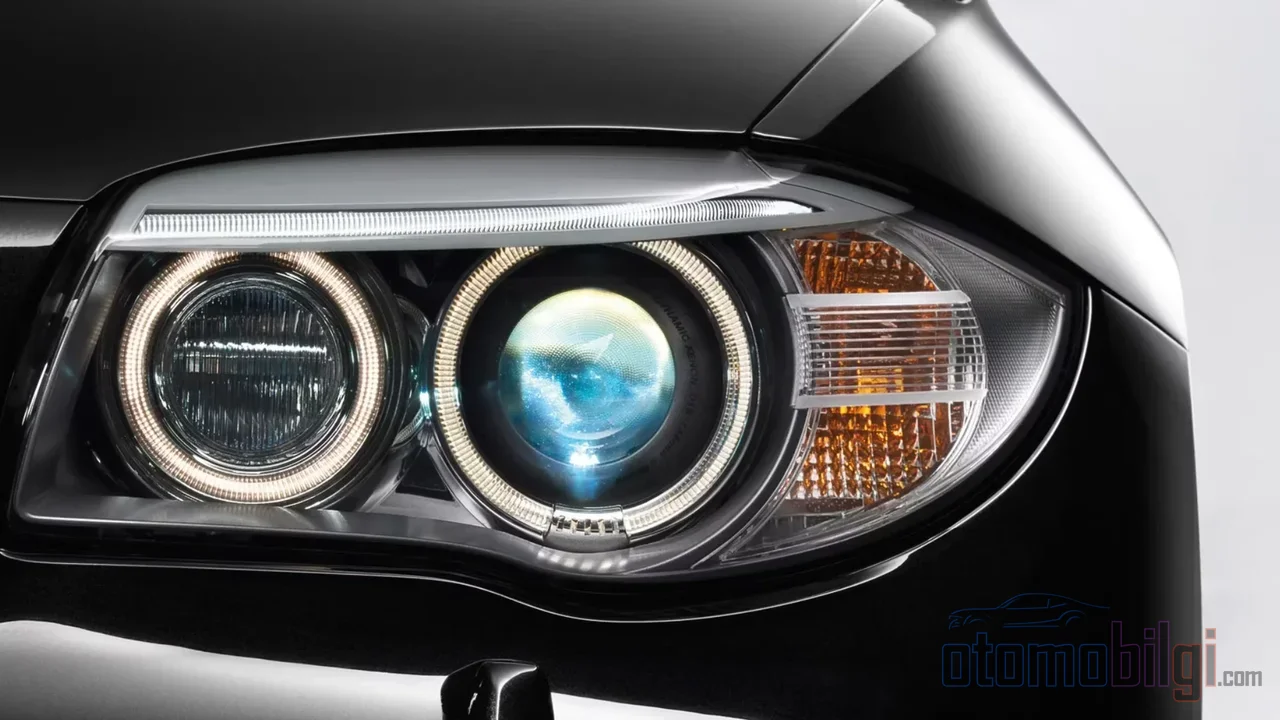
Have you ever wondered how much electricity your headlights consume during a night drive? I'm sure most people only look at the brightness; but the real story is hidden in that secret war between watts and lumens. While about 90% of the energy consumed by a halogen bulb flies away as heat, LED does the same job with many times less electricity. But why? The answer lies in physics: is light born in the sparks of a filament, in the plasma of an arc lamp, or in the disciplined world of a semiconductor? On this page, we will compare headlight technologies not with a marketing brochure, but through the eyes of a calculator. If you're ready, we're descending into the land of lumens/watts.
The Physics of the Halogen Headlight: Heated Wire, Vanishing Energy
The halogen bulb is actually a very elegant invention: inside the glass capsule there is a tungsten filament, surrounded by an inert gas and a small amount of halogen (iodine or bromine). The electric current heats this filament to about 2,500°C, and light is born through the incandescence process. So a halogen is actually a heat machine; light is like a by-product of the job. About 80% of vehicles on the road today have halogen headlights, so it's still the most common technology.
But what's the situation on the efficiency side? Bad news: about 90% of incandescent lamps' energy is spent as heat. Even when the fill pressure rises to 3 bar and the filament operates in the 2800-3200 K range, energy efficiency remains only around 7-13%. In lumens/watts, this means roughly 15 lm/W for a standard halogen. A typical halogen headlight bulb consumes 55-65 W and produces 1,000-2,000 lumens; do the math and the picture reveals itself. Moreover, if you try to run the filament hotter to increase lumen efficacy, the lifespan shortens; physics puts its signature here too. On the lifespan side, halogen lives in the 400-1,000 hour band.
Xenon (HID): The Conversion Efficiency of the Arc Lamp
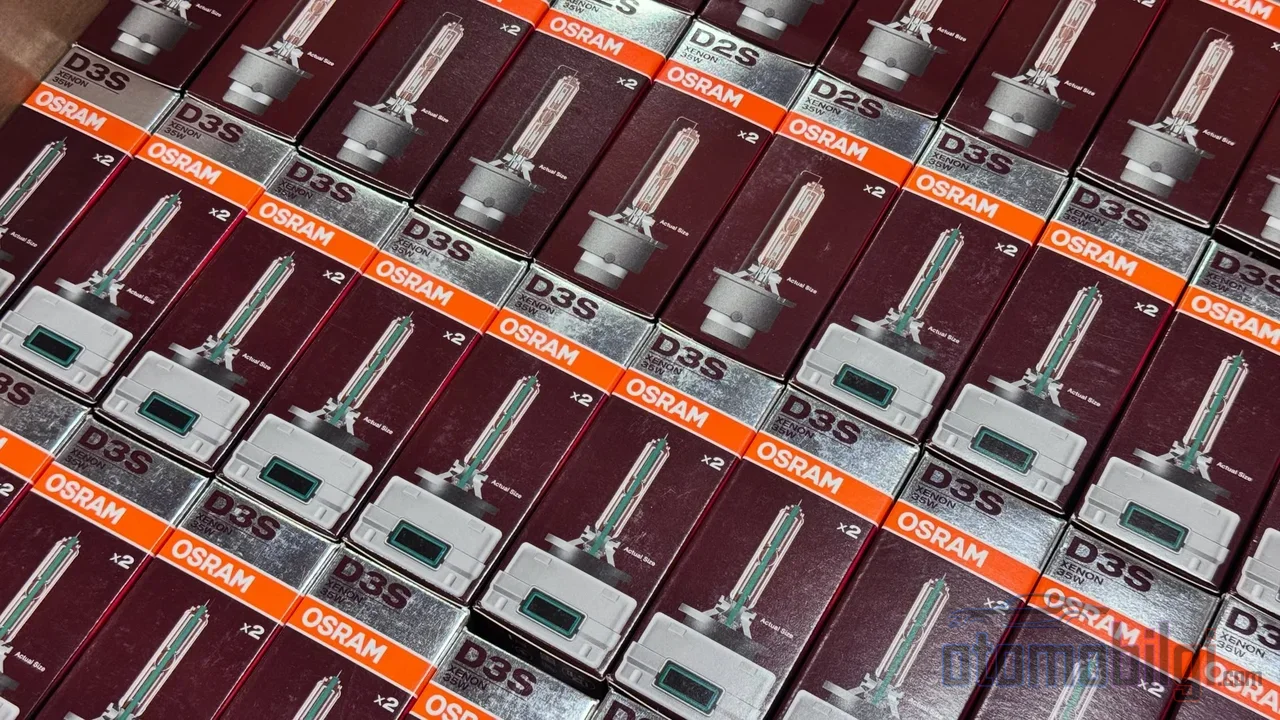
Xenon, or the HID lamp, belongs to a completely different world. Inside the quartz body there are two tungsten electrodes, xenon gas, and a metal halide mixture. Its operation has three stages: first, a high-voltage pulse ionizes the xenon gas, then the gas mixture heats up and its resistance drops, and finally the ballast in the circuit switches to continuous operation mode and delivers constant power. The xenon gas is actually only for the initial flash of light; reaching full brightness takes a few seconds. The ballast here is the critical electronic component that generates and regulates the high voltage.
On the efficiency side, HID makes a serious leap compared to halogen: the lamps can typically offer an efficacy of over 100 lm/W; in general HID lighting, there are cases where up to 150 lm/W is reached. But when you get into the details, things get complicated: in xenon short-arc lamps, efficacy varies between 15-45 lm/W depending on lamp power, and HID efficiency increases as watts increase. So very different numbers are hidden under the same HID term; it matters which lamp you are talking about. On the automotive side, a typical HID bulb consumes 35-55 W and produces 3,000-5,000 lumens (in conservative measurements, xenon is about 3,000 lm, halogen about 1,400 lm). Lifetime falls in the 2,000-3,000 hour band.
Highlights
- With 15-25 W consumption per LED bulb, it produces 8,000-12,000 lm; halogen manages only 1,000-2,000 lm with 55-65+ W.
- About ~90% of incandescent/halogen lamps' energy is lost as heat; efficacy is around 15 lm/W.
- HID lamps can reach efficacies of over 100 lm/W, but a ballast and warm-up period come into play.
- LED lifetime is 25,000-50,000+ hours; halogen lasts only 400-1,000 hours.
- Laser-phosphor systems are 30-40% less efficient than LED in terms of lumens per watt in most applications.
LED Physics: Why Is a Semiconductor So Efficient?
The LED's secret is not a heated filament but semiconductor physics: as electricity passes through the semiconductor material, photons are emitted directly. There is no heat-and-glow cycle; most of the energy is converted into light. Luminous efficacy is in the 50-100 lm/W band depending on the structure and phosphor type; 2026's market-leading bulbs report ambitious values like 180-220 lm/W, though these figures come from a single source and need independent verification. In automotive LED bulbs, consumption is measured at 15-25 W with a light output of 8,000-12,000 lm; forums commonly agree that LED is 1.5-5 times more efficient than HID.
Driver and Heat Sink: The Hidden Components of Total Consumption
But wait, the story doesn't end with the bulb. Although the LED's light is cold, its chips heat up, and this heat must be transferred to the copper core or heat sink behind it. If the heat cannot be dissipated, light output drops, the color shifts, and lifetime shortens. Cooling with heat pipes in automotive LED headlights is an engineering field serious enough to be the subject of academic studies. On the HID side there is also a ballast: high-efficiency electronic ballasts can reduce lighting electricity consumption by 10-30%. So the real efficiency calculation should always be made at the system level; the wattage on the bulb's label is only half the story.
Matrix LED and Adaptive High Beam: Smart Light Consumption
Matrix LED headlights add a dimension of intelligence to the efficiency story: individually addressable LED arrays provide an adaptive driving beam (ADB). There are no moving mechanical parts; when an oncoming vehicle approaches, the relevant LEDs dim and turn off one by one, and light is managed according to the scenario. Digital matrix systems increase nighttime visibility while reducing glare for oncoming drivers. And here's the good news: LED elements consume significantly less power compared to traditional technologies; the energy saved also translates into fuel economy. On the safety side, the picture is improving: only 5% of headlight systems tested in the 2026 model year have excessive glare; in 2017 that rate was 21%.
Laser Headlights: High Intensity, but There's an Efficiency Bill
The term laser headlight is somewhat misleading; because what reaches the road is not a laser, but the light produced by the laser. The system works like this: the blue light of the laser LED passes through a phosphor material in the headlight unit; phosphors absorb the more energetic, shorter-wavelength photons and shift them to a longer wavelength (down-conversion). The gain is high light intensity and long seeing distance; the cost is efficiency: this phosphor conversion creates energy loss. As a result, laser diode lighting is 30-40% less efficient than LED lighting in lumens/watt for most applications. So laser headlight is not an efficiency champion; it is a premium segment solution focused on range and compactness.
Comparison Table: Watt, Lumen and Lifespan Side by Side
| Technology | Consumption (bulb) | Luminous flux | Typical efficacy | Lifespan |
|---|---|---|---|---|
| Halogen | 55-65+ W | 1,000-2,000 lm | ~15 lm/W, ~90% of the energy is heat | 400-1,000 hours |
| Xenon (HID) | 35-55 W | 3,000-5,000 lm | above 100 lm/W possible; 15-45 lm/W depending on the lamp | 2,000-3,000 hours |
| LED | 15-25 W | 8,000-12,000 lm | 50-100 lm/W (depending on construction) | 25,000-50,000+ hours |
| Laser-phosphor | - | - | 30-40% less efficient than LED | - |
The missing cells in the laser row are not something to be shamelessly hidden; manufacturers and technical sources do not publish a standard consumption and lifespan figure for laser headlights that is directly comparable to halogen-HID-LED. That is why the table, honestly, settles for only the efficiency difference.
The Raw Lumen Trap: Numbers Are Not Everything
Now come to the most crucial part. Don't get excited right away when you see 12,000 lumens; because lumen output alone is not enough. The distribution of the light pattern on the road, color temperature, and the focus of the beam determine real performance. This is exactly why low-quality LED conversion bulbs are notorious: in projector H11 comparisons, standard wattage performance halogen bulbs have even been measured to be 2.5 times more efficient than some LED conversions in bulb-based lumen measurement. The reason is simple: if an LED bulb fitted into a halogen housing is not compatible with that housing's beam control, light scatters in all directions and the lumens go into the sky instead of the road. Color temperature is also part of the same trap: the 4000K-6000K range provides better visibility in precipitation while above 8000K reduces visibility in fog and rain; xenon can be less effective than halogen in foggy weather.
Cost and Scenarios: Which Technology Makes Sense in Which Situation?
Let's take a quick look at the price side: halogen bulbs are in the $10-50/pair range, HID conversion kit is $75-300 plus $100-200 installation, and LED is at the level of $50-400+/pair. In the long run, LED stands out as the most economical option with its 25,000+ hour lifespan. But the energy calculation changes depending on the scenario: if you just want a cheap and easy-to-replace solution, halogen is still the most common answer in the world. If you want high and stable luminous flux on dark rural roads, HID is a satisfying middle ground; xenon is somewhat more efficient than halogen, but the difference is not big enough for the driver to immediately notice in daily use. If low consumption, long lifespan, and adaptive beam control are all wanted together, LED is by far the most sensible architecture in terms of energy. Laser is the high-end engineering choice that comes into play not for efficiency but when intensity and range are called for.
Conclusion: Who Owns the Efficiency Throne?
Looking at the axis of light produced per watt, the answer is clear: LED, producing 8,000-12,000 lumens with 15-25 W consumption, is the most efficient headlight technology; it is followed by HID, which produces 3,000-5,000 lumens with 35-55 W, and at the bottom is halogen, which uses 55-65+ W while delivering 1,000-2,000 lumens. The physical reasons are just as clear: the incandescent filament buries most of the energy in heat, the arc lamp reaches a good conversion efficiency but loses points at the system level due to the ballast and warm-up process, the semiconductor LED produces photons directly and manages its heat with a heat sink, while the laser-phosphor stays far off the efficiency chart due to conversion losses. The next time you turn on your headlights on a night drive, remember this physical calculation working behind you; light is not only visible, it is also calculated.
Sources
- Xenon vs. halogen headlights
- LED vs Halogen vs HID Headlight Bulbs
- Incandescent Lamps - Springer
- LED lamp - Wikipedia
- Luminous efficacy - Wikipedia
- How To Control and Reap the Benefits of HID Lamps - Infineon
- Cooling of LED headlamp in automotive by heat pipes - ScienceDirect
- Diode laser-excited phosphor-converted light sources - SPIE Optical Engineering
- Headlights - IIHS
- 3rd Gen HID vs LED vs Halogen H11 projector headlights - TacomaWorld