Halogen or LED? Lifespan and Cost Comparison
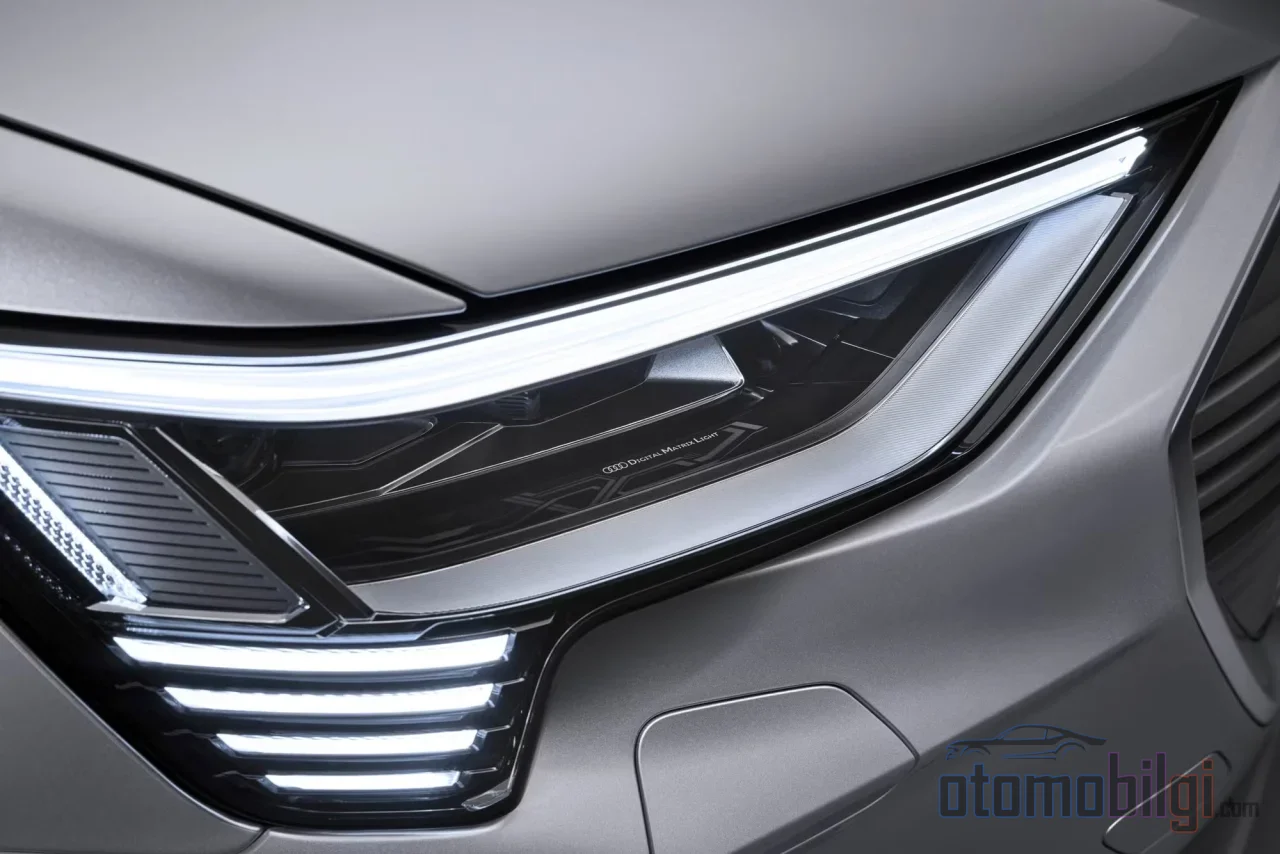
An incandescent bulb costs 5 pounds, a headlight unit 5,000 pounds. Yes, you read that right: there is a thousandfold difference between two parts that do the same job. The halogen or LED question today is no longer just "which one is brighter"; it is the question of "how long does each technology last, and what happens to your wallet when it fails." And you will be a little surprised when you hear the answers, because the most expensive technology is not always the most sensible one.
About 80% of vehicles on the road still have halogen headlights. In other words, what we call that "old technology" is still on duty. So are the 30,000-50,000 hour lifespan claims of LEDs real, why does a xenon ballast suddenly die, and why does the bill cover the entire headlight assembly if a matrix LED headlight breaks? Let's go, let's talk with numbers.
Highlights
- Halogen bulb lifespan is 400-1,000 hours, xenon 2,000-3,000 hours, LED 25,000-50,000+ hours.
- Halogen bulb replacement costs $10-40; a sealed LED or laser headlight unit costs thousands of dollars plus labor.
- An LED unit replacement typically costs $750-1,500, a halogen headlight unit $200-500.
- The real enemy of LED lifespan is not light, it is heat management: with good cooling, the lifespan extends to 5-10 years.
- There is a serious difference between marketing lumens and actual light output; lux rather than lumen measurement is what matters.
The anatomy of the three technologies: Filament, arc and diode
First, let's quickly get a grasp of what looks like what. A halogen headlight is actually the descendant of Edison's light bulb: a tungsten filament inside a glass capsule, surrounded by iodine or bromine gas, and electric current heats this filament to about 2,500 °C. Imagine a wire that hot; that is how incandescent light is born. The fragility comes from this; moreover, if you touch it with bare hands, the oil on your fingers gets on the glass and the bulb may weaken and break.
Xenon, i.e. HID headlights, is an entirely different creature. Between two tungsten electrodes inside a quartz body, xenon gas is ionized by a high-voltage pulse and forms an arc. The component that feeds this arc and produces and regulates the required high voltage is called the ballast. This part is the heart of the xenon system and, spoiler alert, its most frequently failing organ.
In LED, there is no heated filament; light is produced directly in semiconductor diodes. It reaches 100% brightness instantly, draws very little energy and theoretically lasts tens of thousands of hours. Matrix LED is a level above this: an adaptive driving beam (ADB) system consisting of individually addressable LED arrays automatically adjusts where the light falls on the road. Sounds great, doesn't it? Let's first look at the lifespan side.
Lifespan comparison: Which lasts longer, halogen or LED?
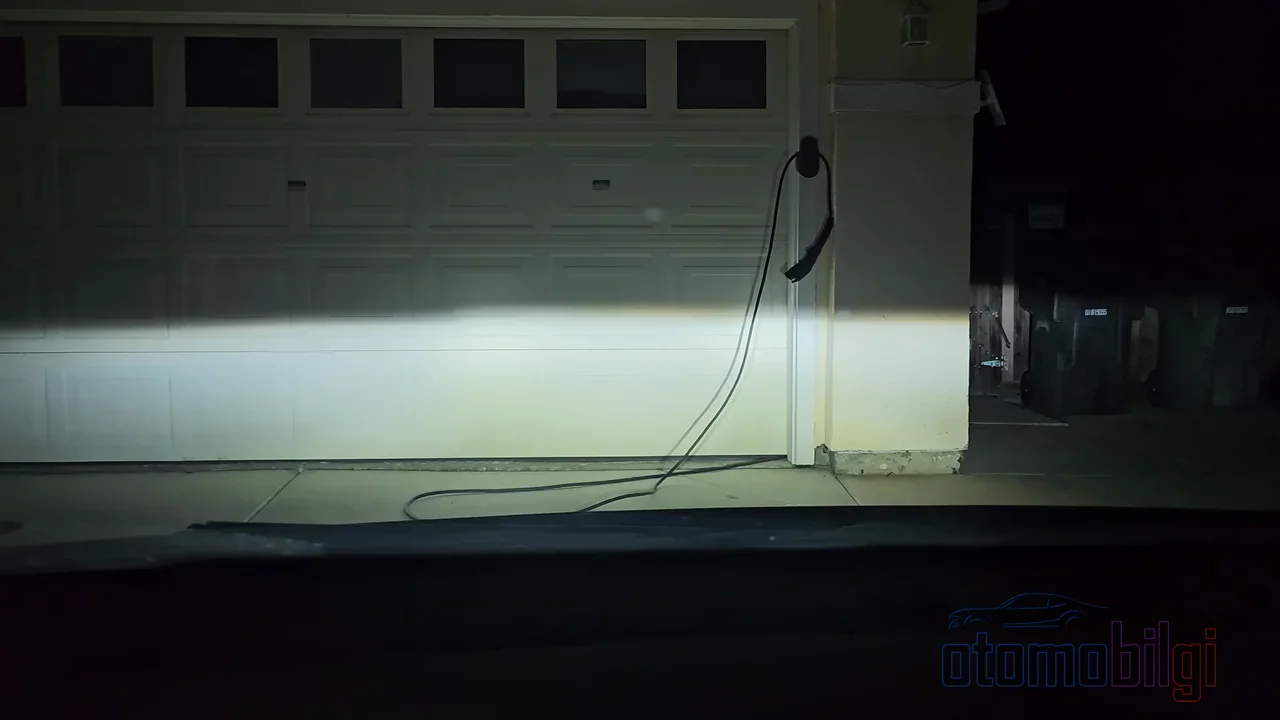
Halogen: the 400-1,000 hour sprint runner
The lifespan of a halogen bulb ranges from 400-1,000 hours in different measurements; under normal conditions it is accepted as approximately 1,000 hours. The spread within this range depends on bulb quality and usage conditions; the technology itself does not change. With average daily use, replacing a bulb every few years is inevitable. But here's the good part: replacement is a two-minute and cheap job.
Xenon: 2,000-3,000 hours, but the ballast is risky
The xenon arc lasts 2,000-3,000 hours and produces light 2-3 times brighter than halogen: approximately 3,000 lumens and ~90 Mcd/m² brightness, far above halogen's ~1,400 lumens and ~30 Mcd/m². Color temperature is in the 4,000-6,000K band, meaning a whiter light. There are two flaws: reaching full brightness requires a few seconds of warm-up, and it relies on complex, expensive components like the ballast, which can fail over time. Symptoms of ballast failure are buzzing, dimming and flickering, random shutoff, color change, or not lighting up at all; causes are usually insufficient voltage supply, a grounding connection fault, electronic failure, or an internal short circuit.
LED: the 25,000-50,000+ hour claim and the real world
2026 industry data gives LED headlight lifespan as 25,000-50,000+ hours; some assessments say it exceeds the vehicle's lifetime. The theoretical limit can reach up to 100,000 hours, but it's more honest to talk about 5-10 years in real use. There is one critical warning here: the claimed lifespan and verified durability are not the same thing. The LED's real enemy is not the light source itself, but heat management: heat, voltage problems, and installation errors are the main causes of early failure. A well-cooled LED lives for years; a poorly cooled one can die before a halogen bulb. Performance and reliability depend on the driver (ballast/driver) that regulates power distribution.
| Technology | Lifespan | Light output | Color temperature |
|---|---|---|---|
| Halogen | 400-1,000 hours | ~1,400 lumens | 3,200-5,000K |
| Xenon (HID) | 2,000-3,000 hours | ~3,000 lumens | 4,000-6,000K |
| LED | 25,000-50,000+ hours | Varies widely by source | - |
I deliberately left the lumen cell in the LED row empty, because it covers the topic: the gap between marketing numbers and actual output.
The lumen trap: why not every number can be true
While some seller pages claim 8,000-12,000 lumens for LED headlights, other measurements mention far more modest values like 1,600+ lumens. Neither is lying; they measure different things. Marketing materials usually give the theoretical maximum value, while real measurement gives the light that actually reaches the road. And the real issue is this: lumens don't tell you where the light actually goes; that's why the meaningful measurement is lux, that is, the lux value. 10,000 lumens not properly focused on the road can illuminate worse than 1,500 lumens directed by a well-designed optic. Halogen's light output also ranges across a wide band of 900-2,000 lumens depending on the source; generally, a roughly 55-watt bulb produces 900-1,000 lumens.
There's also the efficiency side: LEDs can be 1.5-5 times more efficient than HID, but the constraints in headlight design limit this advantage; comparable LED headlights can't always deliver the same advantage. The clear picture on energy consumption is this: LED is the most efficient, xenon is more efficient than halogen but not as much as LED, and halogen is the greediest. So for anyone thinking in terms of the electricity bill, LED is ahead by a wide margin.
Failure cost: The gap between replacing a bulb and replacing a module
Here is the real issue. Halogen bulb replacement is done with an amount like $10-40, with the basic bulb costing around $20; a $10-30 range for a pair of bulbs is normal. In professional replacement, labor is $61-90 and the part around $120-123, with the total average coming to $181-213.
The LED side, however, is a completely different league. While a halogen headlight unit is in the $200-500 range, LED unit replacement typically costs $750-1,500. For sealed LED or laser headlight units, the price climbs to thousands of dollars, with labor added on top; in extreme scenarios, the replacement cost can exceed $5,000. Why? Because LEDs are not bulbs; they are usually integrated into the entire headlight unit. A damaged matrix LED unit may require replacing the entire assembly. So when a single LED pixel goes out, the factory solution can be to throw away the whole headlight.
Xenon stands somewhere in the middle here: its upfront cost is low, but the math changes when the ballast fails. Also, xenon headlights require mandatory headlight washers and automatic leveling for homologation purposes, because there is a risk of dazzling oncoming traffic. Some xenon systems also contain the toxic metal mercury, which means an extra responsibility at the end of their life.
Installing LEDs in a halogen housing: Does it make sense, or is it risky?
Conversion kits are sold for halogen sockets in the $80-250+ range, and LED bulbs are around $40-150 per pair. It sounds good: LED brightness for a few hundred dollars. But the reality is complicated. There really are quality LED bulbs, properly designed, that can be used directly in place of halogens and can increase output. On the other hand, a randomly purchased cheap LED bulb can perform far worse than halogen; optical mismatch scatters the light everywhere instead of onto the road. Moreover, the legality of fitting LED bulbs into a halogen housing varies depending on the market you are in - this is not an out-of-the-box issue.
Halogen also has a loyal contingent of defenders, and not without reason. Halogen light penetrates rain and fog better than LEDs, but some drivers find halogen less tiring on the eyes and more pleasant. Warm, yellowish-white light does not bother everyone. It gives full brightness instantly, there is no sensitive electronics like a ballast in its system, and if it fails, the money out of your pocket is about the cost of a lunch. Simplicity is also an engineering virtue.
Which technology makes sense in which scenario?
We have come to the decision part. The short answer is this: If you will keep the same vehicle for a long time and the headlight unit is not sealed, LED is the most cost-effective in the long run in terms of energy and lifespan; but if you will change the vehicle within a few years or your budget is tight, halogen is still the most sensible balance. Now let us break this down into scenarios.
- Budget-focused, older vehicle: Halogen. Bulb is 10-40 $, replacement takes minutes, failure risk is low. Enjoy the simplicity.
- Long-term ownership, lots of night driving: LED or quality xenon. LED offers 25,000-50,000 hours of lifespan and low consumption, but good heat management is a must; xenon comes with 2,000-3,000 hours and ballast risk.
- New vehicle with Matrix LED: The technology is stunning, and adaptive light distribution genuinely improves safety. But a damage bill could mean replacing the entire assembly; imagine 750-1,500 $ and above.
- Conversion enthusiast: Choose a quality, optically compatible kit. A cheap, random LED bulb is the worst scenario; the light can be worse than even halogen.
Now, back to the main question: halogen or LED? LED wins on lifespan and light quality, halogen on cost and simplicity, and if you are looking for a balance between the two, a xenon in good condition wins. The most expensive solution is not always the most sensible one; the most sensible solution depends on how many years you will keep the headlight and how much tolerance you have for failure. The numbers are on the table, the decision is yours now.
Sources
- Xenon vs. halogen headlights
- Xenon vs. LED Headlights: The Complete 2025 Comparison
- Xenon headlights - function and retrofitting
- Headlights Burned Out: What's the Cost to Replace?
- Why Replacing A Modern Headlight Can Cost Thousands
- LED vs Halogen vs HID Headlight Bulbs: Complete Performance and Cost Comparison
- 2026 Complete Guide to LED Headlights
- Why LED Headlights Fail Early: Common Causes
- Matrix LED Headlights: Redefine Adaptive Front Lighting
- The differences between halogen, xenon, led and laser headlights