Why Is Fog Inside the Headlight Normal?
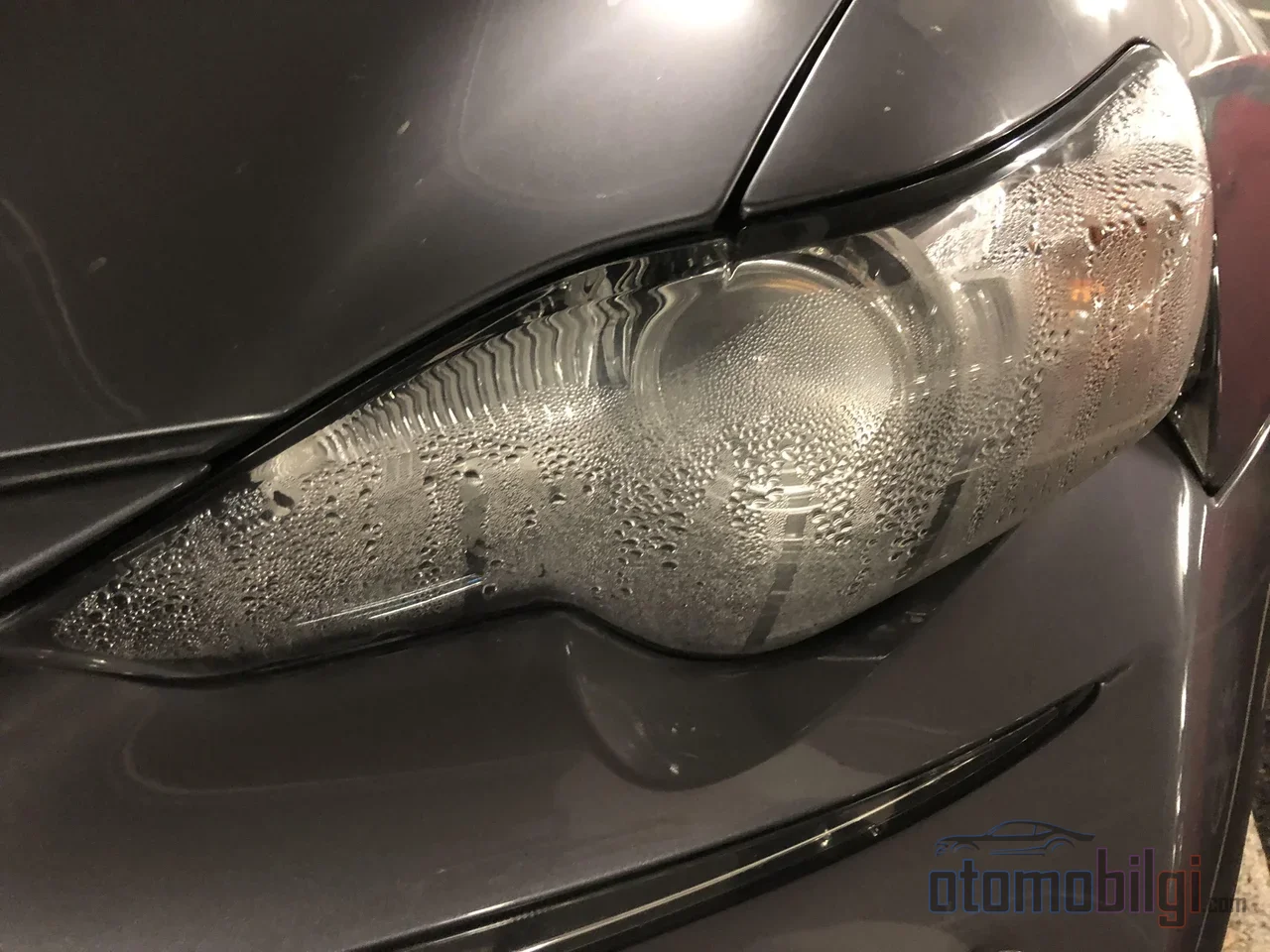
In the morning you head out to the garage and glance at the headlight: there is a thin layer of mist inside the glass. The first thought that crosses your mind goes something like this, right: "Is the headlight broken, did the seal fail, should I take it to the service center?" Stop, do not hit the panic button. Because that mist is often not a sign that the headlight is faulty, but quite the opposite, a sign that it is working properly. Yes, you read that right. So how can a drop of water accumulating behind a piece of glass be "normal"? The answer comes from physics class and it is incredibly logical.
In this article, we will open up the engineering side of headlight fogging: the dew point, ventilation holes, membrane technology, and what those much-talked-about IP67 and IP69K ratings actually do and do not guarantee. Then we will tie it all together with a clear answer to the question "which fog is normal, and which one burns a hole in your wallet".
The Headlight Is Actually Not an Airtight Sealed Box
The common picture in our heads is this: the headlight is a vacuum-sealed capsule that nothing can enter. The reality is not like that at all. Almost all modern headlights have small breathing holes on the rear housing, that is, vents. When the headlight operates, it generates heat, the air inside expands and escapes outward. When you turn it off, the air cools, its volume shrinks, and a slight vacuum forms inside the housing; it is this vacuum that starts drawing in air from outside. And that air carries moisture.
The logic here is actually the same as with the bathroom mirror. The mirror fogs up after a hot shower because humid air hits the cold glass. Or think of it this way: on a hot summer day, a cold beer bottle sweats instantly. What happens on the headlight glass is no different; when the moisture inside touches the cooling lens surface, it turns into droplets.
What Does the Dew Point Determine?
The threshold that physicists call the "dew point" is at work here. As long as the surface temperature stays above the dew point, moisture remains invisible in vapor form. The moment the surface cools and drops below the dew point, vapor turns into mist, and mist turns into droplets. That is why headlight fogging appears most often in rainy and snowy weather, especially in the morning and evening hours; at those times the humidity is high while the glass is cool. According to automotive lighting engineering calculations, this mechanism triggered by temperature differences accounts for approximately 80% of the moisture seen inside a headlight. So most of the issue is not water leaking in from outside, but vapor that is already present inside. Moisture enters the housing through three routes: absorption of water vapor by plastic components, vapor permeability of the housing and lens materials, and convective or diffusive moisture transfer through the ventilation system.
Key Takeaways
- Headlight housings are not completely sealed; nearly all of them have ventilation holes for pressure equalization.
- Condensation triggered by temperature differences accounts for approximately 80% of the moisture inside a headlight.
- IP67 and IP69K ratings do not prevent fogging; condensation can occur without any liquid leakage.
- LED headlights generate little heat, so mist dries more slowly; halogen headlights vaporize it faster.
- Thin fogging is normal; large droplets and water pooling at the bottom of the housing are signs of a fault.
How Do Vents and Membranes Work?
So if opening a hole lets moisture in, why don't engineers just make the headlight completely sealed? Because a sealed box would create a bigger problem: heat and pressure buildup. As the temperature constantly changes, air must be able to enter and exit; but this exchange must not let in liquid water, mud, dust or road spray. That is why special venting elements are fitted to the holes at the top and bottom of headlights.
At the heart of these elements are usually ePTFE (expanded polytetrafluoroethylene) membranes. ePTFE is a microscopically porous structure known for its chemical stability and heat resistance. While the pores allow air molecules to pass through, they repel liquid water droplets, fine dust and particles. Known in engineering literature as the "macro-venting" approach, this reduces heat and pressure buildup inside the housing with high airflow, carries vaporized moisture out, and thus helps prevent both sealing failures and fogging. These details have even made it into patent literature, and they are interesting: the position and area of the vent holes and the side on which the radiator fan creates negative pressure can be measured differently on the left and right headlights, and structures have been described that provide a breathing passage between the cap and the vent hole and force air circulation on the inner surface of the lens. In other words, engineers spent hours thinking even about the placement of that tiny hole.
What Happens If the Vent Gets Blocked?
If the venting is damaged, blocked or missing, things go the other way: moisture gets trapped inside and cannot find a way out. A blocked vent is one of the known and common causes of moisture buildup inside a headlight. Some headlights also contain a silica gel packet, i.e. a desiccant, to draw in moisture; if this packet swells and becomes saturated over time, it may need to be replaced. In short, the first suspect in a fogged headlight is the condition of that invisible little hole.
Do IP67 and IP69K Ratings Prevent Fogging? No
This is the most commonly misunderstood part of the matter. The IP rating indicates a product's level of protection against dust and water. In vehicle lighting, IP67 is generally considered sufficient; IP69K is required in mud, salt water or high-pressure washing environments; for resistance to prolonged immersion, IP68 is the expert class. IP69K is a definition that comes from the German DIN 40050-9 standard and measures resistance to cleaning with 80-100 bar high-pressure water at temperatures up to about 80 °C.
But there are two critical warnings here. The first: IP ratings do not include one another. The fact that a product has passed IP69K does not mean it has passed IP66, IP67 or IP68, because the tests are carried out under completely different conditions. If you want resistance to prolonged immersion, that resistance must be marked separately. And second, which is our main point: no IP rating prevents fogging. Neither IP67 nor IP69K means "waterproof"; moreover, condensation occurs without a single drop of liquid entering from outside, purely through the passage of water vapor. In other words, you can see fog inside the lens even when the headlight seal is working perfectly. If you have a housing with no leaks that still gets damp, that phenomenon is entirely the product of a physical cycle.
Why Does Fog Last Longer in LED and Laser Headlights?
The technology changed, the physics did not. Halogen headlights produce a lot of heat; that heat is quite good at vaporizing the moisture inside and expelling it through the vents, but the same heat can also wear out the sealing elements over time. HID, or xenon, systems sit somewhere in the middle. With LED headlights, things are different: LEDs produce far less heat compared to halogen and HID. That is pleasant, but it is a disadvantage against fogging: since there is no heat to vaporize the moisture, accumulated fog clears much more slowly and much later. A similar situation exists in electric vehicles; since there is no heat from an internal combustion engine up front, the moisture balance of the headlights changes and engineering teams have to pay special attention to this issue.
The electronics side is serious. A thin fog does not harm the LEDs; the real danger is liquid water. If standing water reaches the electronic components, it can cause short circuits, corrosion, failure of the LED driver, or complete loss of light. Moisture damages reflectors and lenses, corrodes contacts, and harms the wiring; leaking moisture can spread into the housing insulation and even create mold. If cold water hits a hot bulb, the bulb can explode. With adaptive headlights, the risk is a bit higher: in systems where dozens of independent LEDs are controlled one by one, condensation forming in a high-humidity environment can create multiple failure modes. There is also a phenomenon called the "greenhouse effect": it occurs when moisture repeatedly vaporizes and condenses on the lens, and it is not the same thing as normal condensation; it is a harbinger of a separate problem.
Normal Fog or Water Pooling? Here Is the Guide to Telling Them Apart
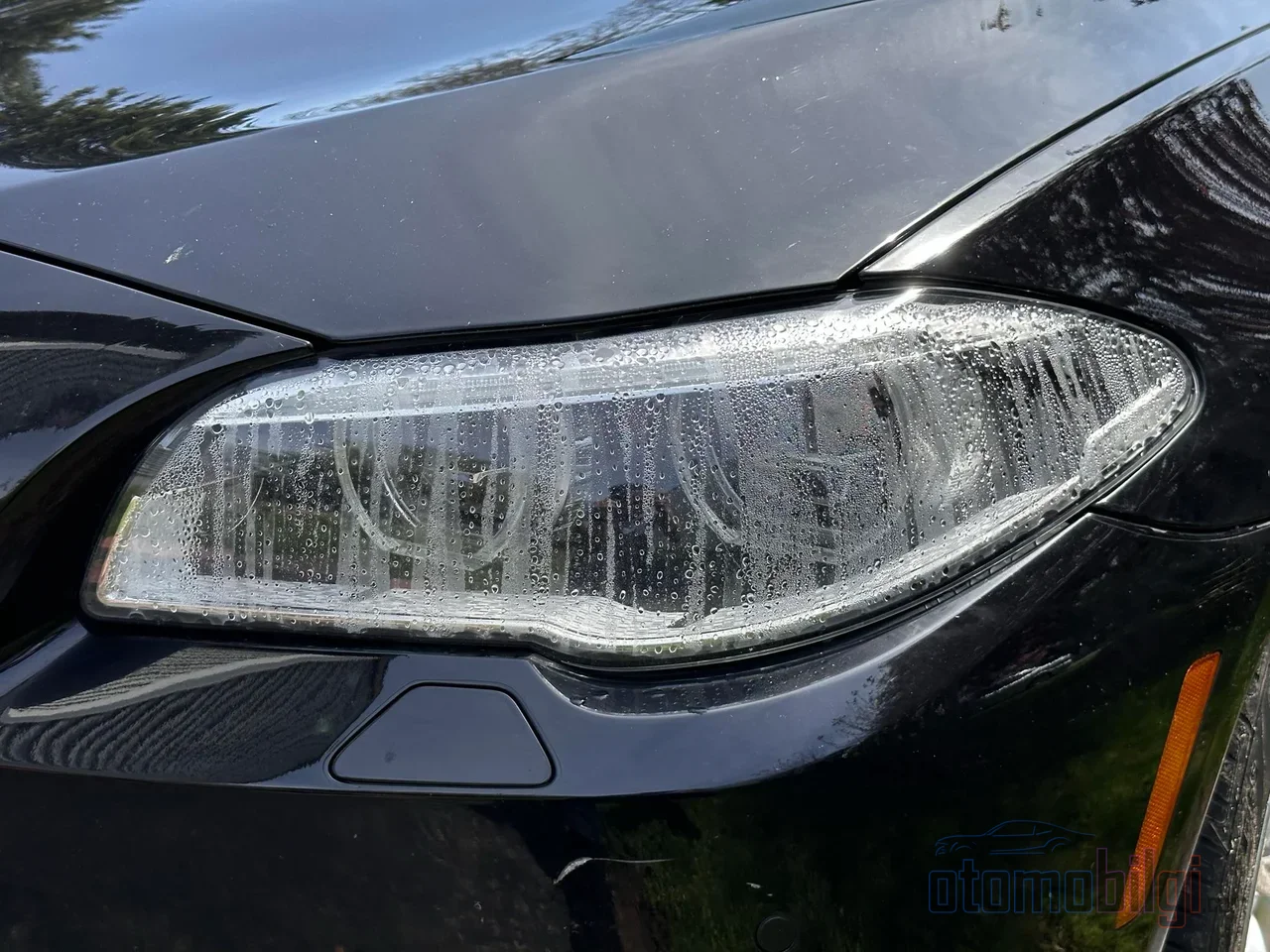
Now let's get to the part that actually works in the field. Official service bulletins make the same distinction: a thin fog forming on the inner surface of the lens in a high-humidity environment, that is, a light fog with no streaks or drop marks, is considered normal. So in which case can you relax, and in which case should you rush to the service?
| Finding | Normal? |
|---|---|
| Thin fog on the edges of the lens, covering less than 50% | Normal |
| Fog that clears quickly with the light on or in the sun | Normal |
| Fog seen on first use of a new headlight, disappearing within a few days | Normal |
| Large droplets and drop marks | Fault sign |
| Water pooling at the bottom of the housing, "pool" formation | Fault sign |
| Moisture that returns after drying or worsens over time | Fault sign |
| Discoloration or oxidation on the inner surface | Fault sign |
As for timing: light fog usually disappears within 24-48 hours in dry conditions; the moisture balance inside the headlight may take 2-3 weeks to fully settle, depending on the weather. Be patient, do not make hasty decisions. But what should you not do? Heat guns are absolutely forbidden: can melt the plastic lens or damage the inner coating. Drilling a hole in the headlight housing is not a solution either; it voids the warranty and lets in dust, salt, and even insects. During high-pressure washing, water sprayed directly at the seals and vents can force moisture inside; remind the car wash attendant. The good news about seals is that one of the most common causes of failure is dried and cracked rubber edge seals and the cornering lamp cover seal; so the solution is often a concrete and reasonable job such as part replacement.
Headlight Fogging - Quick Answer: When Should You Worry?
Let's wrap it up: fog on your headlight is normal condensation required by physics if it is a thin mist covering less than half of the lens, close to the edges, and disappears within a day or two while the headlight is on or in the sun; the ventilation holes that are part of the headlight design carry the vapor out over time. The situation to worry about is water pooling at the bottom of the housing, large droplets, permanent marks, and dense fog that worsens over time; these are signs of a seal or vent failure and require maintenance to prevent electronic damage. No urgent action is needed for a thin fog that does not reduce light output; but if the fogging seriously reduces illumination, flickers, or distorts the beam pattern, having the headlight inspected is the right decision. The line that separates a fault from a normal phenomenon is this: if there are droplets and pooling, it is time to get to work; if there is only a veil-like mist, physics is doing its job.
Sources
- Why Are My LED Headlights Fogging Up? Causes, Prevention and Pro Tips
- What IP value is required for vehicle lighting?
- IP ratings explained for emergency vehicle lighting, cameras and chargers
- IP Ratings Explained: IP65, IP67, IP68, and IP69K
- Understanding Fog and Water Issues
- Headlight Condensation Explained: Why Fogging Happens and When It's Normal
- Why Do Headlights Get Condensation? What's Normal and What's a Problem?
- How to Prevent Headlight Condensation
- Which IP class for vehicle lighting?