Why Are Laser Headlights Still Only Found in Luxury Cars?
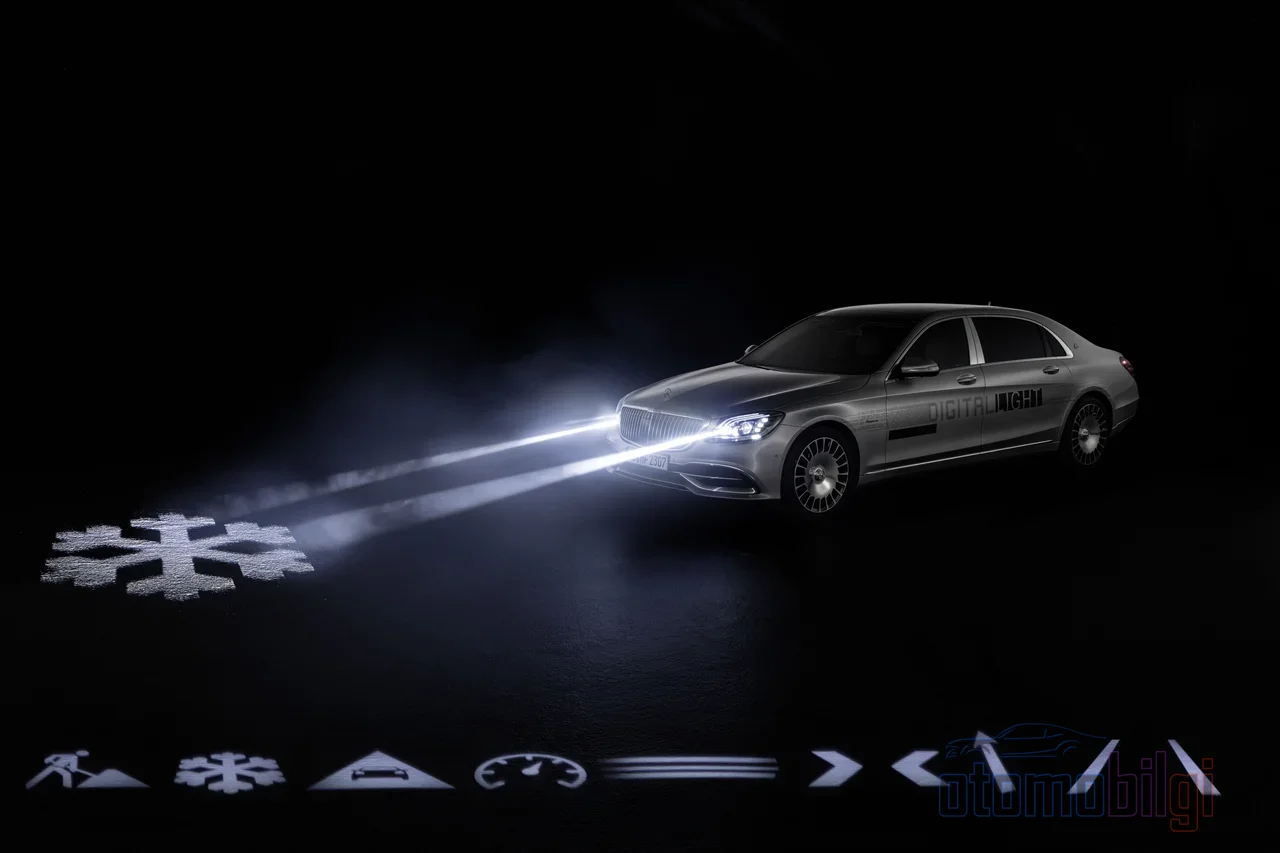
Stop for a minute and think about this: even the flash on your phone is LED, the headlights on your car are probably LED, and even street lights are LED now. So why are laser headlights, called the pinnacle of technology and able to illuminate the road nearly 1.2 kilometers ahead, still only found in cars with six-figure price tags? This technology, which two German giants raced to outdo each other with around 2014, had quietly begun to exit the stage as of 2024. The story is actually not a failure of technology; it is a brutal lesson in engineering economics. So let's begin, because the answer is not as simple as you think.
How Do Laser Headlights Actually Work?
First, let's clear up a popular misconception: a laser headlight does not send lasers onto the road. This is the most misunderstood part of the topic and the foundation of the cost story. Inside the headlight, blue laser diodes direct their beam at a special phosphor material; the phosphor is excited and converts this energy into white light visible to the human eye. A raw blue laser beam is dangerous to the human eye, so the phosphor converter is not a luxury but a necessity.
So why does no one care about such a complex arrangement? Because the physical nature of laser light is the game changer here. Laser light can create a focus point smaller than a millimeter and keeps the beam nearly undispersed. The result: much smaller optical surfaces for the same brightness. While a classic halogen high beam is approximately 220 mm in diameter, laser technology needs only about 30 mm for the same light intensity. Also, when we talk about range, laser can reach up to 1,200 meters, roughly three times the distance of classic LED high beams. This means your eyes can see half a kilometer further on the highway at night.
Highlights
- A laser headlight does not send lasers onto the road; the light hits the phosphor inside the headlight and turns into white.
- For the same light intensity, a halogen headlight needs about 220 mm in diameter, while laser gets by with 30 mm.
- The cost of a laser headlight unit measured around €6,000 in tests; the xenon unit was around €1,000.
- BMW gave up on laser headlights due to high costs and regulatory burden.
- In the US, the brightness limits of the FMVSS 108 standard sealed the fate of laser headlights.
The Five Components That Increase Cost Layer by Layer
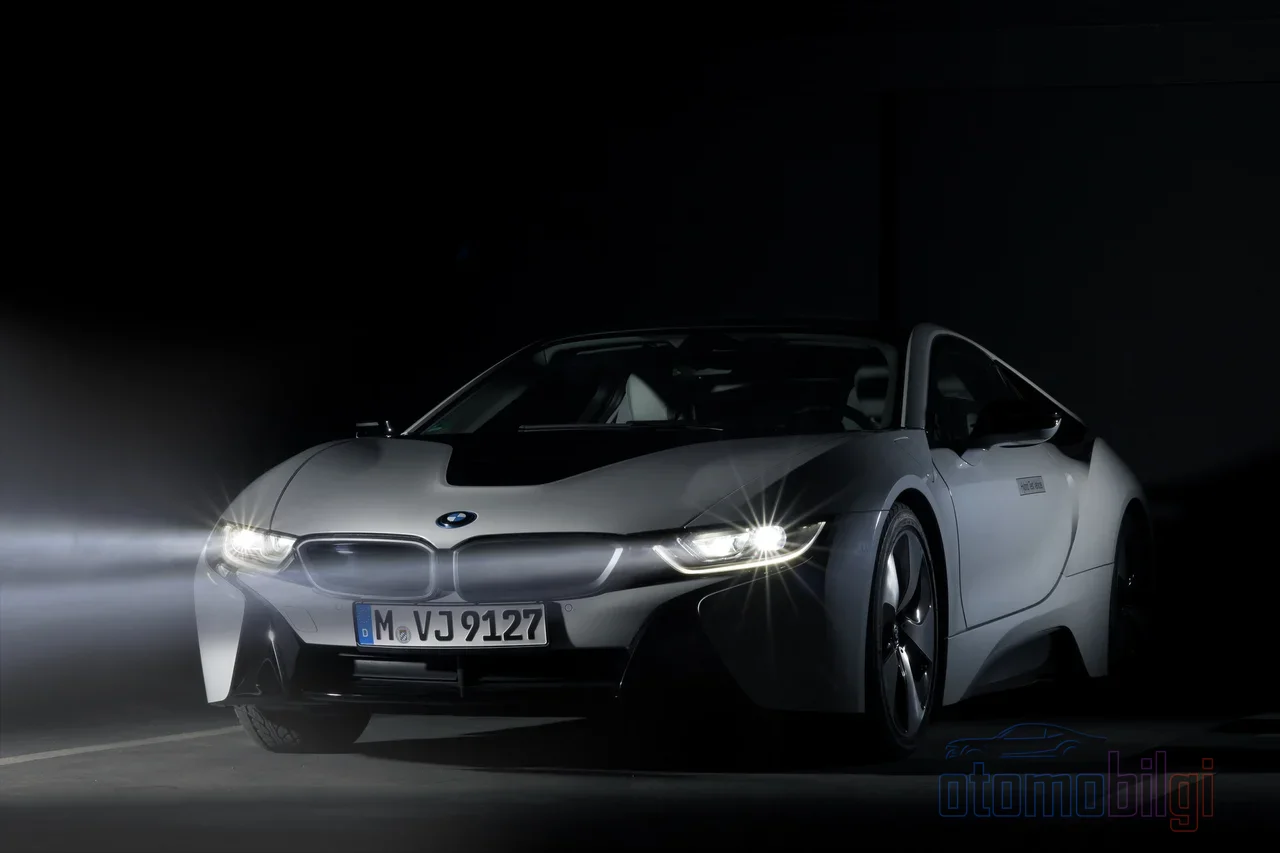
Here is where the heart of the problem lies. When we talk about money for a laser headlight module, we are not talking about a single expensive part; we are talking about overlapping layers of cost. Each layer is manageable on its own, but together they multiply the price.
The blue laser diode and the heat problem
Due to physics, blue laser diodes operate at lower efficiency than red or infrared diodes. Low efficiency means high waste heat; moreover, although the diode itself is microscopic in size, it pushes an intense amount of heat onto a small area. In the photonics industry, this is cited as one of the main reasons laser systems remain expensive due to limited production volumes, tight tolerances, and insufficient automation. Consider the pulses coming to the car, the range from -40 to +80 °C, and high humidity; all of the stress tests that are not applied to the camera module on your phone are applied to this tiny diode. Shrinking cooling systems down to this scale was only solved in recent years.
Phosphor converter and precision optics
The phosphor layer is not a simple painted glass. High-performance ceramic or glass-based materials are involved, and its geometry, material selection and optical character directly determine the module's performance. An engineering study published in 2019 examines a module in which an array of five 1.2 W blue laser diodes is combined with an aspheric lens, a heat-spreading base, a glass-based phosphor layer and a dichroic filter: 6 W optical output, 1,860 lumens, 4,100 K color temperature and an efficiency of more than 310 lumens-per-watt. Nice numbers; but every part on this list is an optical component requiring precision manufacturing and characterization. In other words, there are many parts, and each one is expensive.
Safety layers
If there is a real laser inside the headlight, the safety architecture must be built accordingly. In normal operation, it is guaranteed that the laser light cannot escape beyond the headlight cover; if the headlight is damaged in an accident, the laser shuts off instantly. These monitoring and intervention systems mean extra engineering and extra money that an ordinary LED headlight does not need.
Homologation burden
For a headlight to be allowed on the road, it must pass ECE regulations in Europe and the FMVSS 108 standard in the USA. On the European side, there is an upper limit of 200,000 candela for high beams; on the US side, the regulation limits headlight power even more strictly than in Europe. This is exactly why the laser headlight was withdrawn from the USA: when brightness and range limits ban the long range, which is the technology's biggest trump card, why would manufacturers even bother? Convincing approval bodies is an engineering step in itself; test scope, documentation and time costs pile up.
How Much Does the Price Tag Really Cost?
Let's look at the numbers, because the cost of a laser headlight is not an abstract kind of expensive. In comparative tests that were carried out, the cost of the laser headlight group was measured at around 6,000 €; in the same test, the xenon group was at a level of around 1,000 €. Some brands are charging prices of around 4,000 dollars per unit for laser headlights. For comparison: a halogen bulb replacement is in the 10-40 dollar range, while sealed LED or laser headlight units can cost thousands of dollars. In other words, replacing a single laser module can approach the down payment on a good used B-segment car.
There is one more detail, and it clarifies the cost story: the laser headlight is not a system that replaces the LED headlight. Manufacturers handle the main lighting with LEDs; the laser is merely an additional high-beam layer that kicks in at high speeds. So when you look at the car, you add the cost of the laser on top of the LED set. Two layers, two prices.
Why Did LEDs Get Cheap but Lasers Didn't?
That's the real question, isn't it? LEDs were once the plaything of the luxury segment too; now they are standard even in the most entry-level cars. The difference lies in how economies of scale work. On the LED side, standard bulb formats were developed, production lines settled in, automation came into play, and unit prices fell as volume increased. The classic chicken-and-egg cycle turned in the right direction.
With laser, however, this cycle is broken: production volumes are limited, assembly requires precision, automation is insufficient; therefore the unit cost remains high. High cost prevents volume from growing; and when volume does not grow, the cost does not fall. The photonics industry does not emphasize this relationship for nothing. Each new LED generation also adds another pinch of salt: LED technology is evolving so fast that it takes every card off the table from laser except range. Among the reasons cited for BMW's decision to abandon laser headlights are high cost, complex regulations, and precisely this rapid LED evolution.
Dead, or Growing? The Contradiction in the Market Data
The interesting part is that while news reporters write that laser headlights are being abandoned, market reports forecast double-digit growth into the 2030s. The explanation of this contradiction most likely lies in the definitions: most reports use a broad definition of laser-based lighting that could also cover aviation lighting and general illumination; the automotive side, which actually produces laser headlight modules in the true sense, is shrinking. There are serious differences between estimates for the automotive laser headlight market, and the cautious ones put the market size at around 1.6 billion dollars in 2024. So saying the technology is dead is an exaggeration; but claiming it is enjoying its golden age in cars is wishful thinking.
Why Did Laser Headlights Remain Stuck in the Luxury Segment?
Let's sum it up, because the answer should now be clear. Laser headlights are still found only in luxury cars, because the technology works but cannot be operated economically: the low efficiency of the blue laser diode necessitates forced cooling, phosphor converters and precision optics, safety layers and a heavy homologation burden - when all these come together, the unit cost becomes indefensible for the mass segment. On top of that, economies of scale work in the opposite direction: there is no volume, so the price does not fall; and because the price does not fall, there is no volume. LED, on the other hand, is cheap, standardized, and improves with every generation. Matrix LED systems already make it possible to use high beams without blinding oncoming traffic thanks to pixel-level control; the only real advantage laser has left is range, and even that is limited especially by US regulations.
My take is this: the laser headlight is one of those children of automotive history that were technologically successful but born economically too early. One day, if diode efficiencies increase, production automation settles in, and regulations loosen, the math on the table may change. But today, in 2026, the engineering mathematics speaks plainly: the number of customers willing to pay 6,000 € for a headlight unit exists only in the segment that does not care about that money. And precisely for this reason, the laser headlight remains, for now, the signature accessory of luxury cars.
Sources
- OSRAM Develops Laser Diodes for Automotive Lighting
- An advanced laser headlight module employing highly reliable glass phosphor (Optics Express)
- Laser light sources - the future of automotive lighting?
- Why Are Lasers Still So Expensive? The Volume-Cost Relationship
- Laser Headlamps Are Disappearing. Here's Why
- How Laser Headlights Died In The US
- The Real Reason BMW Killed Off Laser Headlights
- Halogen v LED v matrix LED v laser: Headlights compared
- Headlights Burned Out: What's the Cost to Replace?
- Packaging for Laser-Based White Lighting: Status