Why Were Matrix Headlights Banned for Years in the US?
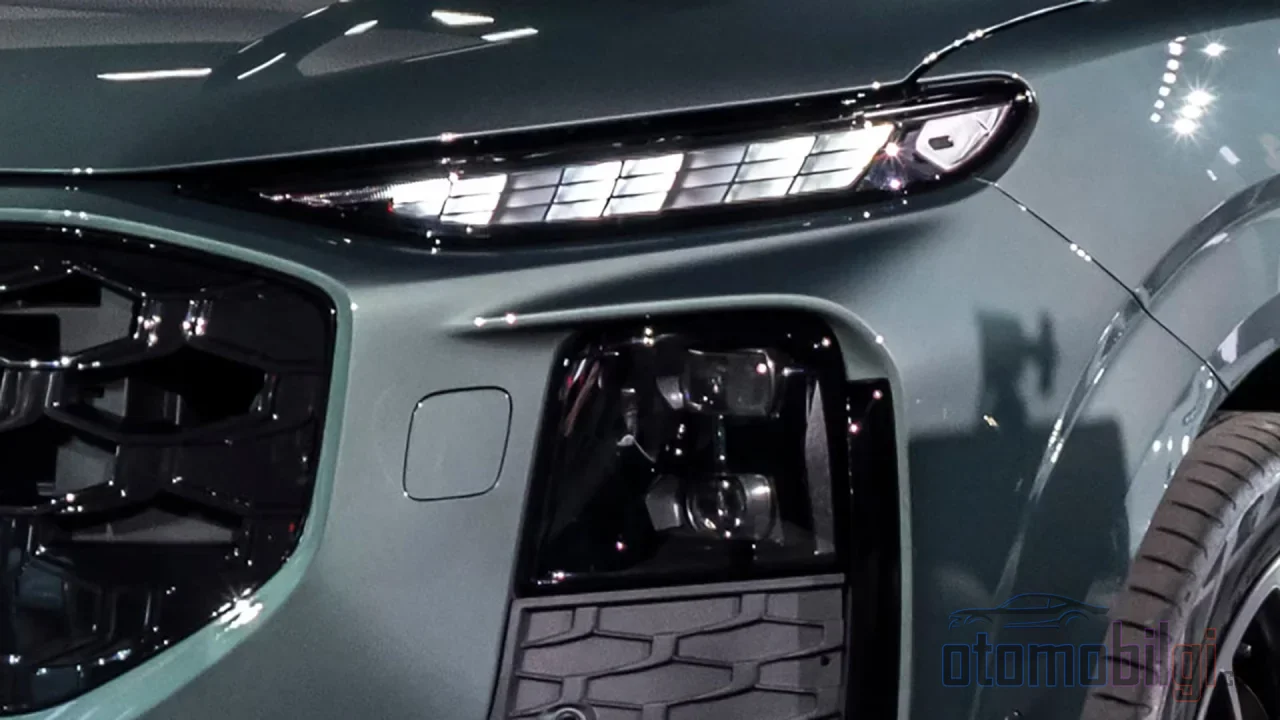
Say you bought a $90,000 Audi in New York, the box on the headlight stalk says "Matrix LED", dozens of individually controlled LED pixels in the housing, a camera, a processor, the whole team. But you head out at night, a car approaches, and your headlights are still doing the old-school on-off routine: either everything is on or everything is dimmed. Meanwhile the owner of the same car in Europe keeps the road edges brightly lit while darkening exactly the zone where the oncoming car is. What's the difference between them? Not the hardware, definitely not. The difference is on paper: the US federal safety standard called FMVSS 108 effectively banned matrix headlights for decades. So how does a headlight standard lock out a technologically ready system? The story is a complete lesson in regulatory engineering, with a surprising 2022 finale.
What Is ADB, and How Does It Differ from the Classic System?
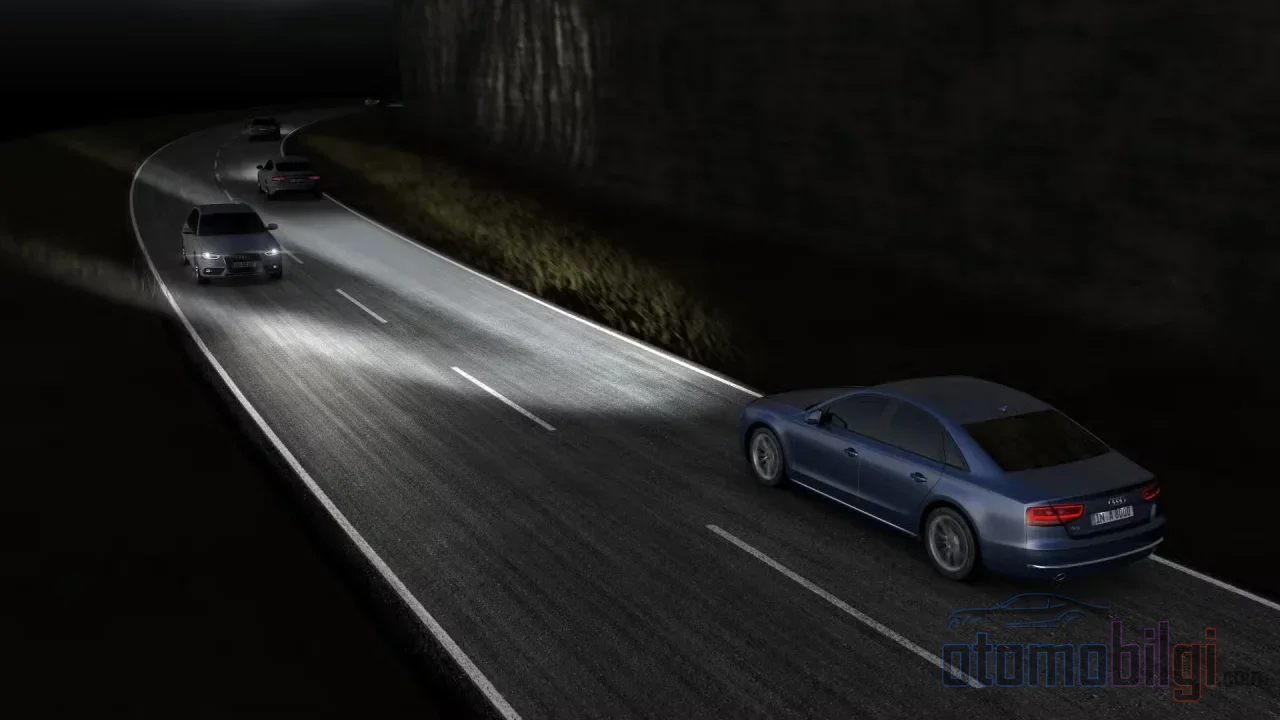
First let's clarify the concept, because this is exactly where the law got stuck. Adaptive Driving Beam, or ADB, means an adaptive driving beam. In the classic high-beam system there are two states: high beam on or off. In ADB there is no state, there is a process. The camera detects oncoming and preceding vehicles; while pulling the parts of the beam falling toward those vehicles down to low-beam level, it keeps sending high-intensity light to the areas of the road that remain empty. In other words, it doesn't switch the light off completely, it shapes it. NHTSA's 2022 rule text defines this in three parts: reduced-intensity areas, unreduced-intensity areas, and the transition zones between the two.
On the hardware side, this is done with LED segments controlled at pixel level, an image processor and adaptive control software, and in some systems with DLP-based high-resolution projection. Instead of ON/OFF logic, there is continuous adaptation. Studies by TU Darmstadt also show that this system improves visibility under all traffic conditions. In short, there was no problem on the engineering side. The problem started on paper.
Why Does FMVSS 108 See a Headlight as a "Single Schema"?
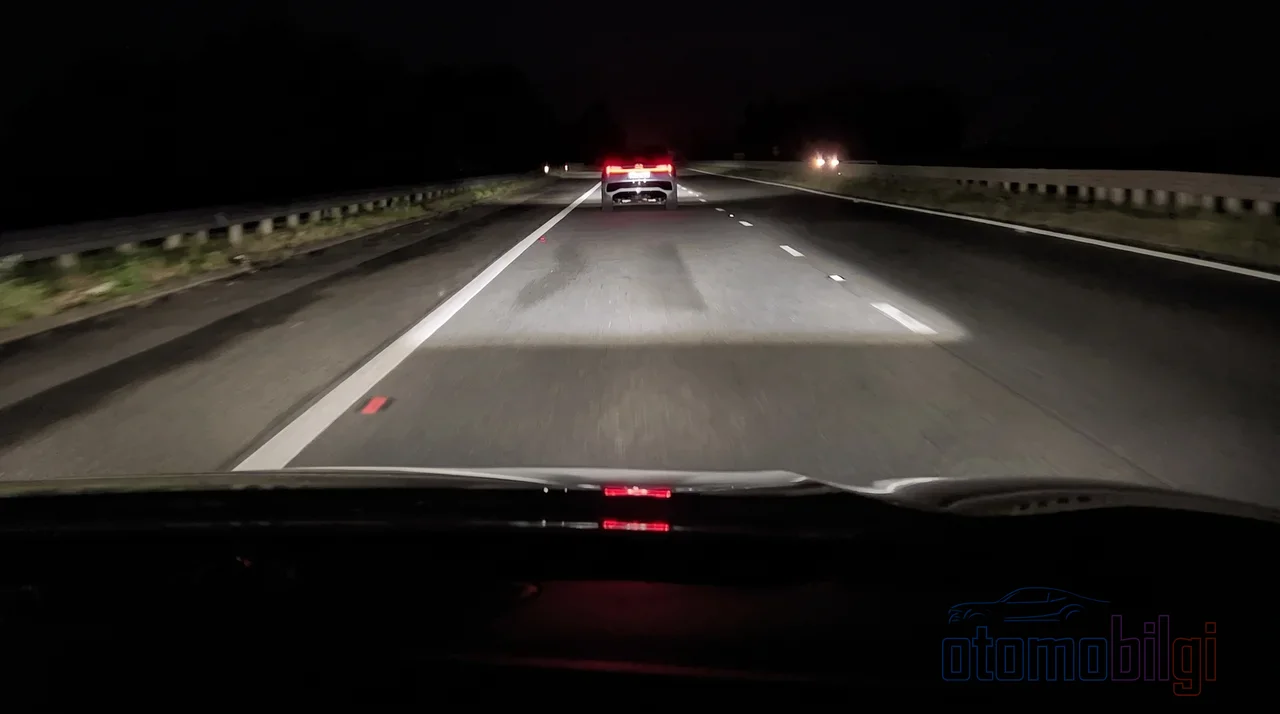
In the US, all lighting equipment is governed by FMVSS 108 (49 CFR 571.108). The old version of the standard demanded this: a headlight had to satisfy both the fixed low-beam photometry requirements (Table XIX) and the fixed high-beam requirements (Table XVIII) at the same time. The light pattern, meaning the brightness distribution the beam creates on the road, was defined in the standard as a single fixed schema. Easy to imagine: the standard was telling the headlight "take two separate photos, and both must comply with the rules." ADB, however, is exactly a video; a pattern that changes constantly. Beam-changing technology had entered the US in the 1950s only as a high/low beam switch, and the standard's logic had frozen in that era. Within this framework, there was no place for a dynamically adapting beam outside the ban.
Highlights
- Adaptive high beams were approved with ECE R123 in 2012; the equivalent permission in the US only arrived on February 22, 2022.
- The reason for the ban was not missing hardware, but FMVSS 108's fixed high/low beam photometry requirement.
- Some Audi and Mercedes models sold in the US had matrix hardware installed but software-restricted functionality.
- The 2022 rule opened the door to track testing (220 m, Table XXI) and component-level photometric certification.
- On December 30, 2024, NHTSA rejected all 12 reconsideration petitions.
Legislative Differences Between ECE R123 and FMVSS 108
The two worlds' headlamp regulations differ not only on "whether to allow or not"; their philosophies are different. On the European side, ECE R123 is the standard that directly regulates adaptive headlamps (classic headlamps fall under ECE R112), and the camera-based glare-free high beam received approval under this regulation in 2012. The ECE side also requires that the adaptation of the main beam must not cause discomfort, distraction, or glare to the driver using ADB.
Photometry and Intensity Differences
ECE regulations allow upper beams with much higher intensity than North American regulations permit; the US upper beam has a lower maximum. ECE also defines a glare ratio between the maximum upper beam and the lower beam that limits glare, and uses a sharp asymmetric cutoff line in the lower beam that illuminates the road. There is a difference on the testing side as well: ECE photometric tests are conducted with an exactly rated light source having a reference luminous flux at 12.0 V. There is also a structural difference: While ECE is based on the type approval system, the US market follows a different regulatory framework. The same headlamp requires two separate "identities" under two legal systems.
| Feature | ECE R123 | FMVSS 108 (before 2022) | FMVSS 108 (after 2022) |
|---|---|---|---|
| Adaptive beam status | Approved since 2012 | Effectively banned | ADB defined as a new beam type |
| Beam definition | Adaptable main beam | Fixed lower + upper beam requirement | Reduced/unreduced areas and transition zones |
| Certification | Type approval system | No provision for dynamic patterns | Vehicle-level track test + component photometry |
| Test setup | ECE photometry procedure | - | Based on SAE J3069, with OEM lamps |
Why Did Audi and Mercedes Ship with Restricted Software?
Here is the most painful part of the story, especially for readers who bought vehicles in the US. Audi was producing its US-specification vehicles with the Matrix hardware fully installed; the restriction was entirely software-based, not hardware. In other words, the LEDs in the headlamp housing, driver circuits, camera, everything was in place but the software was disabled. A similar situation existed on the Mercedes side: It is known that among EQS owners, the Digital Light projection features are banned and kept disabled on US vehicles.
The engineering explanation for this is simple but ruthless: The existing headlamp hardware certified to the European standard did not meet US requirements. The documents also show that in the pre-2022 period, NHTSA rejected temporary exemption petitions from BMW and Volkswagen Group of America for ADB headlamp vehicles. Yet ADB systems could establish exactly the balance described here: a dynamic pattern brighter than the traditional low beam, but less bright than the full high beam. The technology was ready, but the door was closed. The manufacturers' only solution was to install the hardware and unlock it via software.
February 22, 2022: How Did NHTSA Open the Door?
The process was a long marathon that started with Toyota petitioning NHTSA in 2013, followed by the publication of the proposed rule notice on October 12, 2018. The finale: On February 22, 2022, NHTSA published the final rule allowing certification of ADB headlamps (87 FR 9916). The rule rests on two pillars.
- Vehicle-level track test: The ADB system's glare limits are tested on a real vehicle. There are maximum illumination intensity limits (Table XXI) for marked distance segments at a 220-meter range; for example, in the 15-30 m segment, a maximum of 3.1 lux is measured for oncoming vehicles and 18.9 lux for vehicles traveling in the same direction.
- Component-level photometry: requirements at the lamp level for glare and visibility; certification can be done through actual testing, simulation, or another valid method.
The test setup is compatible with SAE J3069 (March 2021); the photometer and stimulus lamp positions follow J3069. But FMVSS 108 deliberately diverges at one point: real OEM headlamp and tail lamp units must be used in the test setups. In other words, representative lamps are not enough in the lab setup; the real thing is required. NHTSA's reasoning is clear: the ADB system must be able to detect the step intensities of a tail lamp.
Why Did the Debate Continue After the Rule?
The door opened, but the threshold is still narrow, that is certain. 12 stakeholders including Honda, Volkswagen, Toyota, Ford, Koito, Stanley, Valeo, SAE, and IIHS requested a reassessment of the rule; their reasons were technical complexity, conflicting test requirements, and misalignment with SAE J3069/UNECE. NHTSA rejected all of these petitions on December 30, 2024. Among the rejections was the request to allow ADB illumination to exceed the vehicle's low beam by up to 25 percent, and Ford's request for separate glare limits for right/left turns.
The numbers show why the debate ran so hot. Ford's 2021 F-150 headlamps exceeded the Table XXI maxima at nominal aim: in the 30-60 m segment, while the limit was 1.8 lux, the nominal measurement was 4.4 lux; aiming the lamp 3 inches lower brought it down to 1.1 lux, but this time the forward viewing distance decreased by 40.3 percent. According to SAE's calculation, with a 400 m right turn and a 600 mm mounting height, a lamp with a 2,700 cd maximum in the lab drops to a 2,160 cd limit in the track test for a pair of lamps; a 500 cd minimum also applies to the same lamp. Valeo, on the other hand, proposed that the glare requirements be calibrated according to the tested lamp's height instead of fixed values; that too was rejected. NHTSA's position is this: the standard is performance-based, gives design flexibility to the manufacturer, and the component requirements serve as a safety net for the track test. For example, an area exceeding the 75,000 cd high beam maximum could create glare beyond the 220 m test distance.
Why Were Matrix Headlights Banned for Years in the US: Short Answer
Let's give the straight answer: Matrix, i.e. ADB headlights, were banned in the US not because of technology shortcomings or safety concerns, but because FMVSS 108 defined the headlamp as a single design that must comply simultaneously with both the fixed lower beam and fixed upper beam photometry requirements. The 2022 rule recognized ADB as a separate beam type and opened up certification through track testing and component photometry; but since all the amendment requests that came in 2024 were rejected, the current requirements remain fully in force.
So what comes next? The matter is not settled at the table yet. NHTSA published a new proposal envisioning the modernization of FMVSS 108 for compliance with autonomous driving (ADS) equipped vehicles on October 26, 2026; on the table is a change to the test voltage specification for integral-beam headlamps and the removal of some requirements. A comprehensive revision is also planned. The story of adaptive high beam, which has been standard equipment in Europe for more than a decade, reaching its full potential in the US is only just entering its second act. Seeing how a regulatory rule that blocked a headlamp's software rather than its hardware got resolved is one of the best lessons in regulatory engineering.
Sources
- Adaptive Driving Beam Headlamps Final Rule (Federal Register, February 22, 2022)
- Adaptive Driving Beam Headlamps: Denial of Petitions for Reconsideration (Federal Register, December 30, 2024)
- Modernization of FMVSS No. 108 To Accommodate ADS-Equipped Vehicles (NPRM, October 2026)
- Denial of BMW and Volkswagen Group of America Exemption Petitions
- NHTSA ADB Final Rule PDF
- ECE R123: Adaptive Headlamp Standard
- eCFR 571.108 Standard No. 108
- NHTSA Will Update Headlight Regs (Car and Driver)
- FMVSS 108 Testing for Adaptive Driving Beams Webinar (Intertek)
- Federal Motor Vehicle Safety Standard 108