Digital Light Technology That Paints Pictures on the Road With Headlights
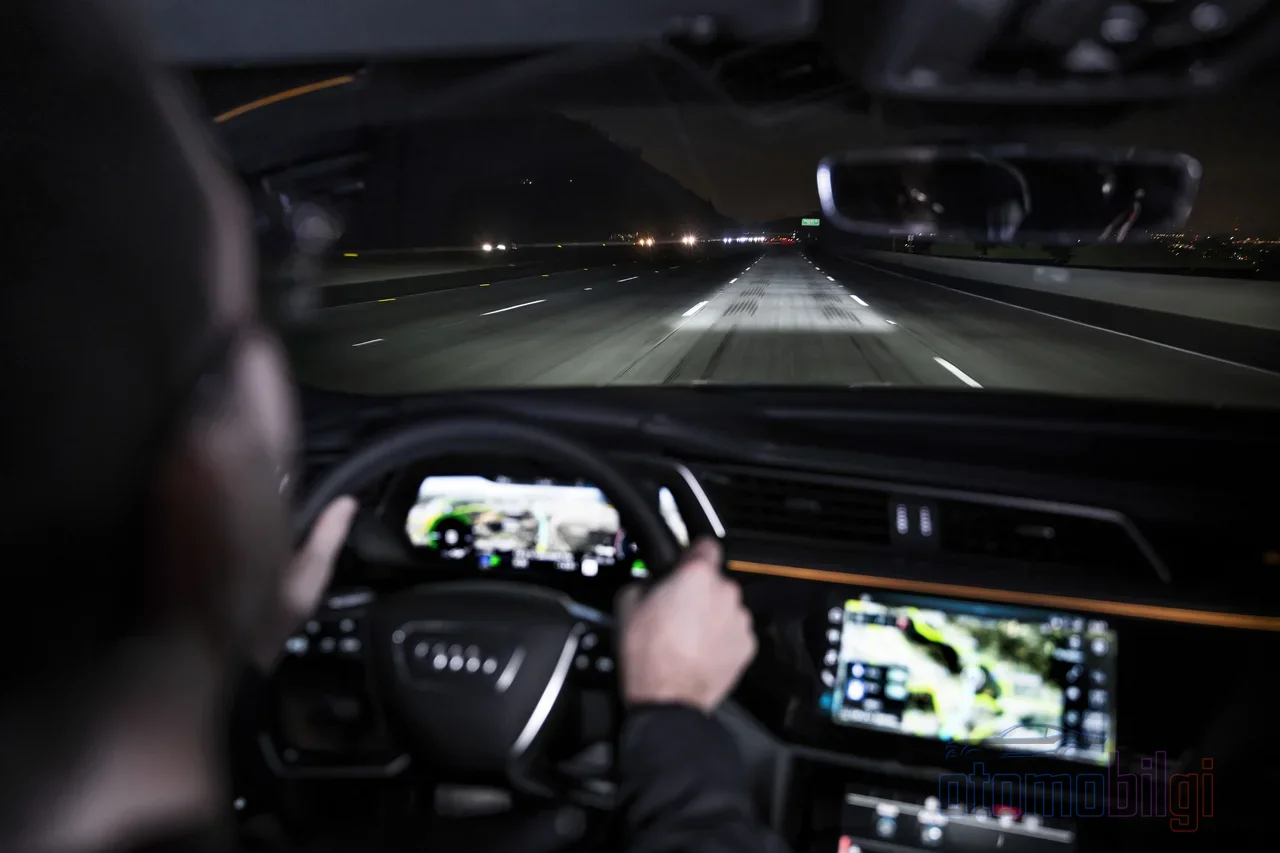
You look through the windshield of a car that can see the whole road at night, and a giant arrow appears on the asphalt. Drawn in light, as if the road itself were telling you where to go. Behind the headlight cover there is not a projector, but the synchronized dance of two million tiny mirrors. So how does a headlight learn to paint with light? This is exactly the engineering answer we will look at: the inner world of digital headlights that stop glaring and write messages, arrows and symbols onto the road.
How a Headlight Turns Into a Projector: How Micro-Mirrors Work
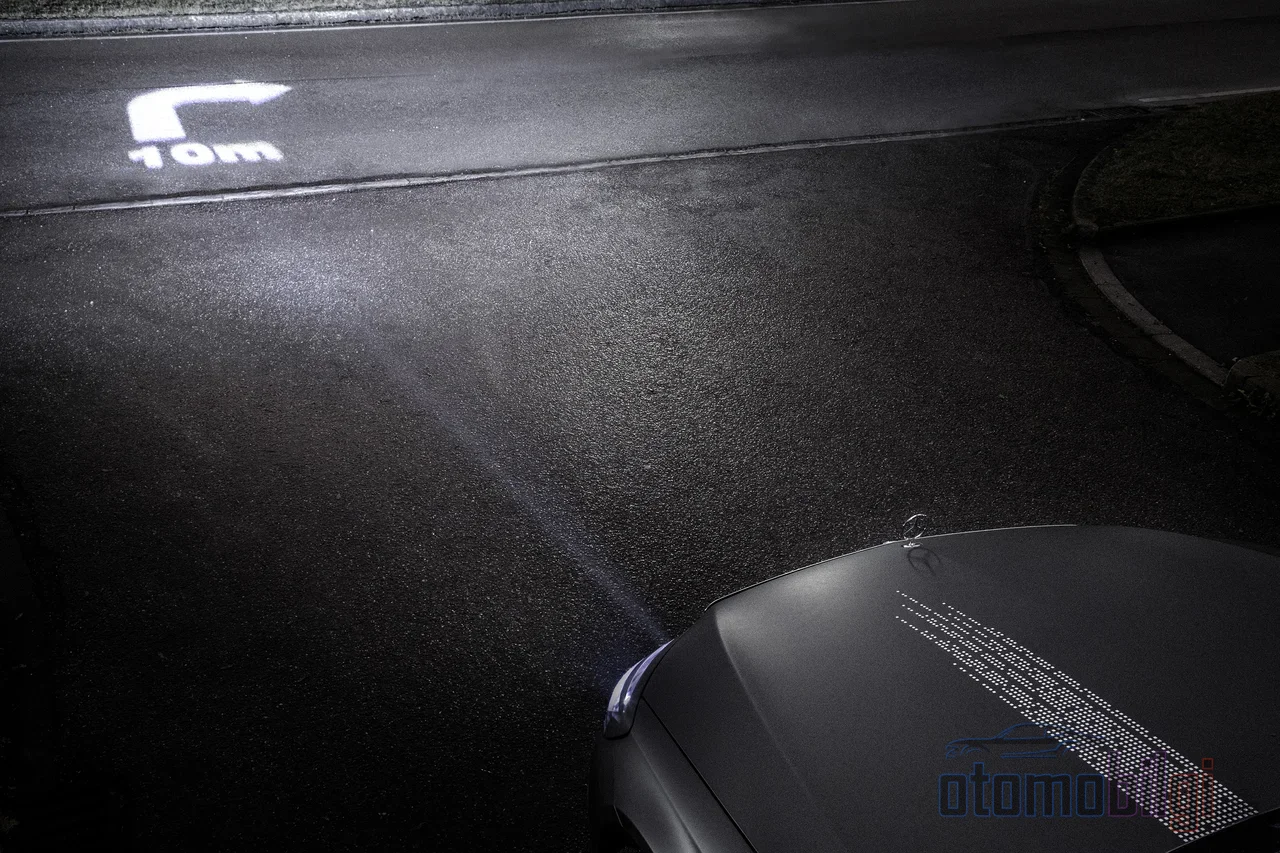
Recall the logic of the classic matrix headlight: dozens or hundreds of LEDs are addressed individually, and the area above oncoming traffic could be dimmed. Digital projection headlights take this idea one dimension further. When Mercedes-Benz announced the name Digital Light in 2016, it was stated that the system had two million pixels; sensors and algorithms analyze the vehicle's surroundings and adjust the brightness of each pixel individually according to the scenario. In other words, the headlight is no longer a single spotlight; it behaves like a giant high-resolution screen - a screen that projects light onto the asphalt.
Who does the pixel work? The answer involves an entirely different industry: projector technology. Texas Instruments' automotive-qualified DMD chips, that is, digital micromirror devices, deliver color, brightness and contrast for exterior lighting and projection in the same package. A DMD is a chip carrying thousands of tiny mirrors; each mirror directs light either into the optical path or into the trash. It is stated that more than one million micro-mirrors are used in each headlight unit of Mercedes-Benz Digital Light. On the other hand, Sunny Automotive's smart lighting system speaks of 2.6 million independently controlled micro-mirrors - managed by voltage control, these mirrors can project any pattern you want onto the road. The difference between the two figures comes from the definition: the first refers to the number of mirrors per headlight unit, the second to the total pixel surface of both headlights.
The optics are not as simple as they seem, either. Academic studies have been published on integral optical design methods for LED plus DMD based headlight systems; a Lund University thesis designed a high-resolution, wide-angle DLP headlight system from start to finish. In practice, the optical engine of a DLP projector headlight requires a structured light path in order to handle the very high flux density of modern light sources. In short: a powerful LED, a smart mirror chip, and a lens array that brings them together properly. When this trio is set up correctly, the headlight becomes a device that does not just emit light, but shapes it.
What Is the Pixel Count Good For? From Matrix to HD Matrix
The quality of the detail a headlight can draw on the road depends directly on the pixel count. Think about it: trying to draw a zebra crossing on the asphalt with an 84-pixel headlight is like writing with a thick felt-tip pen. 65,536 pixels, on the other hand, is a fine-tipped pen. Porsche stepped in exactly at this point, and in its HD Matrix LED headlights raised the number of pixels per lamp unit from 84 to 65,536; the company says this step delivers a light distribution that is twice as bright and with much higher resolution. On the Mercedes side, HD technology reaching 2.6 million pixels on the surface illuminates the road without blinding oncoming traffic and can project navigation arrows onto the road.
Highlights
- Mercedes-Benz Digital Light was announced in 2016 with two million pixels; more than a million micro-mirrors work in each headlight unit.
- Porsche HD matrix headlights raised the pixel count from 84 to 65,536 and offered twice the brightness.
- Matrix headlights can reduce energy consumption by about 16% compared to conventional headlights.
- DLP-based headlights can project a zebra crossing, direction arrows, a warning symbol or even a written message onto the road.
- Smart headlights work with camera, accelerometer, steering angle sensor and GPS data.
But adding pixels is not free. High-resolution projector-style matrix designs can display images such as logos; in return, driving more pixels means more computation and slower response. Engineers strike a balance here: as resolution increases, control per pixel needs to speed up, because the scene in front of a car traveling at 100 km/h changes every second. The distinction between matrix hardware and adaptive headlight software can also be confusing; even if the hardware is present, adaptive behavior is enabled via software and may not give the same result on every hardware.
| System | Pixels / Mirrors | Standout capability |
|---|---|---|
| Matrix LED | Individually addressable LEDs | Glare-free high beam, real-time light reshaping |
| Porsche HD Matrix LED | 65,536 pixels per unit | Twice the brightness, high-resolution distribution |
| Mercedes Digital Light | 2 million+ pixels in total | Projection of arrows, zebras and symbols onto the road |
| DLP projector headlight (Sunny) | 2.6 million micro-mirrors | Projection of handwritten messages, graphics, parking guidance |
Meanwhile, the energy side of matrix technology is not empty either: comparative data shows that matrix headlights can reduce energy consumption by about 16% compared to conventional headlights. Pushing light only where and how much you need it is more efficient than illuminating blindly - the logic is like lighting only the corner of the room you use.
Symbols Drawn on the Road: Projection's Real Jobs
So what can two million pixels draw on the asphalt? The list is surprisingly practical. Among the scenarios described since the day Digital Light was announced are the following:
- A temporary zebra crossing drawn on the road for pedestrians - telling the person crossing, with light, that the vehicle sees them.
- Light stripes representing the vehicle's full width; measuring the gaps for you as you pass through a narrow construction gap.
- Light traces replacing missing lines on the road surface.
- Direction arrows and warnings; signs pressed onto the road before a sharp curve.
- A scenario of a connected and sensor-equipped vehicle collecting information and projecting a stop sign onto the road ahead of an upcoming danger.
Audi's Digital Matrix LED system is also on the same track: it comes with functions like lane light with advanced traffic information and direction indicators. In the application demonstrated on the new Audi A6, lane guidance and orientation light assist with lane centering; if the driver unintentionally changes lanes, an arrow symbol can be projected onto the road. The messaging side is even more interesting: digital headlights can project navigation guides and written messages onto the road in front of the vehicle. Some vehicles with the Pixel Smart Lighting System can also display handwritten messages, symbols, graphics, welcome animations and parking guides. In other words, the headlight has become a screen that speaks in front of the car.
Mercedes' official user manuals also confirm that projection is no longer a marketing ornament, but part of the assistance system: DIGITAL LIGHT visually extends the driver assistance systems and projects the assistance displays onto the road in front of the vehicle while on the move. When the vehicle is switched on and off, short welcome or farewell animations are also played. The same manuals also state that the headlights adapt to the driving situation, weather conditions and road conditions. An even further step is also in the works: researchers are investigating visible light communication (VLC), in which modulated LED beams can carry data while illuminating the road. We can summarize it as light being both the message and the messenger.
Why on the Asphalt and Not on the Dashboard? Attention Economy
This question has probably crossed your mind: what is the point of projecting information onto the road when there are already huge screens inside? The engineering answer makes a lot of sense. When drivers interact with the dashboard touchscreen, their lane keeping and task performance deteriorate noticeably; these systems demand multiple touches and visual attention, taking the eyes away from the road. A projected arrow, lane line or warning symbol on the road, however, stays within the driver's field of vision. The driver receives the information without lifting their head or taking their eyes off the asphalt - just like the logic of a head-up display, but using the road surface instead of a screen. Smart headlights can work together with vehicle functions such as navigation and head-up display to highlight road signs and directions.
What makes this possible is that the headlight has now become a sensor fusion hub. Smart headlights are fed by camera, accelerometer, steering angle sensor and GPS data; as of 2026, this technology has begun to spread to vehicles in the US market. Sensor data tells the current position and driving state, the algorithm makes the decision, and millions of micro-mirrors write that decision onto the asphalt with light. A three-layer chain: see, decide, draw. Pretty cool, don't you think?
Is Road Projection Available in Every Country?
The annoying side of the matter: when the technology is ready, it doesn't reach everyone. It has been discussed repeatedly in community forums that Mercedes' Digital Light with projection function is only offered in Germany, Qatar and Lebanon - regional differences in regulatory approvals limit the activation of the function. So the projection in the headlight of the very same car turns on or stays off depending on the country you are in. On the US side, the picture is only just beginning to change: smart headlights only recently started reaching vehicles in America. On some vehicles with matrix hardware, the adaptive software feature being sold separately is also causing confusion among consumers; you need to know what is in the car's headlight and which function is unlocked via software. Such forum-based market observations are not official statements, of course, but they show that regulatory differences really are slowing the spread of the technology.
There is also a legitimate skepticism: is this thing a necessity, or just a showpiece? Even back in 2016, when the system was announced, the question was raised whether road projection would go beyond being a gimmick; it was thought it could be practical in the future of connected and sensor-equipped vehicles, but that it would take a long time to reach the roads. Today, the fact that assistant functions appear in official manuals shows the prediction was largely correct: it took a long time, but it arrived.
The Answer Written in Light
Digital light technology that draws pictures on the road with headlights is essentially the individual control, using sensor data, of more than 2 million pixels, each of which is a microscopic mirror; thanks to the DLP-based optical engine, the headlight can go beyond glare protection and project crosswalks, direction arrows, lane guides and written messages onto the asphalt. Because it carries the information not to the instrument cluster display but to the road the driver is already looking at, it communicates without taking the eyes off the road. In short, the headlight no longer illuminates - it narrates.
Sources
- Mercedes digital headlights project street signs and markings onto the road ahead - New Atlas
- Assistance functions of DIGITAL LIGHT | S-Class Saloon - Mercedes-Benz
- Switching DIGITAL LIGHT supporting projections on/off - Mercedes-Benz GLS 2026 Manuals
- DIGITAL LIGHT dynamic light functions | GLE SUV 2026 - Mercedes-Benz USA
- Exterior lighting & projection DMDs - Texas Instruments DLP Products
- Using the DLP Smart Lighting System to Analyse Projection Headlights - Sunny Automotive
- Performance leap in light technology - Porsche Newsroom
- How Audi's light digitization is pointing the way toward the future - Audi
- Smart Headlights Finally Trickle Down to Cars in the U.S. - The New York Times
- Here's How Smart Headlights Work - Autoweek