Is Installing Halojen LED Headlights Legal and Sensible?
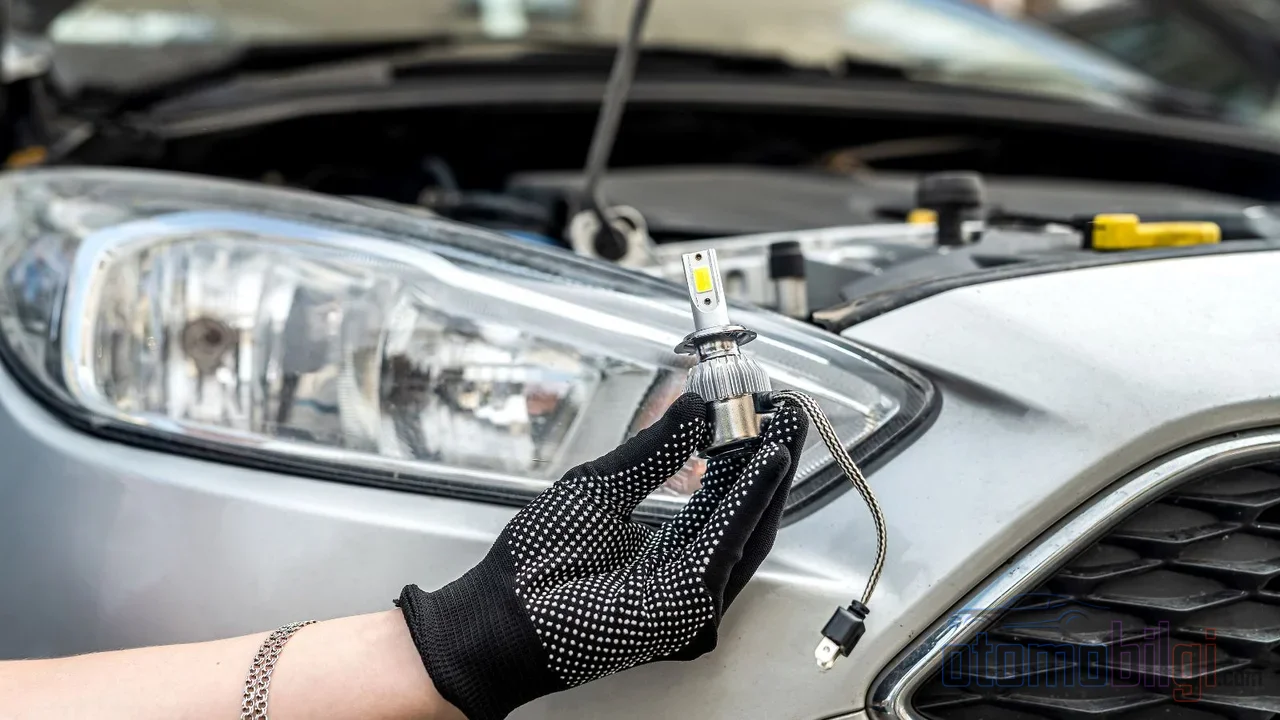
You looked at your car, the halogen headlights seem dim to you, you found an LED bulb set online for under a hundred liras, and there's only one question on your mind: should I install it? The box says "300% brighter," and in the videos the night road lights up like daytime. But here's the interesting part: most of these bulbs don't emit exactly the light they should where you install them - and legally speaking, the picture is truly murky. Is an LED conversion on a halogen-headlight vehicle legal, technically sensible, or just a bright promise in a box? Let's take it step by step, because the answer isn't as simple as you think.
Why a Headlight Isn't Just a Bulb: Reflector Physics Kicks In
First, let's shatter this perception: a headlight isn't a bulb box, it's an optical system. The bulb, reflector, lens, and housing are designed as a single whole and shaped relative to one another. Inside a halogen bulb, two thin wires (filaments) are stretched, and these wires scatter light in 360 degrees, in every direction. Those wavy, mirror-like surfaces inside the reflector capture exactly this spherical light, gather it, and pour it onto the road in the desired pattern. You can compare it to a ball game: the reflector works like a player who passes the ball coming from every direction to a specific point.
LED chips, on the contrary, produce directional light; the light points in only one direction. An LED that can't uniformly feed a reflector designed for halogen with light scattered across 360 degrees illuminates only part of the reflector. The result? The light pattern is corrupted: abnormally intense bright spots, dark pockets, and most dangerously, light scattered upward from the reflector that hits the oncoming driver directly in the eyes. So a bulb labeled "brighter" can actually leave less usable light on the road in practice.
The real culprits behind glare
A blinding light pattern is no accident; it's usually one of several concrete errors:
- Chip size and position: If the LED chips are larger than the point occupied by the halogen filament or don't sit at the same point, the reflector can't find the light source it was calculated for.
- Thick heatsink and PCB: The thick electronic board at the bulb's base blocks part of the light.
- Orientation: Whether the chips sit horizontally or vertically, together with their position within the housing, completely changes the light pattern.
- Color temperature: Blue-heavy light above 6000K scatters more in the atmosphere; it magnifies the glare effect.
Key Takeaways
- A halogen filament emits light in 360 degrees; LEDs produce directional light - the reflector can't distinguish between these two sources, it just produces a distorted pattern.
- In the US, no aftermarket LED bulb is street-legal at the federal level; no product has entered NHTSA's replaceable light source docket.
- In the UK, as of October 14, 2026, ECE-approved LEDr bulbs can pass the MOT in compatible halogen headlights.
- The phrase "DOT approved" doesn't refer to any independent testing; the manufacturer self-declares its own product.
- Projector (lensed) housings control the LED far better than reflector housings thanks to their sharp cutoff lines.
Is Installing LED Bulbs in Halogen Headlights Legal? The Two Sides of the Legislation
Now let's get to the real question, because here the world splits into two major regulatory systems. Both systems share the same fundamental philosophy: the headlight is approved as a whole, as the sum of its parts, not as individual components.
USA: FMVSS 108 and the Closed Door
FMVSS 108, in force in the USA since 1968, certifies the headlight system as a whole consisting of the housing, reflector, lens and light source. Within this framework, there is no legal certification path for a separate LED bulb plugged into a halogen socket. The comment from NHTSA, the federal regulator, on the matter is clear: LEDs cannot be used in headlights with replaceable bulbs designed for halogen; they can only be used in integrated headlight units designed for LEDs. What's even more striking is this detail: As of March 2026, not a single aftermarket LED bulb has ever entered NHTSA's replaceable light source docket. In other words, the thousands of products sold on the market as "street legal" belong to a category that officially does not exist under the federal framework.
Let's add one nuance: NHTSA does not directly regulate the modifications individuals make to their own vehicles; enforcement is left to state laws. For this reason, in states with strict annual inspections like Pennsylvania, New York, Virginia, Texas and Massachusetts, LED retrofits are highly likely to be caught, while in states like Florida or Ohio they can practically be overlooked. The typical penalty is a fix-it notice, a fine of $100-$200, or failing inspection; in the event of an accident, it becomes a risk that can count against you in fault determination. The sentence to remember is this: not getting caught is not the same thing as being legal.
What's more, the "DOT approved" label is not as reassuring as it sounds. DOT does not test any product in a laboratory; the manufacturer self-certifies its own product. This marking, which carries no validity for replacement LED bulbs, sits on the box like a badge of prestige.
Europe: ECE R37 and a Historic Breakthrough
On the European side, that is, in the United Nations ECE system, the type approval of the halogen bulb is done under regulation R37. For years, the picture here was simple too: an LED bulb could not go into a halogen socket, because there was no approval category for it. The CE or R10 (electromagnetic compatibility) markings on bulbs do not mean type approval; many people were unaware of this distinction and assumed illegal products were legal. High and low beam units are subject to their own regulations, such as R148 and R149.
Then, in May 2025, a historic step was taken: the first LED bulbs certified under UN Regulation 37, that is, ECE R37 certified, were announced. These are the first LED bulbs approved for universal use, carrying an R37 approval certificate and requiring no headlight approval number check. In countries that apply the ECE system, including Türkiye, the situation is evaluated within the framework of this regulation; in other words, an approved LEDr product entered a genuinely legal category for the first time in the retrofit debate. The UK was among the first to put this change into concrete practice - with the new MOT rule effective from 14 October 2026, the DVSA announced that ECE-approved LEDr bulbs can pass the inspection in compatible halogen headlight units and that testers must accept these bulbs. These bulbs, previously rejected automatically because approval was not assumed, thus officially entered through the door.
On the US side, the wind also seems to be turning: It was announced that in October 2026 NHTSA will comprehensively update FMVSS 108; this revision is expected to open the door to advanced headlight functions that are illegal today. Already with the 2022 final rule and the 2024 amendments, Adaptive Driving Beam (ADB) had been legalized under FMVSS 108 - but note, the legalization of ADB does not make general LED bulb conversions legal; that is a separate system category.
Why Does the Projector vs Reflector Housing Difference Change Everything?
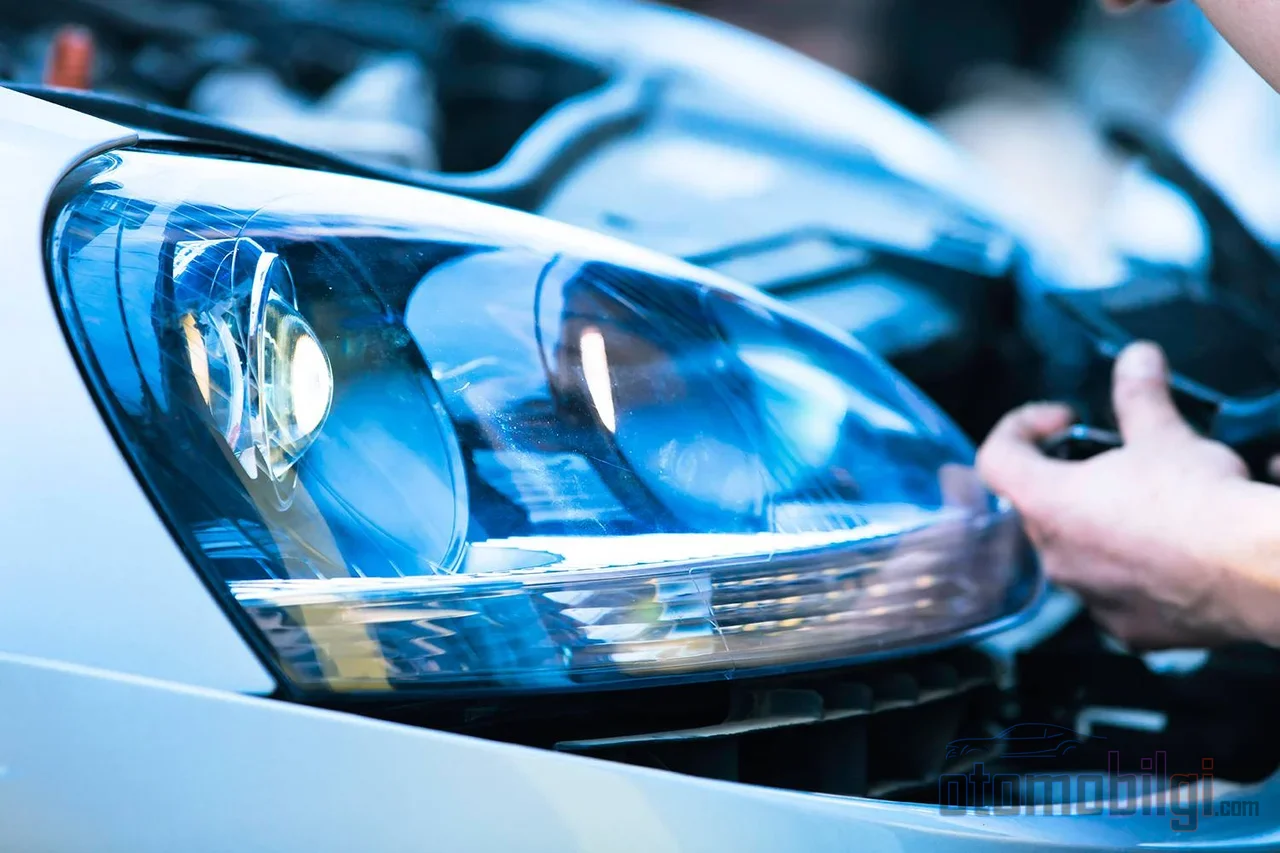
What type of headlight your vehicle has is the factor that most determines the outcome of an LED conversion. The two housing types behave completely differently toward LEDs:
| Feature | Reflector housing | Projector (lensed) housing |
|---|---|---|
| Cutoff line | No sharp cutoff, light scatters around | Has a sharp cutoff shield |
| Glare risk | High | Lower, light is controlled |
| Compatibility with LED | Poor; the pattern deteriorates quickly | Relatively good; suppresses the intense output |
| Typical result | Dark pockets + light scattered upward | A clean, sharply defined light pattern |
The projector housing, as its name suggests, filters the light through a lens and sets it into a sharp line. Because this shield trims and disciplines the LED's high-intensity output, an LED inside a projector typically produces a clean light pattern. In a reflector housing, however, there is no mechanism to provide discipline; the light pattern is left entirely to the reflector's surface, which was calculated for a halogen filament. The same bulb produces two different results in two different housings - which is why sellers' promise of "fits every vehicle" is an engineering-deficient sentence from the very start.
Why Are OEM LED Headlights a Completely Different Architecture?
You might ask, "If LED works, how do factory LED headlight vehicles do it?" The answer is very instructive: manufacturers do not install LED bulbs, they produce integrated headlight units designed for LED from the ground up. In OEM LED headlights, there is no such thing as a bulb; the LED chips, reflectors, and projector optics are shaped within a single design, taking the LED's directional light into account. Where the light source is, which direction it faces, which point the lens will capture - all are determined with millimeter-level calculation and approved as a whole.
In other words, the difference between a factory LED headlight and a bulb you plug into a halogen headlight's socket is as much an architectural difference as a technological one. Putting an LED into a halogen housing is like wrapping a radio antenna around the back of a radio: electricity flows, sound comes out, but the system never works the way it was designed to.
So, Upgrade or Marketing Gimmick? An Honest Engineering Verdict
The industry has two camps on this, and both need to be read honestly. The strict camp is very clear: headlamp units approved for halogens must not be converted for use with HID or LED bulbs; in a reflector housing they are not only illegal, they are dangerous and may invalidate insurance coverage. At the moment of an accident, blinding the other party can work against you in fault allocation, and failing to report the modifications you made to your vehicle to your insurer creates problems in itself.
The pragmatic camp argues the following: the federal regulatory framework failed to keep up with the LED era; high-quality, well-designed LED bulbs can produce a light pattern in the right housing that surpasses original halogens. Indeed, when measurement-focused tests look at light pattern and lux values rather than lumens, there are measurable differences between quality products and cheap market bulbs. Users report lifespans exceeding 30,000-50,000 hours and better night vision. The subtle detail here is: the standards themselves are criticized; some manufacturers are said to produce headlamps that pass only at the official measurement points while over-lighting other areas. In other words, the equation "approved = ideal in every condition" cannot always be established.
So what is the verdict? My reading is as follows: reflector housing + ordinary LED bulb = marketing gimmick; approved LEDr + compatible housing or a fully approved headlamp assembly = a real upgrade. Instead of just swapping the bulb, the safe and legal route is to install a fully approved headlamp assembly. On color, the limit is clear too: white or selective yellow is the legal range; lights above 6000K that appear blue are not legal on the road.
Checklist Before You Decide
- Determine whether your headlamp has a reflector or a projector; stay away from ordinary LED bulbs in a reflector housing.
- Which regulations govern your country? If you are in the ECE system, only consider R37-approved LEDr bulbs.
- Don't mistake the "DOT approved" or CE marking on the box for type approval; look for the approval number and documentation.
- Check your insurer's notification obligation; an illegal light source may invalidate coverage.
- Don't look at lumen figures; look at the light pattern; real performance lies in lux measurements and a proper cutoff.
Shall I summarize? Installing LED bulbs in a halogen headlamp vehicle is no longer a complete gray area as of 2026 - but it is still a matter where you need to look at the documentation, not the box. In the ECE world, approved LEDr bulbs have genuinely opened a legal door; in the US, drop-in bulbs are still not legal under the federal framework, and an FMVSS 108 revision could change this picture. If you were in this situation, what would you do - would you trust the bright promise on the box, or the physics of the reflector? The answer is now in your hands.
Sources
- MOT Special Notice 05-26: Approved LED replacement bulbs in halogen headlamps
- Regulations around LED replacement (LEDr) headlamps - DVSA
- UN Regulation No. 148 - UNECE
- 571.108 NHTSA Interpretation - LED Headlights, M. Baker
- Universally Legal LED Bulbs for Halogen Headlamps - Driving Vision News
- NHTSA Will Update Headlight Regs - Car and Driver
- Are Your LED Headlight Bulbs Legal in 2026? - Headlight Revolution
- Are LED Headlights Legal? What to Know in 2026 - HID Nation
- Are LED Headlights Legal? - Strobes N' More
- Aftermarket LED Bulbs: MOT Rules And Legalities - Autobulbs Direct