Why Didn't Night Vision Thermal Cameras Become Widespread?
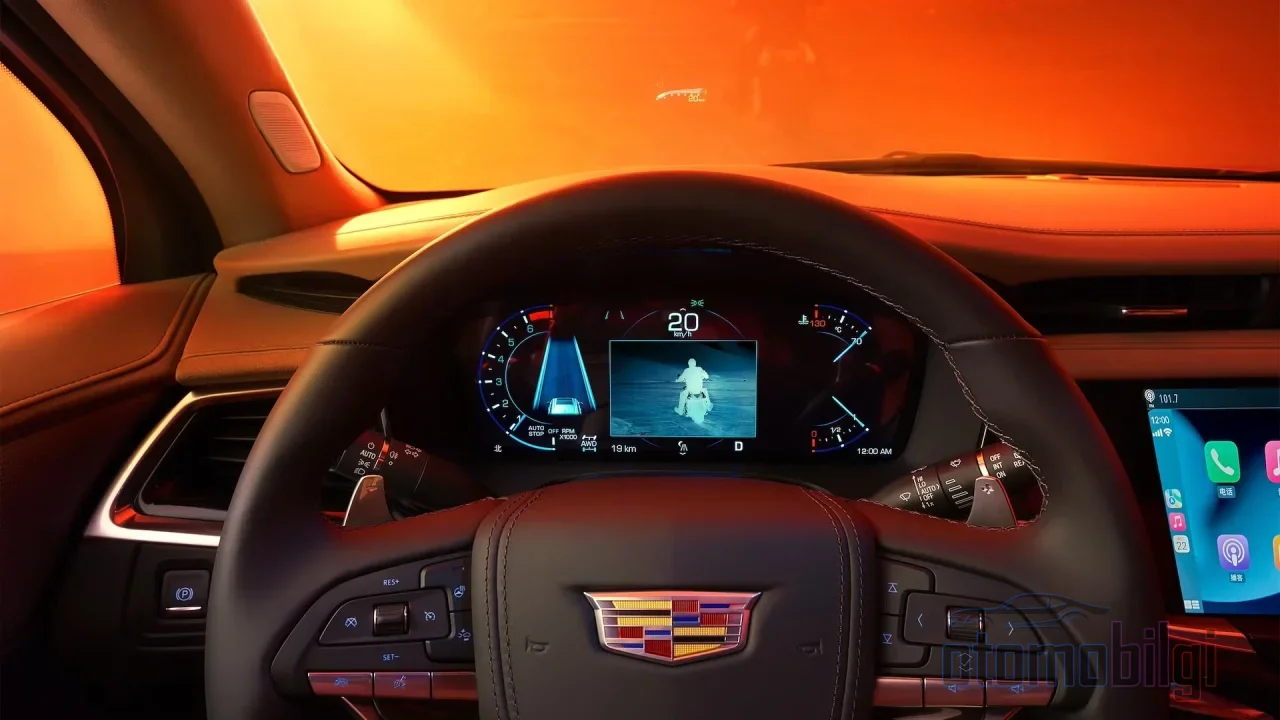
The year is 2000. You are looking at the dashboard of a Cadillac DeVille and you see the silhouette of a person walking in the darkness, at a distance the headlights never touch. A thermal camera has entered a mass-produced car as a $1,995 option. Twenty-six years have passed. Now look around: How many people you know have night vision in their car? Probably zero. Meanwhile, LED headlights have trickled down to ordinary hatchbacks in the same period, and touchscreens have spread everywhere. So why are night vision thermal cameras still stuck in the options list of cars like the 7 Series and the A6? The answer is not a single thing; it is a combination of cost, the surprisingly fast development of headlights, export rules, calibration bills, and what we consumers are willing to pay for.
How Does Thermal Night Vision Work?
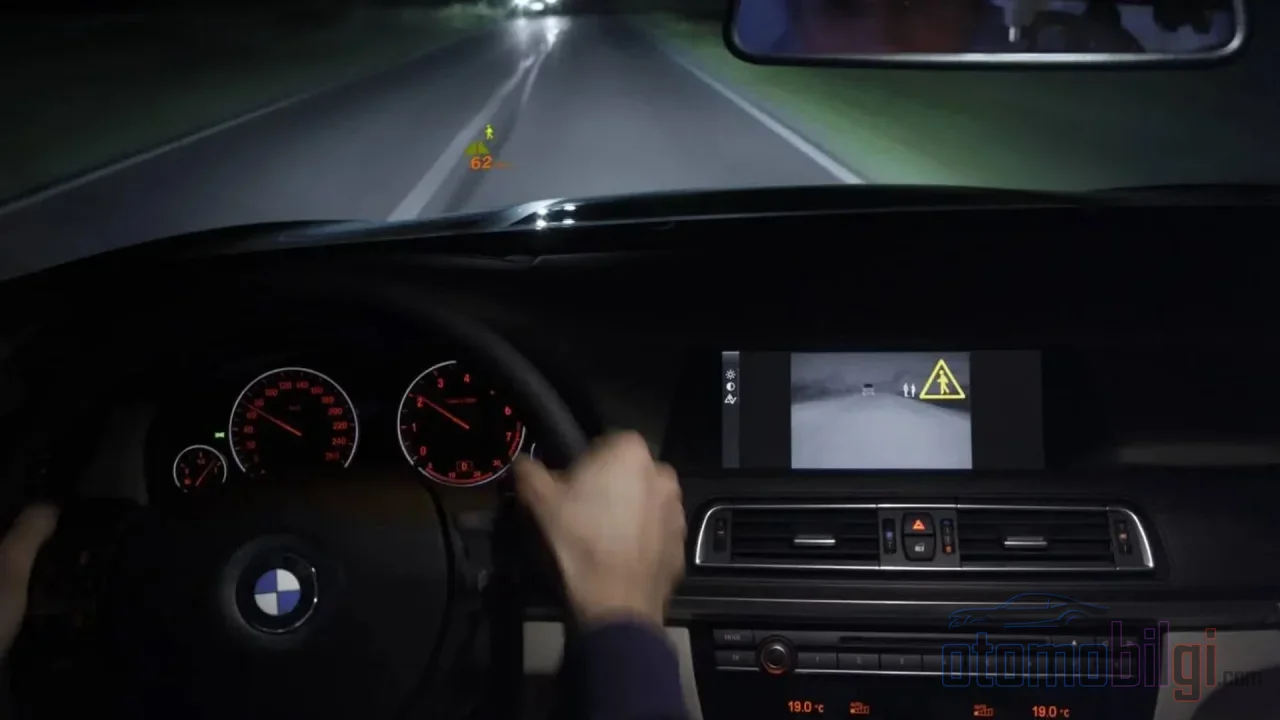
First, let's clarify the physics, because you need to know how the system works to understand why it is expensive. A thermal camera does not emit light; it does not need light either. It sees the heat that objects emit, that is, energy in the long-wave infrared (LWIR) band. A warm-blooded pedestrian or a deer stands out clearly against a cold road and its surroundings; therefore it can be detected in the dark, in fog, in glare conditions, far beyond headlight range. BMW's FLIR-based solution can recognize people from a distance of about 300 meters. Mercedes-Benz's Night View Assist Plus system detects pedestrians and wildlife at up to 160 meters and illuminates them with a spot of light.
The critical point here is this: This technology comes from the military world. Thermal detectors were the material of tanks, helicopters and infantrymen for years. Adapting it to automotive meant the problem of turning a military-grade sensor into a small, cheap and reliable consumer product. This problem has not been fully solved for 26 years.
Highlights
Highlights
- The first mass-produced night vision: The 2000 Cadillac DeVille, a $1,995 option
- BMW's thermal solution detects people from a distance of about 300 m
- The cost of an uncooled thermal module is $180-500; HUD integration drives the cost even higher
- Night vision option prices are in the $2,300-2,500 range, concentrated in the luxury segment
- In the US, FMVSS No. 127 mandates pedestrian AEB that works in darkness until September 2029
Why Is It So Expensive: The Cost Reality of the Thermal Sensor
The heart of a thermal camera is the infrared detector chip. Uncooled LWIR modules cost car manufacturers between $180-500 per module; cooled systems start at $5,000 and can go up to $500,000 in military applications. So if the raw cost of the detector is this much, why does the consumer pay $2,500? Because it does not end with the sensor.
HUD, that is, the display projected onto the windshield, requires a separate optical combiner and extensive calibration. Thermal optics are also expensive compared to standard camera lenses. On top of that comes the volume problem: Although the raw production value of 640x480 resolution thermal detectors is much lower, low sales volumes keep the price high. Companies like Meridian Innovation are targeting camera costs of under 100 dollars with CMOS-compatible manufacturing; in other words, the industry is aware of the price problem but is not there yet.
Export Controls: The Silent but Effective Barrier
The interesting part of the story is this: Thermal cameras are not just expensive electronics, they are also strategic goods. Thermal cores with refresh rates above 9 Hz are classified as dual-use goods and require an export license under ITAR/Wassenaar regulations. Licensing processes come into play for shipments to most of Asia; this extends lead times and increases cost. So the sensor that shows you the image soldiers saw in the 2000s is still bureaucratically tied to that world.
Headlights Closed the Gap: The Matrix LED Punch
The thermal camera's sole advantage was not just "seeing beyond the headlights," but also "showing everything visible to the driver." But development on the lighting side has been incredibly fast. Matrix LED headlights instantly dim the relevant LEDs within the matrix the moment the front-facing camera detects a vehicle or pedestrian, enabling continuous high beam use without dazzling oncoming traffic. In other words, the headlight no longer just "provides light," it intelligently illuminates the scene.
Research shows that pedestrian detection times are later with halogen headlights compared to xenon and LED, meaning LED headlights bring a tangible improvement in nighttime safety. Conclusion: For the average buyer, there is practically little difference between "let me buy a thermal camera for 2,500 dollars" and "let me buy excellent matrix LED headlights at a price close to standard." The thermal system's ability to work independently of headlights in darkness and glare conditions is still a real advantage; but in daily driving, most drivers are not willing to pay the price of this difference.
Failures and Calibration: The Hidden Cost Bomb
The ownership cost of a night vision system does not end with the price tag. Field data are daunting: Static calibration of a single camera is 250-600 dollars, and calibration of the front radar and camera combination starts at 600 dollars. Even a windshield replacement may require recalibration, and not doing it poses a serious safety risk. IIHS surveys show that high-end camera and radar hardware complicates repairs and increases post-repair costs.
History is also instructive on this subject. In Cadillac's first system produced by Raytheon, the chopper wheel membrane, constantly exposed to heat, could crack over time; one of the earliest examples of the maintenance risk of an expensive system. Even today, MEMS shutter reliability issues in uncooled detectors are counted among the factors slowing the spread to the mass market.
What Does the Consumer Want? The Market's Segment Reality
The structure of the market is the clearest proof of the story: Night vision systems are still concentrated primarily in passenger cars, and moreover at the very top tier of the passenger segment. Passenger cars account for approximately 81.74% of market revenue, and the majority of installations are done at the factory. Today the system lives on in models such as the BMW 7 Series, 5 Series, X5 and X6, the Mercedes-Benz S-Class family, and the Audi A6 and Q7, as options priced around 2,300-2,500 dollars. Magna's thermal solution, which began with the BMW 7 Series in 2005, has delivered more than 1 million modules to date; cumulatively, this solution accounts for approximately 98% of automotive night vision cameras on the road.
The picture on the consumer side is also striking: In ownership forums, the core motivation of users seeking night vision is generally deer and large animal detection on rural roads. So there is demand, but it is narrow; strong only in certain geographies and certain use cases. Privacy concerns regarding in-cabin infrared imaging are also one of the factors slowing adoption, especially in Europe and North America.
The Market Is Growing But Always in the Luxury Segment
So is this a story of death? No, quite the opposite: The market is growing. Market size estimates for 2026 are in the range of approximately 3.7-4.9 billion dollars; toward 2030-2032, sizes of 7-11 billion dollars are indicated. Of course, the scope and methodology of these estimates differ; but they all point in the same direction. LWIR technology accounts for approximately 62.78% of the market, with night vision cameras representing 54.72% at the component level. North America holds approximately 41.20% of revenue, while Asia-Pacific is the fastest growing region.
In fact, the market tends to shift from a luxury differentiator to a widely adopted compliance feature; what slows this down are structural constraints such as high average selling prices, export controls, and privacy objections.
Are the Rules of the Game Changing?
Two developments could change the picture. The first is the software side: Manufacturers such as GAC, NIO and BYD are trying to achieve thermal-like images by processing standard CMOS sensors with artificial intelligence; companies such as Deepthink and Visionary.ai are working on solutions that enhance the contrast of night frames without thermal hardware, but these approaches are still at the validation stage. On the hardware side, Meridian Innovation is targeting a CMOS-based thermal camera under 100 dollars.
The second, and the more impactful one, is regulation: In the US, FMVSS No. 127 mandates pedestrian automatic emergency braking (PAEB) that also works in darkness in passenger cars by September 2029; The European Union's General Safety Regulation creates a parallel timeline. Although small-volume manufacturers are given one extra year, the direction is clear. The tests say a lot about this: While thermal-fused PAEB systems pass all night scenarios, conventional camera-radar systems from three major manufacturers in 2024 models failed in multiple tests. The Tura thermal camera that Teledyne FLIR introduced at CES 2026, ISO 26262 compliant and automotive qualified, is positioned precisely for this need; the company states it has produced more than 1 million automotive-qualified thermal sensors to date. Lynred's windshield-integrated camera with a 140-meter pedestrian detection range and Raytron's cameras that have entered more than 20 models with more than 15 manufacturers are also steps in this direction.
Conclusion: Why Didn't It Become Widespread?
The short and clear answer is this: Night vision thermal cameras didn't become widespread because producing an expensive military-origin sensor cheaply still hasn't been solved, matrix LED headlights solved most of the same safety problem much more cheaply, calibration and repair costs inflated the cost of ownership, and consumers' willingness to pay for this technology got squeezed into a narrow scenario, mostly animal detection. The system technically works, it is even unrivaled in the dark; but good engineering doesn't always mean good marketing economics.
The upcoming milestone is 2029: When pedestrian emergency braking in the dark becomes mandatory, the thermal camera may cease to be a luxury option and become the solution the regulation is looking for. Until then, thermal night vision will remain the luxury segment's secret weapon until sensor costs really drop well below the 100-dollar threshold. And if you drive at night in a region with deer hazards, this may be the most sensible $2,500 on the options list.
Sources
- Automotive Night Vision System Market Size
- Automotive Night Vision
- BMW Incorporates Thermal Imaging Cameras in its Cars
- Tura Automotive-Qualified Thermal Camera
- Raytheon Cadillac DeVille Thermal Nightvision Camera
- Automotive Night Vision System Market Report
- Vehicle Infrared Thermal Camera Market
- Halogen v LED v Matrix LED v Laser Headlights Compared
- ADAS Calibration Cost Guide
- Which Cars Have Used Thermal Cameras?