Why Do Bad Characters Drive Iconic Cars?
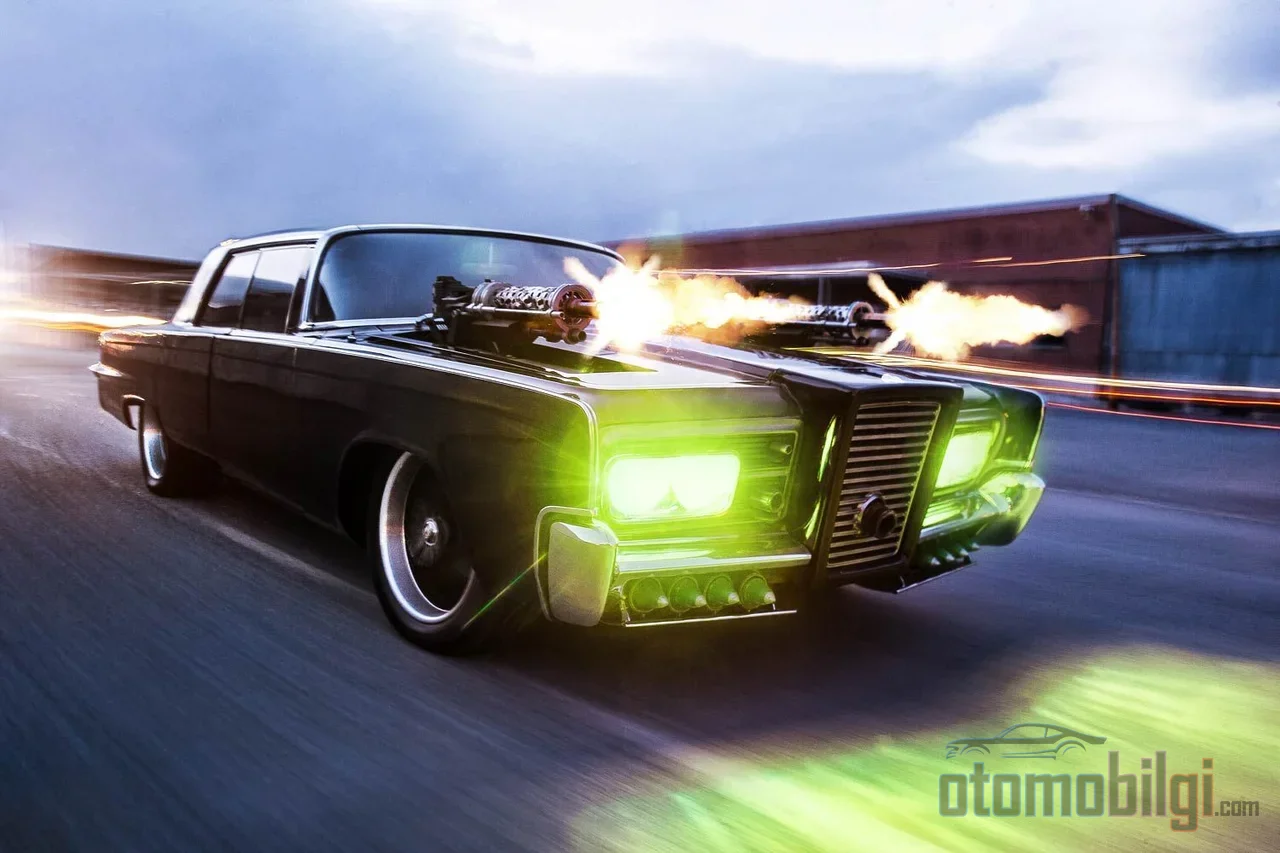
In an action movie, a black sedan floors the accelerator, its headlights piercing your eyes as it goes after the hero. Have you ever stopped to wonder why it's always that car? Why does the villain almost never pick a brightly colored, cheerful vehicle? When you dig a little into cinema history, you notice that on-screen evil also leaves tire tracks - and those tracks are no coincidence, but a design language that has been at work for years. Let's decode this mysterious language together.
Why Do Villains Always Flee in German Cars?
Think of the chase scene: the hero's car is a bit beat-up, a bit worn out. The villain behind, meanwhile, is driving a black luxury sedan with tinted windows, spotless, silent, calculating. This image has become so widespread that it is now a cliche. But why? The answer is actually both psychological and very practical.
There are two strong reasons that don't interfere with each other. First, the image of German luxury brands fits a movie villain perfectly: focused, calculating, sleek, wealthy, and slightly unsettling engineering. Second, cinematic reality: exotic sports cars are expensive and hard to find when renting for a film set; German performance cars, on the other hand, are much easier and cheaper to find in film vehicle rental fleets. So that sedan you love to hate on screen has also passed through the production's budget spreadsheet. A nice detail, isn't it?
Add viewer psychology to that as well. What we have been taught for years is that cold, perfect engineering gives off a sense of threat. Hollywood has sometimes exploited this perception more than a little; even stereotypes fueled by historical connections, such as the Mercedes-Benz 600 Grosser favored by dictators, have seeped into films. Behind the screen, everything is deliberate: the set director, the costume designer, and the choice of vehicle. The villain's car is an extension of their costume.
But are real-world perceptions part of the equation?
Yes, and that's where the funny part begins. In a survey commissioned by a British TV channel, BMW drivers were voted the worst drivers; a traffic study also presented findings supporting that image. So the on-screen cliche and real-world brand perceptions feed each other. While you watch the movie's villain, the screenwriter is already exploiting the bias in your head. Clever, even a little eerie.
Highlights
- The demonic car in the film The Car was a 1971 Lincoln Continental Mark III customized by famed modifier George Barris.
- The 1958 Plymouth Fury in Christine is unique on the list: not the villain's car, but the villain itself.
- Jaguar turned its villain image into marketing gold with its British Villains campaign, which began in 2014.
- Ford revealed that the aggressive design of the 2018 Mustang was inspired by Darth Vader.
- Apple has a policy that prevents villains in films from using the iPhone.
The Devil Found a Body: Cinema's Most Terrifying Cars
The major league of evil cars opens with the 1977 film The Car. In this film that terrifies the residents of a small town, a mysterious black car drives itself, unmanned, carrying out a series of murders. The vehicle is a black 1971 Lincoln Continental Mark III modified by George Barris. It is such a striking symbol of menace that fans call it the devil incarnate. Not being able to see the driver inside the bodywork gives the car a monstrous aura.
Six years later, one of the most special vehicles in horror history arrived: Christine (1983) and its 1958 Plymouth Fury. Capture the difference here: in the other examples, the car was a villain's tool. In Christine, the car was the villain itself. A car that repairs itself, gets jealous, and takes revenge. When you think about where it stands among the first productions that made a car an evil character, you see that a vehicle can be not just a means of transport but an actor.
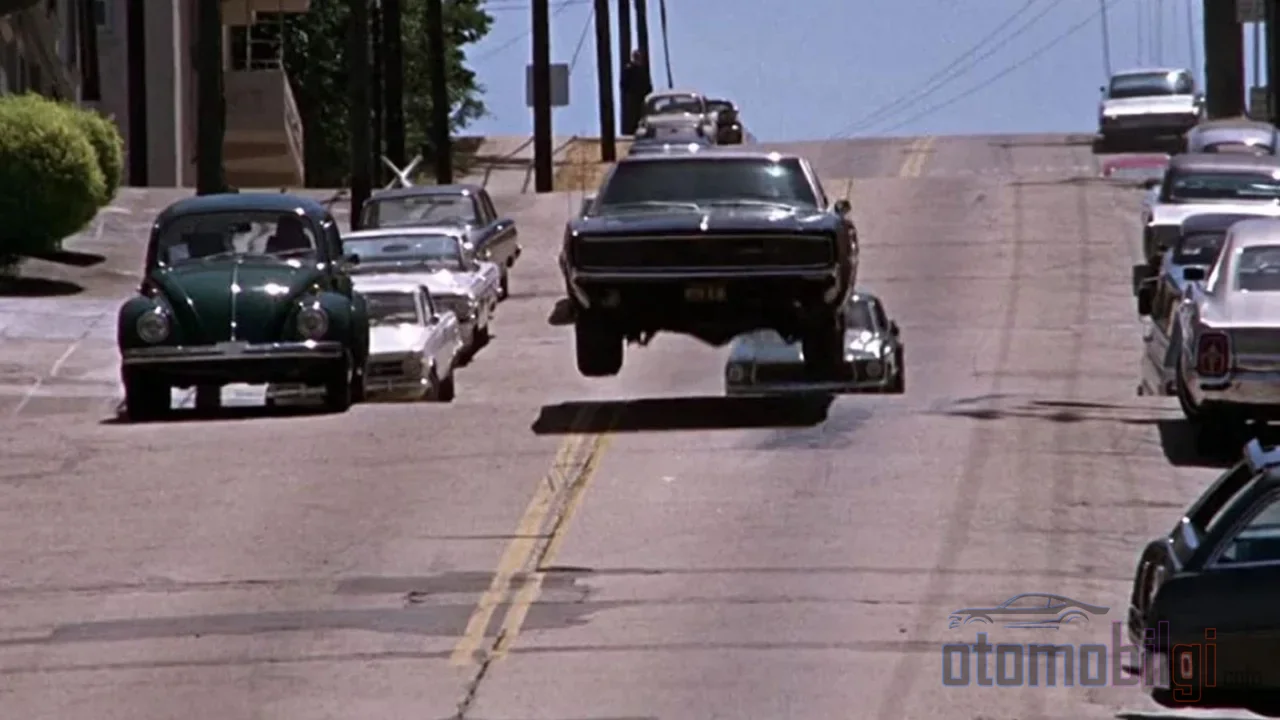
An example from the world of cowboys as well: Bullitt (1968). Facing Steve McQueen's legendary 1968 Mustang GT, the villain's 1968 Dodge Charger is driven by real stunt driver Bill Hickman. The gloomy look of the black Charger forms a perfect contrast with the Mustang's adventurous spirit. The hero-villain balance is established with vehicles, not with dialogue. There is also a cliché that has been circulating in fan group chats for years: Monte Carlo models in films either become the villain's car or die in some way by falling apart. Even ordinary brands can speak this language, which means the matter is not just about luxury vehicles.
| Film / Year | Vehicle | Role |
|---|---|---|
| The Car (1977) | 1971 Lincoln Continental Mark III | The unmanned, killer car itself |
| Christine (1983) | 1958 Plymouth Fury | The car that is the villain itself |
| Bullitt (1968) | 1968 Dodge Charger | The villain's chase car |
| Die Another Day (2002) | Modified Jaguar (Zao) | The villain's service vehicle |
| Spectre (2015) | Jaguar C-X75 (Mr. Hinx) | A flashy but sinister pursuit vehicle |
Bond's Counter-Limit: How Is the Villains' Fleet Designed?
The James Bond universe is the clearest place where the villains' vehicles are treated as works of design. In Die Another Day, the sporty luxury convertible used by the villain Zao was actually a heavily modified hybrid; behind the rearview mirrors and weapon sights there was real engineering. In Spectre, villain Mr. Hinx's orange Jaguar C-X75 is, in enthusiasts' eyes, an example that brings sexiness together with menace. The garages of Bond's enemies also feature black Land Rover Bigfoots, Jaguar C-X75s, and fleets of Mercedes-Benz luxury sedans. So if the hero has his Aston Martin, a second fleet designed to challenge him stands opposite.
Behind these are big names. Former RAF combat pilot production designer Ken Adam established the franchise's entire visual template starting from 1962's Dr. No with seven Bond films. When the first Aston Martin was bought for Goldfinger, Adam and special effects consultant John Stears shaped the car. Bond films gradually turned into style forecasts: viewers began copying their car, drink, and gun choices from these films. The villains' vehicles deserve plenty of credit too - they are the dark side of the Bond aesthetic.
That is why in the world of film and TV, vehicles are considered an integral part of production design. Among production designers, there is a shared view that vehicles are a direct tool for building character. Bond's flashy fleet and Batman's evolving vehicles are the most extreme examples of this: some vehicles end up being talked about even more than the film itself. The villain's car is chosen with the same seriousness - the character's threat level is synchronized with the vehicle's menace.
The Power of Black and the Language of Classic Clichés
What is the first thing that comes to mind when you think of villain cars? The short answer: black. But it is not quite that simple. A study shows that male lead characters - super villains, criminals, and even superheroes - prefer black cars. So black is not just the color of villains; it is also a color of power, a status symbol. A black SUV covered with window tint is the shortest way to tell the viewer that the person inside is dangerous. Even in Reddit discussions, it is said that dark SUVs are seen as a direct villain code for filmmakers.
Think of Darth Vader's black, breathing image as part of this language too. His look is like a limousine: long, pitch-black, ominous. This image is so powerful that it has leaked into real production vehicles. Ford design manager Melvin Betancourt revealed that he drew inspiration from Darth Vader for the aggressive design of the 2018 Mustang. The Hot Wheels world has not stayed idle either: a Star Wars themed car that moves in the real world and seems to breathe was introduced in Jay Leno's garage. The villain aesthetic seeping this deeply into the design universe is the most concrete proof of the cliché's power.
Is the Villain Role a Punishment or a Reward for Brands?
Everything was fine so far, but what do brands think about this? This is exactly where the issue splits in two. Jaguar chose to turn the villain image into a marketing opportunity: the British Villains campaign launched in January 2014 embraced the idea that the British created the best villains in history and won a regional platinum award with the 2015 F-TYPE Coupé. The marketing team also noted that the style attracted a younger, wealthier audience. So Jaguar embraced the villain role, even turning it into an opportunity.
Apple does exactly the opposite: it follows a policy of preventing villains from using iPhones, keeping its brand image clean on screen. Taken together, these two strategies give you a very clear message: screen presence is an asset that brands actively manage. For German manufacturers, let us share an observation from a fan: the hero's car didn't fail to start on screen thousands of times, but the bad guy never had trouble getting his German vehicle going. Maybe that's why some say German brands should own this role as a shadow image - credibility already seems won.
Will This Cliché Change Soon?
There's an interesting speculation circulating in the discussions: as environmentalism and regulatory pressure increase, perhaps in 25 years the villains will be driving fuel-guzzling three-row SUVs; while the heroes will have switched to plug-in hybrid vehicles. It sounds funny, but it makes sense: cinema reflects the social anxieties of the era onto the vehicle. Just as an electronics brand avoids being associated with the villain, villain cars will also change according to the norms of the times.
But in my view, one thing won't change: the villain's car will continue to be the shortest path to storytelling. This silent language, which tells the audience within seconds who is standing against whom, is the most economical information package that can be learned with a single click. The debate over whether it's product placement or a character vehicle is also connected to this: sometimes a brand can make its vehicle part of the story, making the product placement unforgettable.
Conclusion: What Is the Secret of Villain Cars?
So let's make the answer to the question clear: villain characters drive iconic cars, because the vehicle is their psychological portrait. Directors and production designers define the character within seconds by exploiting the biases in the viewer's mind; German luxury vehicles offer an ideal shortcut here, both in terms of performance and image and the practicality of finding them in stock. Black color, design without window tint, an angry engine note: they all leave a short message in your brain. Villain cars are no accident, they are a disciplined design decision.
The next time you watch an action movie, take another look at that black sedan in the background. Which brand, which color, which shadow? Perhaps the cleverest detail of the script is hidden right there. When do you think this cliché will appear before us again?
Sources
- How Come Movie Villains Drive German Cars?
- The Car (1977 film) - Wikipedia
- Top 10 Villain Cars of All Time: Evil on Wheels - Car and Driver
- These are the 10 best movie-villain cars of all time - Driving.ca
- List of James Bond vehicles - Wikipedia
- Designing Bond: In the Villain's Lair with Ken Adam - The Longwell Files
- Jaguar 'British Villains' Campaign - JLR Media
- The Star Wars villain that inspired Ford's 'aggressive' new Mustang - The Sun
- Men drive in top movies, and they like black cars - USA Today
- Inspiration: An Exploration of Television and Film Car Design - ArtDepartmental