Why Does the Porsche Taycan Use Two Gears?
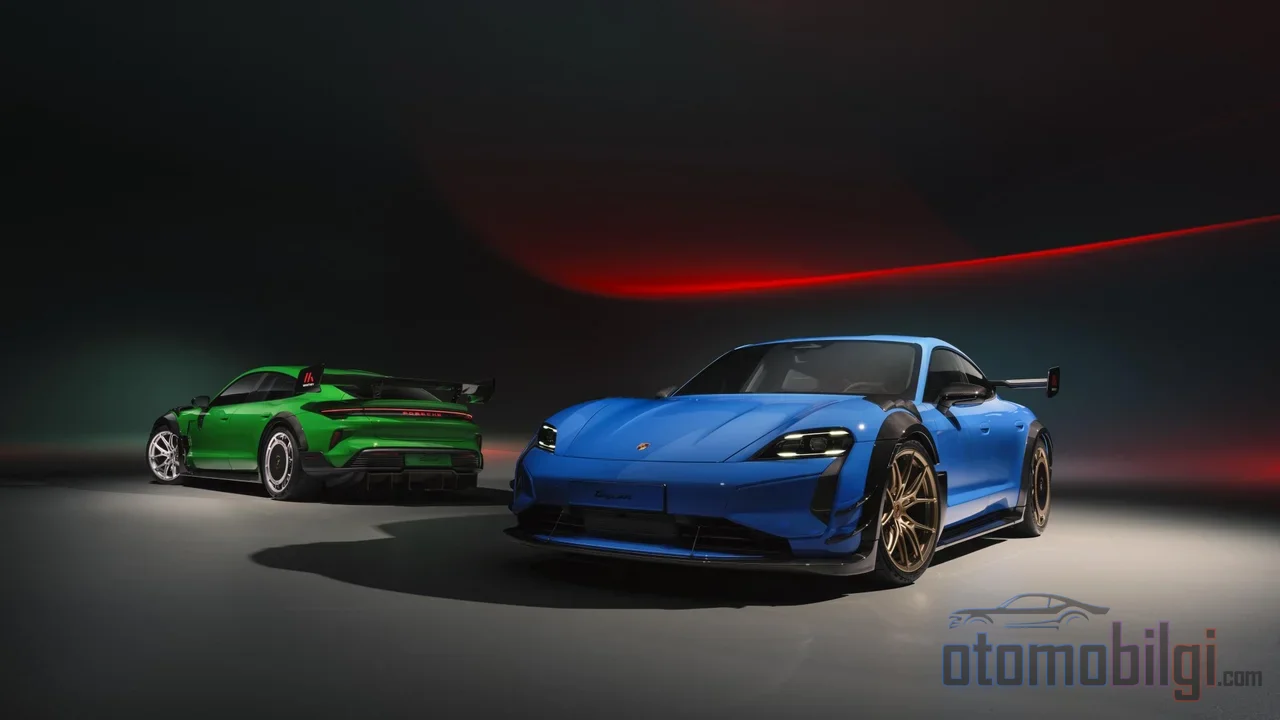
One of the most surprising features of electric cars is that most of them do not need a gearbox. While thousands of models roam the roads operating with a single reduction ratio both at launch and at top speed, the Porsche Taycan placed a genuinely two-speed transmission behind its rear axle. Is this an engineering showcase, or the filling of a conceptual gap that the single-speed reduction hides? Answering this question requires looking at exactly where the electric motor's rpm-torque characteristic weakens.
Why Did the Gearbox Disappear in Electric Vehicles?
An internal combustion engine operates efficiently within a narrow rpm window: in normal use it spins roughly between 1,200 and 4,500 rpm, the redline is around 5,000-6,000 rpm, and it cannot sustain this speed for long periods. To make use of this narrow window, a gearbox is essential; a typical 5-speed transmission has a ratio ladder ranging from a 3.35:1 first gear to a 0.68:1 overdrive.
The electric motor is almost entirely exempt from this constraint. An EV motor reaches 10,000 rpm very quickly, can spin up to a maximum of about 20,000 rpm, and retains most of its efficiency across this wide range. There is no concept of idling either: if the vehicle is stationary, the motor is stationary, and the same torque is delivered to the wheels at 1 rpm just as at 1,000 rpm. For this reason, most manufacturers place only a fixed-ratio reduction between the motor and the wheels; this single ratio, which converts the motor's rapid rotation into the low speed and high torque at the wheels, does all the remaining work.
A direct connection, however, does not work: the motor must spin much faster than the vehicle travels in order to stay within its efficient zone. A numerical example clarifies this difference. With its gear calculation, the Hyundai Ioniq 5's maximum motor speed exceeds 14,000; an internal combustion vehicle using the same single ratio would be limited to a top speed of about 76 mph (about 122 km/h) and the motor would be damaged.
Highlights
- The Taycan's rear axle has a two-speed transmission, while the front axle has a single-speed transfer with an 8.05:1 ratio.
- The second gear ratio is roughly half of the first gear; the shift occurs at around 80 km/h, within a 80-105 km/h band depending on the drive mode.
- The two-speed architecture is paired with the rear motor rated at 140 kW and is of a modular design.
- The Taycan completes 0-60 mph in 2.6 seconds with the launch advantage of first gear.
- The advantage of the single-speed setup is simplicity: The Model S's entire drivetrain has only 20 moving parts.
How Does the Taycan's Two-Speed Transmission Work?
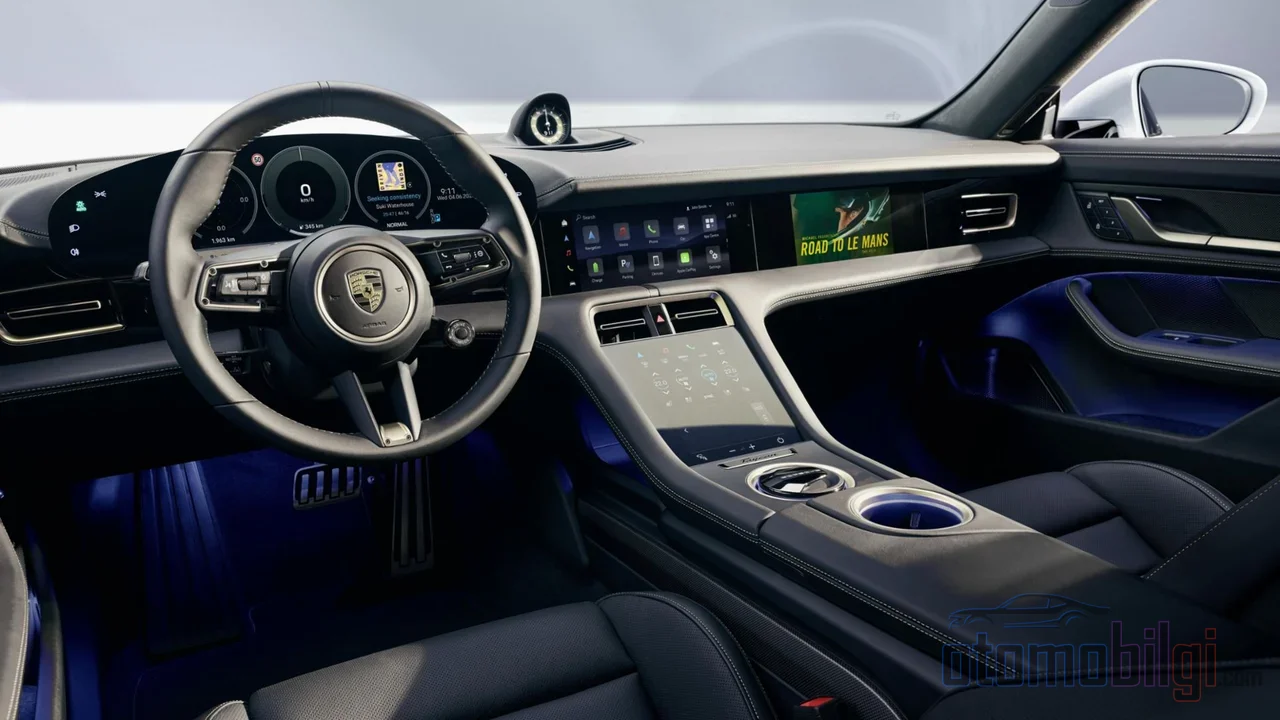
Porsche's solution is to split the power across two axles, delivering it with different ratios. On the front axle, the motor is connected to the wheels through a single-speed transmission with an 8.05:1 ratio. On the rear axle, things change: the larger of the two motors drives the road through a transaxle structure using parallel spur gear pairs and a limited-slip differential. At the input is the pinion gear coming from the electric motor; the critical point here is that the two gears are scaled for very different tasks.
First Gear: Traction Stage
First gear's job is to deliver more torque to the wheels at launch. Thanks to mechanical advantage, the car accelerates more strongly at launch; the numbers are striking, and the Taycan completes its 0-60 mph sprint in 2.6 seconds. This is launch performance that many single-ratio rivals cannot reach, and it comes directly from the gear advantage.
There is also a less visible benefit: first gear does not merely produce wheel torque. By partially taking the launch load off the motor and power electronics, it helps these components stay cool during hard accelerations. For the repeatability of performance, this matters at least as much as the peak value on paper.
Second Gear: Long Stage
The long-scaled second gear offers high efficiency and power reserve even at high speeds. The gear step is large: the second gear ratio is roughly half that of first gear. In practice, the vehicle determines the moment of the shift by monitoring speed and throttle inputs; the gear change occurs at around 50 mph, that is about 80 km/h, and depending on the drive mode it moves across the 50-65 mph range, shifting toward the upper end of that band under full throttle. Research simulations show that an early upshift at 10,700 rpm with a high state of charge can deliver a shift limited to a 0.100-second inertia phase without straining clutch load.
The effect of this architecture on the rev balance is also clear: the motor reaches its redline at a higher speed in second gear. While a vehicle arriving at this point in a single ratio would have exhausted its power reserve, the Taycan retains its source of traction at high speed thanks to its long gearing. From the driver's perspective, the result is a power distribution that a single ratio cannot provide at either the low end or the top end; neither of the two gears can do the other's job to a comparable degree.
Drive Modes and Interaction with the System
The two-speed transmission works in tandem with the Taycan's drive mode architecture. The gear shift point is not fixed; the vehicle flexibly positions the shift within the 50-65 mph band according to the selected mode and the position of the accelerator pedal. This means the same mechanical hardware can be used both in an everyday efficiency profile and a maximum performance profile.
The number of stages in the drivetrain also varies by variant. Together with the single-ratio motor on the front axle, the Taycan 4S and Turbo effectively have a three-stage power distribution; in the base model this number is two. The rear motor, with its two stages, handles high-performance launches and high-speed highway use on its own.
Development continues on the software side as well: Porsche's E-Shift system offers virtual gear shifts matched to the actual mechanical gear changes. The virtual shift from 2 to 3 is synchronized with the physical two-stage shift on the rear axle; when E-Shift is turned off, these virtual shifts are deactivated. The mechanical setup is thus combined with an interface that gives the driver the feel of a classic geared vehicle.
Why Don't Other Manufacturers Choose the Same Path?
The Taycan's powertrain is modular, can fit different vehicles, and is paired with a motor that has a maximum power rating of 140 kW; in other words, it is a technically imitable solution. Despite this, two-speed transmissions have not become widespread in production EVs. There are several concrete reasons for this.
The first is that there is a simpler way to achieve the same goal. Tesla achieves some high-speed efficiency goals by giving its two motors different reduction ratios, without adding a second transmission stage. In a dual-motor architecture, having each motor carry its own ratio is an elegant way to avoid concentrating complexity in a single powertrain.
The second is the technical challenge itself. The instant and very high torque of electric motors puts clutches and gear sets in multi-speed transmissions under far harsher loads than a comparable internal combustion powertrain. Weight is also the natural enemy of EV efficiency; a second stage means added mass and an extra moving part.
Third are the measurable returns of simplicity. A single-speed setup means fewer moving parts, less risk of failure, and lower maintenance costs. Tesla states that the Model S's entire powertrain has only 20 moving parts; the Chevrolet Bolt has 80 percent fewer moving parts than a comparable internal combustion vehicle. In this equation, the launch and top-speed gains of a two-speed transmission do not offset the cost and complexity difference for most segments. This is exactly where the Taycan's position becomes clear: this architecture is a meaningful choice at premium performance targets, but not yet necessary for the mass market.
When Is a Two-Speed Transmission Still Necessary?
Let's put all these pieces together. The Porsche Taycan uses two speeds because a single-stage reduction unit cannot exploit a motor's rpm-torque characteristics with equal success at both the low and high ends: the first stage takes on wheel torque and acceleration at launch, keeping the motor and power electronics cool; the long second stage preserves efficiency and power reserve at high speeds. A single ratio cannot deliver both ends at once; two ratios can, and the price is weight, complexity, and cost. The Taycan is one of the rare examples that accepted this price and made it to the production line, and it has made this balance defensible in the performance class it targets.
Sources
- What Does it Mean that Electric Cars are Single Speed
- Do Electric Cars Have Gears? How EVs Really Work
- Why electric cars don't have conventional gearboxes
- Design and Parameter Optimization of Single and Two-Speed Transmissions For Electric Cars
- Why does an EV needs a "gear reduction" in the gearbox?
- Why do electric cars still need a gearbox?