How Does Torque Vectoring Work in Electric Cars?
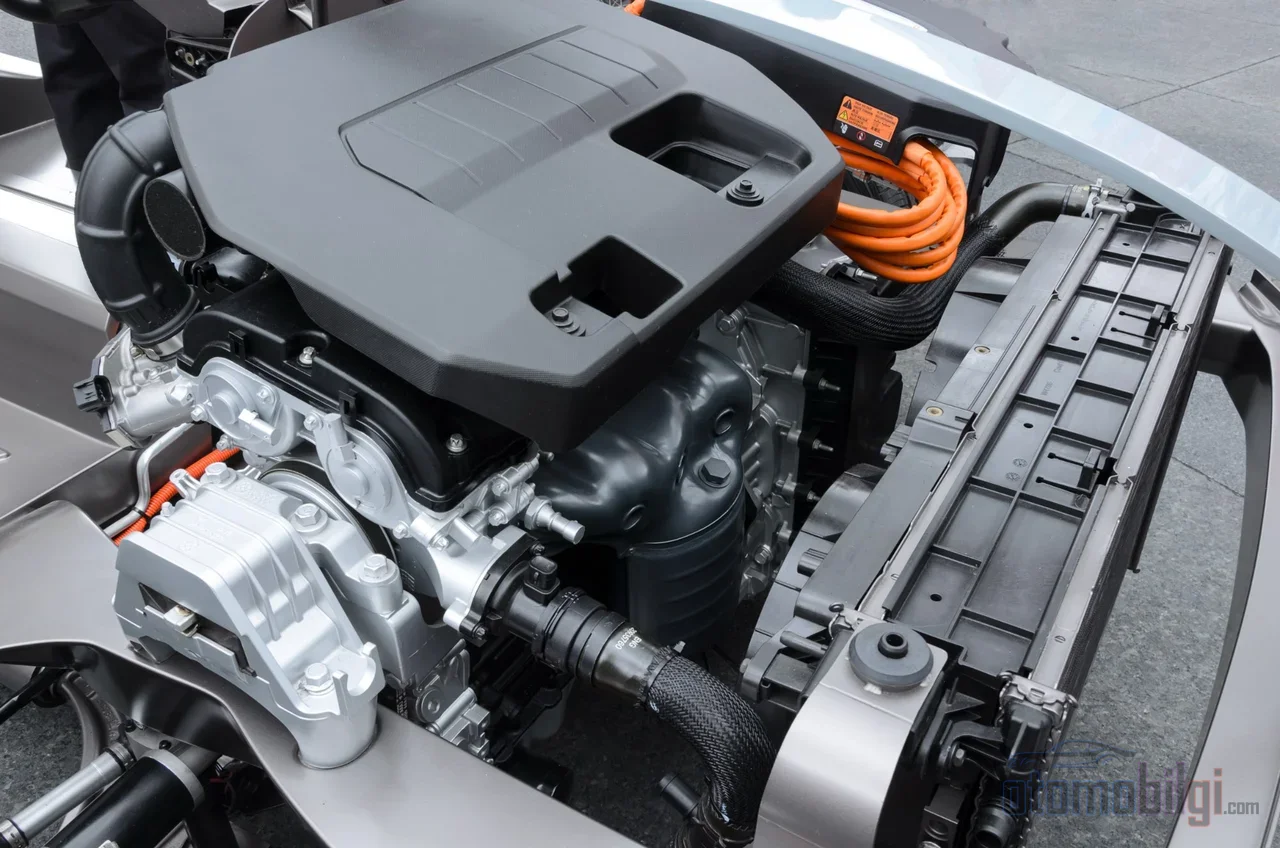
Share This Page
Torque vectoring is the instantaneous redistribution of power between the wheels and axles of an electric vehicle via software control; since there is no mechanical connection between the motors, this distribution happens faster and more flexibly than in internal combustion systems. This page explains how the system works, from its architecture to drive modes.
Highlights
- Torque vectoring improves grip and steering response by creating yaw motion around the Z axis in the vehicle
- In EVs, redistribution is done not with mechanical clutches but with software-controlled independent motor control by means of
- Technology introduced in the 1990s in internal combustion vehicles; it became a natural advantage in EVs
- In dual-motor systems, the upper layer manages energy efficiency, while the lower layer directly controls the yaw moment with left/right torque differences
- In four-motor architectures, each wheel is controlled independently; in corners, the outer motors produce higher torque than the inner motors
How Does Torque Vectoring Work in an EV?
At the heart of the concept lies simple physics: what turns a car entering a corner is not just the steering angle, but the torque balance between the wheels. When you send more torque to the wheels on the outside of the corner than to the inside ones, the car makes a rotational motion around the Z axis, meaning its vertical axis. This motion is called the yaw moment and torque vectoring is precisely the art of producing this moment in a deliberate, controlled manner. The result is faster steering response, better grip, and more predictable chassis behavior.
In an internal combustion vehicle, doing this is difficult, because power comes from a single source and is distributed to the wheels through a mechanical box called the differential. A traditional open differential splits the incoming torque equally between the two wheels and cannot control a spinning wheel: when one wheel starts to slip, power continues to flow to that slipping wheel, which offers no resistance, and that is the useless side. A limited-slip differential (LSD) partially brakes this power with mechanical clutches; a torque vectoring system, on the other hand, actively directs the power to the wheel with the best grip.
In an electric vehicle, the picture changes radically. When there are two or more independent motors, software decides how much each motor will work. Each motor produces torque directly to the wheel or axle it is connected to; there is no need for a mechanical redistribution mechanism to carry the power in between. The absence of a mechanical connection gives the system faster response times and much greater flexibility in torque transfer.
The Difference from Internal Combustion Systems: A Software Decision Instead of a Mechanical Marvel
In internal combustion vehicles, torque vectoring is done with two common methods. In the brake-based approach, momentary braking is applied to the inside wheel of the corner; this works, but it is inefficient because it wastes energy as heat. In the differential-based approach, clutch packs inside the differential are engaged by electronic control and pile torque to one side. Both methods are functional, but both depend on the response speed and durability of mechanical components.
On the electric side, the concept is deliberately simpler: software commands two or more motors individually. Instead of applying the brakes, it moves the increasing torque away from the slipping wheel and gives it to the wheel with grip. The technology has been known in the internal combustion world since the 1990s; today it appears under various names in many performance cars. In electric vehicles, the same goal turns into a structural advantage as the number of motors increases: the power to be distributed is already fragmented, and each part has its own control.
The Control Chain: The Path from the Yaw Sensor to the Motor
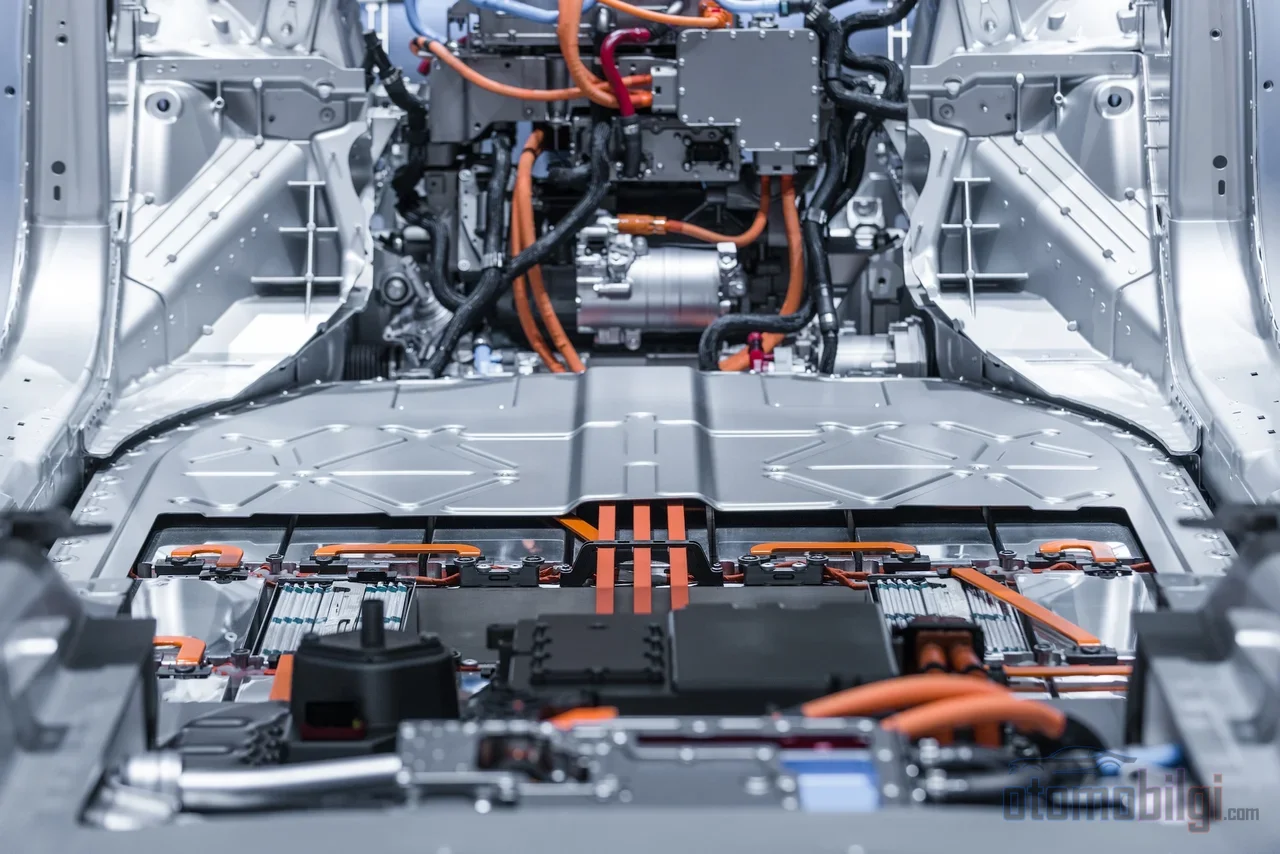
Torque vectoring is a decision chain, and every link in it is measurable. A typical electronic architecture works as follows:
- The yaw sensor reads the vehicle's actual rotation rate.
- This signal is processed, converted into yaw rate data at DC level, and sent as a message to the CAN bus.
- The vehicle control unit (VCU) compares this data with the trajectory the driver wants.
- The torque distribution function calculates the torque command that must be sent to each motor.
- The system repeats cyclically: each measurement becomes the input for the next torque decision, and the vehicle continues to follow the optimal trajectory.
The physical actuator of this chain is the traction inverter. It converts the high-voltage DC current coming from the battery into controlled AC that the traction motor can use; it adjusts the motor's speed and torque through PWM, or pulse-width modulation, and also manages regenerative braking through the same hardware. In other words, torque vectoring is not a separate box, but a software-algorithm job jointly carried out by the inverter and the VCU.
In modern architectures, this job is divided into two layers. The upper layer splits the torque between the front and rear axles in a way that reduces energy consumption; the lower layer generates direct yaw moment through the torque difference between the left and right wheels. Efficiency and dynamism are two goals of the same system operated in two different layers.
What Happens in a Single-Motor EV? Virtual Differential and Slip Control
A single-motor, single-axle EV cannot be expected to perform torque vectoring in the classical sense: the left and right wheels are mechanically connected to each other, and the motor produces a single torque. What comes into play here is the virtual differential logic: the control software monitors wheel speeds and electronically imitates the work a physical differential would do. When a slipping wheel is detected, the system reduces torque or engages regenerative braking to suppress the slip; the goal is not to create extra yaw moment in corners, but to prevent loss of power and maintain stability.
This problem has long been studied in the control literature for independently driven wheels. From methods that do not rely on slip ratio but estimate the maximum transmissible torque, to methods that keep the slip ratio below approximately the 20% threshold to grip-based control approaches. Their common denominator is this: if slip takes the tire outside the zone where it transmits both grip and steering force to the road, control of the vehicle weakens rapidly; the job of the control software is to keep torque within that limit.
Millisecond Balance in Dual-Motor Architecture
In a dual-motor, all-wheel-drive EV, the front and rear motors are controlled independently by software. This independence provides not only traction distribution but also the ability to manage the limits of physics. Under hard acceleration, the vehicle's weight shifts rearward and front tire grip decreases. In this case, the system can prevent loss of grip by reducing the torque sent to the front motor - an internal combustion system can barely do this with mechanical clutches, while EV software targets motor torque directly.
In-corner behavior is managed with the same logic. When torque is shifted between the front and rear axles, the vehicle's turning character changes: a rear-biased distribution reduces understeer, that is, the steering's reluctance to turn. Its measurable benefit is also clear: torque vectoring provides a continuous yaw moment on top of conventional suspension design, lowering the understeer gradient, widening the region where the vehicle's response works linearly, and increasing the maximum lateral acceleration that can be achieved.
The price of this asymmetric torque is heat. In a long corner, the outer motors produce significantly higher torque than the inner ones; as the outer motors' temperature rises, the inner motors' decreases. The thermal dynamics of power transfer depend on the driver's inputs and the control algorithm's torque demand - meaning vectoring is also a thermal design parameter in motor sizing.
Four-Motor Architectures: One Motor Per Wheel
The four-motor configuration, which connects a separate motor to each wheel, is seen as the logical endpoint of torque vectoring. Each wheel's torque can be controlled individually and independently; motor response is fast and high efficiency in energy use can be achieved. It is assessed that this approach enables ultimate torque vectoring because it fully manages the torque of all four wheels.
Only this architecture raises a question familiar from everyday life: why isn't it in every vehicle? The answer lies in the balance of cost and packaging. Four separate motors, four separate inverters, and the control software to manage them; add to that the complexity of the slip control software. An interesting engineering note comes from motor selection: since torque increases in cubic proportion to the motor's radius, axial flux motors with a high torque/volume ratio help fit these four-motor packaging constraints.
Drive Modes and Their Connection to Regenerative Braking
A drive mode selected with a button on the steering wheel changes the character of the torque vectoring algorithm. A more sporty mode adjusts the torque difference between the two sides or two axles more aggressively, producing faster steering response and more agile cornering behavior; intervention of the stability system is reduced. Comfort-oriented modes, on the other hand, intervene late or keep the torque difference close to symmetry. In multi-mode dual-motor systems, these transitions are made through a synchronizer, between the torque vectoring regime and the motor's maximum torque drive.
Regenerative braking is also part of the same equation. In a rear-wheel-drive EV, when regenerative braking engages, an additional braking torque is applied to the rear wheels, which can lead to wheel slip and stability problems. This is exactly where torque vectoring comes into play: it redistributes the braking torque among the wheels to prevent slipping. The coordinated management of braking, traction, and chassis control with a single strategy is at the center of the current engineering debate in this field.
Worth It or a Luxury? The Balance of Cost and Benefit
A realistic assessment of torque vectoring should answer two questions: Does the system make a difference in normal driving, and at what price? On the benefit side, it is not felt in most drives at moderate speeds on dry asphalt; the difference emerges on muddy surfaces, in aggressive corners, and in driving at the limit. The system is also complex and expensive; repairing it in case of failure is not easy either.
On the other hand, there is a long-term expectation: it is thought that torque vectoring may follow the path of ABS, once considered a luxury, and become a standard safety feature in the future. There is also an active area of work on the energy efficiency side: optimizing both the front/rear torque split and, in vehicles with per-wheel motors, a torque distribution that reduces total power demand is the focus of current research. In other words, the technology is maturing not only as a performance tool but also as an efficiency tool.
Conclusion: The Choreography of the Dance Lies in the Software
Torque vectoring is a vehicle dynamics discipline that has transformed from a mechanical miracle into a software-based capability in the electric vehicle. In single-motor models it suppresses virtual differential slip, in dual-motor models it manages the balance between axles, and in four-motor architectures it choreographs each wheel individually. As that cyclical decision chain passing through the sensor, control unit, and inverter speeds up, the mechanical chaos of the internal combustion era is giving way to a measurable, adjustable, and updatable driving experience. Viewed through an engineer's eyes, this is the most impressive part: the same chassis can exhibit a completely different vehicle behavior with a different software profile.
Sources
- Electric Vehicle Torque Vectoring Design
- And onto Torque Vectoring, the Next Step in Electric Vehicle Design
- Torque vectoring explained
- Torque Vectoring: What It Is & What It Does
- Dual-motor, four-wheel-drive layout
- The Future of Super Handling (1): Four-Motor EVs
- Review on Torque Distribution Scheme of Four-Wheel In-Wheel-Motor EVs
- Stability Issues of Rear-Wheel-Drive EV with Regenerative Braking
- Traction Control for EVs with Independently Driven Wheels
- A Traction Control Strategy with an Efficiency Model
- Wheel slip control for AWD EV with individual in-wheel motors
- What Is a Traction Inverter?
- EV Traction Inverter & Motor Measurements
- Power optimal torque distribution for overactuated EVs
- Optimizing torque distribution for energy efficiency
- Multimode dual-motor electric vehicle system
- Drive Mode-Dependent Torque Vectoring Control