Why Is 0W-16 Oil Preferred in Hybrid Engines?

When you open the owner's manual of a hybrid vehicle, in many cases you encounter a figure that few people were familiar with until a few years ago: SAE 0W-16. While 5W-30 or 5W-40 has long been the habit in classic gasoline vehicles, why do next-generation hybrid engines from manufacturers like Toyota, Honda and Lexus demand increasingly thinner oils? The answer to the question is not marketing, but mechanics: a hybrid gasoline engine has an operating profile different from its conventional counterpart, and this profile expects different things from the oil. On this page, we take a close look at what the 0W-16 grade is, its relationship with hybrid engines, the consequences of the wrong viscosity, and what to pay attention to when choosing a service oil.
What Is 0W-16 and What Does the Viscosity Code Say?
0W-16 is an ultra-low viscosity, fully synthetic engine oil grade; it has been developed for hybrid electric vehicles (HEV) and plug-in hybrids (PHEV). It meets the API SP and ILSAC GF-6B performance standards. Understanding the logic of the code makes the rest easier: the 0W at the beginning refers to winter - that is, low-temperature - flowability. The figure 0 here shows how easily the oil flows in the cold; a lower figure means faster lubrication at first start, less friction and less wear. The 16 in the code, meanwhile, is the kinematic viscosity grade at high temperature, and is noticeably thinner than a classic 5W-30.
This thinness is not a goal in itself, but a result. Manufacturers are shrinking every source of loss in the engine in order to reduce exhaust emission targets and fuel consumption; the oil film is one of those sources. Across the industry, there is a shift toward 0W-20 and 0W-16, and even 0W-8 in some new models.
Highlights
- 0W-16 is an ultra-low viscosity fully synthetic oil grade developed for hybrid and plug-in hybrid vehicles (API SP, ILSAC GF-6B).
- Compared to 0W-20, 0W-16 has typically shown 1–2% better fuel economy in tests.
- Hybrid engines run cooler due to frequent stop-and-go; this increases the risk of fuel dilution and moisture in the oil.
- Toyota's official approach: if 0W-16 cannot be found, 0W-20 can be used, but 0W-16 must be returned to at the next change.
Why Is the Oil Profile of Hybrid Engines Different?
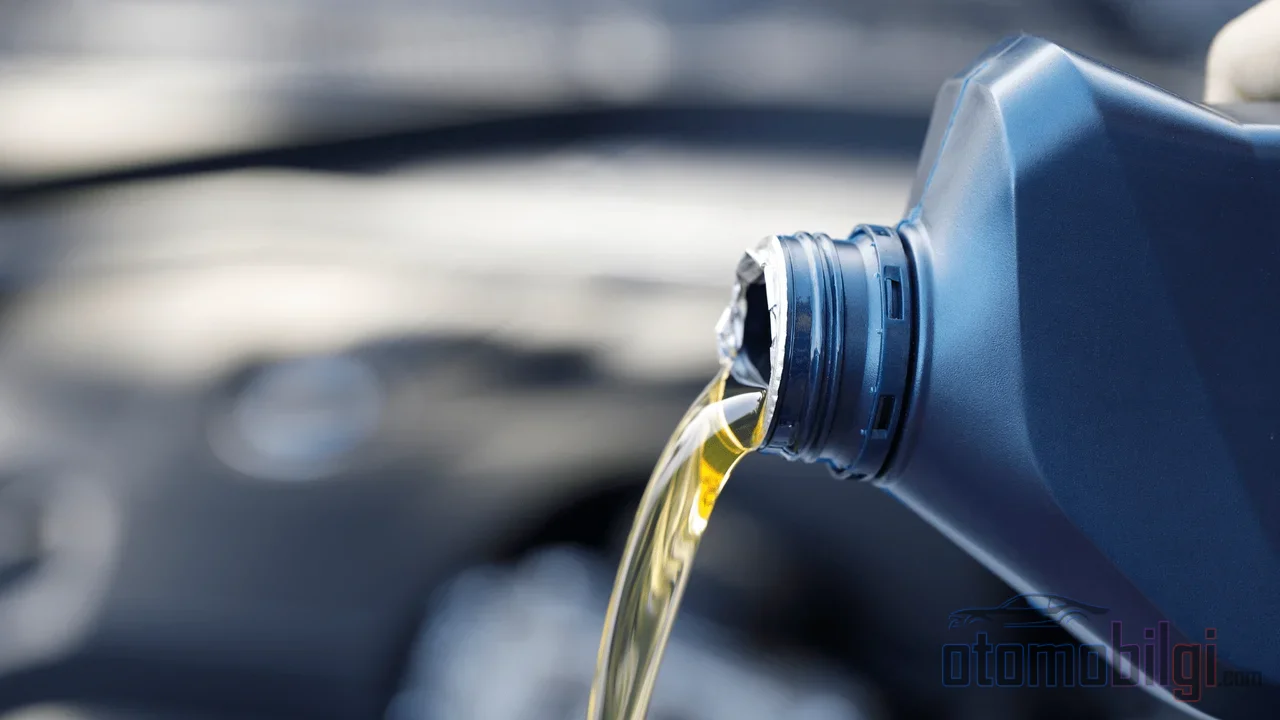
In a hybrid vehicle, the gasoline engine operates in a cycle of being constantly switched on and off with electric support. Frequent stop-and-go in city traffic, with frequent engine shutdowns and restarts tied to that stop-and-go; means the engine carries out its duty for a large portion of its time without reaching full operating temperature. This has two direct consequences: fuel escaping into the crankcase diluting the oil (fuel dilution) and moisture accumulation from condensation. Hybrid oils are formulated against these two risks.
Fuel dilution is not a matter to be underestimated. A field study published by SAE in 2025 showed that under extreme dilution conditions, a 0W-20 oil can actually drop to a viscosity of 0W-8. In other words, the true viscosity of the oil waiting in your crankcase may be several grades thinner than what the label says. Another 2025 study published by MDPI also shows that this effect becomes pronounced at low temperatures and affects fuel consumption. Oils developed for hybrid conditions are designed with additive packages that address this dilution and low oil temperature scenario.
The Electric Motor and Generator Side
In a hybrid powertrain, the gasoline engine is not alone; the electric motor and generator operate within the same system, with bearings rotating at high speeds. 0W-16 grade oils developed for hybrids are tested for this high-speed bearing protection, deposit control, and compatibility with the system's polymeric materials - including insulation components. Therefore, choosing a hybrid oil is not just a matter of the viscosity number, but also of material compatibility with the entire hybrid system.
Friction, Cooling, and Fuel Consumption Gains
The basic logic behind lowering oil viscosity is a simple energy balance: a thinner oil film reduces the energy spent as pumping and shear resistance in the piston rings, main bearings, and camshaft. At a scientific level, this effect has been verified: in a numerical analysis study published in 2025, 0W-16 delivered a noticeable fuel economy improvement compared to both 0W-20 and 5W-30.
As for the numbers, the picture is as follows: in primary oil producer tests, 0W-16 showed economy improvements of up to 2% compared to 0W-20; industry-wide, the typical value is in the 1-2% range, and this gain applies only to engines designed for this viscosity. More optimistic figures of 4-6% also circulate, but these rest on a single source, and the verified range of 1-2% should be taken as the basis.
| Comparison | Typical result |
|---|---|
| 0W-16 vs 0W-20 | 1-2% better fuel economy |
| 0W-16 vs 5W-30 (numerical analysis) | Noticeable economy improvement |
| 0W-20 in a vehicle requiring 0W-16 | Acceptable (temporary), economy drops |
| 0W-16 in a vehicle requiring 0W-20 | May be too thin, not recommended |
The Heated Debate: Protection or Efficiency?
Among driver communities, there is an ongoing debate between 0W-16 and 0W-20. One view argues that 0W-20's thicker film makes it better for protection, in exchange for a slight increase in fuel consumption. While some users report better mileage with 0W-20 despite the manufacturer's recommendation, others write that they observed a drop in consumption after switching to 0W-16. The contradiction here stems from measurement methods, driving profiles, and differences that vary from vehicle to vehicle; controlled tests and manufacturer data favor 0W-16.
On the other hand, there are also individual opinions such as "low viscosity is chosen only for emissions targets, 5W-30 makes more sense in my old car." The only scenario in which this interpretation is correct is when the engine was not designed for 0W-16 in the first place: viscosity gain, but it is meaningful only in engines optimized for that grade. Switching to a thicker oil in an engine that requires 0W-16 loses efficiency; using 0W-16 in an engine that requires 0W-20 or thicker risks being insufficient for the hydrodynamic lubrication film.
Which Viscosity Should You Use in Your Vehicle?
The short and clear answer: the grade specified in your owner's manual. Some Toyota and Honda four-cylinder models require 0W-16 from the factory; this grade is common in the new-generation Toyota, Honda and Lexus hybrids. If the manual says 0W-16 and you cannot find it, Toyota's official approach is a good guide: if 0W-16 is unavailable, 0W-20 can be used, but you should return to 0W-16 at the next oil change. This is not a solution, but an exceptional tolerance.
Do not go in the opposite direction: using 0W-16 in an engine that requires 0W-20 can leave the film thickness inadequate, especially under high temperature and load conditions. You should only move from 0W-20 to 0W-16 with the manufacturer's approval. Using a thinner oil than specified can lead to insufficient lubrication, increased engine wear and possible warranty issues.
Effect on the Warranty
Using a different viscosity does not automatically void the warranty; however, if it can be shown that a failure was caused by the wrong viscosity used, a warranty claim can be denied. Practical conclusion: in a vehicle that requires 0W-16 or 0W-20, sticking to the specified grade is the safest way to avoid risking warranty validity.
Things to Watch Out for in Oil Choice at Authorized and Independent Service Centers
- Check that the oil packaging carries API SP and ILSAC GF-6B approval (or at minimum the grade the manufacturer requires); the viscosity figure alone is not enough.
- Before going to the service center, note the grade in your manual and look at the label of the oil applied; especially at independent shops, the "whatever is on hand" approach is not the right grade for hybrids.
- Prefer a product developed for hybrids: fuel dilution, low oil temperature and polymeric material compatibility are the aims of these formulations.
- Keep the invoice and oil label; in warranty processes, a record of which viscosity was used and to which standard carries value.
Closed Answer: Why 0W-16?
Three engineering rationales for preferring 0W-16 in hybrid engines come together: a thinner oil film reduces friction losses and delivers fuel economy gains on the order of 1-2%; the engine, which works cold thanks to frequent stop-and-go and electric assistance, achieves rapid lubrication at first start and reduced wear with low viscosity; the hybrid-specific formulation protects against the risks of fuel dilution, moisture and polymeric material compatibility. These three are meaningful only together with the correct grade - if the manual says 0W-16, the oil you use should also be 0W-16.
One final note: the industry trend is reaching even lower, toward 0W-8; hybrid-focused products in this class have already entered the market commercially. It is realistic to expect the numbers in owner's manuals to shrink even further in the coming years. What remains unchanged, however, is the rule itself: the viscosity decision belongs not to the driver, but to the engineer who designed the engine.
Sources
- The Skinny on 0W-16 Oil - ENEOS
- Numerical analysis of low-viscosity lubricants in hybrid vehicles - ScienceDirect
- A Study into the Engine Oil Performance on Plug-in Hybrid Electric Vehicles - SAE
- Fuel Dilution in Hybrid Engine Oils - MDPI
- Maxima HYBRID 0W-16 - Petrol Ofisi
- 0W16 Oils And SN-Plus Certification? - Underhood Service
- 0W16 Vs 0W20: Which Motor Oil Is Right For Your Engine? - Terzo Oil
- The Most Suitable Engine Oil Choice for Hybrid Vehicles - Rowe Oil
- Benefits of 0W16 Oil vs 0W20 - Palco