Alternator Whistle: The Definitive Fix for a Noise That Rises with RPM
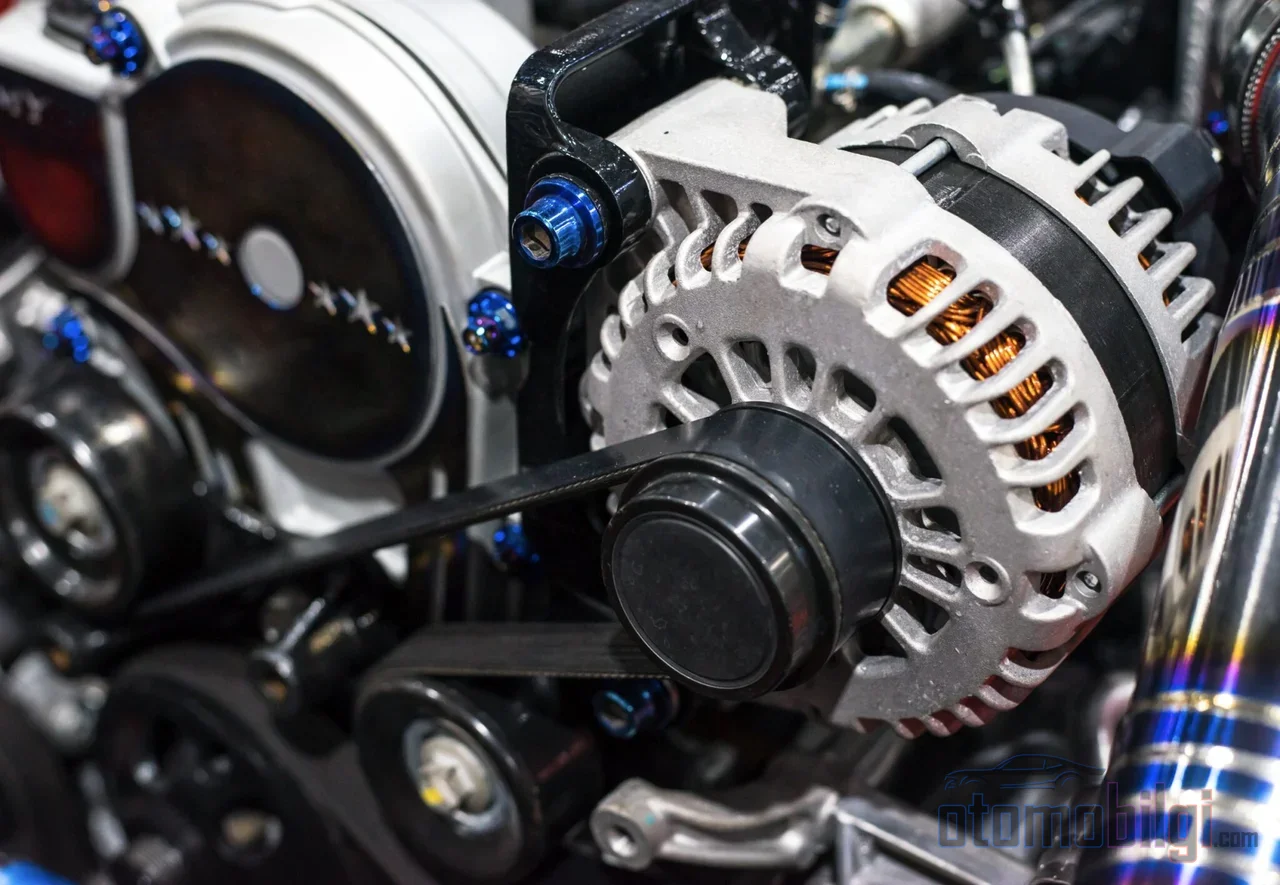
You're pressing the gas, the music is on, everything is fine... and then you notice: a high-pitched sound coming from the engine, rising and falling in sync with your revs. It doesn't go away when you turn the radio down, and it becomes even more noticeable when you turn the volume up. Welcome to the alternator whine club! Don't worry, when you read this page to the end, you will know where that whine comes from, how to diagnose it, and how to silence it. Let's get started.
Where Does the Whine Come From? Let's Find the Source First
Not every noise in your car's sound system is the same thing, and a wrong diagnosis means hours wasted. The first question is this: does the sound change with engine speed (RPM)? If the whine gets higher-pitched when you accelerate, the alternator is most likely involved. Because the alternator is the only electrical device in the car that follows engine speed; when the revs rise, it speeds up too and tries to leak the electrical noise it produces all the way to the speakers.
But be careful: mechanical sounds coming from the engine bay can also be confused with speaker whine. If the alternator bearing is worn, a squeaking grinding sound is heard; if the belt, pulley, or tensioner is faulty, screaming or screeching-like sounds appear. These come not from the speakers, but directly from the engine bay. So first, distinguish this: is the sound really coming from the speakers, or from the engine bay?
There's also the static sound heard when connecting your phone via AUX while charging it at the same time, if applicable. That's a separate story, and we'll get to it below as well. Now let's first meet the most classic suspect: the alternator.
Key Takeaways
- A whine that rises in sync with engine revs is usually alternator noise
- Healthy voltage: 12.4-12.7V with the engine off, 13.8-14.6V with it running
- Alternator AC leakage should be below 0.1V AC
- Keep RCA cables at least 30 cm away from power lines; if crossing is unavoidable, cross at 90 degrees
- Check grounding and cable routing before buying a filter; the filter is often the last step
Why Does the Alternator Leak All the Way to the Speakers?
Let me explain simply: the alternator actually produces alternating current (AC) and converts it to direct current (DC) to feed the car's electrical system. This conversion is not always perfect. Faulty rectifier diodes can allow raw AC current to leak into the electrical network; a weak alternator, a small battery, or a powerful amp connected to stock wiring can also cause voltage fluctuation (ripple). Once this noise enters the network, your sound system's cables carry it to the speakers with relish.
So how does the noise find the sound system? Two classic culprits come into play here: the ground loop and poor cable routing. Think of the ground loop like this: when audio components are grounded at different points, a small resistance difference forms between them and a return circuit is established for noise. For example, if the head unit ground under the dashboard and the amplifier ground in the trunk are at different points, the RCA cable's shield becomes the easiest return path for this loop, and the hiss enters exactly through that cable into the amp. Running power cables parallel and close to RCA signal cables also creates electromagnetic interference; if the factory wiring harness, antenna cable, and speaker cables are bundled carelessly, they can pick up noise in the same way.
There is also a hidden culprit: excessive amplifier gain setting. If you turn the gain up more than necessary, you carry tiny noises that are normally inaudible to the speakers as if shouting them through a giant megaphone. So sometimes the problem is not the noise itself, but the setting that amplifies it.
Step-by-Step Diagnosis: How Do You Find the Source of the Hiss?
Stay calm and proceed in order. Most of the time the problem turns out to be much simpler than you think.
1. When does the sound occur?
If there is hiss while the engine is running but the sound system works fine with the engine off, there is an electrical leak. If there is static even with the engine off, the likelihood of a damaged speaker or faulty speaker connection increases. If the sound gets worse when you turn on the headlights, air conditioning, and rear window defroster, suspicion of the alternator and charging system increases.
2. RCA test
The most basic test is this: Unplug the RCA connectors from the amplifier. If the hiss disappears, the noise is entering through the signal path, meaning the RCAs, the head unit, or a ground loop. If the hiss continues, you need to look at the power side or the amplifier itself.
3. Voltage and AC leak check
Get a digital multimeter and connect it to the battery terminals. You should read between 12.4-12.7V with the engine off and between 13.8-14.6V with it running. But be careful: even if the voltage looks normal, faulty diodes can cause noise. For this, set the multimeter to AC voltage mode; the reading should be below 0.1V AC. If it is above that, the alternator is leaking AC.
4. Listen for mechanical noises
Finally, listen to the pulley, AC compressor, and the shaft and tensioner bearings. Belt-related squealing noises are often mistaken for alternator hiss. Tighten the bolts firmly and use star washers. keep your hands well away from the belts while the engine is running, and disconnect the battery's negative terminal before starting any cable work.
Solution: Free Fixes First, Then Filters
Here is the best part: most hiss is resolved without spending a single cent. Pay attention to the order, because installing a filter should always be the last step.
Fix the grounding (most of the time the solution ends here)
- Connect all grounds to clean, bare metal; don't hesitate to scrape off the paint.
- Tighten the bolts thoroughly and use star washers.
- Keep the ground cable short and thick.
- Consolidating all grounds to a single common point significantly reduces noise.
- No stacking grounds on top of each other over thinly painted sheet metal; that is a classic invitation for noise.
Review cable routing
Keep the RCA, speaker, and antenna cables away from the main power cable. Rule of thumb: route the signal cables at least 30 cm (12 inches) away from power cables; if they must cross, always cross at a 90-degree angle. The truth is that opinions on this are divided: some say running RCA alongside the power cable changes nothing, while installation guides mandate separation. Cable quality and the system's sensitivity determine the outcome; if you want to stay on the safe side, separate them.
Filters: when, and which one?
If noise persists after wiring and grounding have been verified, a filter can come into play:
- Just two warnings:
- a ground loop isolator for the current loop in the RCA cable's shield,
- a power-side filter if charging noise is confirmed,
- a power capacitor for large multi-amplifier systems.
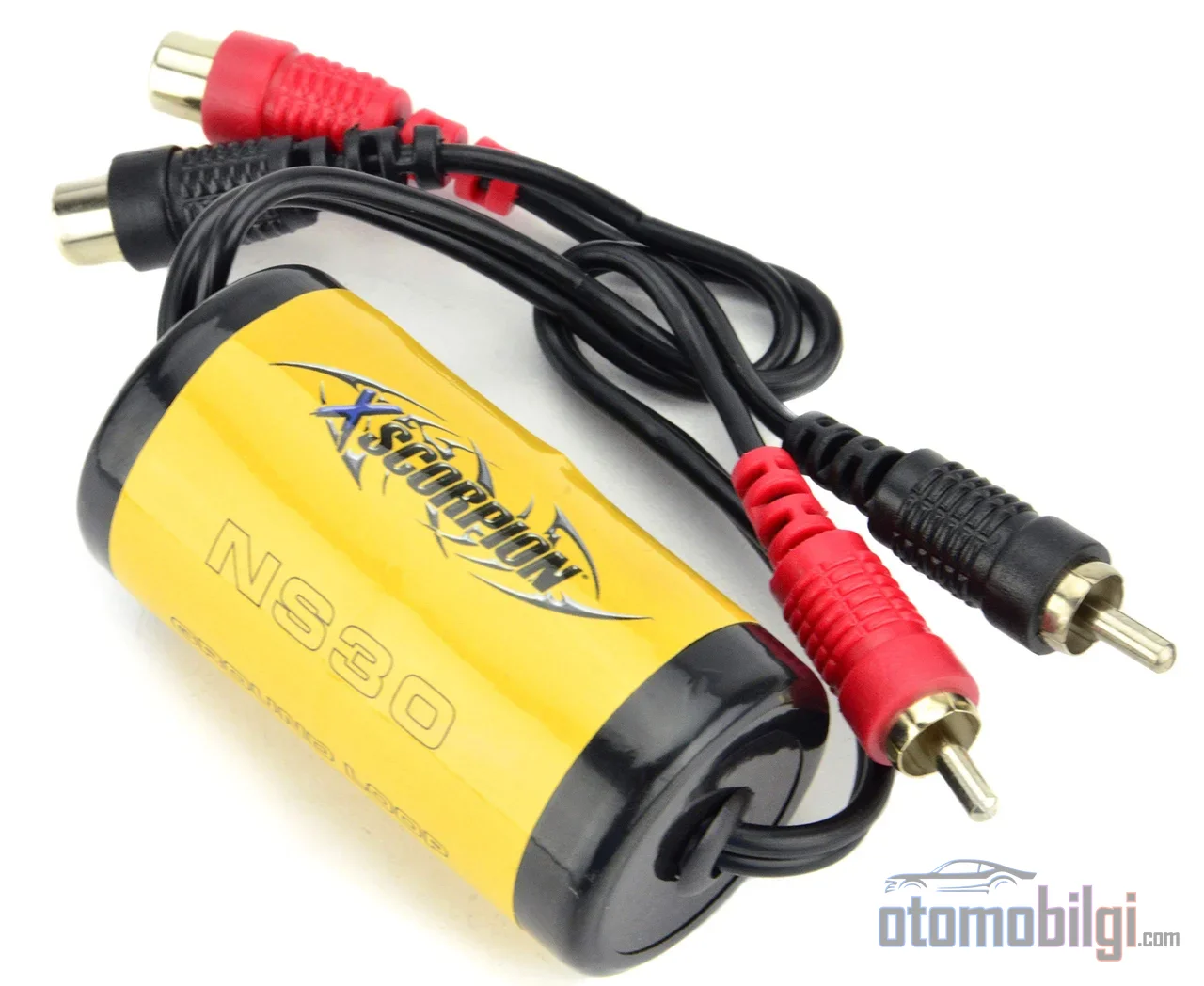
A ground loop isolator breaks the electrical connection causing hum and hiss by placing a transformer between the noise source and the amplifier. A simple but effective principle. Only two warnings: cheap isolators are known to degrade sound quality, so quality models are preferred. And disconnect the battery's negative terminal before installing the filter. For power-side filters, the best result comes from mounting the filter at the alternator B+ terminal, where it catches noise before it enters the electrical system. In high-power systems, the "Big 3" wiring upgrade also makes a serious difference.
One more fact: a filter doesn't solve everything. It reduces the symptom but doesn't fix a bad alternator, a bad ground, or faulty diodes. If the alternator, pulley, tensioner, or belt is faulty, sometimes the only permanent solution is replacing that part. Moreover, a faulty alternator isn't just a nuisance: voltage spikes and ripple can damage the amplifier, and low voltage can lead to clipping and speaker risk. If the alternator dies completely, the vehicle can only travel 30 minutes to 1 hour on battery power alone.
Static Coming Through AUX While the Phone Is Charging
This is one of the most annoying variants of hissing: you connected your phone to AUX, it's plugged in to charge, and static noise is coming from the speakers. The culprit is again the ground loop. When the phone's power source and the stereo's power source are connected to the same electrical system, the two circuits interfere with each other and this noise gets carried onto the signal line; it doesn't occur in every vehicle model, but it's very recognizable when it does.
There's one more possibility: the charging cable or the phone itself can emit RF signals. As for cheap USB chargers... let's be honest, they're a record-breaking category when it comes to noise. The hum heard from a charger is sometimes harmless coil vibration, and sometimes a sign of overheating, overloading, or poor quality. Similar hum issues during charging have also been reported with USB-C hubs; the cause could be the charger, the PD load, the cable, the hub, or an electrical fault. Replacing a low-quality charger with a quality one can end the whole problem in a single move.
Short Answer: Where Does the Whine Come From and How Do You Fix It?
Let's wrap it up. If the whine in your car's audio system rises with engine RPM, it comes from electrical noise generated by the alternator leaking into the sound system through weak grounding or incorrect cable routing; if you hear static from AUX while charging, the culprit is the ground loop between two power circuits or a cheap charger. Order of solution: first unplug the RCA connectors to identify the source, then gather all grounds to a single point on clean metal, separate the signal and power cables, and only then bring in a filter or ground loop isolator. Don't jump straight to replacing the alternator; test the charging system first - most of the time it's solved without spending money.
Remember: the noise is a symptom, not the disease. Finding the source instead of silencing it with a filter protects both your sound quality and your wallet. Now grab that multimeter and face the whine; let that sound be scared of you.
Sources
- Understanding Alternator Whine: Causes and Solutions for Your Vehicle
- Car audio noise suppression guide
- Eliminating Noise with Car Audio Ground Loop Isolators
- Do ground loop isolators work for car audio?
- How to Eliminate Ground Loop Noise in Car Audio?
- Static noise with auxiliary input while charging
- Why Is My Charger Making A Buzzing Noise?
- Best methods for dealing with alternator whine?