How Does ANC (Active Noise Cancellation) Work in Vehicles?
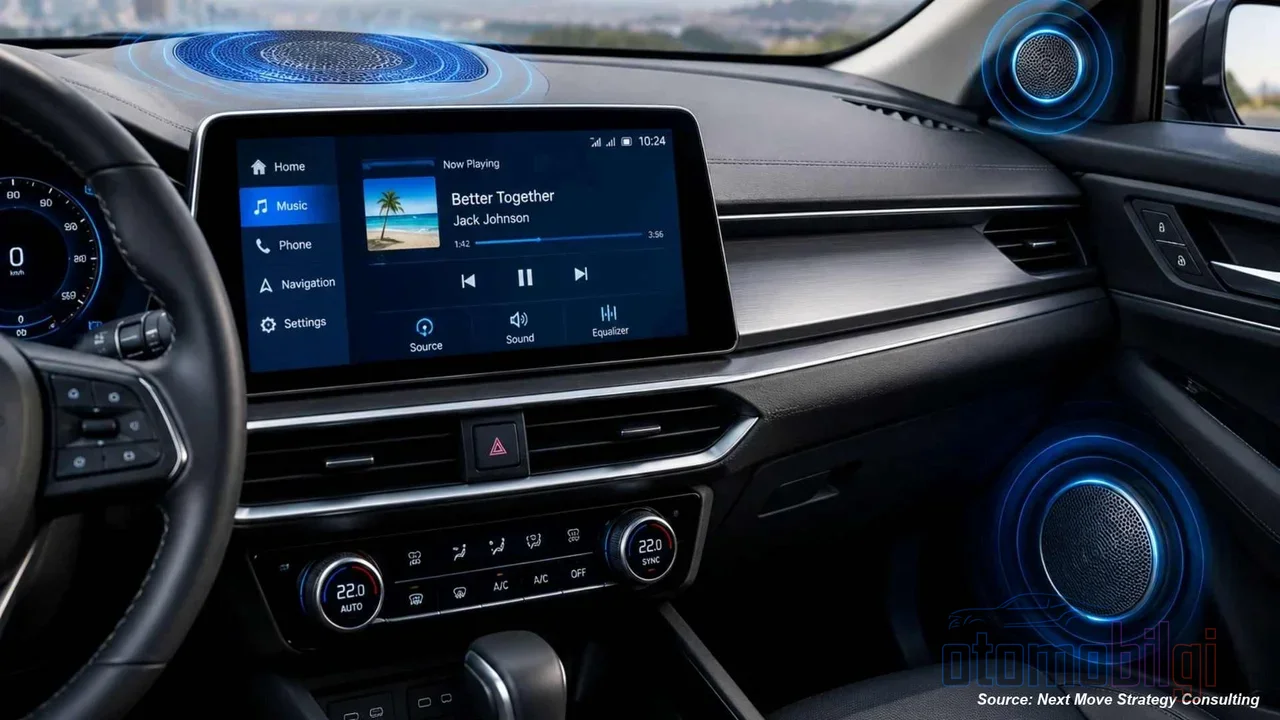
You love the active noise cancellation in your headphones, right? On a plane, the engine drone suddenly disappears and the music comes to the fore. But have you ever thought about a car cabin that manages to pull off the same trick? Windows up, music off, yet the inside just never quite goes completely silent. This is exactly where Active Noise Cancellation, or ANC technology, steps in and fights that annoying cabin drone on your behalf. But let's be honest: this battle isn't always won. So how does this system work, where does it really make a difference, and where is it just a slick headline in a brochure? Let's take a look together.
How Does ANC Work? Canceling Noise with Reverse-Phase Sound
The idea is actually very clever: instead of hiding the noise behind a wall, you send a sound wave that carries the same strength but oscillates in exactly the opposite direction. Mathematically, a signal is generated whose phase is inverted by 180 degrees, acting like a mirror image of each sound wave. When the two waves meet, they cancel each other out; this is called destructive interference. It's as if two people are trying to push the same door in opposite directions at the same time, and the door doesn't budge.
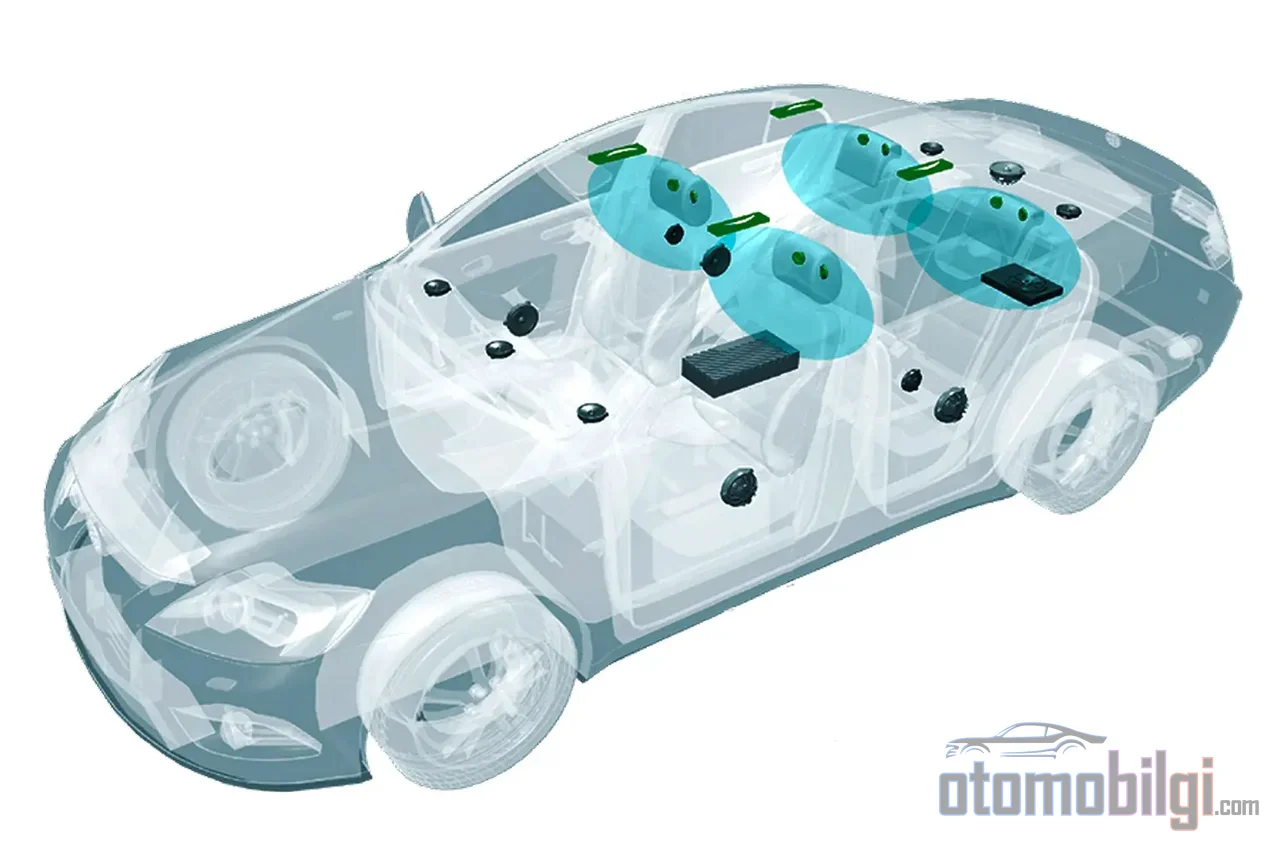
So how does this work in a vehicle? Small microphones placed inside the cabin continuously measure the constantly changing engine and road noise. These signals are processed in real time by adaptive algorithms in a unit called a DSP (Digital Signal Processor), and the reverse-phase counter-signal is sent into the cabin through the car's own speakers. An interesting detail: the system works even when the stereo is completely off, not just while music is playing; in other words, a silent battle continues in the background without you noticing.
For the system to work with correct timing, it needs to be able to predict the noise. Conventional ANC systems therefore read engine speed (RPM) data over the CAN bus; if the engine's speed is known, the frequency at which it will produce a drone can also be determined. Nissan's Advanced ANC system goes one step further: with accelerometers placed at points close to the engine and tires, it directly measures body vibration and targets both engine and road noise. Nissan states that this approach was the first application to target engine and road noise simultaneously. Let's note this in history: Nissan first offered ANC in 1991 on the Bluebird model, and it was a world first.
Highlights
- ANC in vehicles works by sending sound that is 180 degrees out of phase with the noise measured by the cabin microphones.
- The technology is most effective against low-frequency noise in the 65-250 Hz range; it is weak at high frequencies such as hissing sounds.
- The first automotive ANC application: the 1991 Nissan Bluebird.
- Hyundai's RANC responds fast enough to have an analysis time of 0.002 seconds, and in tests it reduced cabin noise by 3 dB.
At Which Frequencies Is It Effective, and Where Does It Fall Short?
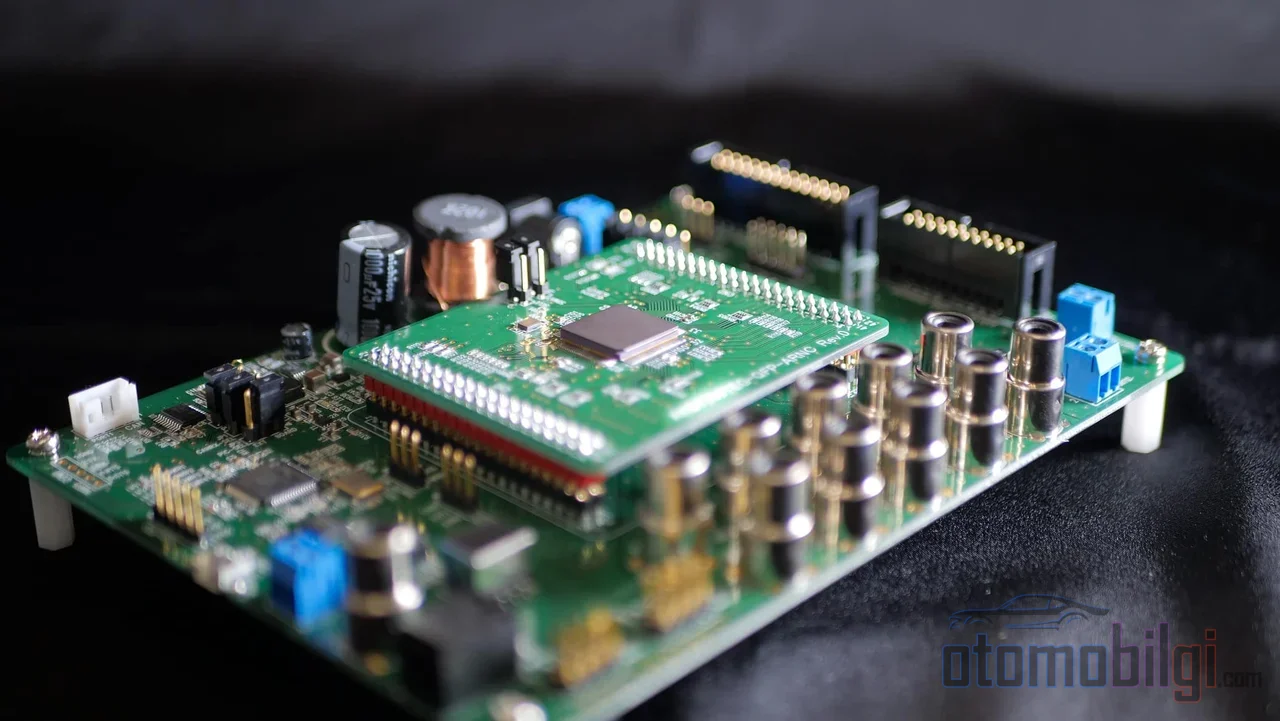
This is the most critical part of the matter, the part rarely explained in brochures. ANC is not a magic silence button; it is a tool strictly bound by the laws of physics. Low-frequency sound waves are long and change slowly; so the system can track them. High-frequency waves, on the other hand, are short and fast; the system cannot always analyze them in time before they reach your ear without producing a counter-wave.
Let's talk in concrete numbers: According to Hyundai, active noise cancellation works best in the 65-125 Hz band, while with electronic systems noise can be reduced in the 30-250 Hz range, a spectrum covering the firing frequencies of a four-cylinder engine. However, full cancellation for all seats and all frequencies is generally possible only up to 120-130 Hz; for the firing frequency of a four-cylinder engine at 6000 rpm, global cancellation can target up to about 200 Hz. Above that, achieving the same success for every frequency and every seat position becomes harder. Above 1 kHz, active cancellation almost gives up; that's where passive insulation comes into play.
So what does this mean in real life? Wind noise. The energy of wind noise is also concentrated mostly at low frequencies, but it changes continuously and irregularly; this is exactly the area where ANC struggles. High-frequency sounds like hissing and sudden impact sounds like potholes also fall outside the system's range. In electric vehicles, when the engine sound disappears, road and wind noise become more prominent; that's why sound management has become an even more important issue in EVs.
Passive Insulation Is Still Indispensable
There is a very important fact here: ANC never completely eliminates passive noise control (PNC); the two complement each other. On the passive side, fiberglass, cellular foams, acoustic-laminated front and side windows, door sound barriers, special floor mats and mufflers do the job; they dampen sound waves before they enter the cabin. While the passive method is more effective at high frequencies above 800 Hz, ANC takes over at the lower end. If you consider that a typical mid-range vehicle carries more than 45 kg of insulation material, ANC's appeal becomes easier to understand: it reduces low-frequency noise without adding weight, and since it uses the existing sound system, it is a relatively low-cost addition for the manufacturer. Moreover, less insulation material means less weight, which translates into fuel economy and, in electric vehicles, range.
Manufacturers Implement the System in Different Ways
Not every brand gives the same answer to the silence problem. Some even take a completely different path. Let's briefly look at who does what:
- Nissan: The new High-Performance ANC in select models concentrates noise reduction on a specific seating area with its Zone Control function. In Auto mode, the system detects where the passengers are seated; if you want, you can give priority to rear seat passengers. Conversation, music and emergency sirens are left audible.
- Hyundai RANC: Since road noise is irregular, classic ANC may not be able to keep up; RANC calculates road vibration with an acceleration sensor, and the counter-wave transmission takes 0.002 seconds, while road noise reaches the passenger in about 0.009 seconds. So the system has a share in it. In tests, it reduced cabin noise by 3 dB; that's roughly half the noise of a car without the system. It was used in the Palisade and Kia K9.
- Lincoln: Active Noise Control in the Continental works with microphones that monitor the cabin's sound profile; counter acoustic waves sent from the speakers cancel out unwanted noise. When used together with acoustic laminated glass, it achieves a significant reduction in NVH values.
- Bose: Road Noise Control (RNC) reduces road, tire and chassis noise across a wide frequency range using an accelerometer, microphones and the sound system; Engine Harmonic Cancellation (EHC) continuously monitors and cancels narrow-band engine harmonics using engine CAN data and cabin microphones. It is additionally tuned for each vehicle variant.
Why Doesn't Rolls-Royce Use ANC?
Here's the surprise name: Rolls-Royce. In the Ghost (2021), a completely different path was chosen instead of active cancellation. Acoustically tuned damping units were placed in the seat frames, ports were added between the trunk and cabin, and a special whisper resonance frequency was generated for the cabin. On top of that, over 100 kg of sound-absorbing material, double-glazed windows and a double-shell partition wall were installed. So at the peak of luxury silence, resonance engineering and heavy passive insulation were chosen over electronic cancellation. This reveals a nice truth: ANC is not the gold standard in every condition; good engineering means choosing whichever method works.
Silence Delivered Through Software Updates
One of the exciting aspects of ANC is that it is largely software-based. Tesla is a living example of this: "Active Road Noise Reduction" came to the Model S and Model X with a software update; a pair of microphones embedded in the body is used to reduce road, tire and wind noise. ANC also came to the Cybertruck via an OTA update; the required microphone and speaker hardware was already present in the vehicle. So the hardware was ready in your car, and the only thing missing was the software, which arrived over the cloud. The opposite also happens: in some vehicles, an ANC fault is fixed by dealers reprogramming the radio control module.
The industry's newest step came in September 2026: Panasonic Automotive developed the world's first integrated Advanced ANC system that reduces both road and engine noise in series hybrid vehicles, and the system was first used in Nissan's new Elgrand. The system controls the two noise sources in real time across a wide frequency range; it intervenes only in the targeted noise without touching music, conversation and phone calls.
What to Expect in Real-World Use: Real Difference or Marketing?
Now for the other side of the coin. While manufacturers and suppliers talk about significant improvements, some drivers find the difference underwhelming in real life. This doesn't mean either side is lying; measurement methods and expectations differ. Here are the facts you need to know:
- ANC is most effective against continuous, predictable, low-frequency noise (such as engine hum). It is limited when it comes to random and sudden sounds.
- Tested systems (such as Hyundai's RANC) typically deliver a reduction of around 3 dB; that is a measurable and meaningful difference, but not magical silence.
- A quiet cabin isn't ideal for everyone: some manufacturers amplify engine sound in performance vehicles by playing engine recordings through the speakers; Bose does this electronically with Engine Harmonic Enhancement.
To sum it up briefly: ANC in vehicles is a system that electronically cancels noise, measured using cabin microphones and vehicle data such as engine speed, with sound waves at a 180-degree inverted phase emitted from the speakers; it works most effectively on continuous, predictable low-frequency noise in the 65-250 Hz band, and it remains weak against high-frequency or irregular sounds. If you keep this sentence in mind, you'll know what to expect when you see ANC in a brochure.
If ANC is on the list in your next vehicle, ask yourself this: Is engine and road noise already well insulated in this vehicle, or is ANC there to cover up weak insulation? If the answer is the latter, the technology still works, but on its own it doesn't promise luxury-level silence. The real hero of silence is often invisible: laminated glass, foams, and a well-designed chassis. ANC is a subtle supporter alongside them, making a difference when used wisely.
Sources
- Automotive Audio Solutions: Vehicle Electrification and Active Noise Cancellation
- Advanced Active Noise Control - Nissan Global
- Active Noise Cancellation - Honda Technology
- Hyundai's World's First Road-Noise Active Noise Control, RANC - Hyundai Motor Group
- Active Sound Management - Bose Automotive
- Advanced Active Noise Control - Nissan Global
- Panasonic develops world's first integrated ANC system - Panasonic Automotive
- Rolls-Royce reveals Formula for Serenity - Rolls-Royce Newsroom
- How It Works: Active Noise Control - Driving.ca
- Tesla Model S and Model X get noise cancellation tech