What Is Dolby Atmos and How Does It Work in a Car
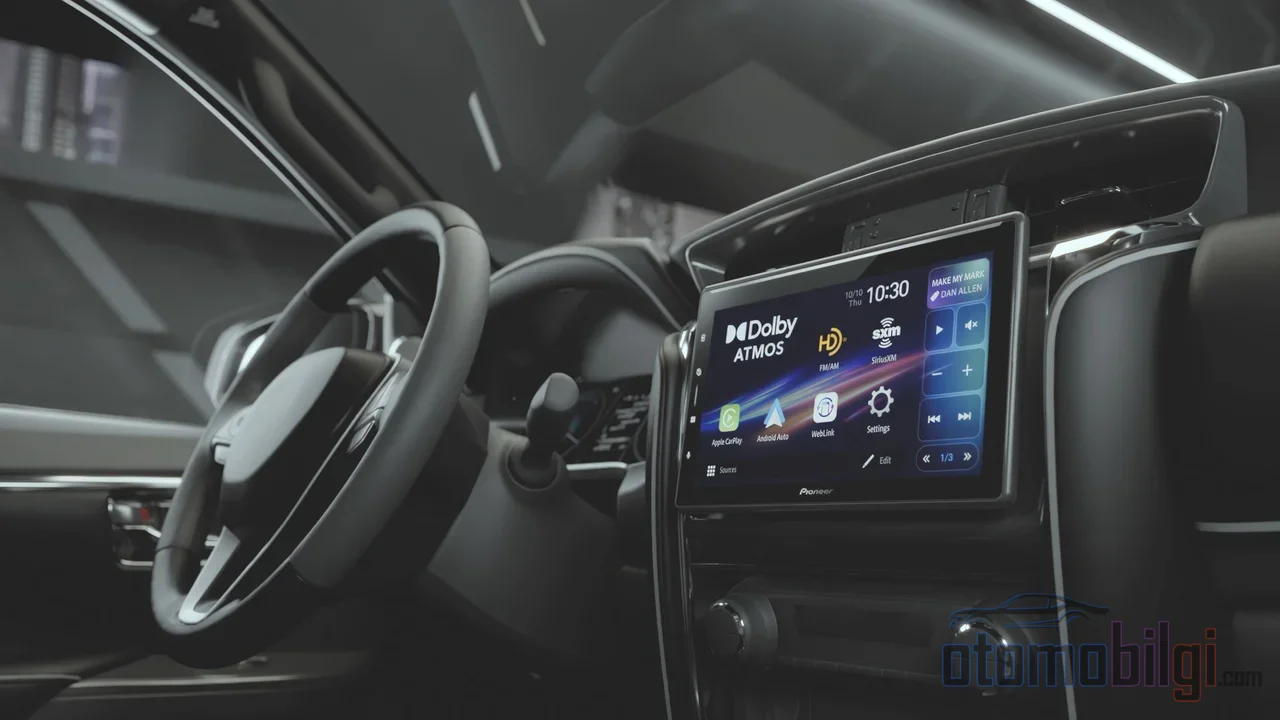
Just think about it: your favorite song is playing, and the vocals seem to come from the windshield while the drums come from the ceiling. When you sit in the driver's seat, the music wraps around you, not from outside but from every direction. That is exactly what the Dolby Atmos experience in a car is, and its journey from movie theaters to behind the steering wheel is on everyone's lips. So how does this system actually work inside the cabin, which vehicles have it, and does it really make a difference? Buckle up, because this journey is a bit technical, but we promise it won't be boring.
What does Dolby Atmos do in a car, and how is it different from stereo?
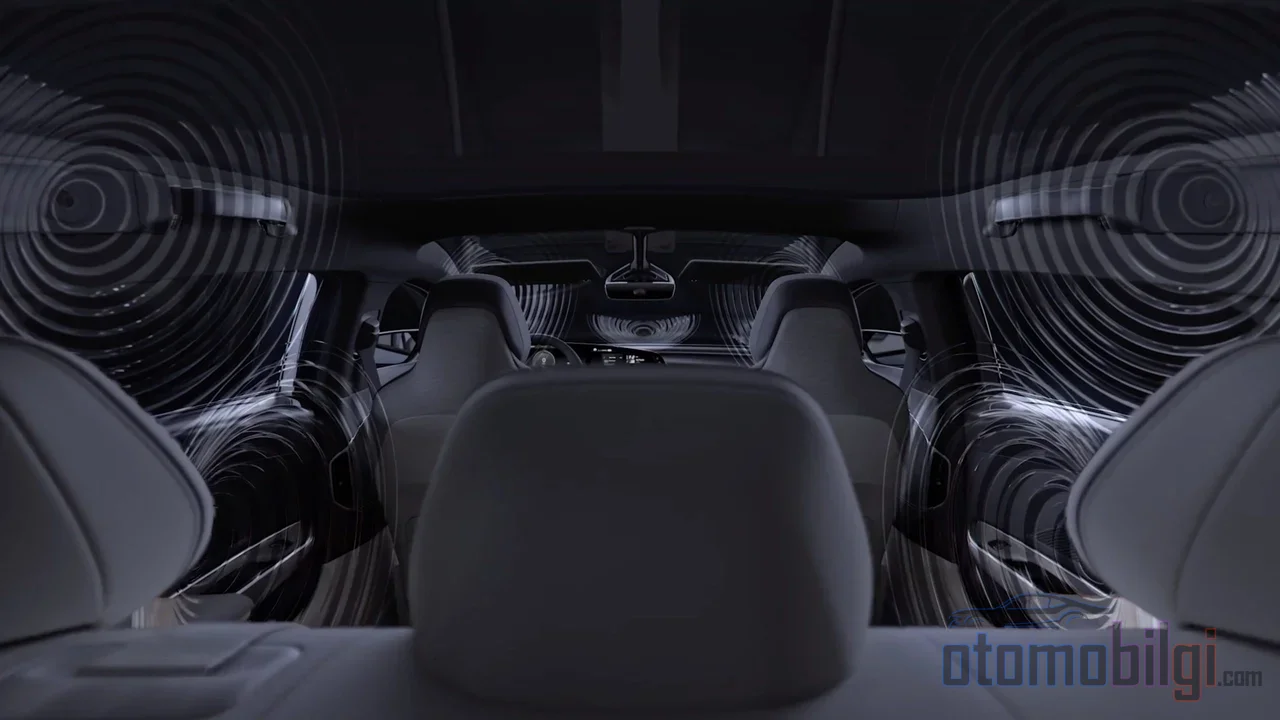
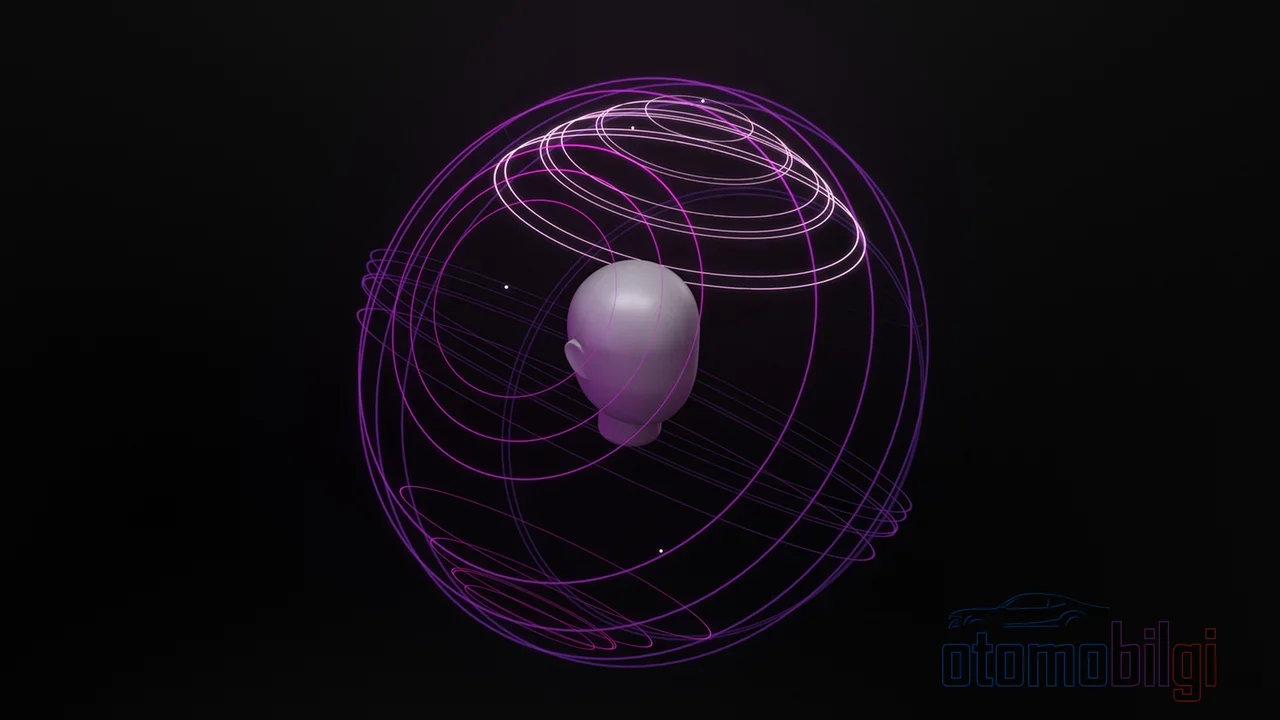
We all know classic music systems: left and right channels, and maybe some rear speakers. Sound is distributed to fixed channels at specific points in the cabin. Dolby Atmos, however, tackles the job with a completely different logic. Music is encoded not by channels but by objects. That means a vocal, a guitar, a bass drum, each one is a separate object on the sound stage, and these can be placed almost anywhere inside the cabin.
The magic here is this: the Atmos software adapts to however many speakers your car has. If a system worth a hundred thousand lira has 31 speakers, great, but even in a simple 4-channel setup, the software intelligently maps the objects to the available channels. In naming conventions like 5.1.4 that Dolby recommends for home setups, the last number indicates the height speakers; in cars too, the ceiling and upper-zone speakers are the key to creating this spatial feeling. Essentially, the system places you at the center of the music: the sound revolves around you, and you are right in the middle of the stage.
Highlights
- Dolby Atmos encodes music as objects instead of channels, and the software automatically adapts to the available speakers.
- The Lucid Air, with its 21-speaker system, is the world's first vehicle to integrate Dolby Atmos.
- In Mercedes-Benz vehicles, Atmos is supported with up to 31 speakers in Burmester 3D/4D systems.
- Volvo brought CarPlay with Spatial Audio support to the EX90 via an OTA update.
- For Atmos music, you need a compatible streaming subscription such as TIDAL, Amazon Music, or Apple Music.
How the signal reaches your seat: the decoding and rendering side
So what happens in the background when a song comes from your phone or from inside the car? Atmos content reaches the vehicle as a Dolby Digital bitstream. The vehicle opens this package, meaning it decodes it, then maps the decoded objects to the speakers in the cabin. This rendering is done in the head unit in a traditional architecture, and the output is distributed to the amplifiers with thick and expensive analog cables. The old-school way means lots of cables.
On the modern side, there is A2B (Automotive Audio Bus), a technology developed with Analog Devices. This data bus carries fully synchronized bidirectional 50 Mbps data over a UTP cable, latency is on the order of 50 microseconds, and it can deliver up to 50W of power over a single cable. Why does this matter? Because the weight of the old analog wiring disappears, which is a small but real contribution to range, especially in electric vehicles. Also, since the bitstream can be transported in packed form, the decode and render work can be done not in the head unit but in the amplifier in the trunk or a remote processing node. It is stated that the Atmos decoder can run on a processor such as the SHARC ADSP-21569, and that this solution has shipped over 100 million units and is featured in more than 35 OEM designs.
How much does the number of speakers matter?
Here is the question everyone wonders about: how many speakers are required? The answer is interesting, because both opposing approaches can work. Pioneer developed a proprietary system on the aftermarket side that adapts a four-speaker, four-channel setup to Atmos, and demonstrated it in a Toyota Camry. On the other hand, Mercedes-Benz's optional Burmester systems can go up to 31 speakers.
According to Dolby's official documentation, the critical point is tuning rather than the number: the speaker system in the cabin must be optimized, meaning tuned, for Atmos rendering. Vehicle-specific DSP processing ensures that sounds are positioned in the right places; the user is left with only narrow parameters such as balance and fader to play with in the cabin settings. In other words, the calibration done at the factory is far more decisive than the controls at your fingertips.
What does cabin noise do to music?
Now let's talk about a reality: the biggest enemy of sound quality inside a car is ambient noise. Road noise masks spatial cues especially in the sub-bass region and pushes the sense of clarity toward the 200 Hz to 4 kHz band. That's why noise is taken into account in automotive Atmos design; but the real shortcut lies with quiet cabins.
In an electric vehicle, which has no engine, engine noise disappears entirely and the problem is largely solved. That's why premium electric vehicles are considered ideal platforms for Atmos. Listening sessions conducted in electric SUVs also highlight this quiet cabin advantage. In short, the same system does not deliver the same result in a noisy cabin and a quiet one; half of the atmosphere is hidden in silence.
Which brand is implementing it how?
Lucid Air: the owner of the first
The Lucid Air is the world's first vehicle to integrate Dolby Atmos. Its 21-speaker Surreal Sound system includes front, rear, side and height speakers. User experiences are interesting: some owners praise the system's clarity, saying vocals and instruments float at different points in space. But not everyone agrees; some criticize a lack of brightness in the treble, finding the sound soft and veiled. So there is no single absolute verdict; taste varies from person to person.
Mercedes-Benz: 31 speakers and 8 exciters
On the Mercedes side, the job requires somewhat more serious hardware. The Dolby Atmos experience requires an MBUX 2 or newer (NTG7) head unit, a Burmester 3D or 4D surround sound system, and a specific software version. Initial availability arrived with the Maybach S-Class, S-Class, EQE and EQE SUV. In the top-tier Burmester setup, the 31 speakers and 8 exciters, an 18.5-liter subwoofer, and 4 near-ear speakers in the front seats are mentioned. The standard Burmester 3D Surround system offers 15 speakers and up to 710 watts of power. In short, Mercedes has turned this into a fully equipped audio engineering showcase.
Volvo: A surprise delivered via OTA update
Volvo's story is perhaps the most exciting of all. The optional Bowers & Wilkins system in the EX90 comes with 25 speakers and a total of 1,610 watts of power; it includes four headrest speakers and four 3D speakers that deliver sound from above. The EX60, meanwhile, has a 28-speaker, Dolby Atmos-certified B&W system, plus a headrest unit in each of the four main seats, a first for Volvo. The real bombshell came in August 2026: Volvo brought Dolby Atmos-supported Spatial Audio CarPlay support to the EX90 via an OTA update, and this update is rolling out to three models. A small but important detail: Spatial Audio only works in vehicles equipped with the B&W system from the factory.
Cadillac, Audi, and the list goes on
Cadillac comes with a 7.1.4 architecture: 7 surround channels, 1 subwoofer, and 4 height channels. The Optiq model has a standard AKG system with 19 speakers. Audi started bringing Atmos sound to its vehicles starting in July 2025. Along with names like Rivian, Polestar, Li Auto, and Sony Honda Mobility, the number of manufacturers supporting Atmos rose from 10 to over 21 in a year. In other words, this is trending away from being a luxury toy toward becoming an industry standard.
| Vehicle / Brand | Sound System | Speakers | Notable Feature |
|---|---|---|---|
| Lucid Air | Surreal Sound | 21 | First vehicle with integrated Dolby Atmos |
| Mercedes-Benz (optional Burmester) | Burmester 4D | 31 (+8 exciters) | 18.5-liter subwoofer |
| Mercedes-Benz (standard, e.g.) | Burmester 3D Surround | 15 | Up to 710 watts of power |
| Volvo EX90 (optional B&W) | Bowers & Wilkins | 25 | 1,610 watts, 4 3D speakers |
| Volvo EX60 | Bowers & Wilkins | 28 | Atmos-certified, headrest units |
| Cadillac Optiq | AKG | 19 | 7.1.4 surround architecture |
Is Atmos available without a subscription?
The short answer: no. The common way to listen to Dolby Atmos music is streaming, which requires an Atmos-supported subscription. How it works varies by brand:
- On the Cadillac side, TIDAL or Amazon Music are listed as compatible services, and a suitable OnStar service plan is also required.
- On TIDAL, Atmos Music is available on both Individual and Family plans across iOS, Android, TV, soundbar, and in vehicles.
- Apple Music supports Dolby Atmos with steps to turn it on and off on iPhone and iPad; on the vehicle side, the situation varies by brand.
- On Mercedes' MBUX platform, lossless FLAC and Atmos tracks can be listened to locally via TIDAL; Apple Music, however, streams only at AAC (256 kbps) quality inside the vehicle.
- In the Volvo case, Spatial Audio over CarPlay became possible via an OTA update and compatible hardware.
When Lucid owners connect to the TIDAL app, they see that Atmos tracks are labeled with the relevant symbol. GM, meanwhile, has announced that Apple Music is coming to all of its electric vehicles. So the ecosystem is expanding rapidly, but every brand has its own way of opening the door; buying the car is only half the job, and the experience doesn't begin until the subscription side is also complete.
Does it really make a difference, or is it just marketing?
Let's be honest, there are two sides to the coin. The catalog of artists supporting Atmos is too large to dismiss: 87 percent of the top 100 artists on the end-of-2022 list had released music in Atmos. In response, some users found Apple Music's Atmos catalog lacking and switched to Amazon Music. So the library is still in a growth phase.
And there is a technical debate, too. Some users claim the car is actually playing a stereo up-mix or binaural mix rather than true Atmos; while these claims are based on user experience, they raise a fair question: is the content and hardware you have really being processed on an object basis? Also, on the mixing side, Atmos music's -18 dB level limit has effectively ended the long-running loudness war, so tracks carry a more dynamic, less compressed character. While this varies from track to track, it is a technical detail that positively reflects on overall listening quality.
In summary: How does Dolby Atmos work in the car?
Let's wrap it up: Dolby Atmos is a spatial audio technology that encodes music on an object basis, intelligently maps it according to the number and placement of the speakers in your vehicle, and adapts the decode and render stages to the cabin hardware. The quality of the experience depends on three things: a speaker system tuned for Atmos, a cabin with low noise (here electric vehicles have a big advantage), and a compatible streaming subscription such as TIDAL, Amazon Music, or Apple Music. From Lucid to Volvo, from Mercedes to Cadillac, brands combine these three with their own engineering approaches.
So what's left for you? If you ever take a ride in an Atmos-capable vehicle, open an Atmos-labeled track when choosing a song and close your eyes (only if you're a passenger, of course!). Trying to guess where the sound is coming from is the most fun way to understand how much difference this technology makes. Perhaps this is exactly the most enjoyable technology to have moved from the movie theater into the car.
Sources
- Dolby Atmos in Your Car | Cars, Setup & Immersive Sound
- Dolby Atmos for Cars - ADI Case Study (PDF)
- Mercedes-Benz with Dolby Atmos (Dolby Professional)
- Lucid Air is the World's First Vehicle to Integrate Dolby Atmos (Dolby Newsroom)
- All-new electric Volvo EX90 SUV to feature Dolby Atmos (Dolby Professional)
- Volvo details CarPlay update that adds Spatial Audio feature for three models
- Cadillac - About Dolby Atmos (Vehicle Support)
- Dolby Atmos (TIDAL)
- So How Does In-Car Dolby Atmos Really Sound?
- I Listened to Dolby Atmos in a Rivian SUV