How Does SiriusXM Satellite Radio Work in a Car?
Just think about it: You're on a remote highway, the same scenery for hours, your cellphone's bars long asleep, and yet you're still listening to more than 170 channels without interruption. How? Not from your pocket, but with a signal coming from satellites orbiting far, far above your head. The question of how SiriusXM works in your car is an engineering story far cleverer than you'd think. And yes, the story isn't only about satellites; there are also terrestrial repeaters hidden among the skyscrapers. If you're ready, we're unraveling this signal chain piece by piece.
How Does the Satellite Signal Reach Your Car?
Although SiriusXM is called "satellite radio," it's actually a two-legged system: on one side, satellites in space; on the other, terrestrial repeaters on the ground. The satellites reflect the signal back to every compatible radio receiver on Earth, including the one in your car. While the geosynchronous orbits of the Sirius side provide very wide coverage, this design has posed serious challenges in terms of satellite engineering. The moral of the story: music comes down from the sky, but it's not easy.
Highlights
- SiriusXM uses both satellites and terrestrial repeaters together
- The signal arrives at 2.3 GHz and is decoded into more than 170 channels on the receiver
- Coverage area includes all 50 US states, the District of Columbia, and Puerto Rico
- Trial subscription does not auto-renew; it stops when the period ends
- The All Music plan is officially $11.99 per month (taxes excluded)
What Do the Receiver and Antenna in the Car Do?
The car end of the chain starts with a tiny antenna: about the size of a cellphone, this antenna is specially mounted on your vehicle and picks up the signal from the satellite or a ground repeater. The antenna module amplifies the signal, filters out interference, and carries it to the receiver. The chipset then converts the incoming signal from the 2.3 GHz frequency to a lower intermediate frequency. In other words, the antenna is something like a bouncer at the door: it keeps the chaos outside and sends in a signal ready to be processed.
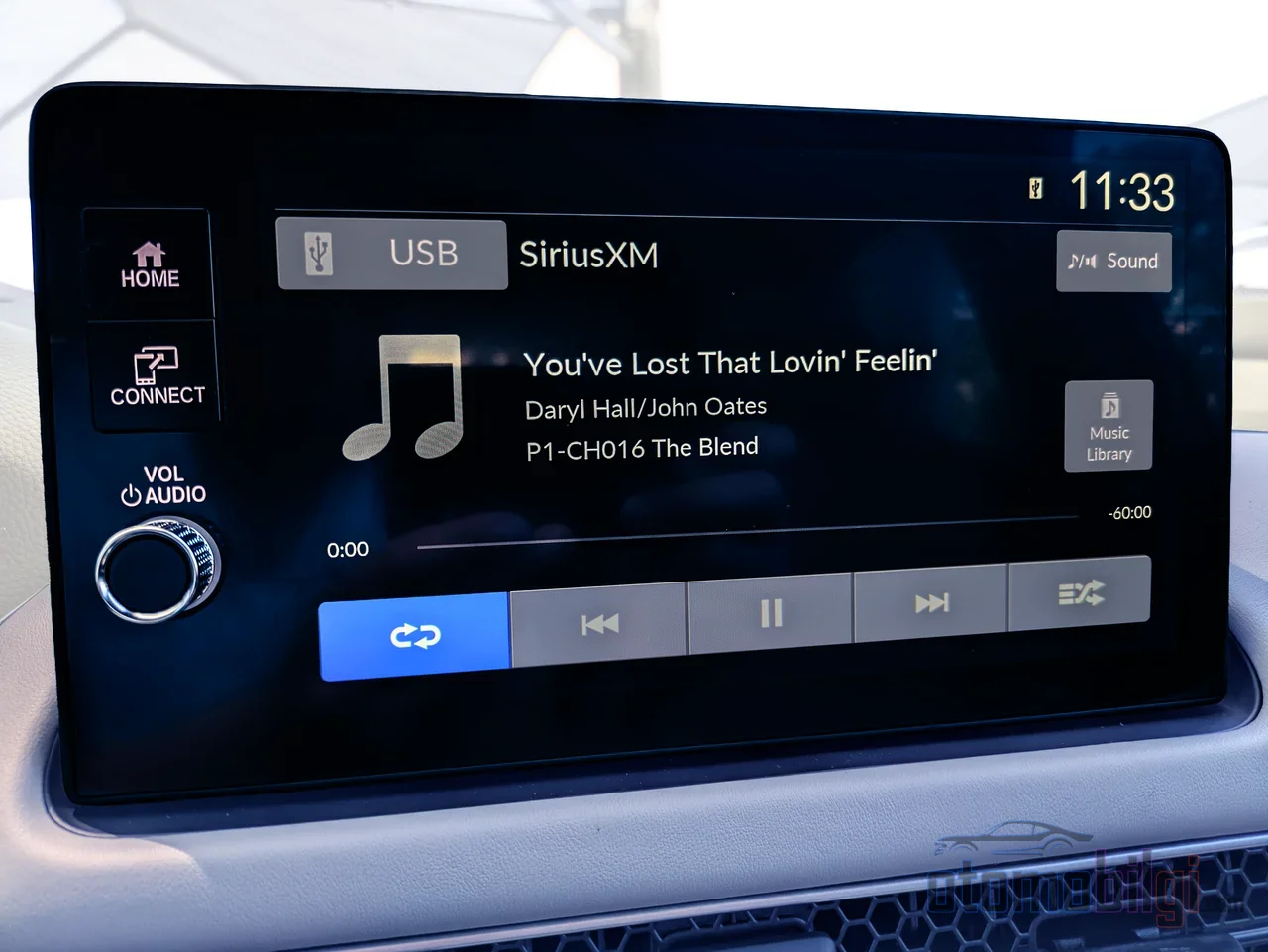
And the chipset's job doesn't end there; it decodes the signal and turns it into more than 170 channels. On the control side, it's the receiver's job: channel and category selection buttons, and the on-screen display of artist, channel, and song information are all handled by the receiver. If you've seen the song title scrolling across your screen, that text is the final link in this very chain.
Urban Canyons and Terrestrial Repeaters
So how does the satellite signal hold up between the towers? Like this: in areas created by tall buildings, which engineers call "urban canyons," the satellite signal weakens. SiriusXM solves this problem with a network of ground-based terrestrial repeaters; these repeaters rebroadcast the signal on the same frequency, closing the coverage gap. The same repeaters also deliver the signal to homes and offices, and they eliminate the hassle of pointing the antenna directly at the satellite. Still, in a home setup it's recommended that the antenna face south, toward where the SiriusXM satellites are; even indoors, eye contact with the sky is still valuable.
Why Does the Signal Cut Out in Tunnels and Parking Garages?
The honest part of the matter: SiriusXM doesn't work flawlessly everywhere. The typical sources of signal problems are the antenna, line of sight to the sky, and physical obstacles. Tunnels, underground parking garages, thick concrete structures, and even severe storms can interrupt reception. The reason is simple: the signal depends on a clear line of sight between the satellite and you; the signal needs a clear line of sight between the satellite and you, and when that line is blocked by a tunnel ceiling, the music goes silent too. The good news is that when you exit an underground garage, the signal usually comes back on its own the moment you see the sky again.
There are also those who experience signal loss after washing their car; such interruptions can stem from the antenna, coverage, or connection. If the signal isn't coming where it should be, refreshing the radio, i.e. performing a "refresh" operation, may work. There is also a practical way to check: Tune the radio to Preview Channel 184 (depending on the vehicle it may also be Preview Channel 1) and see whether sound comes through. If there is sound, the connection is solid.
SiriusXM, DAB, or Internet Radio?
In fact, four different technologies are knocking on the same door, and each has a stage where it shines. SiriusXM's trump card is the long haul: it offers consistent sound quality even in remote areas, because the broadcast relies on the satellite, not the internet. Internet streaming, on the other hand, owes its quality directly to the quality of the connection; if the network is weak, the music is weak too. On the FM side, the signal of classic local stations is strong and stable enough to withstand interruptions; against the satellite radio that goes silent in a tunnel, the local transmitter still has an answer.
| Technology | Strength | Weakness |
|---|---|---|
| SiriusXM satellite radio | Consistent sound in remote areas, ease of use | Interruption in tunnels and covered parking |
| Internet radio / streaming | Wide content access | Dependence on internet and cellular data |
| HD Radio | Extra free content and better sound on local stations | Limited to local stations |
| Classic FM | Strong and stable signal | Limited channel variety |
Let's also clarify this distinction: SiriusXM's own satellite infrastructure and streaming from the mobile app are different things. Both offer nationwide coverage, but reliability, sound quality, and ease of use differ. In everyday use, the most beloved feature of the satellite side is its simplicity: the music starts the moment the engine runs; there's no need to connect your phone or open an app. The phone is certainly a powerful tool, but at the wheel, the goal is to do a lot with few touches.
There are ways to listen in your car without subscribing to SiriusXM: via CarPlay or Android Auto with a streaming-only plan, with an aux or USB cable, or over Bluetooth audio. If you're going to stream without Wi-Fi only, your cellular data plan must be active; in other words, it's not free.
How Does the Subscription Work, and What Will It Cost You?
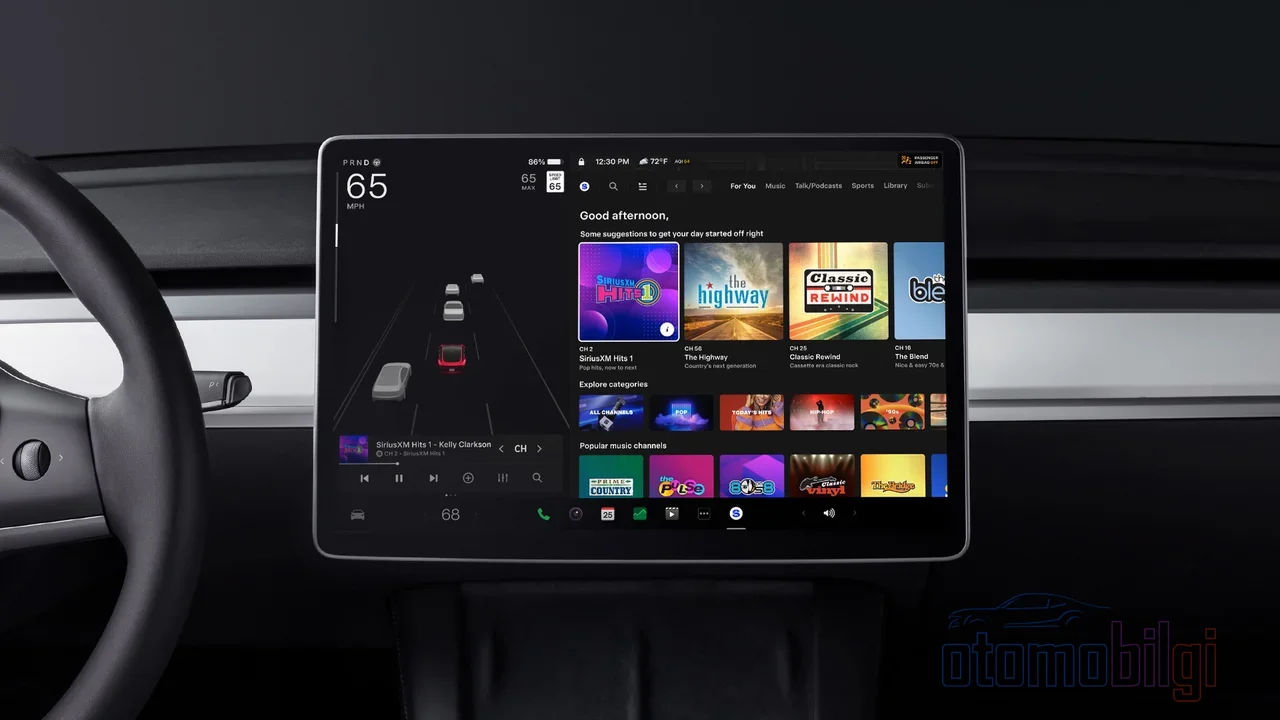
SiriusXM is a subscription service; the hardware in your vehicle opens the door, but the content comes with monthly plans. The popular in-vehicle plans on the main plans page offer the radio service and listening on the mobile app together; from time to time, promotions like the first 3 months for 1 dollar also come into play. The All Music (All Access) plan is officially offered at 11.99 dollars per month (excluding taxes), covering both in-car and app access. On the market, monthly prices between 10.99 and 21.99 dollars are also discussed across different tiers like Select, All Access and Mostly Music; it is also a fact that the package structure is sometimes found confusing. As of February 24, 2026, new full-price subscription rates took effect on the affected plans. Let us also note that as the in-car subscriber base slows its growth, the company leans on new pricing and packaging strategies; this is a sign that the service is gradually putting more weight on out-of-car streaming as well.
Does Your Car Have SiriusXM, How Do You Find Out?
There are four practical ways:
- On the official vehicle eligibility page, select your year, make and model and check which services your car has.
- Take a look at the Radio ID: if it is 12 characters, it is a Sirius radio.
- Query by VIN: on some manufacturers' support pages and on SiriusXM's own website, you can check by entering your VIN.
- Look at the radio menu and the SiriusXM logo on the stereo; on some radios, the Radio ID or ESN number is under the menu, and can also be found by holding down the SAT or ESN button.
If you are buying a used car, there is a separate detail: if the car has SiriusXM, dealers usually activate the radio with a 90-day trial. So music may already be ready and waiting for you. To add the radio to your account after registration, you need the Radio ID or ESN number and the VIN.
What Should You Do If Your Car Has No Satellite Receiver?
There are three main ways. First, a dash-mounted SiriusXM module: it connects through and is controlled by the car's dashboard sound system; the compact device is hidden behind the dashboard for full integration. Second, SiriusXM streaming on your phone: with CarPlay or Android Auto, you connect the phone to the radio via USB or wirelessly, log into the app, and select SiriusXM from the dashboard; in Android Auto too, streaming works with the same logic. Third, integration by adding a satellite radio adapter module. In short, not having a factory-installed satellite receiver does not close this door; it just changes the route.
Let us keep expectations clear about coverage: the service is offered in all 50 US states, the District of Columbia and Puerto Rico; in Canada, it is accessed via SiriusXM Canada. So SiriusXM's home turf is North America; expecting a satellite signal on other continents is like searching for a satellite in a city without repeaters.
What Happens When the Trial Subscription Ends?
Short answer: there is no nasty surprise, because the trial does not automatically convert into a paid subscription. According to the official rules, the trial subscription ends at the end of the stated period unless a new plan is purchased. The easiest way to find out when your trial ends is to log into the Online Account Center and check the Subscriptions tab. If you'd like to continue, you can choose a plan that starts at the end of the trial from the same place; if you make the transition, your listening continues without interruption.
A fine detail: in self-activating trials and paid subscriptions, if not canceled within 7 days from receiving the agreement, certain conditions come into play. Based on user experiences, significant discount offers can appear at the end of the trial; quite a few people have come across campaigns that drop to a few dollars a month and then return to full price. To keep the service after the trial, you may need to contact SiriusXM and reactivate the radio. New and eligible second-hand vehicles come with an All Access plan trial.
Short Answer: How Does SiriusXM Work in a Car?
SiriusXM takes its signal from satellites in space and urban terrestrial repeaters and delivers it to the small antenna in your vehicle; the receiver decodes this 2.3 GHz signal and carries more than 170 channels to your car's sound system. It offers uninterrupted broadcast anywhere with a view of the sky, while the signal temporarily goes silent in tunnels and underground parking garages. Content is funded by subscription, and it stops at the end of the trial period without automatic renewal.
So what's left for you? Find out in two minutes whether your car has SiriusXM using your VIN or Radio ID, check the end date of your trial, and before a long trip, prepare your playlist, not your tunnel list. The satellite handles the rest.
Sources
- Play SiriusXM the Way You Choose
- I just signed up for SiriusXM, how do I listen?
- How Satellite Radio Works
- Sirius XM Radio for your car - 3 Ways to Get it Done
- I've lost my radio signal, how can I fix this?
- How do I become a subscriber when my trial subscription ends
- Does my trial subscription automatically renew?
- SiriusXM's Customer Agreement