From Espace to Caravan: How Was the One-Box Silhouette Born?
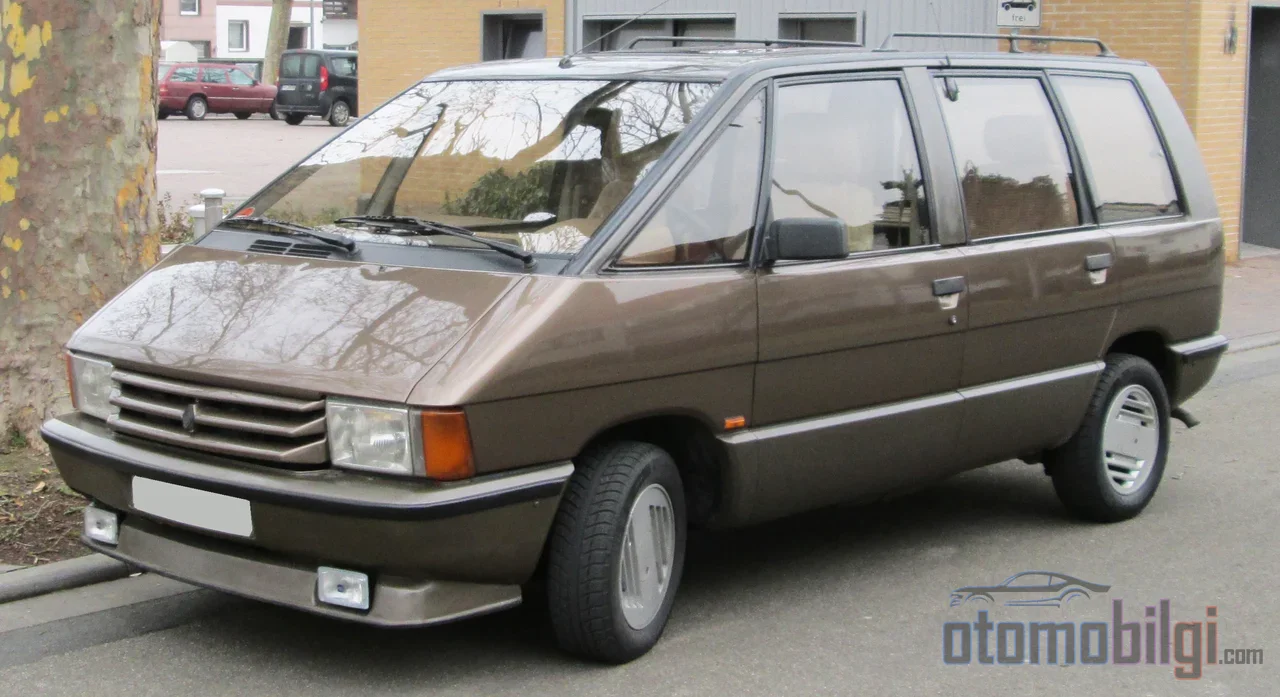
Think back to 1984. Everyone is chasing either long-hooded sedans or boxy bodies, and designers are busy with wedge shapes and angularity. Then one day something appears on the road like a giant glass bubble: it has almost no hood, an upright nose, seats inside that swivel, and the passengers in the back can step out. People stop and stare: what on earth is that? At that very moment, one of the simplest yet most diverse silhouettes in automotive design history is born - the one-volume, or one-box design. And the heroes of this story take the stage in two different continents, within the same year: the Renault Espace and the Dodge Caravan.
What Exactly Does One-Box Design Mean?
Picture a classic car beside you: first the hood, then the cabin, and the trunk volume at the rear - three separate blocks, three separate boxes. Designers referred to this for years as the "three-box" layout. One-box design, however, melts these three boxes into a single whole: the engine, cabin and cargo are resolved within one, flowing body. The French call this form monospace, while we call it one-box or one-volume; all three mean the same thing.
So what made this form possible? The short answer: the placement of the engine. When the engine is placed under the front seats or far forward under a short hood, the car's front face becomes highly upright and the silhouette turns into a single volume from end to end, like a boat. That classic staircase between the hood line and the roof line disappears. Think of a box that your loved ones fit into - to borrow an analogy from daily life, a one-box car is just like a loft apartment that combines the bedroom and the kitchen into a single room: tear down the walls, and you gain.
Highlights
- In 1984, the Renault Espace and the Dodge Caravan/Plymouth Voyager launched the one-box form in the same year.
- With a drag coefficient of 0.32, the first Espace offered a remarkable aerodynamic value for its era.
- On the Espace Mk1, the two front seats could rotate 180° and the five rear seats could be removed - a first of its kind.
- A chess move: the Espace V (2014) evolved into a crossover; the Espace VI (2023) is now a family SUV.
- The legacy lives on today in electric vehicles: the VW ID. Buzz and the Renault E-Space Concept are bringing back the one-box form.
How Did the Silhouette Change When the Engine Moved Under the Seat?
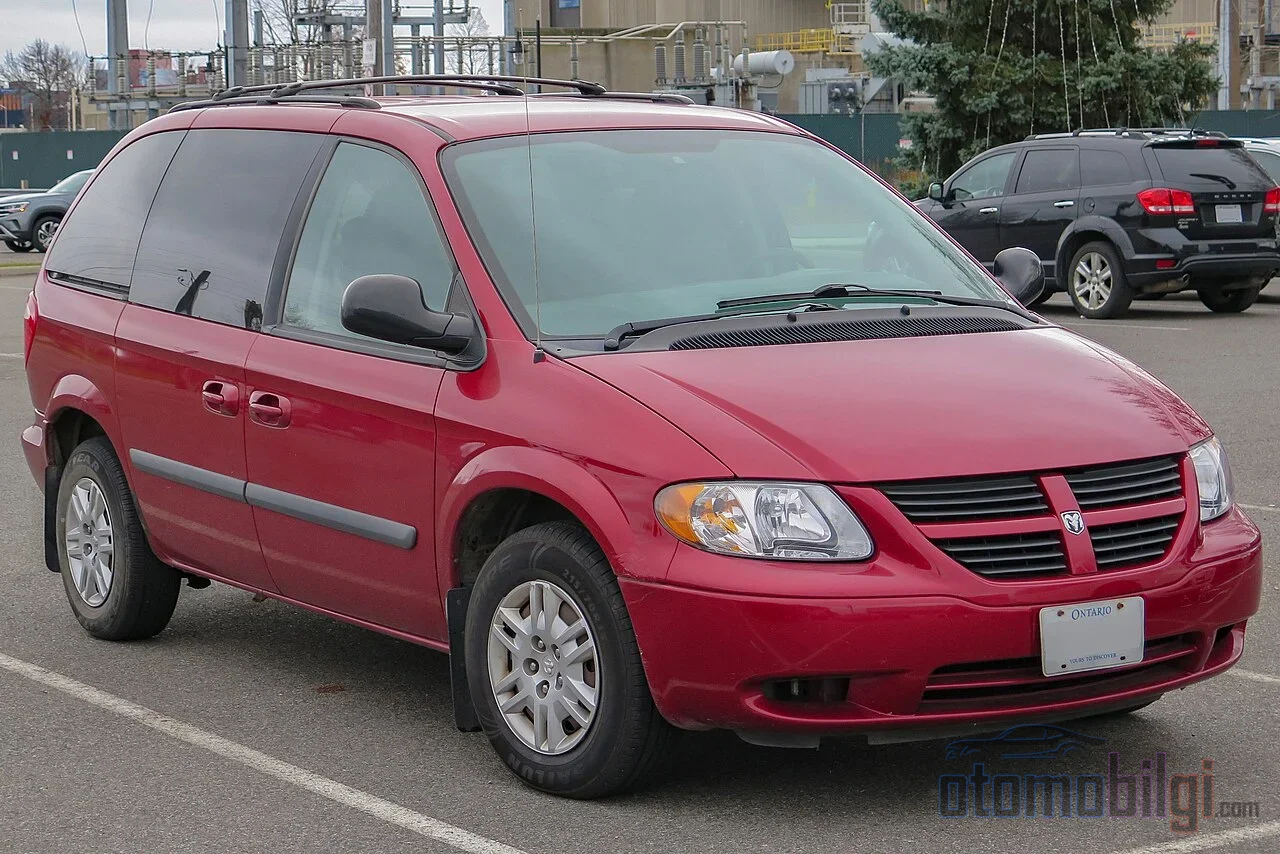
The real revolution began inside the body. When the engine was placed under a short hood, close to the cabin, everything changed on the drawing board: the long-hood tradition became instantly unnecessary, the windshield was pulled far forward, and the driver sat almost at the very front of the vehicle. The result? A shorter vehicle, with far more living space on the same wheelbase. Aerodynamics also favored this form: the uninterrupted single volume managed the airflow more efficiently than long-hooded bodies. The first Espace's drag coefficient of 0.32, despite looking like a box, was better than that of many sedans of its era.
If we compare it to an ice-skating rink: the three-box body hits the air again with each box transition; the one-box body glides over the rink once and slips away. Minivan aerodynamics reached values of up to 0.215 Cd in later years.
1984: A Form Born Simultaneously on Two Continents
Renault Espace: The Glass Bubble French Revolution
The idea for the Espace actually came from designer Fergus Pollock, who was working at Chrysler UK in the 1970s; the project was developed at Matra, but PSA found it too risky and the idea passed to Renault. Renault unveiled the car in 1983 and put it on sale in 1984. It was found so unusual within the company that the alphabetical naming tradition was broken, and instead of an interim team name jokingly referring to an "unidentifiable driving object", a name was chosen that referenced the boxy design and the TGV high-speed train: Espace. Renault marketed the concept with the philosophy of "a car for living".
The technical side was just as extraordinary: a fiberglass body on a hot-galvanized steel space chassis. This structure kept both the weight and repair costs low - imagine it got dinged in a parking lot? The replaced part was a plastic panel. Inside, it was a first of its kind in modularity: the two front seats could rotate 180°, and the five rear seats could be completely removed. The huge windows turned the cabin into a bright cage. Initial sales were slow, but the form gradually became virtually synonymous with the MPV segment in Europe.
Dodge Caravan and Plymouth Voyager: America's Answer
A similar idea was floating around on the other side of the Atlantic too. In 1984, the Plymouth Voyager name returned and was introduced as the Plymouth version of the all-new Dodge Caravan. The "people carrier" trio of the '80s went like this: Renault Espace, Nissan Prairie and Dodge Caravan/Plymouth Voyager. Which one was "first" is still debated even today - the Espace design team claims they had completed their own one-box project months before the Megagamma was unveiled.
Is the Idea Actually Much Older?
The interesting thing is that the one-box idea had been floating around long before 1984. Aviation engineer William B. Stout had already designed a very large vehicle - which could be considered a minivan pioneer - with unitary body construction and a Ford V8 mounted at the rear. On the GM front, the Pontiac Trans Sport concept, unveiled at the Chicago Auto Show in January 1986, made a big splash with its space-age aesthetic and futuristic design; the production Trans Sport hit the roads with the 1990 model year. So the one-box didn't drop from the sky in 1984 - it merely matured that year.
How Did the Aerodynamic Form Mature?
The first one-boxers did look like real boxes, let's admit it. But with the 1990s, aerodynamics became the main focus of automotive design; sharp angles took a back seat, forms softened, and rounded edges arrived. The Espace's own evolution is like a living lesson in this:
- Espace Mk1 (1984): a sharp, angular, honest box; 0.32 Cd.
- Espace Mk2 (1991): the angular shapes gave way to rounded edges; the mirror position extended over the hood, giving an aerodynamic feel. The V6 and 4WD Quadra were added.
- Espace Mk3 (1996): soft lines; the Grand Espace was stretched by 27 cm and became a 7-seater. The Espace dominated the MPV segment, its name almost becoming generic.
- Espace Mk4 (2002): the leading MPV of its era; the Initiale Paris version featured a 2.16 m² glass roof.
In other words, the box stayed fixed, but the box's lines softened in the direction the wind wanted. Just like a ball's corners rounding over time - the form became beautiful by surrendering to the airflow.
Peak and Decline: Why Did SUVs Swallow the Box?
The 1990s and early 2000s were the golden age of one-box designs. Families were enjoying swiveling seats, huge windows and spacious interiors, and every brand was racing to launch an MPV. Then the wind turned. Consumers increasingly began to find minivans "uncool" and saw SUVs as sleeker and more adventurous. The numbers were brutal: In 2019, minivan sales in the US fell to 364,000 units - the lowest in over 30 years - and a further 16 percent drop came in the first half of the year. As the segment shrank, the remaining players tried to survive with bolder design and hybrid engines.
The Espace's own journey was a mirror of this transformation: The Espace V, unveiled at the 2014 Paris Motor Show, arrived as a 7-seat crossover - the form evolved from MPV to SUV. The Espace VI of 2023 is now openly a large family SUV. Although Renault presents it as an evolution faithful to its roots, commentators say the MPV era is over. Even in its 2025 facelift, the Espace is no longer an MPV; it is a family car with its full hybrid E-Tech engine delivering 200 hp of power, 4.8 L/100 km WLTP consumption and a charging-free 1,100 km range, plus a Solarbay dimmable glass roof of about 2 m².
Where Did the One-Box Come From and Where Is It Going?
So if the SUV won, is the box dead? No - and that's the most beautiful part of this story. Because the platforms of the electric era shrank the engine and mechanical parts and placed them in the floor, a canvas opened up before designers that once again makes the one-box form possible. The hood no longer existed to pay homage to the internal combustion engine; so why not return to the one-box silhouette with an upright front face and short hood?
The VW ID. Buzz is the clearest example of this: a fully electric minivan on the MEB platform, and considered the first electric minivan on the market. The short body overhangs and one-box form have been deliberately preserved as the core design element of the original VW; the two-tone paint options are also a sweet wink to nostalgia. On the Renault side, the E-Space Concept reinterprets the 1984 Espace for the electric age: the short hood and upright front section directly recall the old one-box silhouette. The concept shares the E-GMP platform and is planned with single-motor rear-wheel drive and dual-motor all-wheel drive versions. Market analysts even predict the minivan market will grow from its 104.68 billion USD size in 2023 to 137.59 billion USD by 2032.
In short, the clear answer to the question is this: The one-box design was born in 1984 when the engine moved below the front seats, softened and matured in the 1990s out of aerodynamic concerns, peaked in the 2000s, receded with the SUV wave, but is now enjoying a second spring as electric architecture needs it once again.
And as it happens, the SUV revolution itself, ironically, was nourished by the one-boxers' lessons: a spacious interior, modular seats, a high seating position - these were all ideas first popularized by the early MPVs in 1984. The box didn't die; it merely changed its clothes. Next time you see an ID. Buzz or an E-Space Concept on the road, give it a nod as you pass by: you're facing the grandchild of 1984's glass bubble.
Sources
- There once was a vehicle named Espace, an iconic name going back 40 years - Renault Group
- New Renault Espace: a modernized design - Renault Newsroom
- Renault Espace (1984) - Autozine
- Renault Espace: a space oddity - Classic & Sports Car
- Renault Espace - Wikipedia
- Minivan Design Origins Disputed: The Designer Of The Espace Fires Back - The Truth About Cars
- Minivan - Wikipedia
- Renault's iconic minivan is returning as an electric vehicle - DonanımHaber