How Apple CarPlay Changed Over 10 Years?
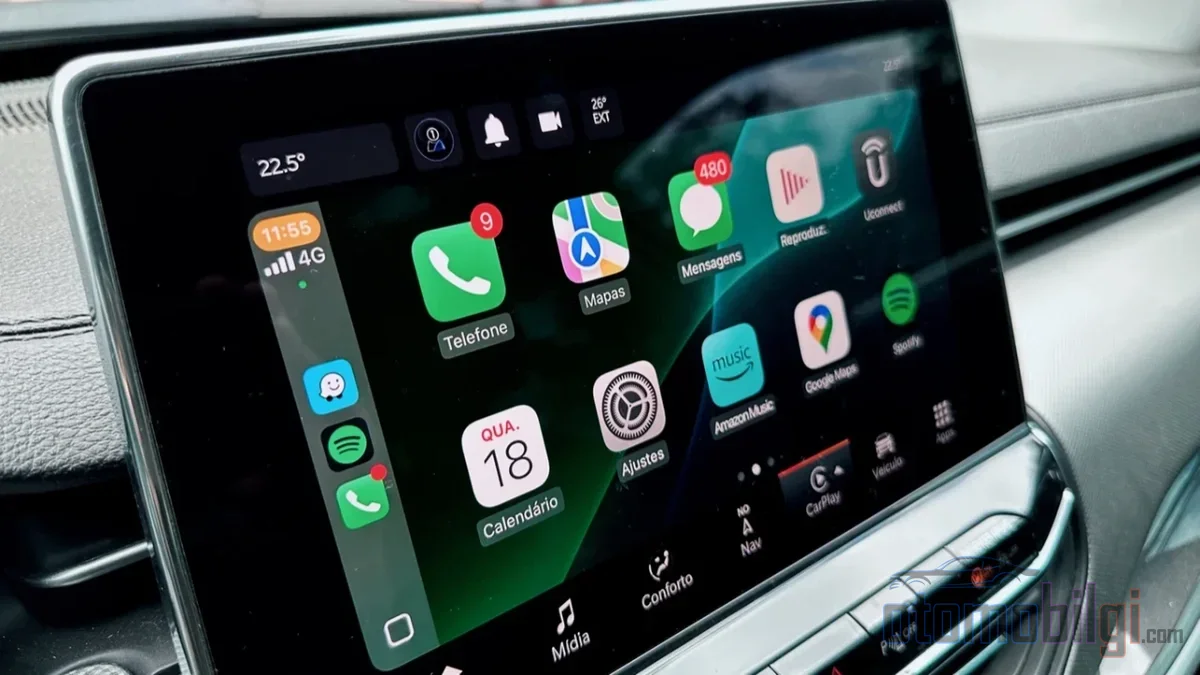
Have you ever looked at your car's screen and seen your phone's interface, and wondered just how new a habit this is? Until 2014, there was no such thing as using an iPhone at the wheel. Apple's idea, which began as a secret project code-named Stark and turned into a giant ecosystem today spanning more than 800 vehicle and motorcycle models, took over a decade. So what happened along this journey, what did each version bring, and where exactly does CarPlay stand today? Let's walk through it step by step, from 2014 to today.
Before CarPlay Was Born: iPod Out and iOS in the Car
The story of CarPlay actually begins not in 2014, but much earlier. In 2008, just one year after the iPhone launched, Mercedes introduced the first audio system with a 30-pin iOS input. Even more striking was the joint effort between Apple and BMW: The iPod Out feature, announced at WWDC 2010, displayed iPhone content in vehicles with a purpose-built interface, and arrived in early 2011 in BMW and Mini vehicles under the name PlugIn. Unlike simple screen mirroring, this system required apps to offer interfaces designed for the car. In other words, CarPlay's philosophy was laid down in those days.
The real announcement came at WWDC 2013: Apple introduced the system under the name iOS in the Car. However, the project was delayed beyond expectations; in March 2014, it appeared before us at the Geneva Motor Show with significant design changes and under its new name, that is CarPlay. Sources give a small discrepancy, ranging from March 3 to March 10, 2014, as exact days; what is clear is this: the system entered our lives with iOS 7.1, and the first manufacturers were Ferrari, Mercedes-Benz, Volvo and Kia. The first model to hit the roads with CarPlay was the Ferrari FF in September 2014. Not a bad start, right?
Highlights
- CarPlay was introduced with iOS 7.1 at the Geneva Motor Show in March 2014; the first car was the Ferrari FF.
- Wireless CarPlay first arrived in 2017 with the BMW 5 Series.
- Third-party navigation support (Google Maps, Waze) opened up with iOS 12.
- CarPlay Ultra was launched with Aston Martin in May 2025.
- Today, more than 800 vehicle and motorcycle models support CarPlay.
The Early Years: Wireless Connectivity and Giant Leaps (2014-2018)
The first CarPlay version was not like today's: basic functions, namely phone, messages, music and maps. But here's the beautiful part: most of the CarPlay software already runs on the iPhone. In other words, the car only provides the screen, speakers and controls; the brain is always the phone itself. That's why the system evolves based on your phone's iOS version rather than the car.
What did the versions bring?
With iOS 8, dark mode came to Maps, iOS 8.3 opened wireless connectivity to manufacturers as an option, and iOS 8.4 added Apple Music and audiobooks. iOS 9 dropped the real bomb: manufacturers could now bring vehicle functions like climate control and radio into CarPlay with their own apps. iOS 10 brought voice message listening and dictation-based replies, while iOS 11 significantly strengthened Maps with turn-by-turn navigation.
The real turning point, however, was iOS 12: Third-party navigation apps like Google Maps and Waze came to CarPlay. A short sentence, but with a massive impact; the Apple Maps requirement, CarPlay's biggest source of complaints, thus became a thing of the past.
The wireless revolution
Until 2017, you had to plug your phone into the USB cable every single time. In February 2017, the wireless CarPlay implementation developed by Harman was announced, and the system first hit the road with the 2017 BMW 5 Series. The technical part is actually quite clever: the initial pairing is done over Bluetooth, network details are shared, and then data flows over a two-way Wi-Fi connection. In other words, your car quietly sets up its own mini Wi-Fi network with your phone. Some sources date wireless CarPlay to 2018, but the widely accepted main info is 2017 and BMW.
During this period, adoption also accelerated: Hyundai, Volkswagen, GM, Honda and Volvo joined in 2015-2016; Ford and Nissan in 2016, while Toyota, which had long resisted, joined the ranks in 2018. In fact, in 2017 heavy trucks met CarPlay through Scania and Volvo, and in 2018 the Honda Gold Wing became the first motorcycle to get it. In December 2019, BMW abandoned the subscription fee it wanted for CarPlay, making the system free.
The Big Redesign and Years of Maturity (2019-2024)
iOS 13 brought the most fundamental change in CarPlay history: a completely redesigned interface, a split-screen layout showing Maps and media side by side, and News, Calendar and Settings on the home screen. The transition from a simple phone mirroring system to the appearance of a true in-car operating system happened exactly in this period.
After that, improvements came drop by drop: iOS 14 brought new wallpapers, food ordering and parking apps, and a soft Siri interface that doesn't take over the entire screen. iOS 15 brought a detailed 3D city view to Apple Maps. iOS 16 added multi-stop routes and fuel refilling and driving task app categories. In iOS 17, with SharePlay in the Car, passengers also became able to add songs to the Apple Music queue; the car party officially began.
The iOS 18 era was even more eventful: the Sound Recognition feature that detects horns and sirens, the Apple Intelligence-based revamped Siri (iOS 18.1), a redesigned call screen (iOS 18.2) and NACS charging standard support (iOS 18.4) arrived one after another. During the same period, the answer to the question of how CarPlay updates arrive also became clear: there is no separate update; everything comes automatically with the iPhone's iOS update.
CarPlay Ultra: The System That Takes Over the Dashboard (2025)
The next-generation CarPlay announced at WWDC 2022 remained in the spotlight for a long time; it was first planned for the end of 2023, then for the end of 2024, and in January 2025 these dates were quietly removed from Apple's website. The long-awaited launch finally arrived on May 15, 2025: the system was announced as CarPlay Ultra with Aston Martin as the first host, and the first demonstration was made on the DBX707.
The difference between Ultra and classic CarPlay is massive: it now controls not just the central screen but also the digital instrument cluster. The driver can combine iPhone-sourced information like maps and media with vehicle-sourced information like speed and gauge data on the same screen and customize the appearance. According to Aston Martin, the system also brings Apple Intelligence to vehicles and interacts with third-party apps for things like parking or fast food orders. It is initially offered only on new Aston Martin orders in the US and Canada; existing vehicles will get it with a future software update.
What about other brands? Audi, Ford, Honda, Jaguar, Land Rover, Lincoln, Mercedes-Benz, Nissan, Polestar, Porsche, Renault and Volvo were on the support list at WWDC 2022, and Porsche and Aston Martin were the first manufacturers to preview the system in December 2023. Porsche also announced climate, ambient lighting and sound controls via the My Porsche app in July 2023. However, as of today, a CarPlay Ultra-equipped car you see on the road is still limited to Aston Martin.
The Divergence from Android Auto: The Story of Two Ecosystems
It would be impossible to talk about CarPlay's 10-year story without mentioning Android Auto; because both systems launched in 2014 and evolved together. Although they share fundamentally similar goals, their paths diverged over time.
| Feature | CarPlay | Android Auto |
|---|---|---|
| Scrolling direction | Horizontal | Strict and consistent, minimal touches |
| Interface approach | Strict and consistent, low-touch | More flexible and customizable |
| App policy | Strict category limits | Wider third-party selection |
| Strong point | Simplicity and the Apple ecosystem | Voice recognition and Google Maps |
In short, CarPlay represents simplicity while Android Auto represents flexibility. The Google side signed off on a comprehensive redesign called Coolwalk in 2023; over the years, both platforms have gained features like improved transit information and indoor mapping. In user forums, there are those who argue that Android Auto is better in terms of stability and interface; but that is an entirely subjective preference. Also, the existence of CarPlay-like systems such as Huawei's HiCar shows how big this market is.
There are those left outside the ecosystem too: Tesla and Rivian offer neither CarPlay nor Android Auto in their own infotainment systems. Even more striking is GM's decision: according to the plan announced in 2023, it is gradually removing both systems from its electric vehicles, starting with the 2024 Chevrolet Blazer EV. The rationale cited is a better user experience and monetizing driver data; the reactions were quite harsh, and the press warned that data privacy would decrease.
CarPlay in 2026: Widgets, Siri AI and Liquid Glass
So where are we today? iOS 26 brought CarPlay the Liquid Glass design language, pill-sized call notifications instead of full screen, and the display of home screen widgets on the dashboard. Also, some of Ultra's features, namely the weather, calendar and music widgets along with Live Activities, were brought to standard CarPlay as well. As of September 2026, every iPhone widget compatible with iOS 27 can be added to the CarPlay dashboard; you choose the ones you want from the road settings menu. Widgets on the dashboard are positioned on the right in right-hand drive vehicles, and touch interaction is also supported in vehicles with touchscreens. The three app updates that arrived at the end of summer and Siri AI further enriched the experience.
What Stage Is Your Version At? Short Answer
In summary: CarPlay was born in March 2014 with iOS 7.1 and basic functions; it went wireless in 2017 with the BMW 5 Series; the interface was rebuilt from scratch with iOS 13 (2019); third-party navigation opened up with iOS 12; and CarPlay Ultra, which also manages the instrument cluster, arrived in May 2025 with Aston Martin. The experience in your car is determined by the iOS version on your phone and the vehicle's hardware; in other words, by updating your phone you also update your CarPlay. Adding wireless CarPlay to an older vehicle is also possible: USB adapters that mimic a wired connection or aftermarket head units do the job.
CarPlay, which went from a once-a-decade phone mirroring project to a platform that even manages instrument clusters, has a clear next step: Ultra in more brands. When that day comes, seeing your dashboard designed by Apple may no longer be a surprise.
Sources
- CarPlay
- CarPlay Ultra, the next generation of CarPlay, begins rolling out today
- Aston Martin and Apple CarPlay Ultra
- Apple CarPlay
- Turbocharge your app for CarPlay
- Which iOS 27 CarPlay Features Actually Work in Your Car
- CarPlay keeps getting better with three recent exciting app updates
- New Apple CarPlay Ultra tested
- When Did Apple CarPlay Come Out
- Android Auto vs Apple CarPlay 2026