How Did the Tesla Model S Become Norway's Best-Seller?
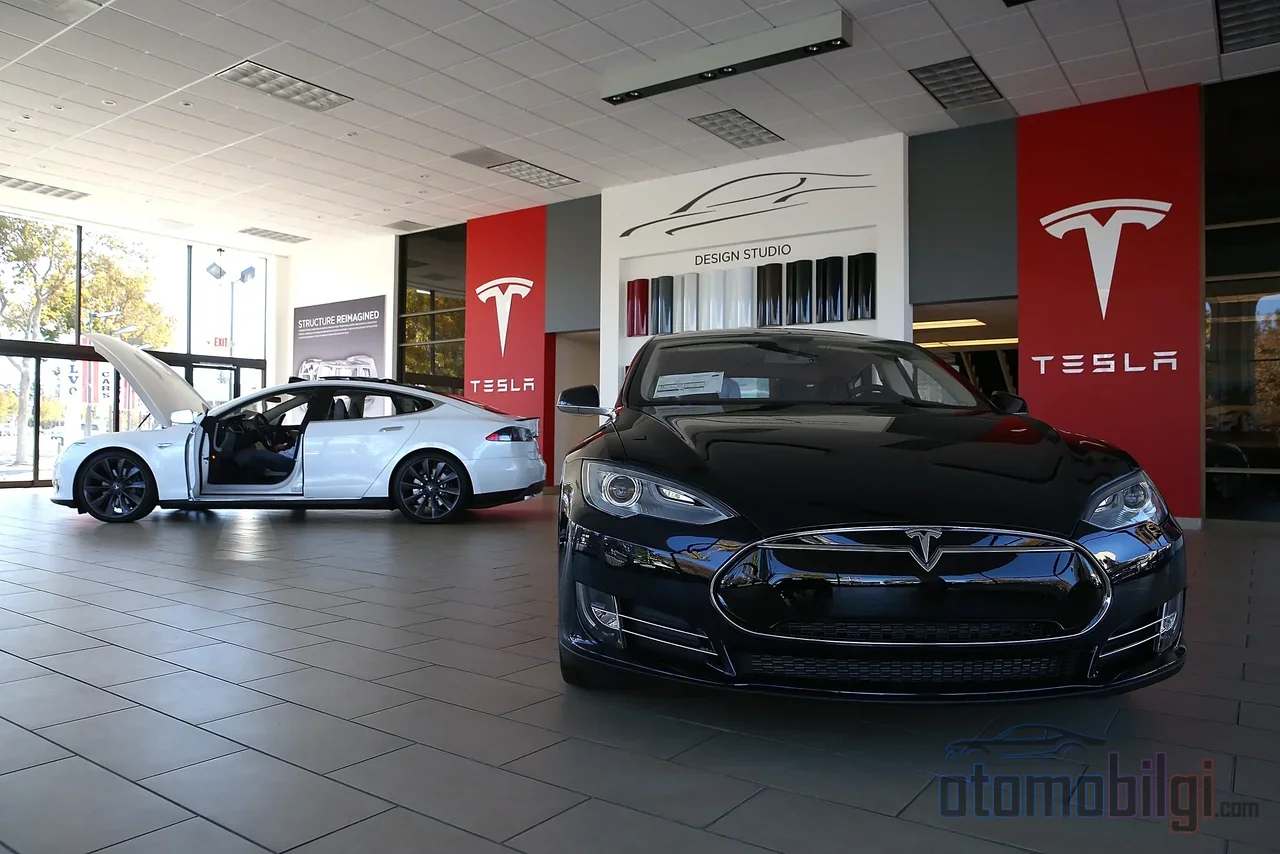
An unexpected name topped Norway's new car sales chart in September 2013: The Tesla Model S. Of the roughly 12,168 new cars sold in the country that month, 616 were a Model S, and it alone held 5.1 percent of the market. For the first time in world history, an electric car had outperformed all its gasoline and diesel rivals in a country's monthly sales ranking. So how did an electric sedan sold in the luxury segment, priced above $110,000, manage this?
Anatomy of the Record: What Happened in Norway in September 2013?
Tesla launched the Model S in Norway in August 2013. In September, its first full month, 616 sales made the car the country's best-selling automobile. The success continued with a rise to second place in November 2013, with 527 sales and a 4.4 percent share. The real explosion came in March 2014: that month 1,521 Model S units were sold, an all-time record for any car in Norway in a single month. For comparison, it is enough to note that the leader of March 2013, the Volkswagen Golf, managed only 555 units. The Model S had surpassed the Golf to become the country's best-selling car.
Highlights
- September 2013: With 616 units sold, the Model S became Norway's best-selling car; a world first.
- March 2014: 1,521 units, the all-time monthly sales record.
- Model S price in Norway: In the range of $110,000-117,000.
- Norway was the first country where annual sales of fully electric vehicles surpassed the total of internal combustion ones in 2020.
- In 2025, 96 percent of new car sales were electric.
The Model S on Paper
According to the era's figures, the Model S could accelerate from 0-60 mph in 5.4 seconds, reach a top speed of 125 mph, and had a range of approximately 300 miles (about 480 km). These three numbers are the technical half of explaining why the car was adopted so quickly in Norway. Since the manufacturer did not disclose horsepower and torque figures for this period, we rely here only on verifiable measurements: range, acceleration, and top speed.
| Specification | Value (2013-14 period) |
|---|---|
| Sale price (Norway) | $110,000-117,000 |
| 0-60 mph acceleration | 5.4 seconds |
| Top speed | 125 mph (about 200 km/h) |
| Range | About 300 miles (about 480 km) |
| September 2013 sales | 616 units (5.1 percent of the market) |
| March 2014 sales | 1,521 units (all-time record) |
Why Norway? The Engineering of the Incentive System
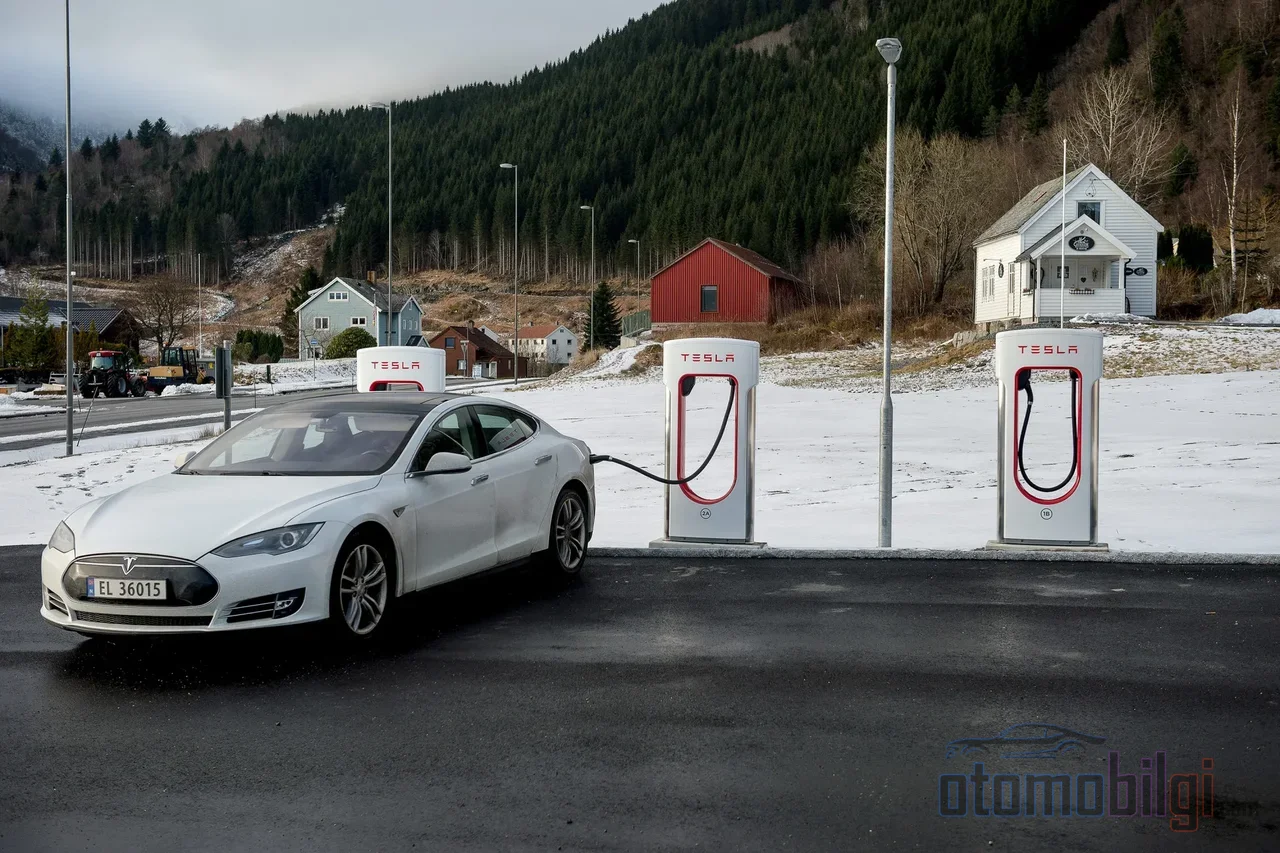
This record was no coincidence; it was the result of a policy chain spanning roughly a quarter of a century. Norway built a graduated incentive architecture that made its chargeable vehicle fleet the largest in the world per capita:
- 1990: Temporary import tax exemption for electric vehicles (made permanent in 1996).
- 1997: Road toll exemption.
- 1999: Free city parking and special EV plates.
- 2001: VAT set to zero; the 25 percent rate applied to internal combustion vehicles was removed for electrics.
- 2003-2005: Bus lane access first in the Oslo region, then nationwide.
- 2009: Free passage on ferries.
To put it in numbers: An analysis from early 2013 showed that the tax exemptions were worth about $11,000 compared to a conventional vehicle; free parking in Oslo could reach up to $5,000 per year. On a high-priced vehicle like the Model S, the VAT exemption alone made a difference of tens of thousands of dollars. In other words, a luxury electric sedan gained an instant price advantage over its taxed rivals.
Did the System Work: The Numerical Evidence
The plug-in segment's share of new sales tells its own story: 29.1 percent in 2016; 39.2 in 2017; 49.1 in 2018; 55.9 in 2019; 74.7 in 2020 and 88.9 percent in 2024. Looking back to 2016, when only 5 out of every 100 passenger cars on the road were plug-ins, the steepness of the trend becomes even clearer: By October 2018 that figure had risen to 10 percent, and by September 2022 to 25 percent. Norway became the first country in 2020 where annual sales of fully electric vehicles surpassed the total for all internal combustion passenger cars. The 50,000th registered on April 20, 2015. electric vehicle was also a Tesla Model S; it was celebrated in Drammen with the license plate EL 60000.
The Long Journey of the Electric Car: Placing the Model S in History
To understand Norway's record, one must follow a countdown going back 180 years. The electric car was not the apprentice of the gasoline car; it was its aging rival.
19th Century: The First Golden Age of the Electric Car
The Hungarian priest Ányos Jedlik built the first electric motor in 1827; the Scot Robert Anderson developed a motorized carriage between 1832 and 1839. The first mass-produced electric vehicles took to the roads in the second half of the 19th century. The turning point in the USA was Iowa: William Morrison, in Des Moines in 1890-91, produced the country's first electric car with a vehicle built to showcase his lead-acid battery, capable of carrying six passengers. In December 1898, the Jeantaud electric car set the world's first automotive land speed record with a speed of 63.13 km/h. By the end of the century, about 40 percent of cars in the USA were electric: they were quiet, emitted no exhaust, and unlike gasoline cars, required no hand crank. Around 1900, thanks to their ease of use, electrics at one point outsold gasoline cars.
Why Did Gasoline Win?
Three engineering parameters determined the fate of the competition: range, speed, and energy refilling. Gasoline cars could go farther and faster, managing this even on hilly terrain. Finding electricity was difficult at the time; and range was limited. Setting aside its practical disadvantages, the electric car withdrew from the stage for decades. Meanwhile, the hybrid idea was also born early: In 1901, Ferdinand Porsche produced the world's first hybrid electric car with the Lohner-Porsche; it would turn out that the idea was nearly a century ahead of its time.
GM EV1: Bold Attempt and Cancellation
In the 1990s, General Motors took the electric car seriously again with the EV1, of which about 1,100 units were produced and leased out. The program was ultimately considered a failure: production costs were high, aging 312V batteries created liability risks for untrained owners and technicians, and the company concluded that electric vehicles were not yet commercially viable. The scrapping of the vehicles sparked protests; museum records note that this reaction reflected the demand for energy reform. General Motors' own assessment was more measured: the EV1 proved that an electric car could be done, and that it was possible to take the risk of building one.
The Lithium-Ion Revolution and the Roadster
The real breakthrough came from battery chemistry. The Tesla Roadster, sold from 2008 onward, went down in history as the vehicle offering a range of up to 392 km with lithium-ion batteries. The critical engineering decision was the choice of cell: the Roadster was powered by 6,831 lithium-ion cells in the 18650 format widely used in laptop computers. Choosing a standard and widely available cell made it sustainable to keep lowering costs and improving performance. The Roadster challenged the preconception that electric vehicles had to be slow, boring, or impractical. The Model S is this architecture carried over into a sedan body; the Norwegian record, meanwhile, is the market leg of the same chain.
After the Record: Where Are Tesla and Norway Today?
The first one, in 2013, was a beginning. By September 2021, 77.5 percent of new sales in Norway were fully electric, and Tesla's share was decisive at that record level. In 2025, Tesla set a full-year sales record in Norway with 34,285 vehicles and captured 19.1 percent of the market; the final quarter of the year, with 12,565 vehicles, was recorded as the best quarter. The Model Y became the first car in Norway to exceed 100,000 new registrations.
The Withdrawal of Incentives and the Debate
The system's success also grew its cost. In 2023, a 25 percent VAT began to be applied to the portion of the price exceeding 500,000 kroner; this first affected premium models such as the BMW iX, Tesla Model X, and Porsche Taycan. Since July 2023, fully electric vehicles have been subject to a weight-based registration tax of 12.5 Norwegian kroner for every kilogram above 500 kg. The government plans to remove the main subsidy within the next two years; as of 2026, electric vehicles priced below 300,000 kroner are protected with a VAT exemption. Meanwhile, the market had reached 96 percent electric sales in 2025.
The criticisms also had a numerical basis. One analyst argued that incentives could direct people whose budgets allowed it toward a second car, worsening environmental problems and causing traffic congestion; the counter-calculation put Oslo's annual benefit at $3,336 per vehicle, at 40 percent of the initial estimate. The crowding in Oslo's bus lanes was documented with a concrete measurement: In a test in December 2013, an electric vehicle completed the bus lane in 19 minutes while a regular car finished the same route in 51 minutes; of the 829 vehicles using the bus lane in morning traffic, 618, or 74.5 percent, were electric.
Result: What Does a First Mean?
The Model S's sales peak in Norway in September 2013 was the first instance of an electric car topping a country's monthly sales list. The final link in a chain stretching from Robert Anderson's crude-motored carriage to Jedlik's motor, from Morrison's six-passenger vehicle to the EV1's cancellation and the Roadster's 6,831 cells, became a significant milestone at the moment the right battery technology met the right market conditions. The tax advantages of the Norwegian model are now being phased out gradually; but what a luxury sedan demonstrated in 2013 still holds true. The electric car reclaimed the competition it lost in the 1900s due to lack of range and infrastructure, a century later with lithium-ion chemistry and political will.
Sources
- Plug-in electric vehicles in Norway
- Norway makes history in electric car sales, thanks to Tesla
- Tesla Model S Was Best-Selling Car In Norway For September
- Tesla's Model S overtakes VW Golf as Norway's best-selling car
- Tesla Model S sales set a record in Norway
- Norway zips ahead in EV race as car sales hit 96% electric
- Tesla Model Y becomes first-ever car to reach legendary milestone
- Norwegian EV policy
- History of the electric vehicle
- The History of the Electric Car