Who Really Invented the Electric Car?
Share This Page
There is no single inventor of the electric car. The process stretching from a miniature model vehicle in Hungary in 1828 to practical vehicles that could hold the road in the USA and France in the 1890s is the sum of steps taken one after another by independent engineers. Who counts as "first" depends entirely on which criterion you use: a model, a vehicle carrying people, or a car suitable for everyday use?
Highlights
- 1828: Ányos Jedlik built the first model electric vehicle powered by its own motor.
- 1881: Gustave Trouvé tested the first electric vehicle carrying people with its own power source in Paris.
- 1898: A Jeantaud, at 63.13 km/h broke the first official land speed record for a car.
- 1900: Of the cars in the USA, 38% were electric.
- 2008: The Tesla Roadster became the first mass-produced electric vehicle sold with a lithium-ion battery.
Whose was the first electric car? Why is there no single answer?
The reason this question has no clear answer is not a lack of information, but a matter of definition. The word "automobile" covers very different things, from a model mock-up to a road vehicle, and each definition highlights a different name. While one source counts Jedlik, who built a small mock-up, as the "first inventor," another looks only at the vehicle that carried people; a third accepts the criterion of a practically usable, sellable vehicle. Three criteria, three different winners.
There is also a technical threshold: until 1859 there was no rechargeable battery. Most early experiments ran on primary cells used once and discarded. It was technically impossible for anyone to build a "usable" vehicle with an energy source spent and finished in one go. In other words, the inventions of the 1830s are the story of the motor, and after 1880, the story of the true automobile.
Early pioneers and their achievements
| Pioneer | Year | Achievement | Criterion |
|---|---|---|---|
| Ányos Jedlik | 1828 | Miniature model vehicle powered by a motor | First model |
| Thomas Davenport | 1834 | Model vehicle traveling on an electrified rail | First American DC motor |
| Sibrandus Stratingh | 1835 | Small-scale vehicle with primary cells | First in the Netherlands |
| Gustave Trouvé | 1881 | Vehicle carrying people, tested in Paris | First human-carrying vehicle |
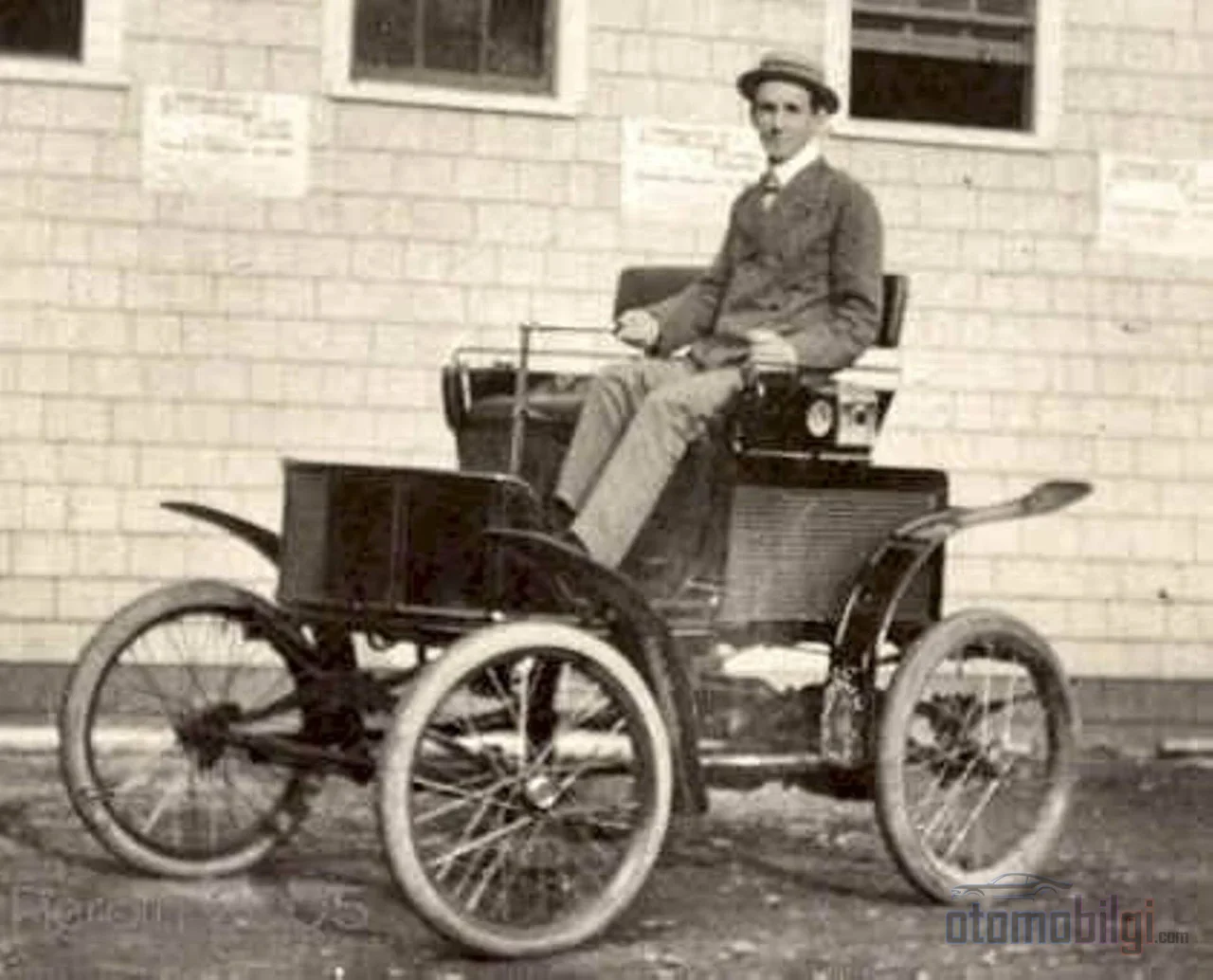
| William Morrison | ~1890 | Six-passenger wagon reaching 23 km/h | First practical US vehicle |
| Charles Jeantaud | 1881-1893 | Experimental vehicle in France, then production | First French production |
Starting from mock-ups: Jedlik, Davenport and Stratingh
The starting point of the story is on a rather modest scale. The Hungarian priest and physicist Ányos Jedlik invented an early type of electric motor in 1827 and in 1828 built a small model vehicle powered by this motor. The vehicle was more of a laboratory demonstration than an automobile in today's sense, and it used a non-rechargeable primary battery. Yet the principle was complete: electric current was being converted into mechanical motion in the motor.
Thomas Davenport, a blacksmith in Vermont, followed a similar path. With contributions from his wife Emily, he built the first American direct current motor and attached it to a small model that ran on a short, circular, electrically fed track. The motor was patented in 1837. In the same period, in Groningen in the Netherlands, Sibrandus Stratingh, together with his assistant the German Christopher Becker, built a small-scale vehicle powered by primary cells. It is also accepted that Robert Anderson in Scotland developed a crude electric car between 1832 and 1839; although sources differ slightly on the date the name appears and his nationality, it is clear that in the 1830s the same idea was being worked on in multiple countries.
The common weak point of these attempts was energy storage. After 1837, Robert Davidson built the first known electric locomotive in Aberdeen; later Galvani with his 7,100 kg locomotive named so, he managed to carry a 6 ton load 2.4 km at a speed of 6.4 km/h. Battery power proved insufficient and the vehicle was destroyed by railway workers who feared for their jobs. The technology existed; there was no battery to sustain it.
The battery revolution and the first vehicles carrying people
The turning point came in 1859: Gaston Planté's lead-acid battery made it possible, for the first time, to store energy and recharge it. In 1881, Camille Alphonse Faure greatly increased the battery's capacity and paved the way for industrial production. The transition of the electric vehicle from model to road-going vehicles would have been impossible without these two dates.
In the same year, in April 1881, Gustave Trouvé tested an electric vehicle carrying people, with its own power source, on Rue Valois in Paris. Having improved a Siemens motor and mounted it on James Starley's tricycle, Trouvé could not obtain a patent; but the vehicle is one of those regarded today as the world's first electric car. For a reader searching for the first electric vehicle to carry people, the answer starts here.
In France, the coachbuilder Charles Jeantaud also made his first experimental electric vehicle in 1881; serious production began in 1893 and continued in Paris until 1907. In Germany, the 1888 Flocken Elektrowagen is referred to in many assessments as the first true electric car; in England, Thomas Parker built one of his own vehicles in Wolverhampton in 1884. Ferdinant Porsche, meanwhile, developed the P1 electric vehicle in 1898, followed by the world's first hybrid vehicle.
Morrison and Jeantaud: benchmarks of practicality and speed
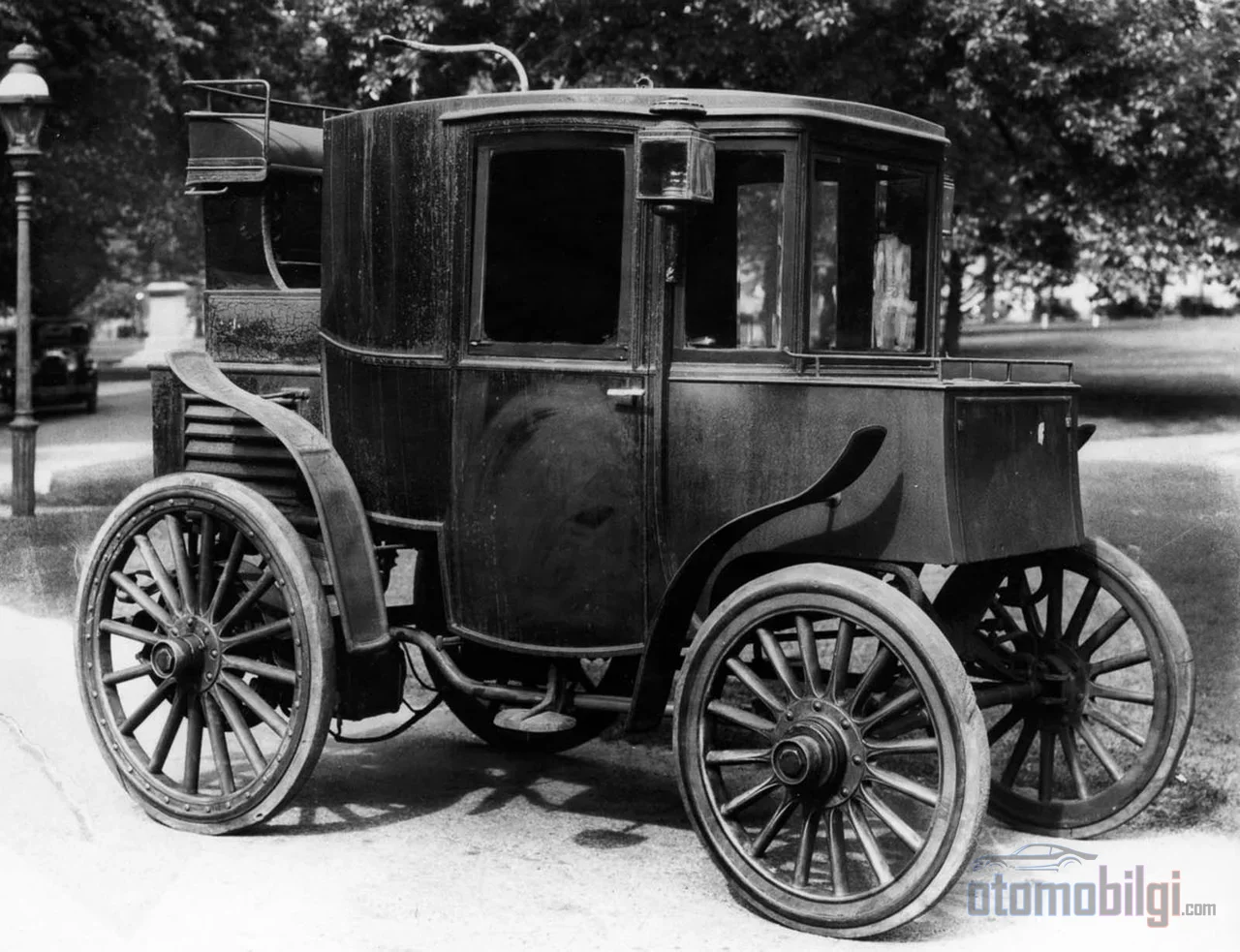
On the American side, the first vehicle that could be called practical came from the hand of William Morrison, a Scottish-born chemist living in Des Moines, Iowa. Morrison electrified a six-passenger carriage; the vehicle 23 km/h could reach speed and the batteries were hidden beneath the carriage seat. The vehicle's launch date is accepted as around 1890; the dates of its development process shift by a few years between 1887 and 1891 in the sources, which reflects a normal engineering process extending from early prototypes to a mature vehicle. Morrison's vehicle caused a real sensation at the 1893 Chicago World's Fair and sowed the seed of the popularization of American electric cars.
Jeantaud, on the other hand, stands out on a different benchmark: performance. On December 18, 1898, a Jeantaud driven by Count Gaston de Chasseloup-Laubat, 63.13 km/h broke the first official land speed record for an automobile with that speed. It was the first vehicle to hold the record twice, and it was electric. Rival Camille Jenatzy's vehicle named La Jamais Contente reached 105.88 km/h on April 29, 1899, crossing the 100 km/h barrier. So in the early years when the automobile was born fast, electric vehicles were the side holding the speed records. The answer to the question "Was the first fast car electric?" is, historically, yes.
The golden age of the electric car and why gasoline overtook it
By 1900, 40% of the automobiles on US roads were steam-powered, 38% were electric, and only 22% were gasoline-powered. Between 1895 and 1905, electrics outsold all other vehicle types in the US. There was a good engineering reason for this: the electric vehicle was quiet, needed no gear shifting, started with a switch, and emitted no smell or vibration. Steam vehicles experienced starting times of up to 45 minutes in cold weather; gasoline cars were started with a hand crank, frequently at the risk of breaking an arm. Electrics were especially popular among city dwellers and women.
Despite this, gasoline won. The reasons reinforced one another:
- Henry Ford's Model T put into mass production in 1908 made gasoline vehicles affordable; in 1912 a gasoline car cost about $650, while an electric roadster cost about $1,750 .
- In 1912, the electric starter invented by Charles Kettering solved the crank problem, the biggest disadvantage of gasoline cars.
- In the 1920s the intercity road network improved, Texas oil made gasoline cheap, and gas stations spread everywhere; meanwhile the electric infrastructure was still absent in rural areas.
Electric vehicles all but disappeared by 1935. You might find this interesting: the idea of swappable batteries was implemented even in that era; this service, proposed in 1896, was used by Hartford Electric Light Company's GeVeCo service between 1910 and 1924 over a total distance of more than 6 million miles .
Interwar 20th-century attempts and the GM EV1
After a long silence, the 1973 Arab Oil Embargo revived interest in electric vehicles. The US Congress passed a law in 1976 supporting electric and hybrid vehicle research. In 1973, GM produced an urban electric prototype, and in 1975 AMC built electric jeeps for testing by the postal service; in 1971, NASA's electric Lunar Rover became the first crewed vehicle driven on the Moon. However, the technology of the era kept these vehicles limited to roughly 45 mph of speed and 40 miles of range.
In the early 1990s, clean air legislation and California regulations restructured the stage. The result was the GM EV1, announced at the Greater Los Angeles Auto Show on January 4, 1996: the first American mass-produced electric vehicle designed from scratch, built between 1996 and 1999. About 1,100 units were produced and offered only through leasing; its range was 80 miles, with 0-50 mph acceleration in 7 seconds . Lead-acid batteries were used in the first models, later switching to nickel-metal hydride. High production costs made the program unsustainable; GM ended the program in 2001 (some sources give this date as 2003). Once the leases ended, the vehicles were recalled and most were destroyed; about 40 examples were spared by being donated to museums. This cancellation, the subject of the 2006 documentary Who Killed the Electric Car? , is still debated today.
The lithium-ion revolution: from the Tesla Roadster to today
The starting point of the modern transformation was the hybrid: in 1997, the Toyota Prius went on sale in Japan as the world's first mass-produced hybrid car and spread worldwide in 2000. In 1999, the Honda Insight became the first hybrid sold in the US since the early 1900s. But it was battery chemistry that truly opened the fully electric era: launched in 2008, the Tesla Roadster became the first street-legal, road-certified series-production fully electric vehicle to use lithium-ion battery cells, offering a range of 393 km on a single charge. Its introduction in 2006 and subsequent success accelerated major automakers. In the same year, 2010, when Tesla received a $465 million Department of Energy loan that was repaid nine years early, the Chevy Volt (the first commercial plug-in hybrid) and the Nissan LEAF also entered the US market.
So the answer to the question "Was Tesla the first electric car?" is clear: No. But being the first mass-produced fully electric vehicle sold with a lithium-ion battery earns it a line of its own in history. And the first link in the chain that made it possible was the miniature model on Jedlik's desk in 1828.
Conclusion: the "first" label depends on the criterion
If you are looking for the inventor of the electric car, first define your criterion. For the first model vehicle, the answer is Ányos Jedlik (1828); for the first vehicle carrying a person, Gustave Trouvé (1881); for the first true road vehicle, the Flocken Elektrowagen (1888); for the first practical US vehicle, William Morrison (around 1890); and for the first French production car, Charles Jeantaud. The fact that these assessments seem contradictory stems not from historians making mistakes, but from different questions being asked. What is certain is this: this technology, which is the sum of a series of breakthroughs, came to the point of determining the mainstream of the automobile not once but twice - in the early 1900s and today.