The Forgotten First Golden Age of Electric Taxis
Share This Page
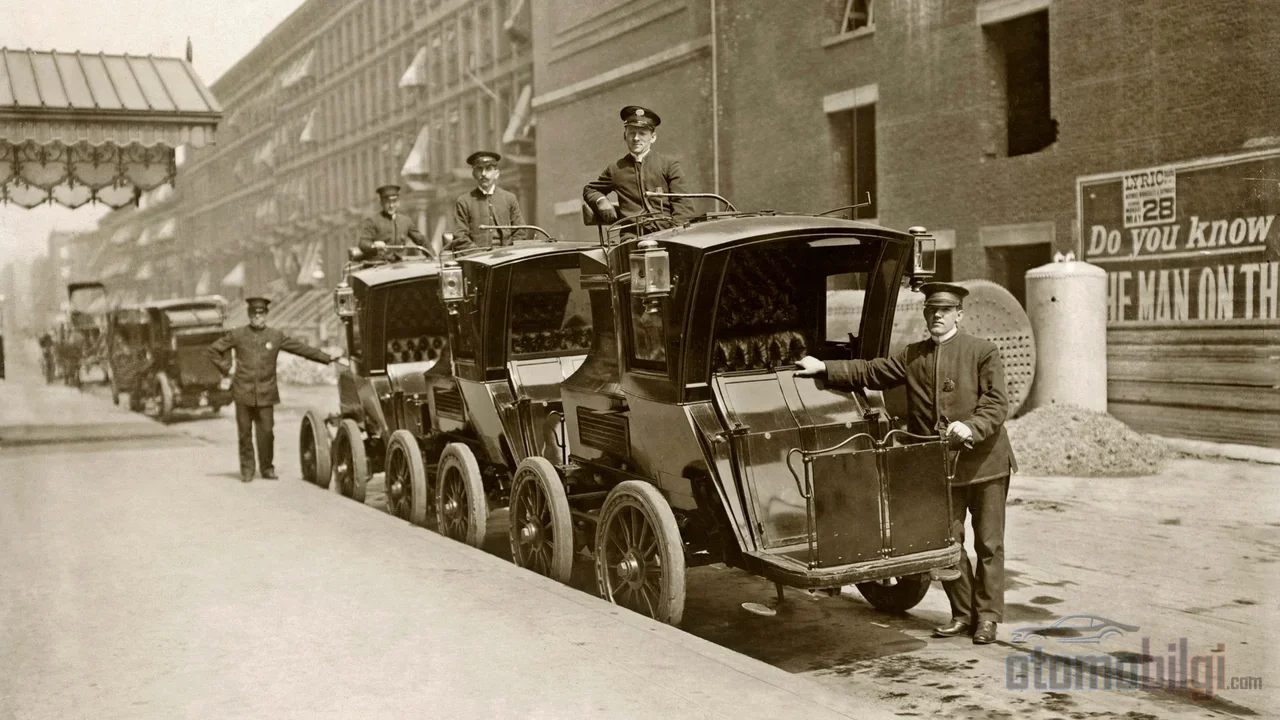
Electric taxis operating on the streets of New York in 1897 formed the first great fleet of electric transportation, even before automobiles with internal combustion engines. These vehicles on Broadway, whose batteries could be swapped in three minutes, quickly built an ecosystem that extended all the way to London; the crank handle, cheap gasoline, and the Ford Model T then buried that ecosystem in history within a few decades.
Highlights
- New York's first electric taxi service began in 1897 with 12 vehicles and exceeded 100 within two years.
- In the Broadway system operated with cranes and hydraulics, a depleted battery was replaced with a fresh one in approximately 3 minutes .
- The first speeding ticket for an automobile (12 mph in an 8 mph zone) and the first fatal pedestrian accident involving an automobile occurred in 1899 with electric taxis.
- London's Bersey Electric Cab fleet produced 77 vehicles; it survived only two years.
- The Electric Vehicle Company produced approximately 2,000 vehicles but went bankrupt in 1907.
Why an Electric Taxi in a City of 150,000 Horses?
The most accurate way to imagine New York at the end of the 19th century begins with the horses filling its streets. An estimated 150,000 horses lived in the city, and each produced more than 35 pounds of waste per day. This was not merely an odor problem; it meant a vast logistics chain consisting of feeding, sheltering, veterinary care, and the transport of waste. The city needed a motorized alternative more than anyone.
From an engineering standpoint, it is no surprise that the electric vehicle stood out for this role. Early gasoline cars smelled, ran loudly, vibrated, and most importantly required a hand-cranked handle. Electric cars, on the other hand, started with a switch. Short-range, low-speed, stop-and-go-heavy taxi duty had exactly the kind of load profile a lead-acid battery could work with: the range was limited, but the taxi was already circulating within the city.
Electrobat: The Heart of the Fleet That Came Out of Philadelphia
The vehicle in question was the Electrobat, patented in 1894 Electrobat by Philadelphia inventors Henry Morris and Pedro Salom. The first prototype resembled a ship more than a motor vehicle: weighing 4,400 pounds, built on a marine engine, and reinforced for rough roads. Within two years, Morris and Salom developed a smaller and faster model. Taxis based on the Electrobat II weighed 1,800 pounds, had a top speed of 20 mph, and could travel up to 25 miles
on a single charge. The numbers show a perfectly reasonable operating profile for the conditions of the era. New York's first taxi company, the Electric Carriage and Wagon Company, began service in July 1897 with 12 electric hansom cabs. In the first month, Salom and Morris reported that 13 vehicles carried more than 1,000 passengers and covered 2,000 miles of road. The fleet exceeded 100 in 1899.
| Feature | First Electrobat | Electrobat II-based taxi |
|---|---|---|
| Weight | 4,400 pounds | 1,800 pounds |
| Top speed | Low | 20 mph |
| Range on a single charge | Short | Up to 25 miles |
| Role | Prototype | City taxi |
3-Minute Battery Swap on Broadway
The real technological achievement of the electric cab was not in the vehicle but in the infrastructure. At a battery swap station set up in a former ice skating rink on Broadway, cranes and hydraulics replaced spent batteries weighing 1,250-1,300 pounds with fresh ones in roughly 3 minutes . Historian David A. Kirsch's summary is clear in engineering terms: the system was faster than horses, and as fast as filling up with gasoline today.
This detail shows that the charging infrastructure debate still discussed today was playing out in exactly the same way 130 years ago. The lead-acid battery's hours-long charging time was a deadly bottleneck for fleet operations; the solution was not to speed up charging but to swap the battery. The first large-scale application of the modern "battery swap" idea was carried out in an ice skating rink.
As the fleet grew, two historic firsts also entered city life. In May 1899, driver Jacob German, traveling at 12 miles per hour on Lexington Avenue, became the first person to be issued a speeding ticket in an automobile and arrested for exceeding the 8 mph limit; a policeman on a bicycle chased and caught him. That same year, an electric taxi killed Henry Bliss, a real estate man stepping off a streetcar, on the Upper West Side: the first pedestrian killed by an automobile had never noticed the vehicle's silence.
London's Hummingbird: The Bersey Electric Cab
In the same year, on a different continent. Designed by Walter Bersey, the Bersey Electric Cab, became London's first electric taxis on August 19, 1897, with a fleet of 12 vehicles. The vehicles could carry two passengers, and their top speed was 12 miles per hour . In total, 77 vehicles were produced; at most 75 were in service at any one time. The vehicle was silent but emitted a high-frequency, buzz-like sound; Londoners gave it the nickname
Hummingbird . This nickname nicely sums up how different the acoustic signature of electric propulsion was: instead of the explosive noise of a gasoline engine, a continuous, high-pitched electromechanical hum. Unfortunately, the fleet's fate was decided not by this pleasant detail but by economics: high maintenance costs ended the service within about two years. The Electric Dawn and Women Drivers
In 1899, the Electric Vehicle Company, backed by investors such as William C. Whitney, expanded to Philadelphia, Chicago, and Boston, and briefly became the largest automobile manufacturer in the United States; in total it produced around
2,000 vehicles . It is known that in 1904 the company produced 2,000 taxis, trucks, and buses, and established subsidiaries from New York to Chicago. Calling this period a "golden age" for urban electric transportation is no exaggeration. produced. It is known that in 1904 the company produced 2,000 taxis, trucks, and buses, and established subsidiaries from New York to Chicago. Calling this period a "golden age" for urban electric transportation is no exaggeration.
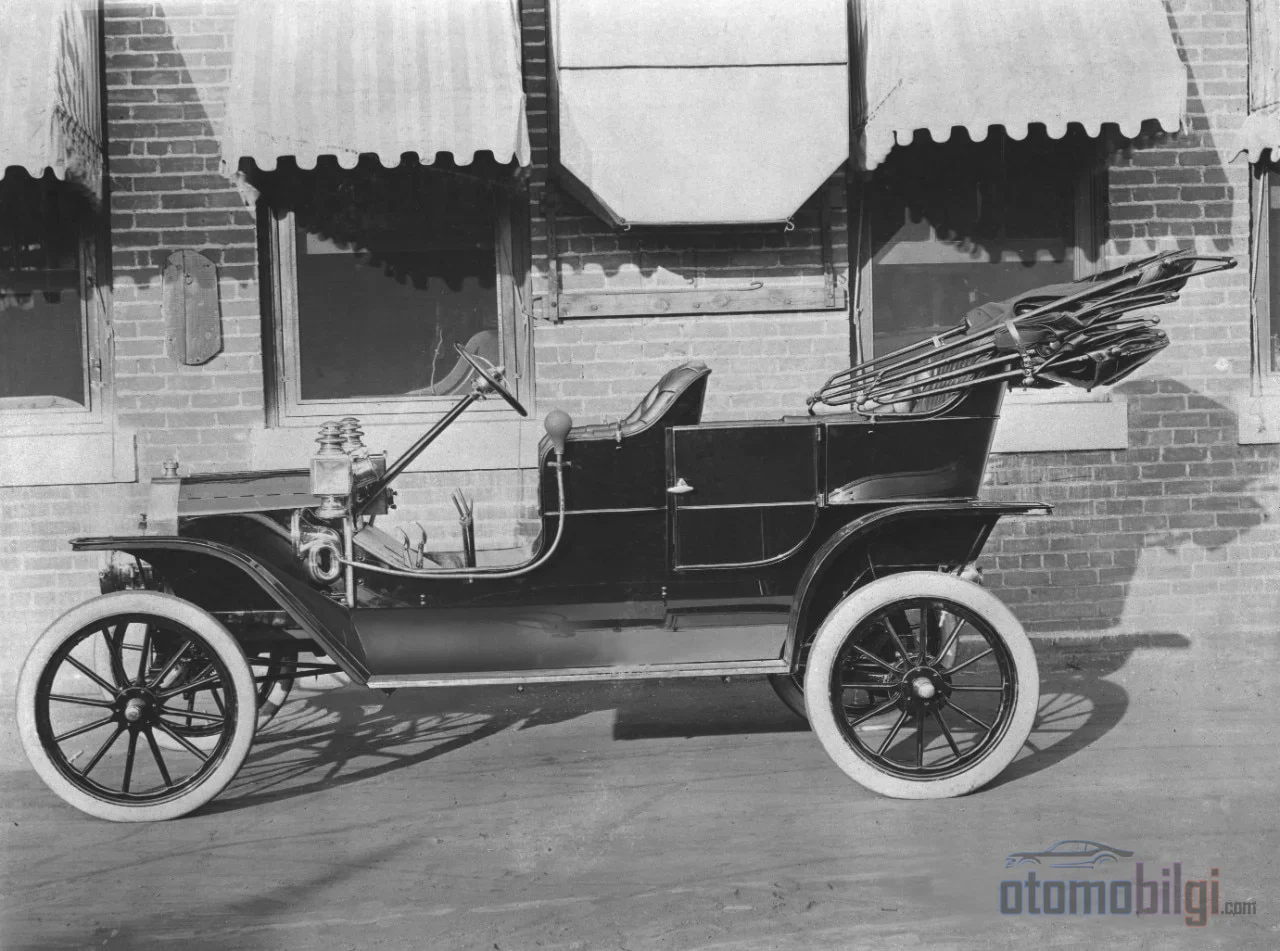
Electric vehicles also found a strong audience in personal use. Starting early gasoline cars truly required physical strength: turning the crank handle could injure the thumb and wrist if it kicked back. Electrics were quiet, clean, vibration-free and started with a switch, which is why they were marketed especially to women. In 1904, Edith Bolling Galt became the first woman to obtain a license for an "electric type automobile". Vehicles from manufacturers like Detroit Electric (1907-1939) were popular among women drivers for their easy starting and smooth ride; examples with what is today defined as a rumble seat layout were typical products of this era.
The Crank Handle, the Model T and the Anatomy of the Decline
No single thing killed the electric ecosystem; there were four overlapping factors.
- The disappearance of the crank handle: In 1912, Charles Kettering's electric starter motor erased the most tangible advantage of electrics. The gasoline car was no longer started with physical effort.
- Cheap gasoline: The discovery of cheap crude oil in Texas lowered fuel costs. Department of Energy historical accounts list this among the main reasons for the decline of electrics.
- Improving roads: Paved and lengthening roads shrank the market for electrics with their limited range and heavy batteries. By 1935, electrics had almost completely disappeared.
- The price of the Model T: The Ford Model T, launched in 1908, showed with its cheapness that the days of electrics were numbered. Ford engineers reportedly evaluated Edison's nickel-iron battery, but the biggest obstacle was the lack of infrastructure.
The end of the New York fleet, on the other hand, was a story of management and capital more than technology. The company's operations outside New York were poorly managed; in 1899, a newspaper revealed that the company had obtained fraudulent credit, which sent its shares down. It tried to survive by buying electric manufacturers like Columbia and Riker, but a devastating fire destroyed much of the fleet and the Panic of 1907 sent production into freefall; the company went bankrupt that same year. Harry N. Allen immediately filled that void: in 1907 he launched a service with 65 gasoline taxis imported from France, and within a year his fleet reached 700 vehicles .
What killed it was not the idea, the technology, or the business model; it was the shadow of the fraudulent type of businessmen behind it.
A striking detail in the history of technology: some commentators of the era envisioned a split in which gasoline cars would dominate long distances while electric cars would prevail in cities. That scenario never materialized, but the idea was precisely this when 25 fully electric taxis hit the streets of New York in 2022 - the electric taxi's return to this city had been made possible by official approval granted to the Tesla Model 3 in 2019. This return would not have been possible without passing through intermediate stops such as the Woods Dual Power hybrid (1916), the Sebring-Vanguard CitiCar (over 2,000 produced between 1974-77), the GM EV1, the lithium-ion battery Nissan Altra, and the Tesla Roadster introduced in 2006.
Lessons from the First Golden Age
The period between 1897 and 1912 should be read not as a failed start of the electric car, but as an early, completed experiment. The Electrobat fleet proved that electric propulsion works with the right task profile (short distance, fixed routes, fleet operation), even with the technology of that era. Battery swapping, silence, and ease of use - topics being discussed again today - all had concrete solutions a century ago. What was missing? A cheap and ever-improving rival, spreading road networks, and a capital structure with fiscal discipline. The electric car exited history not through technological defeat, but through economic substitution - and modern transformation will follow the exact opposite scenario: it too will be an economic substitution.
Sources
- The forgotten history of New York's first electric taxi fleet-in the 1800s
- When electric cabs ruled New York's roads
- Bersey Electric Cab
- The Surprisingly Old Story Of London's First Ever Electric Taxi
- The History of the Electric Car
- History of the electric vehicle
- Early Electric Cars in America (1891-1922)
- Electric vs Gasoline Cars: History Shows This is Nothing New
- Gasoline range anxiety 100 years ago made electric-car charging seem easy
- Early-1900s EVs were marketed to women
- Making Sense of "Failed" Technology
- Electric Vehicle Company
- First Ladies in Electric Cars...in 1904
- The Electric Vehicle Evolution From the 1800s to Present
- Electric Cars Engineering & History