Why Did Gasoline Win in the First Century of the Electric Car?
Share This Page
The history of the electric car is a far older and far more dramatic story than most people assume. At the turn of the twentieth century, electric vehicles were the best-selling cars in America; gasoline engines were seen as shuddering, smelly alternatives that required hand cranking. The reason gasoline won this war was not a single invention or a single decision, but a storm in which road infrastructure, oil prices, the electric starter motor, and mass production all came into play at once. This page examines that war, the interim attempts over the following century, the tragedy of the GM EV1, the lithium-ion revolution, and the modern transformation that began with the Tesla Roadster, in a chronological narrative.
Highlights
- 1899: Camille Jenatzy reached a speed of 105.88 km/h in the electric Jamais Contente, breaking the 100 km/h barrier for the first time.
- 1900: 38% of automobiles produced in the USA were electric; roughly one-third were electric.
- 1912: Kettering's electric starter motor consigned the hand crank to history; until that date, electric cars had sold for nearly twice the price.
- 1996–2003: The GM EV1 was offered only through leasing; the program was cancelled and most of the vehicles were destroyed.
- 2008: The Tesla Roadster became the first mass-produced electric sports car, offering a range of approximately 385 km with a lithium-ion battery.
How Was the Electric Car Born Before the Gasoline Car?
Technically, yes. The electric motor became usable before the internal combustion engine. In 1827, the Hungarian priest Ányos Jedlik built the first electric motor; in 1828, he powered a small model vehicle with it. The Scottish inventor Robert Anderson developed a crude electric vehicle between 1832 and 1839, and the Vermont blacksmith Thomas Davenport built his own electric vehicle in 1834. Perhaps the most striking early example is the first known electric locomotive, built by Robert Davidson in Aberdeen in 1837: In 1841, the 7,100 kg "Galvani" hauled a load for 2.4 km at a speed of 6.4 km/h. Railway workers destroyed the machine out of fear of job losses - the irony of history fits well here: the first sabotage of electric transport was not of a motor car, but of a locomotive.
The critical threshold was storable electricity. In 1859, Gaston Planté invented the rechargeable lead-acid battery; in 1881, Camille Alphonse Faure greatly increased the capacity of this battery. From then on, a vehicle could carry its own energy. On April 19, 1881, Gustave Trouvé tested in Paris on Rue Valois what was probably the first electric vehicle carrying a person with its own power source - a three-wheeled vehicle. Thomas Parker built his first electric car in Wolverhampton in 1884; in 1888, Andreas Flocken made the Flocken Elektrowagen, considered today to be "the first true electric car".
On the American side, the clock began ticking for the Scotland-born chemist William Morrison. Between 1890 and 1891, Morrison developed the first electric vehicle in the USA, in Des Moines, Iowa: a six-seat carriage, a proper piece of engineering that ran at 23 km/h.
1897-1912: What Did the Golden Age of Electric Look Like?
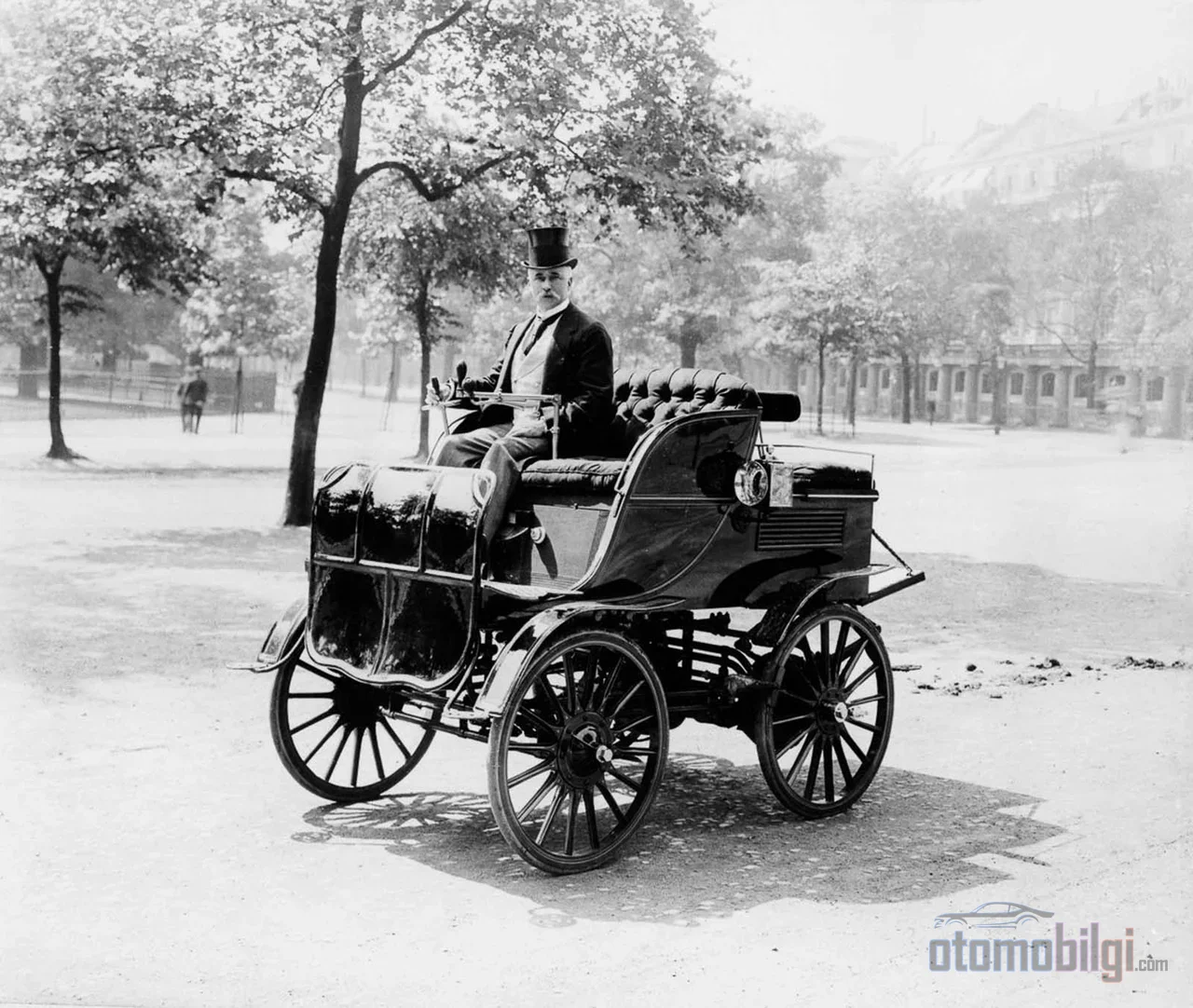
1897 was the year of the electric car's first commercial triumph. Walter Bersey's electric taxis roamed the streets of London; they earned the nickname "Hummingbirds" because of their light buzzing. That same year, Samuel's Electric Carriage and Wagon Company began operating 12 electric hansom cabs in New York, and by 1898 the fleet had grown to 62 taxis; the company was later restructured as the Electric Vehicle Company. That same year, the best-selling car in the US was electric: Pope Manufacturing's Columbia Motor Carriage. In 1902, Studebaker entered the automotive business with electric cars, alongside manufacturers such as the Waverly Company, and in the early 1900s the first mass-produced electric vehicles hit American roads.
Performance-wise, things were not bad at all. On December 18, 1898, the Jeantaud electric car set the first automotive land speed record at 63.13 km/h. On April 29, 1899, Camille Jenatzy reached 105.88 km/h in his torpedo-bodied Jamais Contente, becoming the first car to break the 100 km/h barrier. The electric vehicle held the land speed record until about 1900.
The picture in the 1900 US market is surprising to a reader accustomed to today's figures. Of the cars produced, 40% were steam-powered, 38% electric, and 22% gasoline; roughly one in three vehicles on the roads was electric. Figures for market share vary somewhat depending on how the census was defined - one assessment gives 28% electric, another 38% - but the essence of the picture remains unchanged: in 1900 America, the automobile was not a single uniform machine. Production peaked in 1912: that year, 1,575 electric vehicles were produced in the US, compared with only 936 internal combustion engine vehicles.
Why Did Everyone Love Electric?
The reasons consisted of entirely measurable advantages. The electric vehicle had no vibration, odor, or noise; there was no need to shift gears; there was no need to crank a handle. For comparison, steam vehicles required warm-up times of up to 45 minutes on cold mornings. The electric was a pragmatic choice for urban use, and marketing knew this too: electrics were marketed especially to female consumers - which also created a certain stigma among male consumers, meaning the electric car's first image problem had already been born.
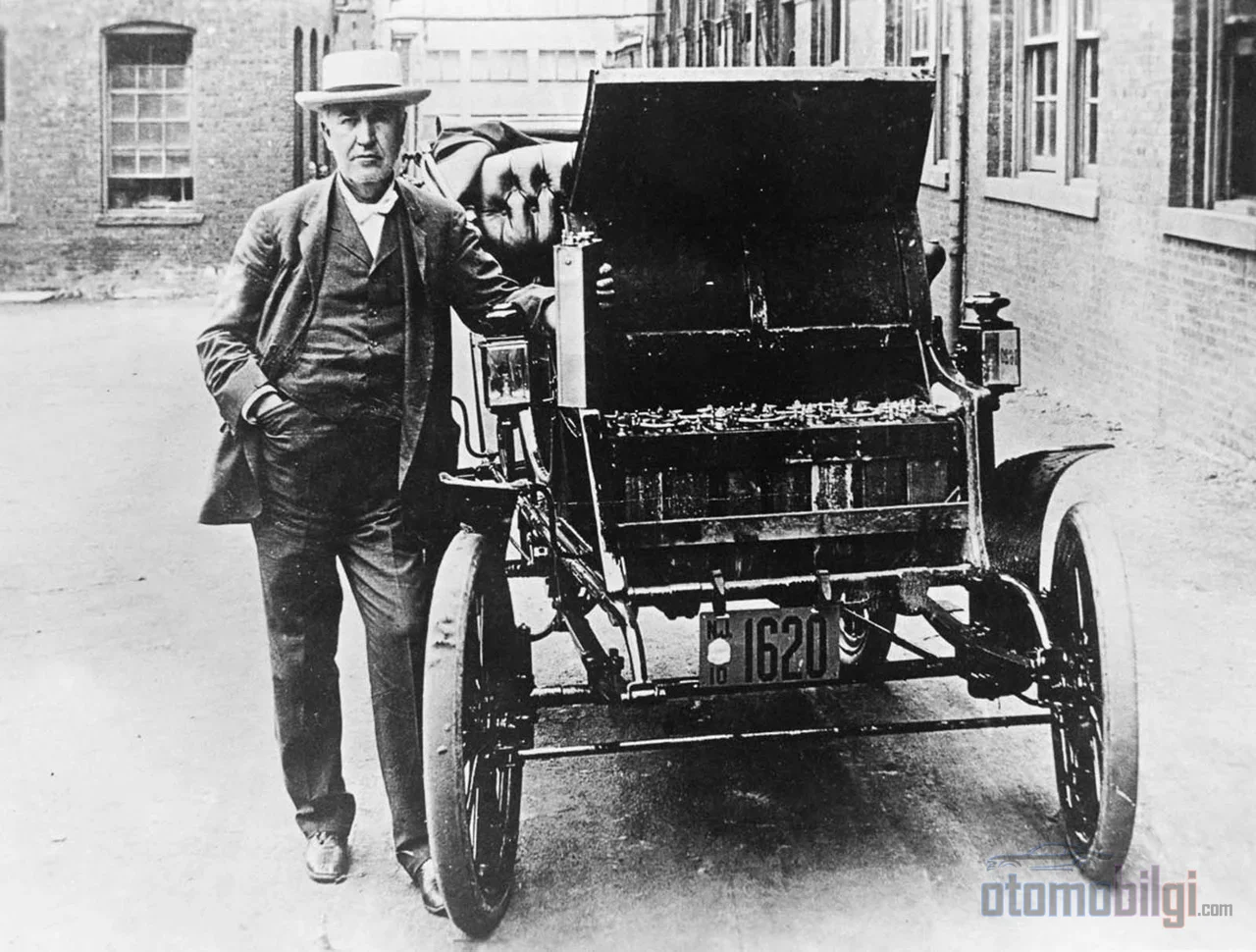
Price, however, was the electric's weak point: until 1912, an electric car sold for nearly twice the price of a gasoline car. As for charging infrastructure, the industry had come up with solutions strikingly similar to today's debates: Hartford Electric Light Company (GeVeCo) served more than 6 million miles with its battery-swapping service between 1910 and 1924; from 1917 onward, a similar service operated in Chicago for Milburn. Battery swapping had already been tried 100 years ago.
Why Did Gasoline Win the War?
The cause of the loss was not a single delayed technology, but four factors piling up within the same decade. First, infrastructure: As the US road network improved, people wanted to travel farther, and electrics limited to 24-32 km/h speeds and 50-65 km of range could not meet this demand. Second, the energy economy: major petroleum discoveries rapidly drove down the price of gasoline. Third, the electric starter motor developed by Charles Kettering in 1912 eliminated the biggest barrier to using gasoline cars - the hand crank; the muffler developed by the Reeves brothers in 1897 had reduced the noise problem. Fourth, Henry Ford's mass production pushed the price of the gasoline car down to levels the electric could not reach: most electric manufacturers stopped production in the 1910s, and by the 1930s the sector had effectively vanished.
It did not die completely, of course; it withdrew into narrow niches. In 1923, Yale produced an electric forklift. Milk delivery vehicles in the United Kingdom - "milk floats" - formed the world's largest battery-electric vehicle fleet throughout the 20th century. In 1954, the Lektro electric golf cart came out. II. During World War II, European countries suffering from fuel shortages tried electric vehicles again. So the idea never remained a mere academic curiosity; it had simply drifted away from its passengers.
Mid-Trials of the 20th Century: From Henney Kilowatt to the Lunar Rover
At the end of the 1950s, the trials began again. The Henney Kilowatt was an electric based on the Renault Dauphine; it had 36V and 72V versions, and the 72V model could reach about 96 km/h - but production ended in 1961, because its price was twice that of the gasoline Dauphine. The classic cycle of low-volume electric manufacturing repeated itself here as well: good idea, bad economics. In 1959, AMC and Sonotone launched research on a "self-charging" battery; in the 1960s, concepts such as the Scottish Aviation Scamp (1965), GM Electrovair (1966) and AMC Amitron (1967) were produced, but none of them turned into mass production.
The most emblematic failed attempt was the 1973 Enfield 8000; only 112 units in total could be produced. A striking contrast of the same year took place on the Moon: On July 31, 1971, the Lunar Roving Vehicle, carried by Apollo 15, became the first electric vehicle used on the lunar surface in crewed history - it had been developed by Boeing and GM's Delco Electronics subsidiary. While the industry could not sell electric cars on Earth, it was using an electric vehicle on the Moon.
The energy crises of the 1970s-80s brought the subject back onto the agenda; the 1976 US Electric and Hybrid Vehicle Research Act provided incentives. However, the result was disappointing: products like the Sinclair C5 failed, and the conversions between the 1960s and 90s (Electrosport, Electra-Van, Lectric Leopard, Solectria Force) sold in low numbers. Battery chemistry set the limits, and lead-acid could not overcome those limits.
GM EV1: Why Did the First True Electric of the Modern Era Die?
The starting point of the modern revival is considered to be 1990. That year, GM Chairman Roger Smith introduced the GM Impact concept at the Los Angeles Auto Show; the same year, California put its ZEV - zero-emission vehicle - mandate into effect. The pressure from CARB pushed the automobile industry into an unprecedented electric portfolio within a decade: Chrysler TEVan, Ford Ranger EV, GM S10 EV, Honda EV Plus, Toyota RAV4 EV and Nissan Altra EV - the last of which was the first series-production electric vehicle with a lithium-ion battery.
The star of this family was the GM EV1. It was not sold to consumers; it was offered only through closed-end leases. When the three-year lease contracts ran out in the early 2000s, GM canceled the program, citing high production costs and a small market. The vehicles were recalled and most of them were destroyed; fans staged protests and the EV1 became one of the most emotional symbols in the history of the electric vehicle.
The story cannot be said to be one-dimensional. Some automotive historians challenge the "GM abandoned electrics" narrative, arguing that the EV1's legacy gave momentum to the company's fuel cell vehicle work; there are differing assessments about the program's inevitability. Nevertheless, by 2002 the picture was clear: Toyota sold the last 328 units of the RAV4-EV to the public, and the other manufacturers withdrew their electrics from the market. A shining start, proven demand, and then a complete withdrawal - that was the balance of the decade-long experiment. GM's 2026 commemorative publication marking the EV1's 30th anniversary, stating that "the legacy lives on today," is a good timeline marker for measuring how long this turnaround took.
The Lithium-Ion Revolution and the Tesla Roadster: Why the Cycle Broke This Time
The engine of the electric car's comeback developed outside the automotive sector. The lithium-ion battery began being developed in the late 1970s by a global team of scientists, and it is regarded as the first major revolution in storage technology since the lead-acid battery in 1859. As lithium-ion costs fell throughout the 1990s, the transformation that began with the California ZEV mandate accelerated. This leap in battery chemistry was the only variable that could break the "good idea, bad economics" cycle that had been turning for decades.
In 2008, the Tesla Roadster turned this potential into an automobile: the first highway-legal, series-production fully electric sports car using lithium-ion battery cells. It offered a range of approximately 240 miles (385 km), was priced around $100,000, and recovered energy through regenerative braking. Later updates raised the range to as much as 340 miles. The Roadster's real significance lies not in its figures but in the breakthrough in perception: the electric car could now be a product whose performance and range called the gasoline car into question, rather than a compromised vehicle sold at an unfair price. By the end of 2020, cumulative plug-in light electric vehicle sales reached 10 million - a share that had been one third in the 1900s turned into millions of vehicles by the end of the century.
What Can Be Learned from a Century-Long Cycle?
Three constants appear in the history of the electric car. The first constant is that technology was never the core problem: the electric vehicle proved it worked four times: in 1888, 1912, 1996 and 2008. The second constant is that the economy makes the decision - Ford's prices in 1912, the Henney Kilowatt's double price tag in 1961, the EV1's production costs in 2003. The third is that every leap in storage technology (lead-acid 1859, lithium-ion 1990s) opened the door to a new golden age. Gasoline's winning war was not an engineering defeat, but an economic and infrastructural balance; and that balance has been reversing for decades.
Sources
- History of the electric vehicle
- The History of the Electric Car
- Early Electric Cars in America (1891-1922)
- General Motors EV1
- EV1 Electric Car - National Museum of American History
- What happened to the General Motors EV1?
- Driving the future, then and now: the story of the EV1 - GM News
- The lost history of the electric car
- Tesla Roadster (first generation)
- The History of the Lithium-Ion Battery
- Lithium-Ion Battery - Clean Energy Institute, University of Washington
- Electric Vehicles Have Been Around Since the 19th Century
- Mythbusting: The truth about the GM EV1