How the Lithium-Ion Battery Brought the Electric Car Back?
Share This Page
The lithium-ion battery, with its high energy density and falling costs, is the battery chemistry that solved the electric car's century-old range and weight problem, making the modern electric vehicle technically possible. This article tells the story spanning from the 1890s to 1991 and how this revolution reshaped the automobile.
Highlights
- In 1900, 28% of cars in the US were electric; gasoline won the competition.
- The first commercial lithium-ion battery was put on sale by Sony in 1991.
- Lithium-ion cost per kWh dropped from about $9,200 to $78 .
- Tesla Roadster (2008): 393 km EPA range, 0-100 km/h in 3.9 seconds.
Did the electric car actually start before gasoline?
Contrary to what many readers might assume, yes. The history of the electric car begins in almost the same era as the internal combustion engine, and in the first half century, electricity was by no means an outsider technology. Between 1827 and 1828, the Hungarian priest Ányos Jedlik built the first electric motor and ran a small model car. Between 1832 and 1839, the Scotsman Robert Anderson developed a crude electric vehicle; however, galvanic cells could not yet be recharged, meaning the vehicle ran on a single-use energy store. In 1837, Robert Davidson built the first electric locomotive prototype in Aberdeen; the enlarged Galvani of 1841 pulled a 6-ton load 1.5 miles at a speed of 4 miles per hour. Railway workers destroyed the machine out of fear of losing their jobs - that is how early resistance to technology was encountered.
The turning point came in 1859: Gaston Planté's lead-acid battery made rechargeable energy storage in a vehicle possible for the first time. This chemistry proved so robust that it is still used today in the starter batteries of internal combustion engine vehicles. Around 1884, Thomas Parker put electric trams into service in England and produced prototype electric cars.
From Morrison to Jenatzy: the first golden age
On the US side, the reference point is William Morrison. In 1890, he filed a patent application for his electric car in Des Moines, Iowa; the vehicle was front-wheel drive, produced 4 horsepower, reached 20 mph, and with 24 battery cells required recharging after 50 miles. It created a sensation at the 1893 Chicago World's Fair. In Philadelphia, Salom and Morris obtained the Electrobat patent in 1894; by 1896 it offered a 25-mile range with two 1.1 kW motors, and that same year it won five-mile sprint races against the gasoline-powered Duryea automobiles.
The numbers clearly show the popularity of the early era: in 1900, 28% of the cars on the road in the US were electric; one third of the 160 cars displayed at the first automobile exhibition were electric. For urban use, electricity had real advantages - it was quiet, clean, started with the turn of a key, and rarely broke down. In 1899, Camille Jenatzy, in a vehicle with twin 25 kW motors and a partinium aluminum alloy body, in the La Jamais Contente was the first person to break the 100 km/h and 60 mph barriers. In New York, the Electric Vehicle Company operated more than 600 electric taxis using battery swap stations; the first electric taxi service had been established in London in 1897.
Why did gasoline win? The anatomy of the electric-gasoline rivalry
The electric vehicle's first defeat was not a defeat of performance, but a defeat of engineering economics. There were four decisive factors, and all of them were measurable:
- Cost: electric cars were almost twice as expensive as gasoline cars and were considered a luxury item. In 1908, while the Ford Model T cost 850 dollars, most electric cars sold for at least twice that; when the Model T dropped below 300 dollars in 1923, many electric cars were ten times more expensive.
- Range and energy storage: a spare gasoline can was far lighter than a spare battery - the essence of the problem was precisely this mass ratio.
- Infrastructure: there was no charging possibility in areas without electricity; gasoline, by contrast, was a storable energy that could be sold everywhere.
- Starting: in 1912, Charles Kettering's electric starter motor (first used in a Cadillac) eliminated the hand crank and erased the electric car's fundamental usability advantage.
To sum it up in one sentence, the energy density of the lead-acid battery could not meet the automobile's demands for mass and range. Detroit Electric still managed to produce more than 35,000 vehicles between 1907 and 1939; Henry Ford's wife Clara Ford used a Detroit Electric from 1908 to 1914. In England, electric milk delivery vehicles known as "milk floats" operated into the 1980s, and the country was the world's largest user of electric road vehicles for most of the 20th century - but these were narrow, task-specific vehicles, not general-purpose automobiles.
The 20th century's interim attempts: as heavy as the battery goes
From the 1920s onward, the electric car became marginal but did not die entirely; every attempt proved once again that the problem always lay in the battery. In Japan, the 1947 Tama served as a taxi with a lead-acid battery, a top speed of 20 mph, and a range of 40 miles. The Henney Kilowatt (1959-1960) raised the voltage from 36 V to 72 V, reaching 60 mph and a 60-mile range; even so, only about 100 chassis were produced and 47 cars were sold.
GM's Electrovair II experiment (1966) is a data point showing the seriousness of the situation: silver-zinc batteries, a 532 V system voltage, 115 hp, and a 40-80 mile range - but the batteries lasted only 100 charge cycles, and the package cost 160,000 dollars in that year's money. In 1971-72, the Lunar Roving Vehicle (LRV) served a different goal, ultimate reliability: with GM Delco motors and non-rechargeable silver-zinc batteries, at a cost of 38 million dollars. After the 1973 OPEC embargo, interest revived: the Citicar that went on sale in 1974 was modest, with 2.5 hp and about 25 mph, but its total production of 4,444 units made it the largest post-World War II electric vehicle manufacturer in the USA until 2013. The 1977 GM Electrovette their prototypes were lead-acid based, went 50 miles at 30 mph; when gasoline prices failed to meet expectations, it was shelved.
GM EV1: the car that faced the battery problem early
In the 1990s, California's zero-emission vehicle mandate gave birth to the first serious automaker EV of the modern era. GM moved from the Impact concept into production and EV1 began leasing in 1996-97; it reached lessees in 1997, and roughly 1,000 units were leased in total. The first model had a lead-acid battery; the later nickel-metal hydride (NiMH) option offered a range of 70-160 miles - a noticeable leap within the chemistry of the era, but not enough.
The last cars were produced in 1999; GM canceled the program in 2003 citing high production costs and a small market, ended the leases, took the vehicles back, and destroyed most of them. There were citizen protests; Francis Ford Coppola was one of the few people allowed to keep his car. What exactly sealed the EV1's fate is still debated today: while the common narrative emphasizes cost and market size, an alternative reading centers on GM's 1992 financial crisis and management change (Jack Smith becoming CEO). The common ground is this: lead-acid and NiMH chemistries could not reach the energy density to make a car profitable and practical. The missing piece was lithium-ion.
How did the lithium-ion revolution begin?
The fundamental research on the lithium-ion battery was published in the 1970s; John B. Goodenough, M. Stanley Whittingham, and Akira Yoshino shared the 2019 Nobel Prize in Chemistry for this work. The commercial breakthrough came in 1991: Sony began producing and selling the world's first rechargeable lithium-ion batteries using Yoshino's design - and it was this product that took the "lithium-ion" name. The battery first entered cameras, then other consumer electronics; the electric vehicle was not yet on the map, but the energy store that would make it possible was now in mass production.
The starting measurements explain in numbers why the technology prevailed. The first commercial cells offered a volumetric energy density of ~200 Wh/L - nearly double that of contemporary systems. Gravimetric density rose from the 100-120 Wh/kg band to over 300 Wh/kg; in the three decades since it went on sale, volumetric density has tripled. The most striking curve, however, is in cost: lithium-ion batteries fell from about $9,200 per kWh to $78 - a drop of more than 99%. Most technology transitions deliver either performance or cost reduction; lithium-ion did both at once, and that was enough to transform the automobile.
| Benchmark | 1991 (first commercial cells) | Decades later |
|---|---|---|
| Cost (per kWh) | ~$9,200 | $78 |
| Volumetric energy density | ~200 Wh/L | Tripled |
| Gravimetric density | 100-120 Wh/kg | Over 300 Wh/kg |
| First highway-legal EV user | Nissan Altra EV (1998) | |
From the lab to the automobile: the line from the tzero to the Tesla Roadster
When consumer electronics lithium-ion cells became accessible, automotive engineers were among the first to notice. In 1997, Alan Cocconi's company AC Propulsion tzero introduced: 150 kW (201 hp) with a lead-acid battery. Martin Eberhard ordered a tzero with lithium-ion; the result was 0-60 mph in 3.7 seconds - with an estimated cost of $220,000. This prototype proved that a low-volume but high-priced lithium-ion sports car could be marketable.
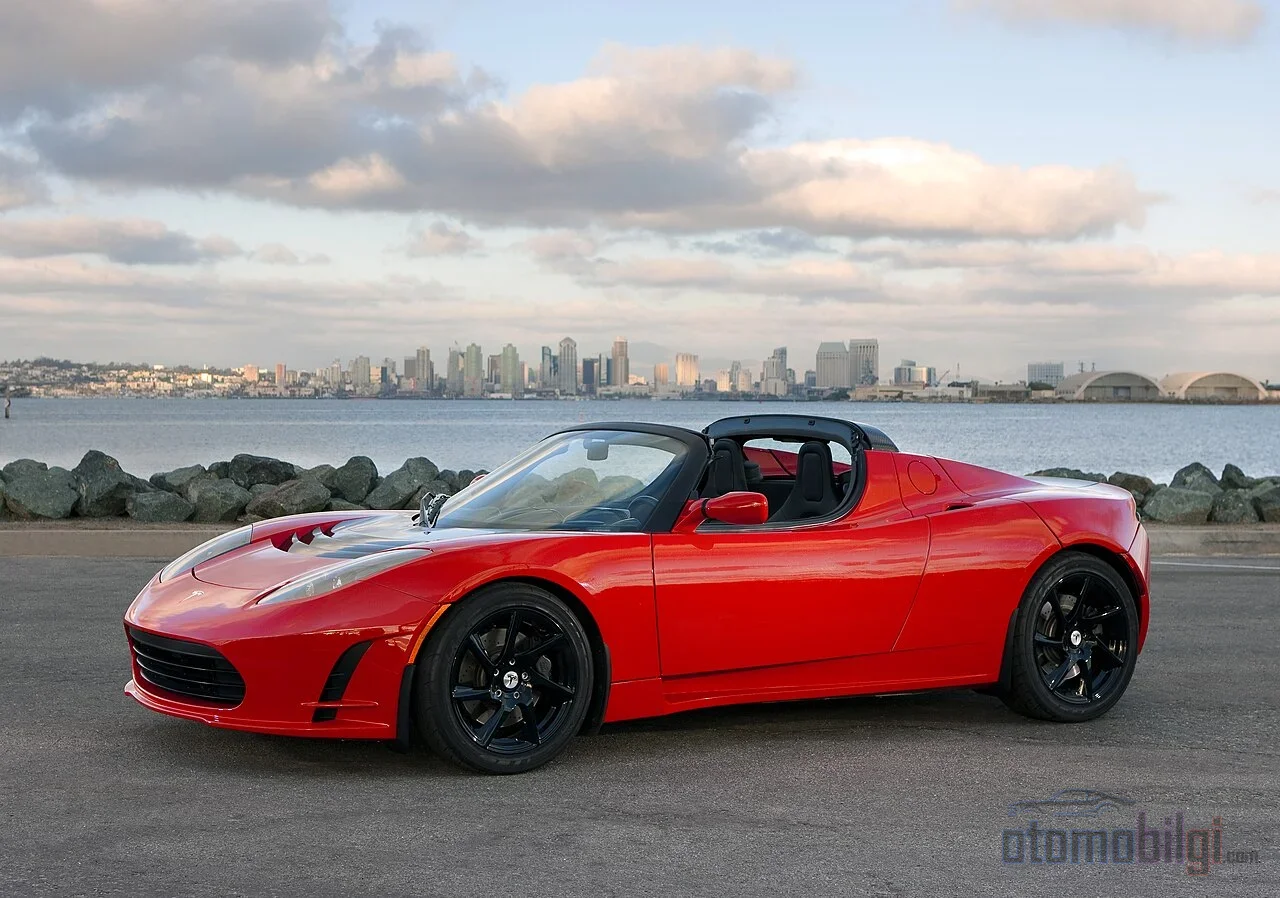
In 2003, Eberhard and Marc Tarpenning founded Tesla Motors; Elon Musk first tried to convince AC Propulsion to go into production, then invested in Tesla. In 2008, Tesla Roadster production began: the world's first series-produced electric sports car using a lithium-ion battery. The first generation used an AC Propulsion-licensed power system and was built on Lotus Elise components. The technical picture was as follows:
- EPA range: 244 miles (393 km) - one of the first production vehicles to show a 200-mile range.
- 0-100 km/h: 3.9 seconds; 288 hp.
- Pack: 53 kWh lithium-ion.
- Production: more than 2,400 units between 2008 and 2012; 2010 price $109,000.
- Durability: the average pack was expected to retain 80-85% of its initial capacity after 100,000 miles.
The Roadster's real contribution was not technology but proof: real range, real performance, and reasonable battery life could all coexist in the same vehicle with a lithium-ion pack. In 2011, the Nissan Leaf hit the road with a 24.0 kWh lithium-ion pack as the first major manufacturer EV on a dedicated platform, and in January 2018 it became the best-selling fully electric vehicle in history, surpassing 300,000 sales; Tesla Model 3 later took over that record. The engineering experience left over from the EV1 lived on in the Chevrolet Volt and Bolt lines.
Where does the transformation stand today?
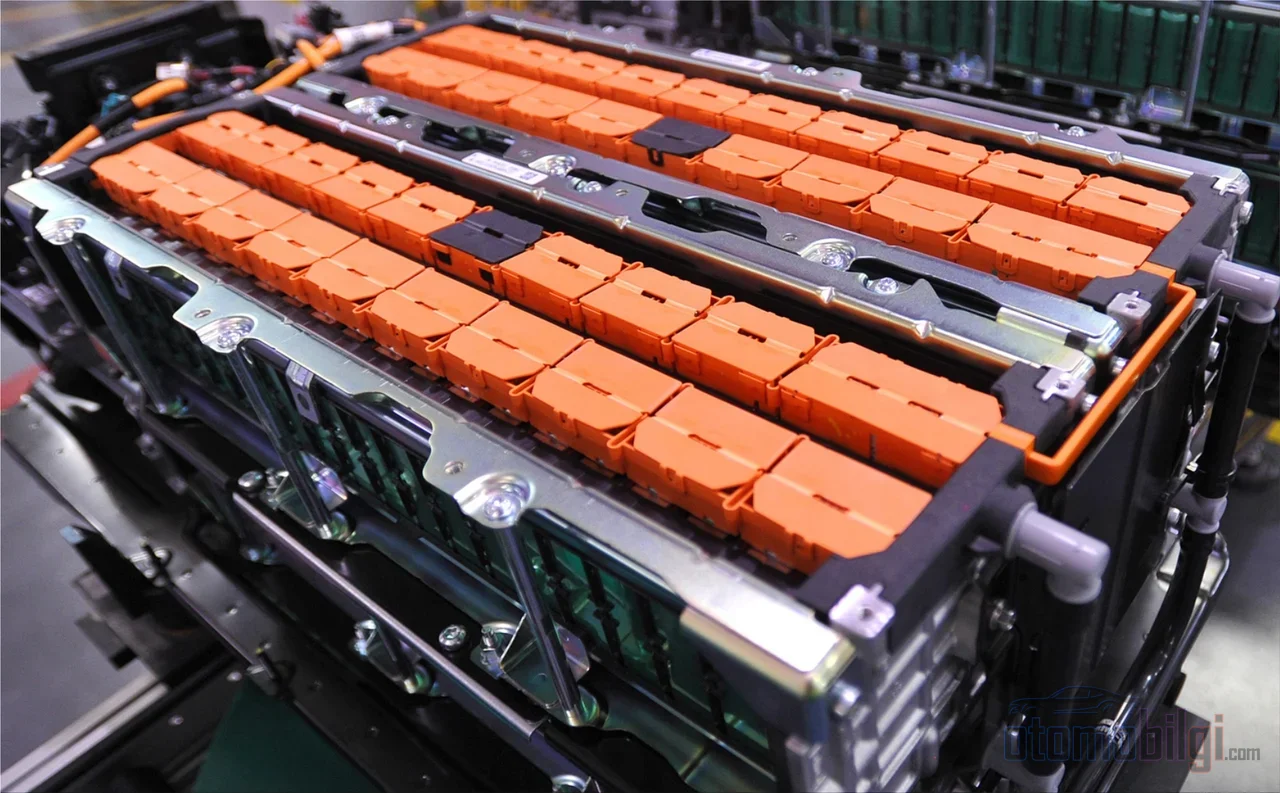
The lithium-ion restructuring of the automotive industry is measured in scale: by the end of 2020, cumulative sales of light-duty plug-in electric vehicles exceeded 10 million units. The cost curve keeps falling - battery pack prices are expected to drop to around $80/kWh by 2026; in 2025, LFP-chemistry packs averaged more than 40% cheaper per kWh than alternative chemistries. Lithium-ion wrote the first chapter of the revolution; whether the next chapter will be written with solid-state batteries stands as an open engineering question.
Conclusion: how did the hardware revolution enable a market revolution?
The electric car held market share in 1900, but its battery could not preserve that share; GM produced the EV1, but its battery could not sustain profitability. Lithium-ion surpassed both thresholds: energy density solved range, the cost curve solved price. The Tesla Roadster was the first car at the intersection of these two curves; today's fleet of 10 million is an extension of a chain that began with a camera battery in 1991. The hardware was prepared, and the market followed it - the sequence went in that direction and never the other way around.
Sources
- Timeline: History of the Electric Car
- First Electric Car: A Brief History of the EV, 1830 to Present
- History of the electric vehicle
- Lithium-ion battery
- Sony press release on lithium-ion commercialization
- Charging Up the Development of Lithium-Ion Batteries
- Battery costs have declined by 99%
- General Motors EV1
- EV1 Electric Car - National Museum of American History
- Driving the future, then and now: the story of the EV1
- Tesla Roadster (first generation)
- Tesla Roadster battery longevity
- Electric vehicle batteries - IEA Global EV Outlook 2026
- Electric vehicle battery prices