William Morrison and America's First Electric Car
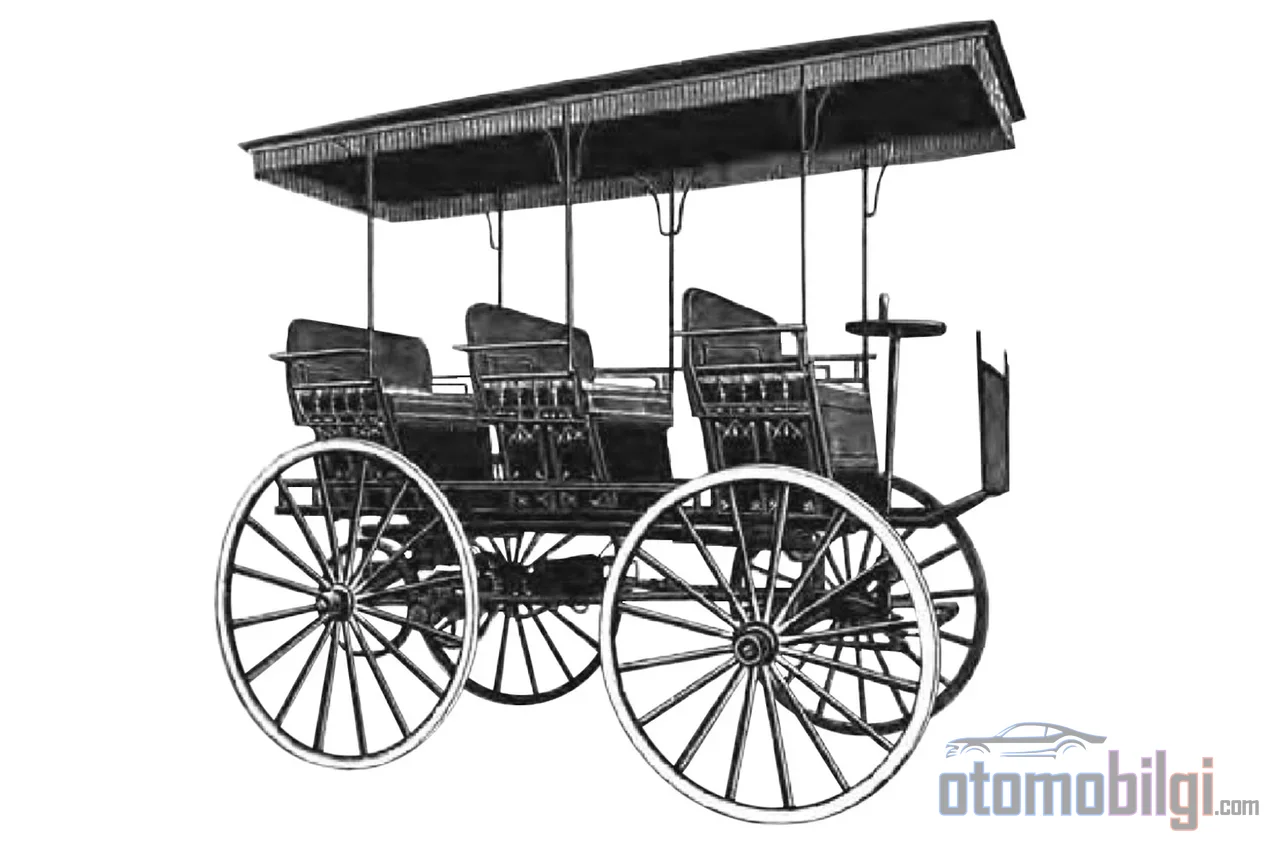
In the basement of a jewelry store in Des Moines, a chemist no one paid attention to was quietly conducting battery experiments. William Morrison's goal was not to build an automobile; he wanted to demonstrate how much power the battery in his hands could carry. The result became one of the quietest yet most enduring milestones in American automotive history: the first successfully operating electric car in the United States.
The Battery Chemist: Who Was William Morrison?
Morrison was born in Scotland around 1850 and was educated at a Scottish university. His profession was chemistry, but his real passion was electricity; he especially loved working on batteries. In 1880, he settled in Des Moines, Iowa. Acquaintances remembered him as a tall, stocky, clean-shaven man with dark hair; he was a vegetarian, spoke little, and preferred to work alone.
His workshop in Des Moines was the basement of a jewelry store called Lumbard Jewelry on Fifth Avenue, between Locust Street and Grand Avenue. There, he continued his experiments with the financial support of the jewelers Marquardt and Lumbard. L. The new production method he developed together with Schmidt insulated the battery plates, preventing short circuits; this meant a lighter and more powerful battery. From a modern perspective, it can easily be said that Morrison's real invention was not the vehicle, but the battery.
Highlights
- William Morrison's electric vehicle was operated in Des Moines, Iowa around 1890-1891 and is considered the first successful electric vehicle in the United States.
- The two-ton vehicle ran on 24 battery cells (48 volts, 112 ampere-hours) and a 4 HP motor.
- Its top speed ranged between 14-20 mph (approximately 23-32 km/h), and it required recharging every 50 miles.
- On August 11, 1892, it became the first automobile to circulate on the streets of Chicago.
- It attracted great attention at the 1893 Chicago World's Fair and triggered the birth of the American electric car market.
How Was America's First Electric Car Born?
The first attempt dates back to 1887. Morrison mounted his own storage batteries and an electric motor driving the right rear wheel onto a carriage built by the Des Moines Buggy Company. The vehicle was not a great success, but it made the news in the Iowa State Register and was then spread across the country via the Associated Press. Morrison thus attracted public attention for the first time.
The truly successful version hit the road in 1890, or in some sources, in 1891. The U.S. Department of Energy and the Library of Congress describe this vehicle as the first successful and practical electric vehicle in the United States; the two institutions give the date as 1891, while Iowa-based accounts point to 1890. This one-year difference is most likely due to the gradual progress of the development process: the vehicle did not mature in a single day, but through several seasons of experimentation.
The Morrison Vehicle in Technical Figures
By the standards of 1890, the vehicle is impressive; by today's measures, it is extremely modest. Speaking from the chief engineer's perspective: Morrison's success was not speed, but the ability to run an electric drive system reliably in a real road vehicle.
| Feature | Value |
|---|---|
| Engine power | 4 HP |
| Drive | Front |
| Top speed | 14-20 mph (~23-32 km/h) |
| Battery | 24 cells, 48 volts, 112 amp-hours |
| Charging interval | Every 50 miles (~80 km) |
| Wheels | Wood with steel coating |
| Weight | Approximately 2 tons |
Two figures circulate in the records regarding speed: 14 mph and 20 mph. This difference most likely reflects different test conditions or different moments of measurement; what is certain is that the vehicle could move at a functional speed in the city traffic of that era. There is a similar spread in passenger capacity: the six-person arrangement is the most solidly documented, while accounts of up to twelve passengers on three rows of seats may reflect different configurations or exaggerated moments. The batteries were placed under the seats and had to be recharged every 50 miles; reasonable for city use, a limiting figure for long journeys.
The 1893 Chicago World's Fair: The Electric Car Takes the Stage
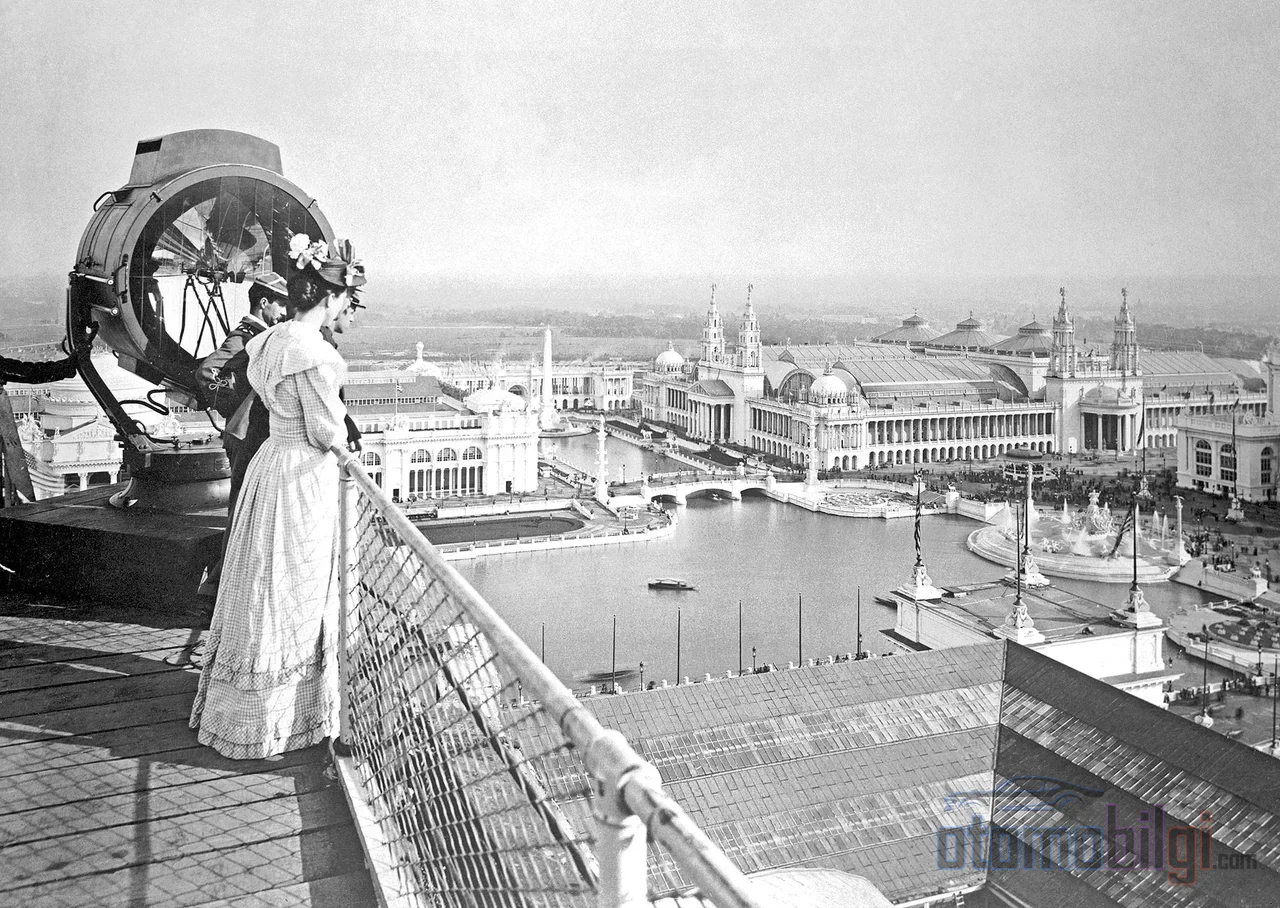
Morrison's vehicle went down in history as the first automobile to circulate on the streets of Chicago on August 11, 1892; the city had not yet made the acquaintance of the motor vehicle. The real explosion came at the 1893 World's Columbian Exhibition, that is, the Chicago World's Fair. The vehicle, which drew huge crowds to the fair, was described as a sensation in the press of the era.
Here, too, the classic tension between engineering and marketing emerged. During the fair tour, word spread that the range was 50 miles; the distance that could actually be completed was around 13 miles. Even this difference was not devastating under the conditions of the time: electricity represented the only motor vehicle technology in those years that was clean, quiet, and easy to use. There was no exhaust smell, no gearbox, and no risk of kickback from a hand crank.
After the fair, however, an interesting period of silence began. Morrison, not by his own statement but measured by his own goal, had completed his mission; he had proven the power of his battery and never engaged in the claim of manufacturing vehicles. Someone else would light the fire of commercial development.
A.L. Ryker and the Birth of the American Electric Vehicle Market
The impact of Morrison's vehicle is measured not by direct figures but by inspiration. Andrew L. Riker is one of the first links in this chain. While still in his youth, in the mid-1880s, he designed and built a three-wheeled electric trike; his first vehicle appears before us in 1887, based on an English Coventry trike. In 1888 he founded the Riker Electric Motor Company in Brooklyn, and in 1894 he used two Remington bicycles as a chassis.
The 1896 Riker Electric Trike in the Henry Ford Museum collection was built in Brooklyn and carried an electric motor delivering 40 volts, 1 horsepower driving the rear wheel. Riker's rise did not stop here: The five-ton electric trucks of the Riker Electric Vehicle Company, founded in 1898, were on the streets of New York in the early 1900s. Riker was later also appointed vice chairman of the Locomobile Company. In short, within a decade of Morrison's basement experiment, a genuine industrial ecosystem for electric vehicles had been born.
Why Did Electricity Lose, and Why Is It Back Today?
Around 1900, roughly 28-38% of vehicles in the US were electric; one in every three cars, depending on the metric. Even Woodrow Wilson used an electric vehicle along with his protection detail. Electric vehicles were quiet, easy to drive, and emitted no odorous pollutants; these advantages found particular resonance among city users.
The equation changed, however, with several parallel developments:
- 1912: Charles Kettering's electric starter motor was introduced in the Cadillac, eliminating the danger of the hand-cranked starter that could kick back.
- 1912: That same year, approximately 30,000 electric cars were sold in the US; the market was at its peak, but the growth had slowed.
- 1914: Henry Ford's Model T moving assembly line definitively shifted production toward the internal combustion engine.
- 1920-1935: Better roads and cheap crude oil discovered in Texas permanently cemented the range and speed superiority of gasoline vehicles.
The electric side also had structural problems. Lead-acid batteries had low energy density; they were sensitive to cold, and their voltage dropped under load. Electric vehicles were roughly twice as expensive as gasoline ones and were considered a luxury good. Studebaker stopped its electric production in 1912; sales declined after the 1914 peak. The following century was not empty, however, with a single exception: In the 1990s, GM produced the first modern mass-produced electric vehicle from a major manufacturer with the EV1; the vehicle was not sold to the public, was provided through a three-year leasing program, and when the program was canceled in 2003, nearly all examples were destroyed. The lithium-ion revolution, however, reversed the delivery: The Tesla Roadster, with a single battery pack of 6,831 cells in the standard 18650 format used in laptop computers, demonstrated that the high-performance electric vehicle was economically and technically feasible.
So When Exactly Was the First Electric Car in the US Made, and by Whom?
The short and direct answer is this: Scottish-born chemist William Morrison got the electric car he developed in Des Moines, Iowa, working in 1890, in a process that stretched partly into 1891. The first carriage attempt was made in 1887, and the successful version is recognized by the US Department of Energy and the Library of Congress as the first practical electric vehicle in the US.
The lasting significance of this vehicle lies not in its technical specifications, but in the path it opened. Morrison built a car to prove his battery; the generations of Rikers, Bakers, and Detroit Electrics that followed turned that proof into an industry. The entire 130-year electricity-gasoline cycle begins with battery plates in the basement of a jewelry shop.
Sources
- An electrifying Iowan: William Morrison, pioneer of battery technology and automobiles - Iowa History Journal
- The History of the Electric Car - U.S. Department of Energy
- Early Electric Cars in America (1891-1922) - Library of Congress, Chronicling America
- Annals of Iowa (K. McClellan) - University of Iowa Press
- First Electric Car: A Brief History of the EV, 1830 to Present - Car and Driver
- 1896 Riker Electric Tricycle - The Henry Ford
- Riker Electric Automobile, ca. 1900 - Smithsonian
- Mythbusting: The truth about the GM EV1 - Hagerty
- The Tesla Roadster Battery System - G. Berdichevsky et al., Stanford
- History of the electric vehicle - Wikipedia