The Nissan Leaf and the Birth of the Mass Market
Share This Page
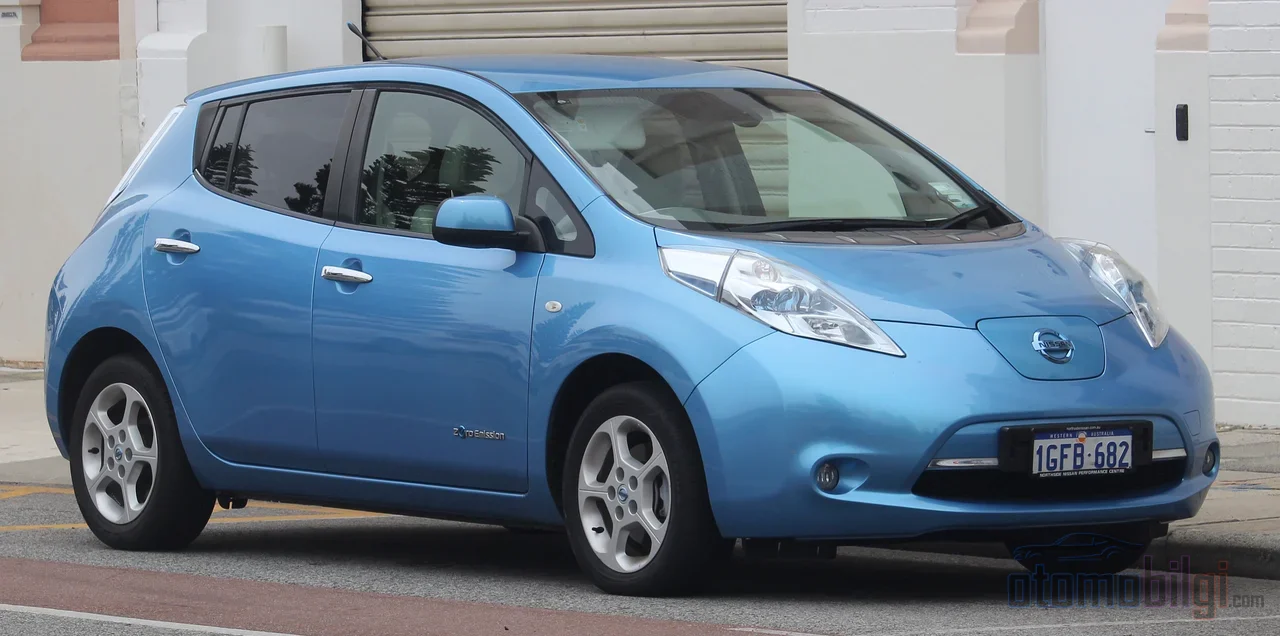
The Nissan Leaf is the electric car that went from being a luxury toy to entering the average consumer's garage; introduced on August 1, 2009 as the world's first mass-produced, zero-emission mass-market car and hitting the road in December 2010, it was the first large-scale electric model. The Roadster had shown the way; the Leaf truly turned the electric car into an everyday product and reached millions of sales.
Highlights
- First-generation Leaf: 24 kWh lithium-ion battery, approximately 160-200 km range
- Global sales: 100,000 (March 2014), 500,000. production (September 2020)
- Named both European Car of the Year and World Car of the Year in 2011
- Third generation (2025): crossover body, ~490 km EPA range, NACS compatibility
- The world's best-selling electric car in 2011-2014 and 2016
The electric car's first report card: why did gasoline win?
To understand the Leaf, we must go back to the beginning of the twentieth century. In the early periods of automotive history, the electric car was not a marginal idea; at the start of the 1900s, mass-produced electric cars were already on the roads in the US, and it is estimated that nearly 40% of the country's cars were electric by the end of the century. Quiet, clean, and easy to use, these vehicles made particular sense for city use; gasoline cars, which had no gears, had to be cranked by hand before starting. The fact that an electric taxi service was in operation in London in 1897 shows just how old this subject is.
Yet gasoline won the race. The discovery of large oil reserves made fuel cheap and plentiful; improvements in the internal combustion engine opened up a gap in range and speed, and the arrival of the electric starter motor also eliminated the deterrent of the hand crank. EV sales declined after their 1914 peak; before World War II, most electric manufacturers either switched to internal combustion or closed down. For a hundred years, the electric car waited as a shelved technology.
GM EV1: the painful lesson before the mass market
The first serious attempt of the modern era came from General Motors. Developed from the Impact concept, the EV1 reached its first lessees at the end of 1996, and around 1,000 units were produced between 1996 and 1999 at a dedicated facility. With its aluminum spaceframe structure, it was the most advanced electric car of its time. However, the program was terminated in 2003 despite customer protests; most of the cars were recalled, dismantled, and destroyed. GM explained this with a safety rationale based on the lack of spare parts, and this decision is still debated today. A balancing note is warranted: among the assessments is that after the cancellation, GM directed the program's accumulated knowledge toward fuel cell vehicle work, meaning the company did not entirely abandon electrification.
The EV1's real legacy lay in its lesson: battery technology could not support a mass-market product with the economic equations of that year. For this equation to change, lithium-ion chemistry had to mature.
The Tesla Roadster and the lithium-ion breakthrough
The breakthrough came in 2008. Tesla Roadster, it was the world's first mass-produced electric sports car powered by a lithium-ion battery; it used 6,831 cells of 18650 size, familiar from laptop computers. It was the first fully electric car to offer an EPA-rated range of 393 km on a single charge, and with its 53 kWh battery it reached a top speed of 125 mph. The Roadster proved how enjoyable electric driving could be; however, its roughly two-seater sports body and its price kept it from being more than a statement piece. Turning the electric car into an ordinary family car required a different company and a different formula.
How did the Nissan Leaf become the world's first mass-produced electric car?
Nissan's path was far more ordinary than the Roadster's, and that is precisely why it was far more effective. The company first developed the EV-01, EV-02 and EV-11 prototypes; the EV-02 was based on the Nissan Cube Z11, and the EV-11 on the Tiida C11. The Leaf, unveiled on August 1, 2009, was the product of this work, and its name was a backronym derived from the initials of Leading Environmentally-friendly Affordable Family Car: accessible, family-oriented, environmentally friendly. Production began on October 22, 2010 at the Oppama plant in Japan; deliveries in the US and Japan started in December 2010. Demand came so quickly that once 20,000 pre-orders were filled in the US, Nissan halted reservations until early 2011.
The technical sheet was modest for its era but honest. The first-generation Leaf, with a 24 kWh battery consisting of 192 flat laminated lithium-ion cells developed with NEC, an 80 kW (110 hp) motor, roughly 160 km of range in realistic conditions and 200 km on a full charge according to the manufacturer's figures. Home charging on 120V took 16 hours, 230V charging 8 hours; CHAdeMO fast charging reached 80% in about 30 minutes. The range was calibrated for city use and critics did not let that pass; those who found the range insufficient also criticized the interior material quality. But the math worked: the car did what could be done with the infrastructure of the day, at an affordable price.
The industry was aware of this. The Leaf won the 2010 Green Car Vision Award, 2011 European Car of the Year, 2011 World Car of the Year, and 2011-2012 Car of the Year Japan awards. It was the first time an electric car swept this prestigious chain from start to finish.
Range and technology evolution across three generations
The story of the Leaf is one of the clearest examples of the steady rise in battery capacity and energy density. In its decade summary, the company explains each step with measurable data and, speaking as an editor, the table is tailor-made for this job:
| Year / Generation | Battery | Key figure |
|---|---|---|
| 2010 (ZE0) | 24 kWh | 80 kW motor, ~160-200 km range |
| 2012 | 24 kWh | 228 km range; drivetrain 30% smaller in volume |
| 2015 | 30 kWh | 280 km range; intelligent emergency braking added |
| 2017 (ZE1) | 110 kW motor | 320 Nm of torque, 67% higher energy density, 400 km range |
| 2019 (Leaf e+) | 62 kWh | 55% more capacity, 458 km WLTC range |
| 2025 (ZE2) | 52 / 75 kWh | ~490 km EPA range, 150 kW charging, NACS compatible |
The hardware updates arriving with the second generation were also critical: e-Pedal one-pedal driving and ProPILOT driver assistance moved the Leaf forward not only in range but also in how it was used. In 2012, Nissan became the first company in the world to offer vehicle-to-home energy sharing (V2H); yet during that period the Leaf's battery was air-cooled, and active liquid cooling was not seen until the third generation. The Nismo RC racing versions are also a colorful part of the story: a prototype from the first generation in 2011, and in 2018 a racing car with dual motors producing 240 kW and 640 Nm.
The road to millions of sales: what do the numbers say?
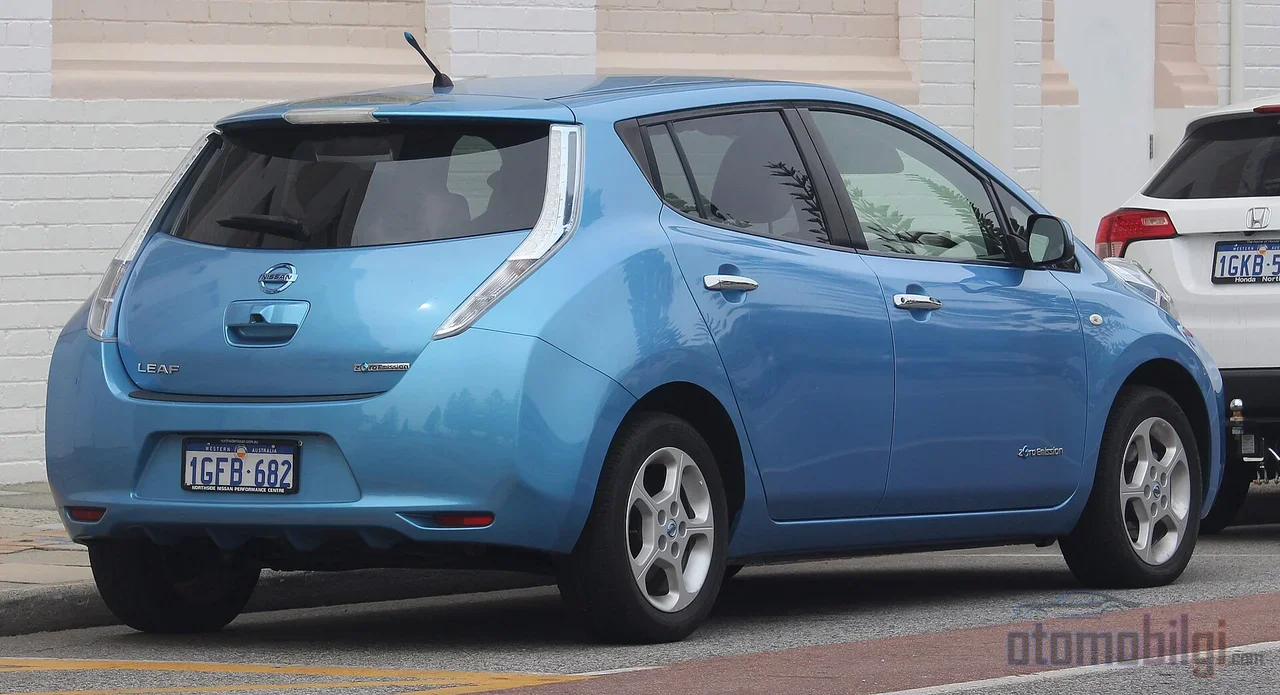
This is exactly where what we call the mass market was born, despite the range constraint. In February 2013, global sales surpassed 50,000; the 100,000 mark was exceeded in March 2014, and at that point the Leaf was the best-selling electric vehicle of all time. In early 2018, the global total passed 300,000, and in 2019 it passed 400,000; the 500,000th unit rolled off the production line in September 2020, saluting the Leaf. In the US, sales began with 19 units in 2010, reached 9,674 in 2011, and peaked at 30,200 in 2014; the total came to 201,256 units. The regional breakdown points in the same direction: sales exceeding 208,000 in Europe, 157,059 units in Japan, and 72,620 units in Norway, making it Europe's largest national market. Units produced at the Sunderland plant reached 270,000 over two generations; UK production ended in 2024.
The parallel growth on the infrastructure side tells the Leaf's importance as clearly as the numbers do: when the vehicle hit the road, there were roughly 200 CHAdeMO fast chargers in Japan; today that number worldwide exceeds 30,000. If there is a chicken-and-egg relationship between charging stations and electric vehicles, the Leaf was the mass-market version of the chicken.
The Tesla Model S and the transformation of the luxury segment
While the Leaf was climbing the sales ladder, Tesla pressed from a different tier. Arriving in 2012, the Model S was a product that shook up the luxury sedan segment; it normalized wireless (OTA) updates in the luxury segment, and its rear-motor architecture gave it an advantage in acceleration. The turning point came in 2018: that year, the Model S for the first time outsold all luxury German models in Europe, and it was also at the top of the US luxury segment. With the Leaf's mass market and the Model S transforming the luxury segment, the electric automobile was now a serious player at every price tier.
The intersection of the two lines is also visible in the sales tables: the Leaf lost its global sales leadership to the Model S in 2015, then reclaimed the lead in 2016, and the best-selling title passed to the Tesla Model 3 in early 2020. This does not mean the Leaf failed; quite the contrary, it is proof that a market large enough to pass on the title had been established.
The third-generation Leaf and the transformation to the present day
The current chapter of the story shows that the formula has completely changed. Introduced on June 17, 2025, the third generation ZE2, abandoned its hatchback roots and moved to a crossover-SUV format, using the AmpR Medium platform shared with the Ariya. With 52 and 75 kWh battery options, approximately 490 km of EPA range, 150 kW charging power, and compatibility with the Tesla Supercharger network, it stands out as the first NACS-equipped Nissan; once again, it is not hard to see the scale of the distance covered in fifteen years when placed next to the first generation's 24 kWh battery. The North American version of the 2026 model year vehicle also spawned the Mitsubishi Eclipse Sportback; a Japan-exclusive Nismo trim was added in July 2026.
This recent expansion is nothing more than the validation of the Leaf's original promise. Fifteen years ago, the vehicle tested the mass market with its city range and simple equipment; today, with its 490-kilometer range and broad charging compatibility, it appeals to the mainstream consumer of that same market. The Roadster proved the idea, the EV1 drew the lessons, and the Leaf built the market. The mainstream story of the electric car was written on precisely these three steps.
Sources
- A decade of innovation - the LEAF's incredible journey | Nissan Global
- Nissan Leaf - Wikipedia
- History of the electric vehicle - Wikipedia
- General Motors EV1 - Wikipedia
- Driving the future, then and now: the story of the EV1 - GM News
- Mythbusting: The truth about the GM EV1 - Hagerty
- The History of the Electric Car - US Department of Energy
- Tesla Roadster (first generation) - Wikipedia
- Tesla's Original Roadster: Price, Specs and Range - Not a Tesla App
- Nissan LEAF first electric car to pass 400,000 sales - Nissan Global Newsroom
- Nissan has made more than 500,000 Leaf electric cars - Green Car Reports
- Nissan LEAF Sales Figures | GCBC
- Tesla Model S Beats All Luxury German Models in Europe - autoevolution
- First Electric Car: A Brief History of the EV - Car and Driver