Was the Flocken Elektrowagen the First Series-Production Electric Car?
Share This Page
1888. Gottlieb Daimler's gasoline-powered car is barely two years old, and Karl Benz's patent motor car is three. Meanwhile, in the small Bavarian town of Coburg, a machine engineer is having an electric motor fitted beneath a lightweight carriage that his horse had been pulling. Today, many automotive historians recognize this vehicle, the Flocken Elektrowagen, as the world's first series-production electric car. But there are also strong opposing voices that question this very title: According to some authorities, this vehicle never actually went into production; it went no further than a prototype. So which one is true?
An Engineer's Experiment in Coburg: Andreas Flocken and the 1888 Vehicle
Andreas Flocken was born in Albersweiler in 1845. He began his career at a tractor factory and founded his own business at the age of 35. Maschinenfabrik A. Flocken in Coburg was a classic machine factory in the 1880s; in 1888, Flocken added an electrical engineering department to the facilities and began experimenting with electric vehicles. That same year, the factory produced its first electric vehicle.
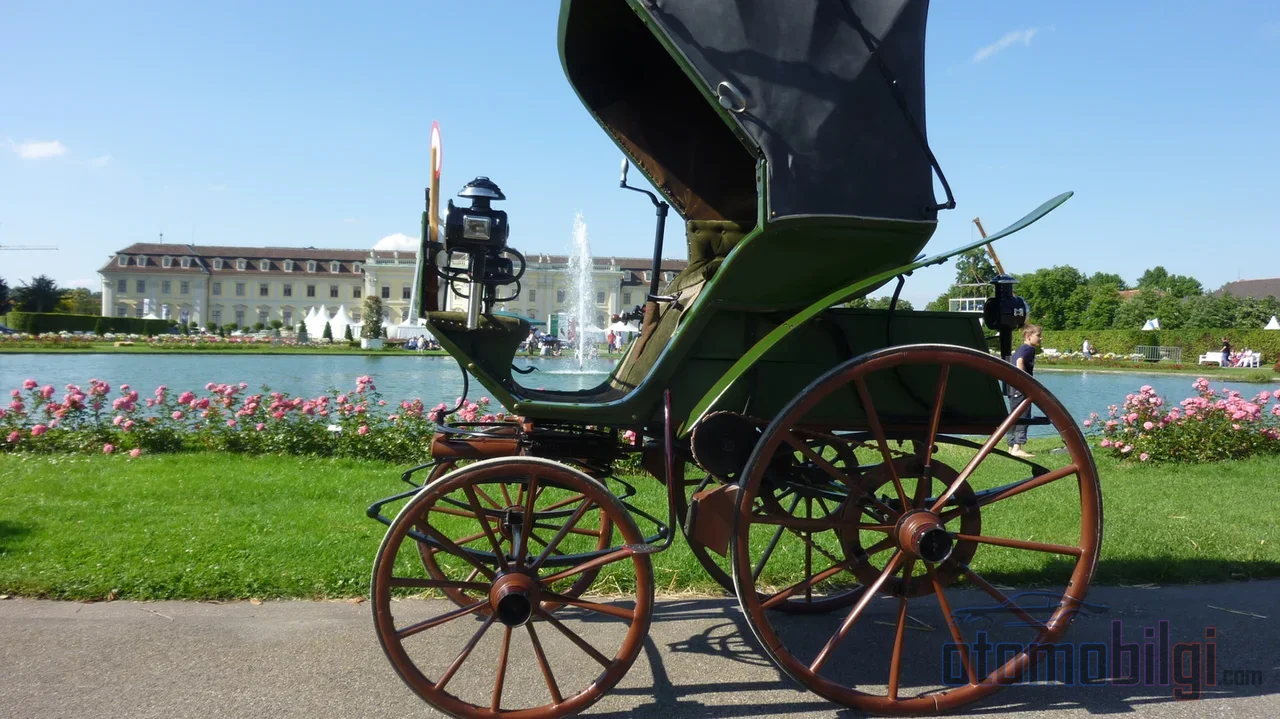
The philosophy of the vehicle was the most sensible engineering approach of the era: take a proven vehicle body and install a new propulsion system into it. Flocken used a high-wheeled lightweight carriage chassis similar to Daimler's 1886 motorized vehicle. Vehicles of this type were inspired by horse-drawn lightweight phaetons of those years and were built for two people. Flocken mounted an electric motor onto this frame, and the result was a vehicle that looked more like a carriage than a car.
Highlights
- Produced in Coburg in 1888; motor power of approximately 0.9 kW (about 1 horsepower).
- Power was transmitted to the rear axle via leather belts; top speed of 15 km/h.
- The wooden-bodied vehicle weighed approximately 400 kg; about 100 kg of that was the battery alone.
- Vehicle production ended in 1903; that year's model came with electric headlights.
- The title of "first series-production electric car" remains contentious due to the debate over whether the vehicle was a prototype or a production vehicle.
Technical Specifications of the Flocken Elektrowagen
By today's standards, the figures are modest - one might even say ruthless: electricity equal to one horsepower, and a top speed slightly above walking pace. But in the context of 1888, these values were electricity's first footprint on the road. The technical data is based on reference automotive handbooks and can be summarized as follows:
| Feature | Value |
|---|---|
| Place and year of production | Coburg, 1888 |
| Motor power | Approximately 0.9 kW (~1 hp) |
| Power transmission | Rear axle via leather belts |
| Top speed | 15 km/h |
| Curb weight | Approximately 400 kg |
| Body | Wooden, high-wheeled, with iron tires |
| Steering | Turntable |
On the subject of motor power, handbooks and some corporate history pages give different values: one writes 0.9 kW, the other 0.7 kW. The discrepancy makes it difficult to be certain whether it stems from the motor's rated power being stated with different definitions (continuous power vs. peak power) or from a different source; both values indicate the same order of magnitude and make no practical difference.
Chassis and weight distribution: a vehicle's limits
Flocken's car was architecturally a compromise. The high-wheeled carriage body with iron tires meant a high center of gravity and a narrow track width; not an ideal combination for stability in corners. The steering system, too, was not contemporary but traditional: the vehicle's turntable arrangement underneath was retained. In power transmission there was no gearbox; the motor's power was transmitted to the rear axle via leather belts, the material of an industrial era. The battery, carrying roughly a quarter of the weight, alone explains the main reason for the limited range: 1888's lead-acid cells stored several times less energy per liter-weight than today's.
The 15 km/h maximum speed figure appears in historical records as "said to have been reached"; that is, it is not an official homologation figure, but an estimate passed down from period observations. Even so, in the last quarter of the 19th century, the distance a car could cover between towns was already very short.
From 1888 to 1903: The Production Period and the Final Model with Electric Headlights
Flocken did not settle for a single vehicle. In the following years other models were developed; electric vehicles featured in the catalog of the Coburg factory for about fifteen years. The best-documented example of this process is the two-seater model from around 1903, whose photographs are preserved in a museum today.
The 1903 model was, compared to the 1888 vehicle, practically a generational leap:
- The steering was now the most modern solution of the era, the stub axle arrangement; the turntable had become history.
- All wheels were the same size and pneumatic tires were used - air had replaced the iron bands.
- Ball bearings and full-elliptic leaf springs modernized the ride quality.
- The battery box was moved onto the front axle; the connecting rod was taken lower and a control lever was added on top.
- And the most striking detail: the vehicle was equipped with electric headlights.
Electric headlights were an extraordinary innovation for that year; in the early years of the gasoline age, lighting was still solved with gas lamps on most vehicles. An electric vehicle using its own energy both for propulsion and lighting is an elegant detail demonstrating the internal consistency of the concept. However, technological maturity was not enough to save consumer interest: 1903 became the year car manufacturing ended at Flocken, and this model is regarded as the company's final work in vehicle history. Consumer interest had by then already shifted elsewhere - to which direction, we will see shortly.
The First Series-Production Electric Car, or Just a Prototype?
The title frequently given to the Flocken Elektrowagen today is that of the first true series-production electric car, and this designation rests on multiple automotive historians as well as local Coburg archival records. Yet historical "first" titles are never unanimous, and this case is no exception.
The most direct objection is as follows: The 1888 vehicle can be counted as the first functional electric car, but it is a prototype that never moved into actual production; therefore it cannot be given the title of "series production." There are also other qualifiers in circulation that balance this view: according to some publications, the Flocken was the "first practical" electric car; according to another assessment, it was the purchasable first limited series electric vehicle. This nuance between "practical" and "limited series" actually reveals the essence of the debate: depending on which criterion is taken, the title of "first" shifts to different vehicles.
Electric attempts before the Flocken
Another layer of the title debate lies in the attempts that began far earlier than the Flocken. According to the American Department of Energy's historical summary, Robert Anderson developed a primitive, crude electric vehicle around 1832. That is a date half a century before the Flocken. However, at that time there were not yet any storable power sources that would have made the spread of electric cars possible; the point at which electric vehicles truly became practical was pushed to after the 1870s. In other words, there was a huge technical and commercial gap between the "first electric vehicle" and the "first production, purchasable electric vehicle," and the Flocken is the first name standing on the far side of that gap - exactly where it gets counted from depends on how the criterion is defined.
This is the honest answer to the question: If the production criterion is accepted, the Flocken is the first series-production electric automobile; if the individual prototype criterion is accepted, the earlier attempts take precedence and the Flocken's title becomes debatable.
Why This Vehicle Was Important: The Electric-Gasoline Competition in the Early 1900s
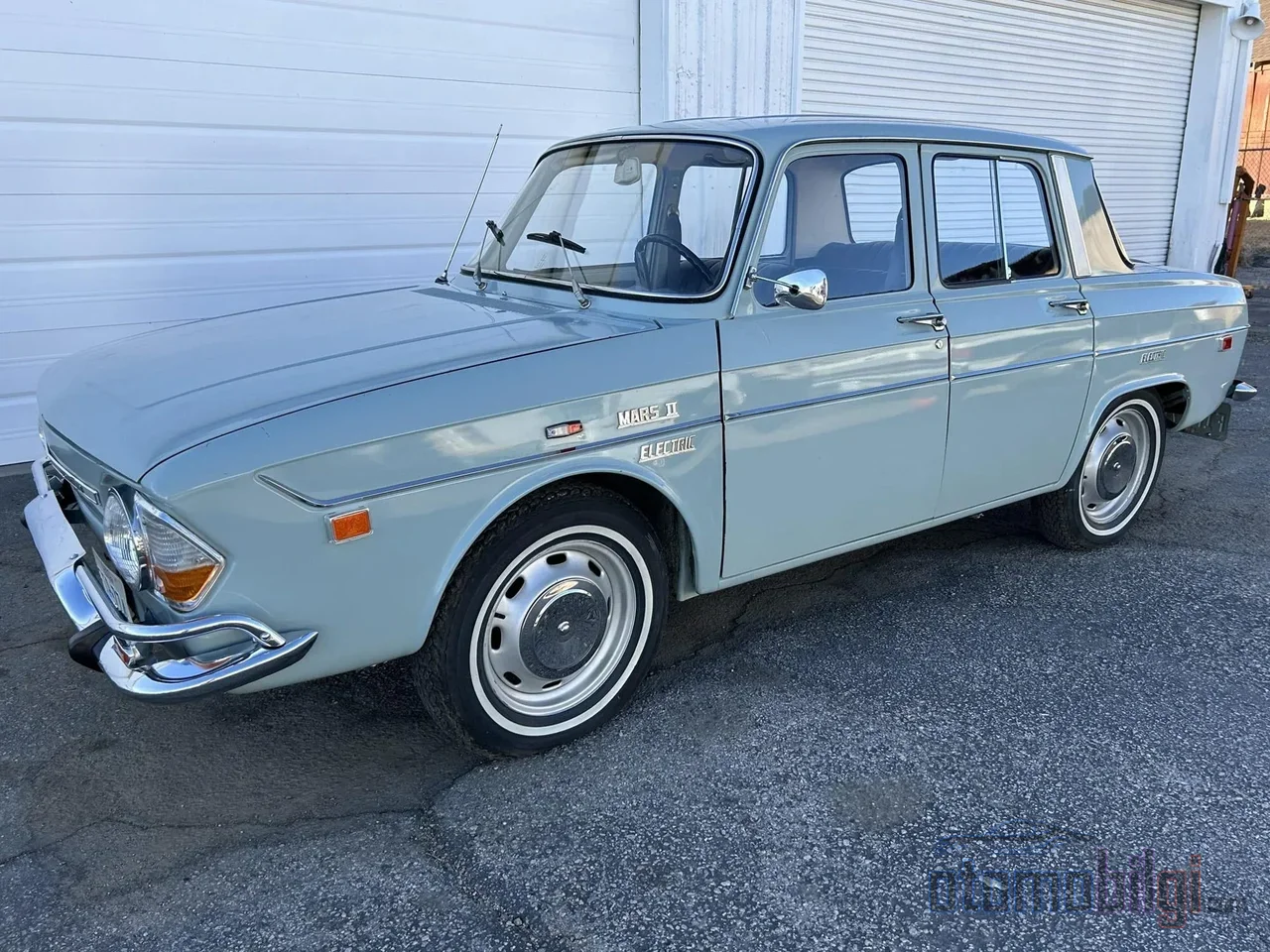
After the Flocken closed down, the electric vehicle did not head toward extinction; quite the opposite - it experienced a short but brilliant golden age. As of 1899, electrics, compared with their gasoline and steam rivals, were quiet, easy-to-use vehicles that emitted no odorous pollutants. In 1900, 28% of the vehicles on the roads of the United States were electric; toward the end of the century this figure had reached roughly 40% among American cars. Things had gone so far that even US President Woodrow Wilson drove an electric car with his official service staff.
The reason for the preference came from everyday life. Gasoline vehicles had no starter: to start the engine, you first had to turn the hand crank, which was a laborious task carrying the risk of broken wrists. Gasoline cars vibrated, made noise, and gave off exhaust fumes. Electrics, on the other hand, set off quietly with the turn of a switch - by far the easier solution, especially for women drivers and city use.
How did gasoline get ahead?
The victory of gasoline vehicles came not from a single reason but from several overlapping factors:
- As gasoline engines developed, they reached greater distances and higher speeds; the range limit of the electric battery increasingly became the deciding factor.
- The electric starter motor and advanced gear solutions eliminated the biggest drawbacks one by one, such as the hand crank and gear difficulty.
- The paving of rural roads accelerated faster than that of city streets; this turned the balance in favor of the gasoline car, which was a leisure vehicle rather than a long-distance traveler.
- Gas stations spread rapidly, and refueling became far more practical than charging at home for hours.
- While the distinction of "gasoline for long distances, electric for the city" was widespread for a time, the infrastructure tilted toward gasoline cars and this divide never closed.
By World War II, the battle had long been over: most electric vehicle manufacturers switched to internal combustion or shut down. Flocken's halt in 1903 was an early prologue to this story.
The Line Extending from Flocken to Tesla
The modern return of the electric car is a continuation of the same story. Produced between 1996 and 1999, the GM EV1 was the first major American mass-produced electric car; it was never sold, only leased, and the program was terminated in 2003 on the grounds of high production costs and a small market. Then, in 2008, came the Tesla Roadster: the first fully electric production car to be mass-produced with lithium-ion cells and highway legal, and the first production electric vehicle to offer a range of over 320 km. This step, which carried lithium-ion technology from consumer electronics to the automobile, finally made the line that Flocken started in Coburg about a century ago profitable and sustainable.
This historical perspective also shows the true significance of the Flocken title debate: a story that began with a 0.9 kW motor and leather belt drive has today reached a range of 320 km with lithium-ion packs. Moreover, the advantages of today's electric vehicles - silence, instant torque, home charging - are fundamentally no different from what the 1888 vehicle offered; only the scale has changed.
Conclusion: Who Owns the First Title?
The Flocken Elektrowagen is considered, according to documented records, the first mass-produced electric automobile in history: built in Coburg in 1888, it reached a speed of 15 km/h with its roughly 0.9 kW motor and leather belt drive, its 400 kg body became the starting point of a lineage of models developed over some fifteen years, and production ended in 1903 with a final model featuring electric headlights. This picture strongly supports the title of "first mass-produced electric vehicle."
In contrast, when the view that the vehicle was merely a prototype that never entered permanent production is combined with attempts dating as far back as 1832 before Flocken, it becomes clear that the title depends on the criteria. What is certain is this: the birth of the electric automobile was not a technological defeat, but a matter of timing. Flocken had found the idea 65 years too early; gasoline infrastructure kept it in the shadows for a century - but not forever.