Why Were Batteries Replaced in Early Electric Cars?
Share This Page
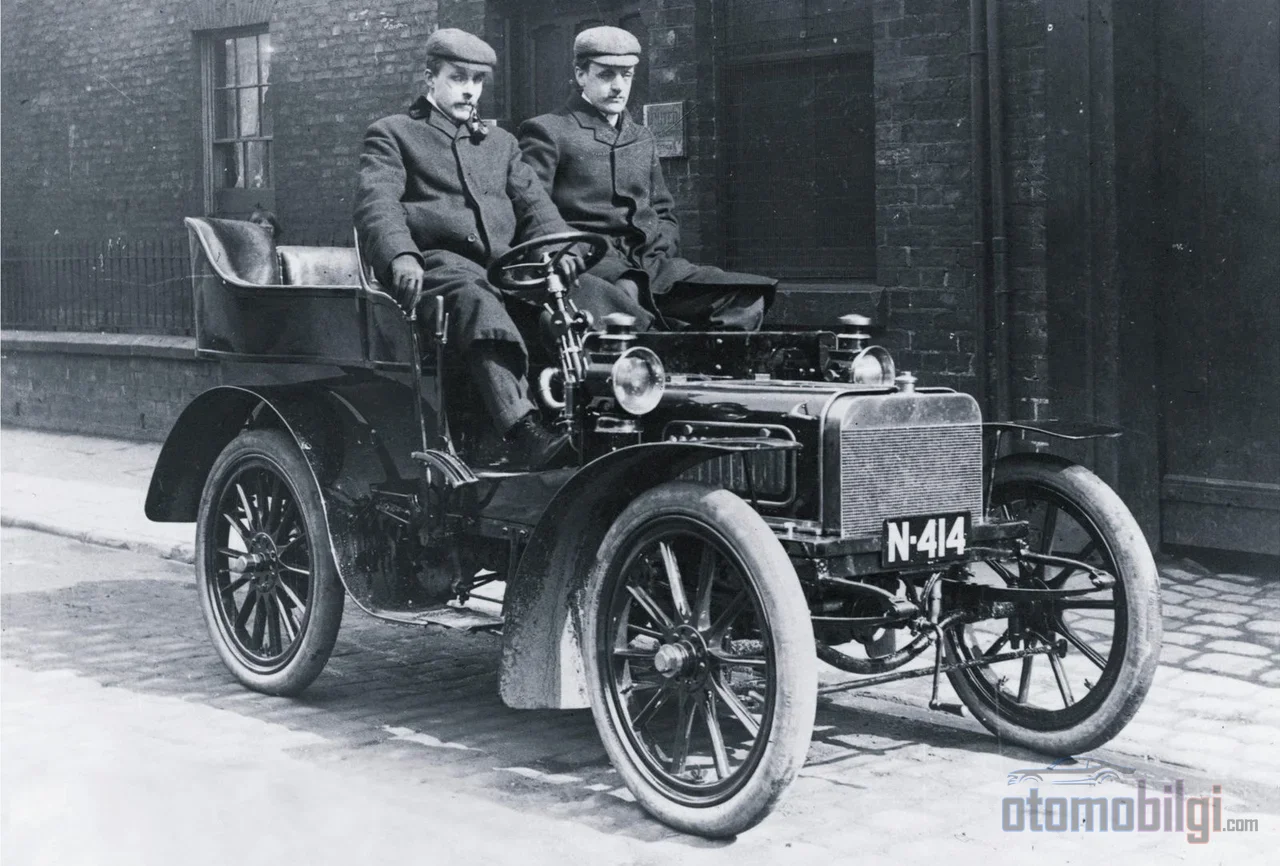
In early electric cars, the battery was not a purchased part of the vehicle but a rented service: in a model operated in the USA from 1910 to 1924, the vehicle owner never bought the battery; in return for a monthly service fee and a per-mile charge, the depleted battery was swapped with a fresh one in minutes at urban stations. A system that answered the range problem with battery swapping rather than charging stations, so early on, is the very model now coming back into the spotlight.
Highlights
- Battery swap service 1910–1924 offered in the USA between
- The model was based on a monthly service fee + per-mile charge structure
- In total, these vehicles traveled over 6 million miles on the road
- New York's first electric taxis in 1897 also swapped their batteries at a central facility
- Around 28% of cars in the USA were electric in 1900
Why did early electric cars need battery swaps?
At the root of the problem was the energy density of lead-acid batteries. With this chemistry, carrying a serious amount of lead and sulfuric acid was needed for adequate range; the battery was heavy and its capacity was limited. For vehicles like electric taxis that worked nonstop all day, living with this limit was impossible. While a wealthy user who parked the car in the city for a few hours and charged it at home could tolerate this constraint, for a commercial fleet the depleted battery waiting hours to charge directly broke the business model.
The solution was surprisingly practical: swap the battery quickly. The first example dates back to 1897. New York's first electric taxis, the Electrobat vehicles, weighed about 1,600 pounds and had a range of around 20 miles ; the taxis kept operating by swapping their batteries for fresh ones at facilities on Broadway. So battery swapping, in the early years of the electric car, was not a novelty but the operational model that kept commercial fleets running.
The GeVeCo model: don't buy the battery, pay per mile
The system at the center of the matter was the arrangement operated between 1910 and 1924 by Hartford Electric Light with its development partners, known as the GeVeCo model. The idea was to remove the most expensive and most problematic component of the electric car from the sale: the owner bought the car but not the battery. The battery remained with the service company.
The pricing looks strikingly familiar to the modern eye. The vehicle owner made two payments: a fixed monthly service fee covering the maintenance and storage of the vans, and a variable per-mile charge corresponding to the energy the battery delivered. Compare it with gasoline: the electric car's per-mile cost replaces buying gasoline, while the cost and risk of the battery were transferred entirely to the service operator.
The operations side was specifically designed for this scheme as well. Both the vehicles and the batteries were modified to facilitate quick swapping; the battery was installed and removed like a standard unit. At stations in the city center, a depleted pack was replaced with a full one within minutes, and the driver continued on the road without range anxiety. In total, these fleets covered more than 6 million miles, showing that the model was not a showcase project but a genuine transportation service.
Why it worked: redefining the range problem
The brilliance of the system lies in the way it framed the problem. The range issue is usually defined as a limitation of battery technology, whereas the GeVeCo scheme reduced the problem to the level of customer experience. Battery capacity remained constant, but running out of range was no longer a lengthy interruption; it was a maintenance stop lasting a few minutes. In terms of refueling time, gasoline's advantage was momentarily neutralized in urban operation.
It is also worth noting for whom this model made sense. Fleet vehicles operating on fixed routes, such as vans, delivery vehicles, and taxis, and returning regularly to a central point, were the ideal users of the swap system; the depot or station was in the city center, and the vehicles departed from and returned to it. Building a widespread station network for private users was an entirely different matter of capital - and that is exactly where the model's limits began.
Why did the model end in 1924?
The early era of the electric car could not survive on its own; its rival was rapidly gaining strength. Until 1912, a gasoline automobile sold for about 650 dollars, while an electric roadster started at 1,750 dollars. As internal combustion engines became more reliable, electrics fell behind in both range and speed. On top of that came cheap and abundant gasoline, an improving road network, and, from 1912 onward, the electric starter solving the hand-crank problem: for roughly the next 30 years, there was no significant need left for the electric against the internal combustion engine.
Within this picture, the swap service's share is clear: when buyers ran out, the service lost its meaning. Electric vehicle production peaked in 1912; the swap service ended in 1924. It is difficult to say in detail whether the model was abandoned due to an operational failure or the exhaustion of the market; the available records show that the service ended, while the triumph of gasoline, which engulfed the entire early electric market, is a broader picture.
Today's battery swapping: the same idea reborn with lithium-ion
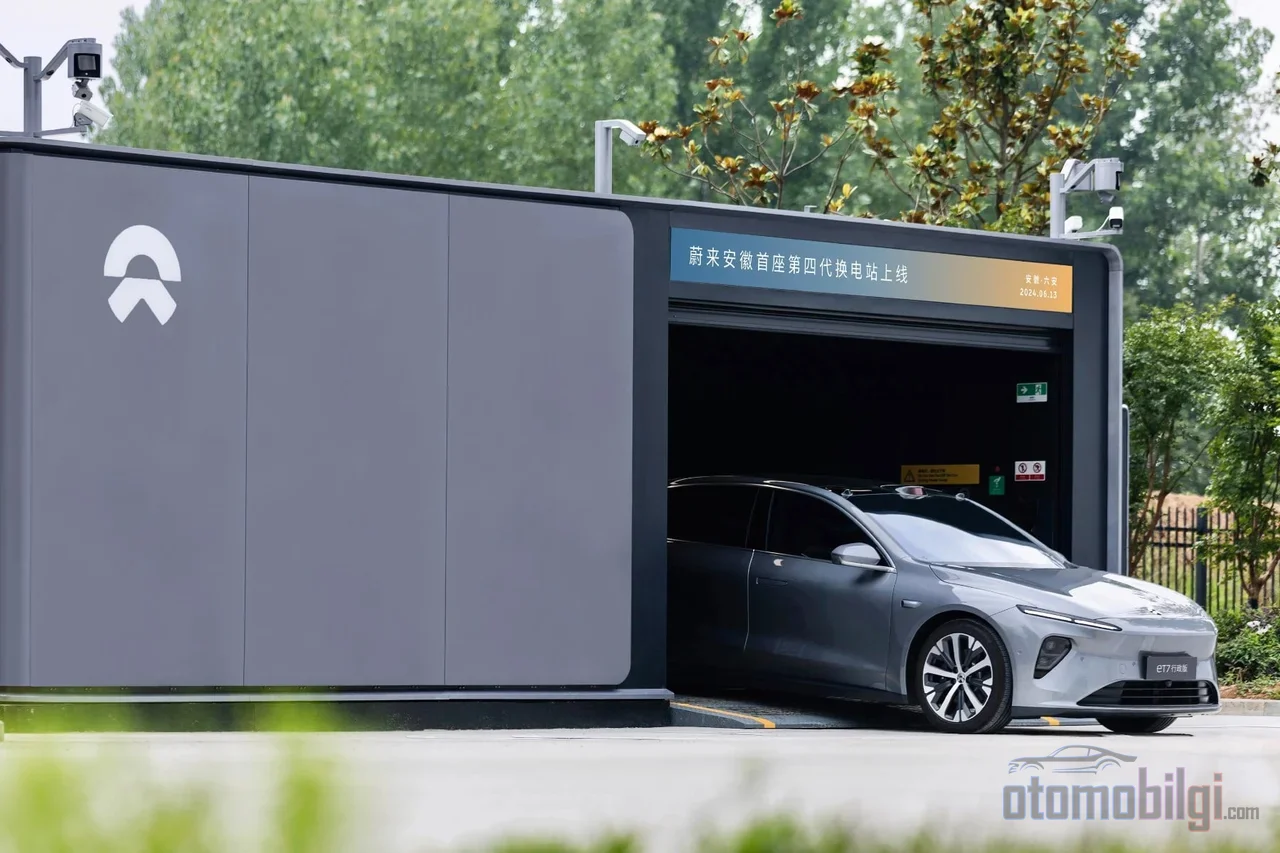
The battery swap idea returned a century later with a similar logic; this time in the lithium-ion era and on a much larger scale. Chinese manufacturer NIO saw its network surpass 9,000 stations as of the end of June 2026, and the cumulative number of swaps exceed 110 million; in February 2026 it had passed the 100 million swap threshold, announcing that these swaps had saved users a total of 83.41 million hours. A single swap In under 3 minutes being completed; in the first week of October 2026 alone 1,192,221 swaps were performed.
The century-old parallel is striking: just as in the 1910s model, swapping today turns the battery into a service commodity, shifting charging time away from the user and onto the operator. The difference lies in scale and technology. Modern swapping has turned batteries into a manageable stock that does not burden the daytime grid, whereas the 1910s model relied on a single central depot in the city center.
| Feature | Early era (1910-1924) | Modern era (2026, NIO) |
|---|---|---|
| Pricing | Monthly service fee + per-kilometer charge | Subscription and per-swap fee |
| Swap time | Within minutes | Under 3 minutes |
| Scale | Single-city fleets, over 6 million total miles | More than 9,000 stations, over 110 million swaps |
| Who owns the battery? | The service company | The operator |
The lesson history teaches
The story of battery swapping is not a story of the electric car's failure; it is the story of a business model that worked in the right market coming to an end together when that market itself disappeared. In the 1910s, swapping was the most rational way to overcome the limits of the lead-acid battery through commercial operation, and it proved this over thousands of miles. When gasoline's advantages in cost and range disrupted that equation, even the most elegant operating model could not carry it alone.
Today the equation is being rewritten: lithium-ion cells extended the range, charging infrastructure is growing, but a fully charged battery in a matter of minutes is still faster than the shortest time charging can achieve. NIO's millions of swaps show this difference is still meaningful for users. The forgotten lesson of the early era is this: battery swapping is not a technological fascination, but a matter of economics and operations - and it works, both a century ago and today, under the right conditions.
Sources
- Swapping electric car batteries since the Gilded Age - Reuters
- Battery swapping - Wikipedia
- The History of the Electric Car - U.S. Department of Energy
- History of the electric vehicle - Wikipedia
- Early Electric Cars in America (1891-1922) - Library of Congress
- NIO Achieves 100 Million Battery Swaps - NIO Newsroom
- NIO Reaches 9000 Battery Swap Stations - FuelCellsWorks
- Battery swap works: NIO completes 1.2 million swaps in a single week - Electrek
- The Story in Pictures of the Early Electric Cars, 1880-1920 - Scout Motors community