Detroit Electric and the Luxury Years of the Electric Automobile
Share This Page
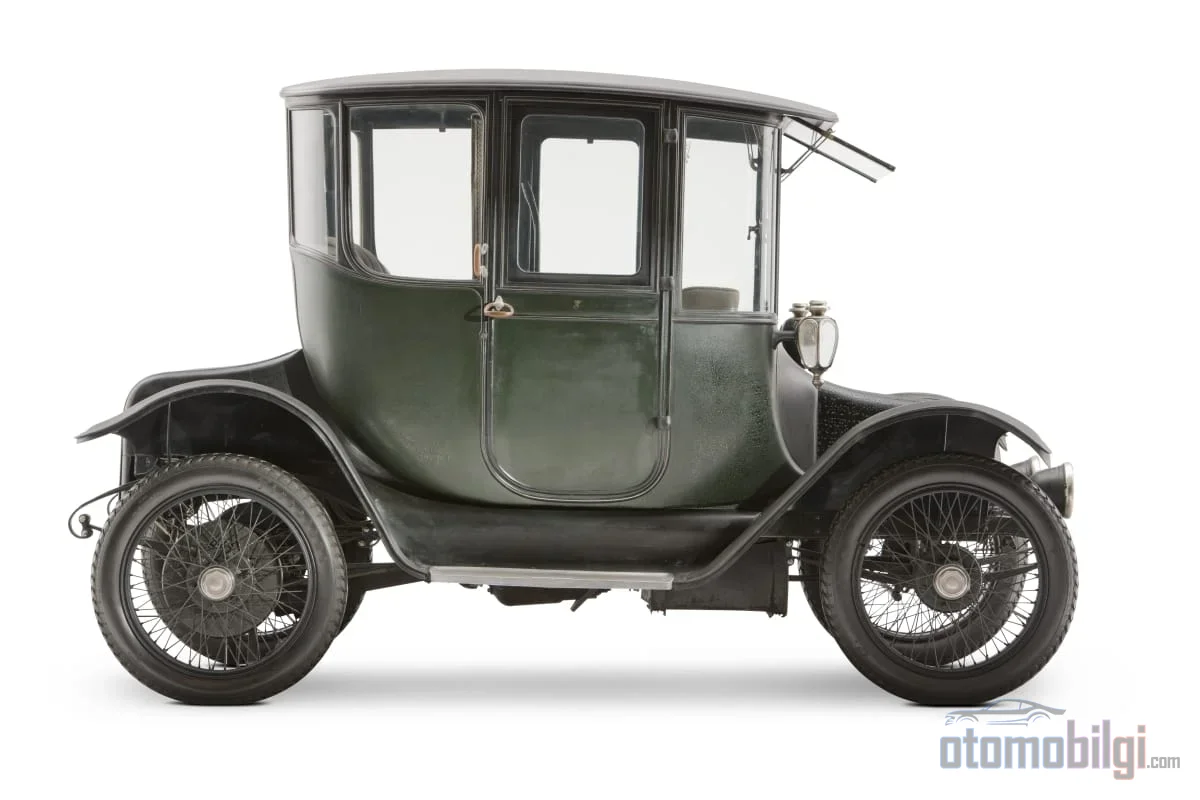
Detroit Electric, produced in Detroit between 1907 and 1939 and reaching approximately 13,000 units, is the most successful luxury model in the history of electric cars. Its design that required no hand crank, its quiet cabin, and an advertised range of 80 miles per charge pleased upper-class buyers - among them figures such as Clara Ford, Thomas Edison, and John D. Rockefeller Jr. - for decades. This page tells how the electric car survived as an elegant, urban luxury product even in an era when gasoline cars were rising through mass production, and why it eventually ran out of steam.
Highlights
- Production period: 1907–1939, a total of approximately 13,000 vehicles
- Advertised range: 130 km; in one test, 340.1 km on a single charge 340.1 km
- Maximum speed: ~32 km/h (20 mph)
- Price difference in 1912: electric roadster $1,750, gasoline car $650
- The last vehicle was shipped on February 23, 1939 was shipped on
Why did the electric car first become the address of luxury?
At the turn of the century, the automobile was competing with three different technologies: steam, gasoline, and electricity. By 1899, electric cars held clear advantages over their rivals: they were quiet, easy to start, and emitted no foul fumes. At the time, these qualities were not seen as "weak technology" but as direct indicators of quality. In the same year, Camille Jenatzy, La Jamais Contente became the first person to break both the 100 km/h and 60 mph barriers - the performance promise of electric power was also on the table.
The market, however, was in the cities. Thanks to their quietness and ease of use, electric cars found customers especially in busy urban centers with dense shopping districts; merchants in these areas even installed charging stations to attract their wealthy - often female - customers. In this context, the electric car was positioned as a "city vehicle": its short range was not a flaw, but a design choice that suited the use case.
Pioneers: Baker and Studebaker
The beginning of commercial electric car sales is 1899: Baker Electric became the first commercially sold electric car that year. The 1909 Baker Electric represented the luxury end of the segment; longer than seven feet with its carriage-style body, the vehicle was described as looking like "a giant telephone booth" and carried twelve 6-volt batteries.
Studebaker's path was different but pointed in the same direction. Studebaker Brothers Manufacturing Company - "The World on Wheels" - a respected wagon and carriage maker of the 19th century, entered the 20th century as an electric car manufacturer and built its first electric model in 1902; production of its first internal combustion engine model, the Model A, only began in late 1903–1904. The fact that Thomas Edison owned his own 1902 Studebaker Electric sums up the technological climate of the era: electricity was taken seriously as the vehicle of the future.
Detroit Electric: a luxury formula in numbers
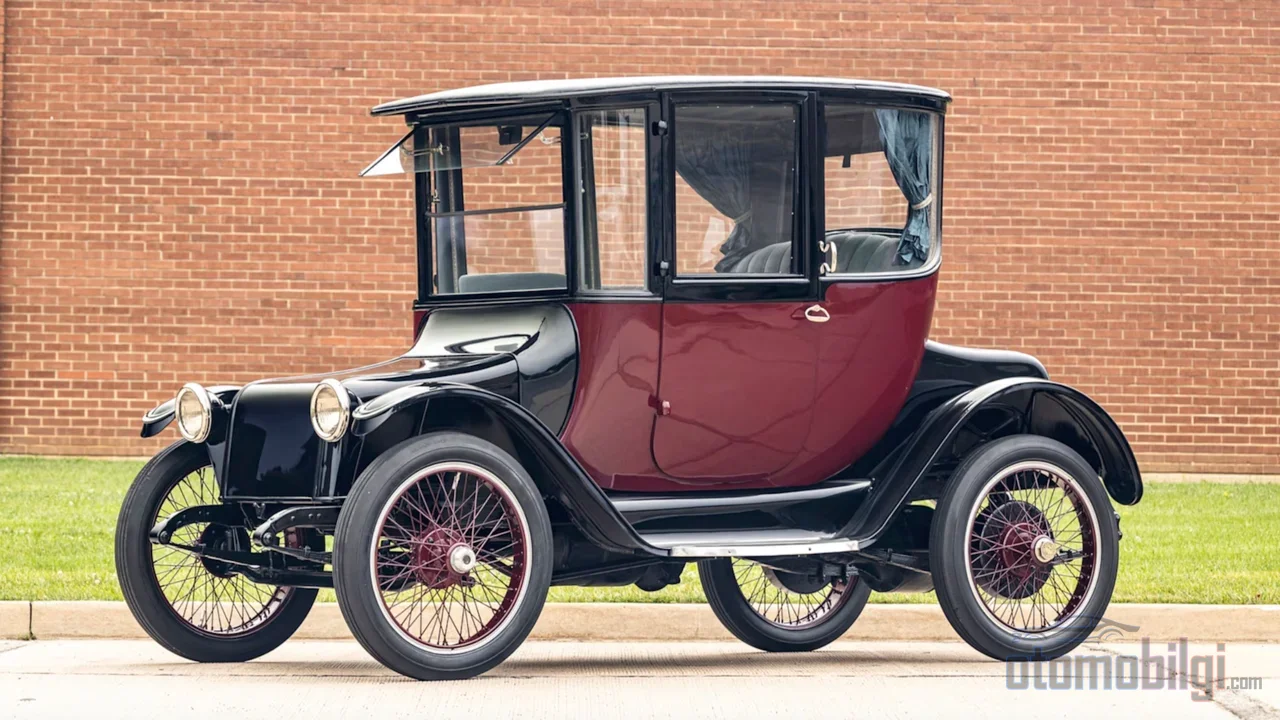
Detroit Electric was a product of the Anderson Carriage Company, a car manufacturer with roots going back to 1884; production began in 1907 with rechargeable lead-acid batteries. The formula was clear: eliminate the most frustrating operation of the gasoline car - hand-crank starting - and maximize comfort. The company was also a pioneer in using curved glass in its first production automobile.
Production peaked in the mid-1910s: per year, 1,000-2,000 vehicles. In 1920, the company structure was professionalized; bodywork was separated out to Murray Body, and the motor and controller work to Elwell-Parker, and the name became "The Detroit Electric Car Company". Caution is needed regarding production numbers: the widely accepted figure is approximately 13,000, but some assessments give more precise numbers such as 12,348, or even the claim of "more than 35,000"; the 13,000 figure stands as a reliable reference within a range explained by definitional differences between body counts and vehicle counts.
| Feature | Value |
|---|---|
| Production period | 1907-1939 |
| Total production | ~13,000 units |
| Advertised range | 130 km (80 miles) |
| Test range (single charge) | 340.1 km (211.3 miles) |
| Maximum speed | ~32 km/h |
| Edison nickel-iron battery option | 1911-1916, $600 extra charge |
| Production peak | Mid-1910s, 1,000-2,000 per year |
| Last shipment | February 23, 1939 |
Clara Ford and famous users
Detroit Electric's customer ledger is like proof of its target audience: Thomas Edison, Lizzie Borden, engineer Charles Proteus Steinmetz, Mamie Eisenhower and John D. Rockefeller Jr. - Rockefeller having bought a pair of Model 46 roadsters . But the most significant name, of course, was someone bearing the surname Ford.
Henry Ford, a few months before selling his first Model T, bought his wife Clara her first Detroit Electric in 1908; the vehicle featured a special child seat for their son Edsel. Clara's third car was a 1914 Model 47 brougham and she used it into the 1930s - 1930 according to one account. The reason is technical and clear: the difficulty of the hand crank, the hassle of the gearbox, and the smell and noise of gasoline. Before World War I, many women preferred electric vehicles for exactly the same reasons. That the wife of the man who sold gasoline cars himself mostly drove electric sums up the irony of the era in a single sentence: While the Model T introduced the masses to gasoline, the electric continued to live on as the private preference of the upper class.
A 29-year-old Detroit Electric in Japan
The brand's footprint extended beyond America as well. GS Yuasa's founder Genzo Shimadzu Jr. imported two Detroit Electrics in 1917 and used the vehicles, with his own manufactured batteries, as his daily transport in Tokyo for 29 years. In 2009, GS Yuasa restored one of the vehicles with a lithium-ion battery; the date May 20 was declared "Electric Vehicle Day" in Japan.
Why did gasoline pull ahead? The anatomy of a lost race
The decline of the electric came not with a single event but with three developments that reinforced one another. It is possible to trace all three with measurable data.
- Electric starting: The 1912 Cadillac was the first to use Charles Kettering's electric starter, and as the technology spread through the industry, the hand crank problem - the electric car's strongest selling point - was solved.
- Price: In 1912, while a gasoline car cost $650, an electric roadster was $1,750. While the 1908 Model T sold for $850, electric cars were generally at least twice as expensive; when the Model T dropped below $300 in 1923, many electric cars were roughly 10 times more expensive by comparison.
- Infrastructure and fuel: Between 1920 and 1935, improving roads made intercity use widespread, and cheap oil discovered in Texas eroded the cost of gasoline. The lack of widespread electricity outside city centers also made a charging network to compensate for the electric car's range limitation impossible from the start.
Within this equation, Detroit Electric still performed well against more innovative rivals like Baker and Milburn. Rising gasoline prices and supply disruptions during World War I gave electric cars a brief respite; the company's own sources refer to this period as one of support. But the relief was temporary. By the mid-1920s, Detroit Electric's "new" vehicles were mostly built on bodies produced years earlier and left unsold - a business model resembling stock liquidation rather than a production line.
The Ford-Edison dream and its end
It is known that even the biggest names who believed in the electric car's future could not solve this problem: Henry Ford and Thomas Edison produced at least one prototype for an electric car but ultimately decided that the gasoline engine's future was brighter. The reasons for the decision were exactly the three headings above - and especially, there was no electricity outside the cities.
The company's final years also follow a declining curve: 1929(according to one record, control passed upon Anderson's death in 1927), Alfred O. Dunk took over the company, 1932 it went bankrupt and A. F. Renz continued the operation. The last Detroit Electric February 23, 1939 was shipped; according to the official website, the vehicles were considered "available" until 1942. By 1935, electric cars had almost completely disappeared from US roads; the early golden age experienced in the 1920s had effectively ended within a decade. The number of known surviving examples today is approximately 113 ; museum examples can be seen in Detroit, Dearborn, Denver, Brussels, Reno, Schenectady, and Perth.
Interim period: luxury died, hope continued
There are six decades between the point where Detroit Electric was exhausted and the point where the GM EV1 was born, and in the meantime the electric car was attempted several times - none could bring back the claim of luxury. Henney Kilowatt (1959-1960) was based on the Renault Dauphine; in 1959 it offered 40 mph speed and 40 miles of range with 36V, while in 1960 it reached 60 mph and 60 miles with 72V, but in total about 100 chassis were produced and only 47 cars were sold. GM's Electrovair II's (1966) version produced 532V and 115 hp from silver-zinc batteries, offering a 40-80 mile range; but the batteries lasted only 100 charge cycles and the package cost $160,000. After the 1973 OPEC embargo, Citicar (1974, ~25 mph, 40 miles), scaled solutions emerged; Citicar/Comuta-Car, with a total of 4,444 units, became the largest post-World War II electric manufacturer in the US and held that title until 2013.
EV1 and the modern comeback
The GM EV1 was produced in response to California's 1996 zero-emission vehicle (ZEV) mandate, and around 800 units were leased in Los Angeles, Tucson, and Phoenix between 1996 and 2003. The program ran only as a lease model; GM canceled it in 2003, citing high production costs and a small market, the cars were not sold to their lessees, and most were destroyed. GM's stated reasons were the lack of spare parts and safety concerns; critics point to the cost, the small market, and the change in California's ZEV legislation.
The real comeback came from the battery. The lithium-ion cell 1991 was commercialized in Nissan Altra EV (1998) was the first highway-legal electric car to use this chemistry. AC Propulsion's 1997 tzero- its lithium-ion version did 0-60 mph in ~3.7 seconds - was the direct inspiration for Tesla Motors, and in 2008 Tesla Roadster went into production as the first highway-legal series-production fully electric car to use lithium-ion cells. Detroit Electric's range promise was 130 km; eleven decades later, the same promise was no longer a luxury privilege but a standard technical specification.
What does Detroit Electric tell us today?
The brand 2008 was revived in by Albert Lam, Lotus's former Group CEO (Detroit Electric Holding Ltd., Netherlands), but the most vivid remnants of the story sit in collections: Jay Leno restored a 1914 Detroit Electric as a restomod between 2015 and 2020. Traces in popular culture continue as well - Grandma Duck's red car with 1902 plates resembles a Detroit Electric, and these cars appear in episodes of Perry Mason and Peter Gunn.
From an engineering standpoint, the lesson of Detroit Electric is clear: an electric vehicle focused on comfort that fits the right use case can stand its ground against a technologically more "advanced" rival for decades. The gasoline car's victory was not absolute superiority; it was the combination of the starter motor, cheap fuel, and mass production scale. Today, all three of these variables have reversed - and that is precisely why one can argue that Detroit Electric's luxury years were not an ending, but an interlude.
Sources
- Detroit Electric - Wikipedia
- About Us | Detroit Electric
- First Electric Car: A Brief History of the EV, 1830 to Present - Car and Driver
- The History of the Electric Car - U.S. Department of Energy
- 1914 Detroit Electric Model 47 Brougham, Personal Car of Clara Ford - The Henry Ford
- Electric Cars Engineering & History - Edison Tech Center
- The Baker Electric - Auto Heritage Foundation
- A Brief History of Studebaker - Motorcities
- History of the electric vehicle - Wikipedia
- General Motors EV1 - Wikipedia
- EV1 Electric Car - National Museum of American History (Smithsonian)
- Tesla Roadster (first generation) - Wikipedia
- 1922 Detroit Electric - Bill's Vintage Cars