Steam, Electric, and Gasoline: The First Car Race
Share This Page
In the early years of the automobile, no one yet knew who the winner would be; steam, electricity, and gasoline were all running an equal race. Around 1900, US production consisted of steam vehicles at roughly 40%, electrics at 38%, and gasoline cars at only 22% share. Today, pages telling the story of the electric car's competition with gasoline frame it as a two-way match; but the first race had three contenders, and the one that vanished from the scene was steam. This page focuses on that three-way race between 1890 and 1910: we can only understand why the electric car finished second and why steam was completely forgotten within this context.
Highlights
- Around 1900, steam held a 40%, electricity 38%, and gasoline a 22% share of US production.
- The first automotive land speed record was set in 1898 by an electric vehicle at 63.13 km/h .
- La Jamais Contente, on April 29, 1899, became the first automobile to break the 100 km/h barrier with a speed of 105.88 km/h .
- Steam vehicles had to wait about 20 minutes for boiler pressure before driving; on cold mornings this took even longer.
- In 1912, electric cars sold for nearly twice the price of gasoline cars.
How Did the Three Contenders Look in 1900?
Each of the three technologies represented a different engineering philosophy. Steam was the most mature power source of the era: a high-torque, fast, and powerful solution familiar from locomotives and industrial facilities. Electricity stood out for its silence and ease of use: no crank handle, no gears, no noise. The gasoline internal combustion engine, however, was the most problematic of the three: hard to start with a hand crank, vibrating, smelly, and its early models were weak in terms of reliability.
The share distribution shows this clearly. In 1900, more than 1,600 steam cars were produced in the US, and about 28% of vehicles on the road are estimated to have been electric; this figure and the 38% sales share are two different measurements of the same story. Gasoline vehicles came third in both measurements. Although the precise percentages of production shares vary somewhat by definition and scope, the ranking does not change: steam in the lead, electricity a close second, gasoline trailing behind.
| Technology | 1900 Share (approx.) | Strengths | Weaknesses |
|---|---|---|---|
| Steam | 40% | Power, speed, mature technology | Long startup time, carrying water and fuel |
| Electric | 38% | Silence, ease of use | Low speed (24-32 km/h), short range (50-65 km) |
| Gasoline | 22% | Range, versatility | Hard starting, noise, early reliability problems |
Steam's Golden Age: Why Was the Stanley Steamer the Market Leader?
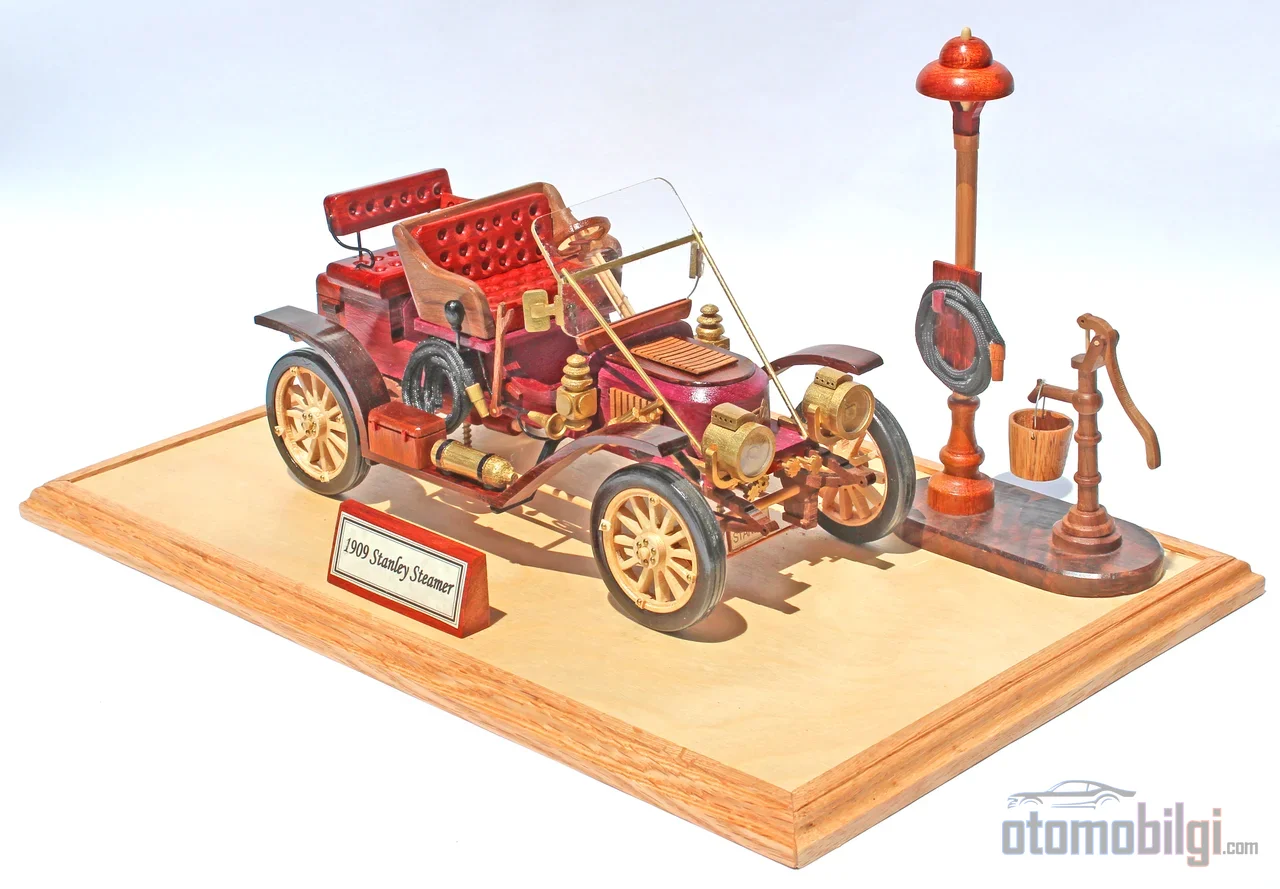
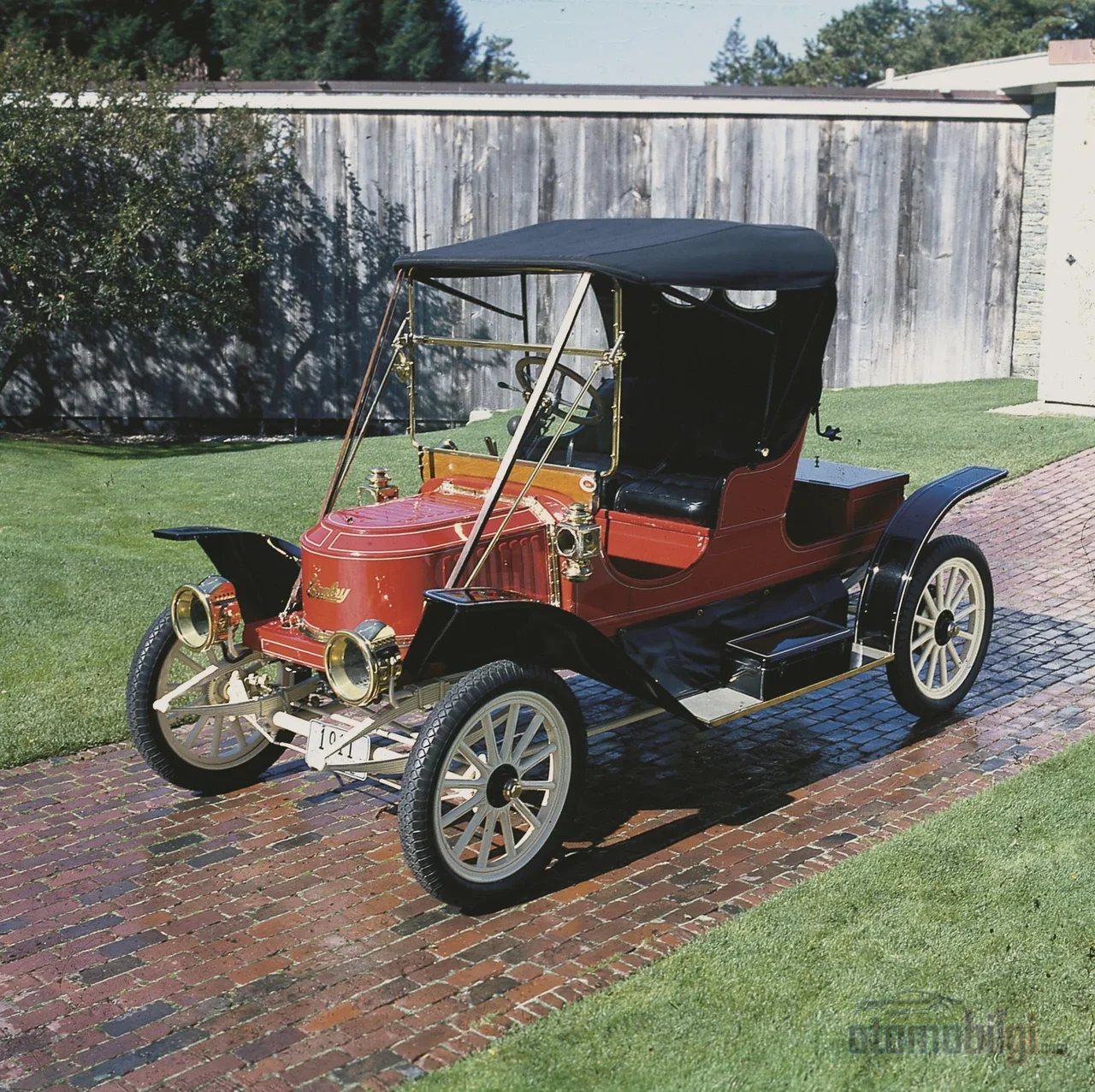
Steam's market leadership was no accident. The Stanley Motor Carriage Company was founded by twin brothers Francis Edgar and Freelan Oscar Stanley, and the Stanley and Locomobile brands were the country's most popular automobiles between 1900 and 1904. These vehicles, known as the Stanley Steamer, offered the pleasure that steam's inherent instant torque gave the driver - something no gasoline car of that era could match. Powered by boiler pressure, the piston produced full pulling power practically from the very first moment, without any concept of revs.
But this performance came at a cost, and the cost was paid with patience, not engineering. The boiler was fired by hand, and before driving, one had to wait about 20 minutes for pressure; on cold mornings this time could stretch to 30 minutes, or even 45 minutes in some early models. The steam vehicle also carried both water and fuel, and due to water loss it required resupplying both on long routes. The Smithsonian's assessment of early automobiles is summarizing: steamers were fast and powerful but harder to use and less safe, which made them machines that appealed more to enthusiasts than to the general public.
Nevertheless, steam experienced a genuine boom in the early 1900s. The technical solution to the problem came later: automatic and quick-firing boilers largely eliminated startup time. But this solution came too late; by then, the gasoline engine had already won the race to shape the market.
Why Was Electric the Star of the First Race?
The roots of electric propulsion go back much further than the automobile. In 1827-28, Ányos Jedlik built the first electric motor and the small model vehicle it drove; between 1832-39, the Scot Robert Anderson developed a crude electric carriage. In 1881, Camille Faure making the lead-acid battery suitable for industrial production was a critical threshold, and that same year Gustave Trouvé tested the first manned electric vehicle with its own power source in Paris. Andreas Flocken built the Flocken Elektrowagen in 1888, and Thomas Parker built his first electric car in Wolverhampton in 1884; in 1890-91, William Morrison developed America's first electric automobile in Iowa, carrying six passengers and capable of 23 km/h speed.
Why Weren't the First Speed Records Gasoline?
Because even on the race track, electric held a physical advantage in the early period. On December 18, 1898, the Jeantaud electric vehicle broke the first automotive land speed record at 63.13 km/h in Achères. Four months later, on April 29, 1899, Camille Jenatzy's La Jamais Contente reached 105.88 km/h with two Postel-Vinay 25 kW motors, becoming the first automobile to exceed the 100 km/h barrier. Gasoline vehicles waited a full three years and four months to surpass this record. The electric vehicle held the land speed record until about 1900; in 1901, Andrew Riker's race car renewed the record as the fastest electric of its time.
The market side also favored the electric car. In 1897, Walter Bersey's electric taxis served London under the nickname "Hummingbirds"; the same year, 12 electric hansom cabs were operating in New York. Studebaker entered the automotive industry with electric cars in 1902, and even President Woodrow Wilson used a Milburn Light Electric in Washington. Electric car sales peaked in the early 1910s; in other words, the decline of the electric car is explained not by gasoline's early superiority but by a siege that came later.
How Did Gasoline Go from Third Place to the Top?
The rise of the gasoline engine is not the story of a single inventor or a single invention; it was a chain of complementary solutions. The Smithsonian's framing is clear: when the gasoline engine became as convenient as the electric one, it rose to the position of a car that was easier to start and drive than steam; speed, range, versatility, and sportiness were added on top of that.
- 1897: The Reeves brothers' muffler brought the gasoline engine's noise down to an acceptable level.
- 1912: Charles Kettering's electric starter motor eliminated the hand crank; the gasoline car's biggest usability barrier was removed.
- Mass production: Henry Ford's production line drove prices down; by 1912, an electric car was already selling for nearly twice the price of a gasoline one.
- Infrastructure and fuel: Cheap Texas oil pushed down the cost of gasoline.
- Roads: The improving road network of the 1920s created long distances that electric cars, condemned to a 50-65 km range limit, could not keep up with.
There was also fundamentally an energy density issue: gasoline carried far more energy per unit weight than the batteries of its era. With a speed of 24-32 km/h and a range of 50-65 km, the electric vehicle was a perfect city car, but it was impractical as a general-purpose vehicle. Early attempts were also made to solve the range problem: a swappable battery service was proposed in 1896, and the Hartford Electric Light Company provided battery exchange service over a distance of more than 6 million miles between 1910 and 1924. However, such services were not enough to change the mainstream of the market.
Why Was Steam Completely Forgotten?
The electric car's loss was coming from behind; steam's loss was withdrawing from the field. Stanley/Locomobile fell seriously behind internal combustion models in 1905, and while most electric manufacturers halted production in the 1910s, steam cars joined the same procession. By 1935, electric cars had all but disappeared; steam cars had been erased from the vehicle market long before that date. When Francis Edgar Stanley lost his life on July 13, 1918, it was widely accepted that the race for the technology his company sold had already been lost.
The disappearance of the steam car has a three-layered explanation. First is starting time: a 20-45 minute boiler preparation became an unacceptable cost of use compared to a gasoline engine that could be started with a key thanks to the starter motor. Second is maintenance and fuel: a vehicle with a boiler carrying two consumable materials and lit by hand could not compete in a market that was increasingly sold to more crowded and less technical users. Third is image: while the gasoline engine took over the speed records and turned the automobile into a vehicle of sport and exploration, steam remained the nostalgic choice of enthusiasts. In other words, steam was not eliminated by a single blow, but by successive marginal disadvantages in every dimension.
What Does the Electric Car's Secondary Position Add to Today's Narrative?
If you compare the electric car only with the gasoline one, the story reads like "the return of the loser." When you place it in a three-way framework, the picture is very different: electricity was the technology that held the speed records in the first half of the automobile's life, served in taxis, and sat in presidents' garages. Its defeat was not a lack of victory but being stuck in second place: a middle position that could not surpass steam in ease of use or gasoline in range and energy density. Today, lithium-ion batteries and modern power electronics are solving exactly the two variables that defined that second place: speed and range. The real lesson of the first race is this: the winning technology is not the best one; it was the one that frictioned least against that market's constraints at that moment. When the constraints changed, the rewriting of the ranking was not surprising.
Sources
- Technological Choices | National Museum of American History
- History of the electric vehicle
- The History of the Electric Car
- The Jeantaud Electric Car Land Speed Record | Origins (OSU)
- La Jamais Contente
- The Last Great Steam Car
- The Stanleys and their Steamer - AMERICAN HERITAGE
- Stanley Steamer -- General Information
- Stanley Motor Carriage Company
- Electric vs Gasoline Cars: History Shows This is Nothing New - MotorTrend
- Steam car