As Batteries Get Cheaper: The Economics Making Electric Cars Mainstream
Share This Page
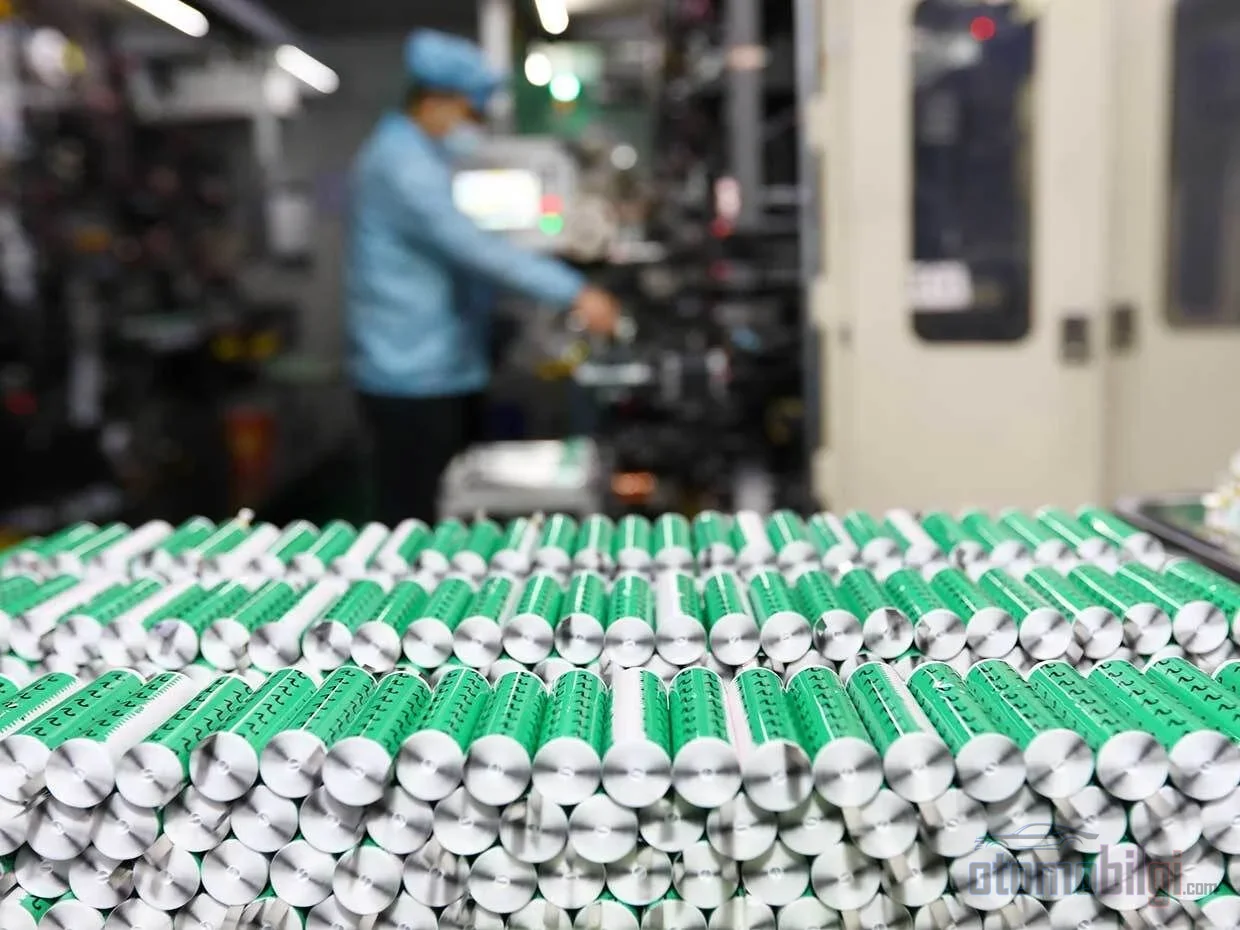
The real driving force behind the mass adoption of electric cars is not motor design or aerodynamics; it is the fact that the cost of a battery cell per kilowatt-hour has fallen by more than 99 percent over more than three decades. The cell price, which was around $9,200 in 1991, had fallen to the $78 level as of 2024. On this page, we examine the economic history of this collapse, the economies of scale, manufacturing investments, and the transformation in battery chemistry, along with their impact on the price curve of the modern electric car.
Highlights
- Lithium-ion cell price was around $9,200/kWh in 1991, $78/kWh in 2024: a drop of more than 99 percent.
- EV battery pack cost fell from $1,415/kWh in 2008 to $139/kWh in 2023: 90 percent in 15 years.
- Every time cumulative production doubles, the price falls by roughly 19 percent : the Wright's Law learning rate.
- According to BloombergNEF, BEV pack prices fell below the $100/kWh threshold for the first time in 2024 : $97/kWh.
- In 2025, more than 20 million electric cars were sold globally; price parity has already been crossed in China.
Why have battery prices fallen so much?
We are not talking about a single big invention. What shapes lithium-ion's price curve is the sum of thousands of small improvements accumulated in chemistry, production lines, and supply chains as cumulative production grows. In engineering literature, this relationship is known as Wright's Law: every time a product's cumulative production doubles, its unit cost falls at a predictable rate. For lithium-ion batteries, since 1998 this rate has been around 19 percent surprisingly close to the roughly 20 percent rate seen in solar panels.
The starting point was 1991: the first cylindrical cells commercialized by Sony and Asahi Kasei cost about $9,200 per kilowatt-hour that year. The total lithium-ion capacity produced worldwide that year was only 130 kWh barely enough for two of today's electric cars. By the end of 2023, cumulative production had reached 27 million times the 1991 level. This gap between scale and price explains the entire economics of the modern electric car.
The pace of decline was not steady in the early years. In the early 1990s, improvement was slow; the market was not mature, Sony held a de facto monopoly, and the industry focused on safety and battery life rather than competition. At the end of the 1990s, the entry of South Korean manufacturers such as Samsung and LG, followed by Chinese manufacturers, brought fierce price competition and large-scale automated production. At that time, the main market was already consumer electronics - phones and laptops - and the economic threshold for automotive use lay further ahead.
The price curve: from $9,200 to $99
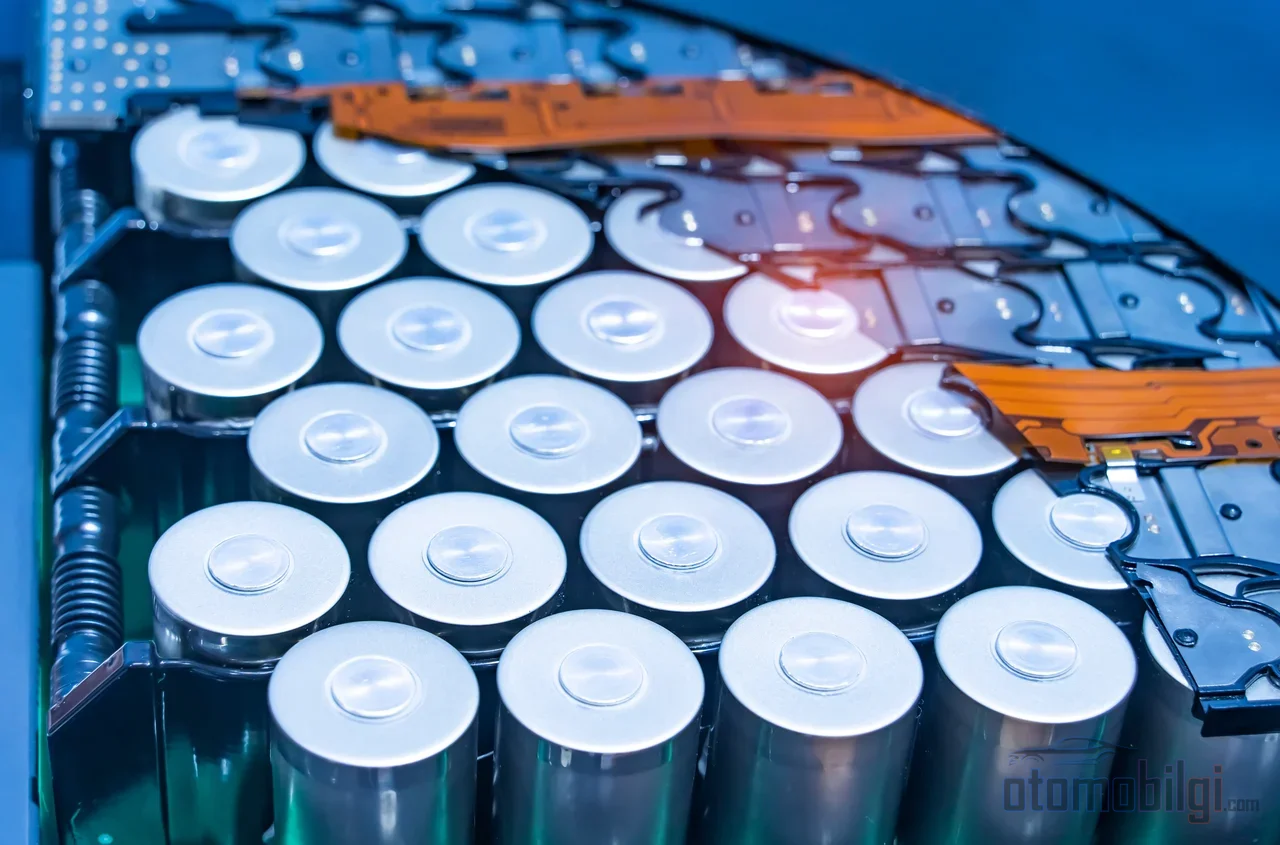
To read the price series correctly, the distinction between cell and pack must be kept clear. The cell is the battery's basic unit; the pack is the vehicle-level component where dozens of cells come together with cooling, power electronics, and the body - and it is naturally more expensive. With this distinction in mind, here is how the three-decade curve progressed:
| Year | Measure | Price |
|---|---|---|
| 1991 | Cell (commercial launch) | ~$9,200/kWh |
| 2008 | Light-duty EV pack | $1,415/kWh |
| 2010 | Average lithium-ion battery | ~$550/kWh |
| 2020 | Average pack | $137/kWh |
| 2023 | Light-duty EV pack | $139/kWh |
| December 2024 | Average pack / BEV pack | $115/kWh / $97/kWh |
| December 2025 | Average pack / BEV pack | $108/kWh / $99/kWh |
The two milestones in the table also deserve special mention. In December 2024, pack prices fell 20 percent compared to the previous year, marking the largest annual decline since 2017, and for the first time, battery electric vehicle packs dropped below the $100/kWh threshold. In December 2025, the decline slowed to 8 percent, but the record-breaking continued: the average pack came in at $108/kWh, while BEV packs, at $99/kWh, were below the threshold for the second consecutive year.
To put this in perspective: a typical 63 kWh pack today would cost roughly between $580,000 and $800,000 at 1991 prices. The cells in the same pack cost around $5,000 today, while the complete pack comes in at $6,000-7,000. With a price gap this enormous, the electric car's transition from niche toy to mass product becomes essentially an accounting matter rather than an engineering one.
Is economy of scale enough? The Gigafactory debate
The Gigafactory, announced by Tesla in 2014-2015, was the most ambitious example of the strategy of crushing battery costs through large-scale production. Analyses at the time projected that the factory alone could produce more than the total lithium-ion batteries manufactured worldwide in 2013 by 2020. One industry analyst calculated that once the facility reached full capacity, costs at the pack level could fall by up to 70 percent, to around $38/kWh ; other publications reported the same expectation as a more conservative 50 percent decline.
The academic side came with an equally clear objection. According to findings published by Carnegie Mellon University in October 2014, large factories alone do not solve the high cost of electric vehicles; economies of scale in battery production are not as strong as hoped. Subsequent years partially vindicated both views: costs did fall, but the reason was not solely the size of the factory; the price curve shifted downward as cell chemistry, production efficiency, and the supply chain each improved. The production side itself is not without risk either - delays in commissioning new lines can create a cost burden of up to $1 million per GWh per week.
Chemistry shift: How did the LFP transition pull costs down?
The last major driving force behind the price curve lies in the choice of cathode chemistry. Conventional NMC (nickel-manganese-cobalt) packs offer a range advantage; in 2025 they average $128/kWh . In contrast, LFP (lithium iron phosphate) chemistry removes expensive metals like cobalt entirely, lowering both cost and safety risk: LFP packs averaged $81/kWh significantly below NMC and longer-lasting. In return, it has lower energy density, shorter range, and weaker cold-weather performance - which is why LFP spread rapidly in the mass-market segment, where range sensitivity matters less, and on the stationary storage side. The stationary storage segment became the lowest-priced category in 2025 at 70 $/kWh , a 45 percent decline compared to the previous year.
One interesting aspect of 2025 was that cell prices kept falling even though raw metal prices moved in the opposite direction. While lithium supply risks and cobalt export quotas pushed metal prices upward, the industry absorbed these shocks through the shift to LFP, long-term contracts, and hedging. The real driver of the price decline is not on the supply side anyway: the industry has 3.1 terawatt-hours of completed cell manufacturing capacity, which is more than 2.5 times the 2024 demand. Overcapacity combined with fierce competition makes batteries cheaper every year. The regional difference is also striking: the steepest drop occurred in China in real terms at 13 percent, while the average pack price in China was 84 $/kWh - North America is 44 percent and Europe is 56 percent more expensive.
Where has price parity arrived? The 100 $/kWh threshold
The threshold most frequently referenced by the industry 100 $/kWh: below this level, electric vehicles are considered to have reached cost parity with internal combustion vehicles without subsidies. Goldman Sachs' projection in October 2024 foresaw that battery prices could fall to 80 $/kWh by 2026 - a nearly 50 percent drop compared to 2023 - and that subsidy-free cost parity could be achieved in the US at this level. BloombergNEF's 2021 estimate pointed in the same direction: 80 $/kWh in 2026, 60 $/kWh in 2029.
The balance is already shifting rapidly. As of February 2026, the price difference between the average new electric vehicle and gasoline vehicle in the US, with the effect of major manufacturers' discounts as well, has fallen to about 6,500 dollars - the smallest gap in years. The gap in the used market has nearly closed: the average used EV is 34,821 dollars, while its gasoline equivalent is 33,487 dollars. The real breakthrough happened in China; there, the average electric vehicle is about 600 dollars cheaper than the average gasoline/diesel vehicle - price parity has been passed, and electric is no longer a luxury but the default option. In 2025, global sales exceeding 20 million, with most vehicles sold in the roughly 40,000-dollar band and some dropping as low as 10,000 dollars, is directly linked to this threshold.
Historical context: why is this time different?
It was not economics but technology that hindered the early period of the electric automobile. Around 1900, about 38 percent of vehicles in the US were electric; in 1897, the first 12 electric taxis had entered service in New York. Between 1897 and 1913 was a period of competition between the two technologies; afterwards, the energy density and cheapness of gasoline determined the advantage, and by 1935 most electric car companies had turned to gasoline or closed down.
An early example of the modern era, the GM EV1,, hit a similar economic wall: around 1,100 vehicles were produced and leased, and General Motors cited high production and maintenance costs along with the burden of nearly 2,000 bespoke spare parts as reasons for ending the program. In other words, it was battery economics that stopped the electric car's first two takeoffs. Lithium-ion's price curve changed that old equation itself: the same 63 kWh pack, which cost the price of a house at 1991 prices, has today become a mere hardware component. Moreover, energy density has more than tripled since the 1990s - 200 watt-hours per liter in 1991, over 700 watt-hours today. More range from a smaller volume, combined with falling unit costs, has changed the equation in an irreversible way.
The coming wave: is it sustainable?
While the trio of economies of scale, production investment, and chemistry transition continues to drive prices down, two forward-looking risks need to be taken seriously. The first is on the supply side: geopolitical tensions, tariffs, and low prices halting new mining and refinery investments could push raw material prices back up in the coming years. The second is the possibility that new tariffs on finished battery products will disrupt pricing dynamics and slow demand. Despite these risks, the technology pipeline is full: silicon and lithium metal anodes, solid-state electrolytes, new cathode materials, and new cell manufacturing processes are cited as candidates for the next cost breakthrough.
As a reference point, early total cost of ownership is also instructive: for the first Tesla Roadster owners, a full pack replacement came up at over 20,000-35,000 dollars, approaching 40,000 dollars in some cases. For the battery of a vehicle sold in today's mass-market price band, the figure we are talking about is around 6,000-7,000 dollars. This difference is the most concrete summary of the story told by the battery price curve alone: the mass adoption of the electric car is not a promise, but a mathematically completed process.
Sources
- Battery costs have declined by 99% in the last three decades – Our World in Data
- Lithium-Ion Battery Pack Prices Fall to $108 Per Kilowatt-Hour, Despite Rising Metal Prices – BloombergNEF
- Lithium-Ion Battery Pack Prices See Largest Drop Since 2017, Falling to $115 per Kilowatt-Hour – BloombergNEF
- Behind the Three-Decade Collapse of Lithium-Ion Battery Costs – IEEE Spectrum
- Falling Battery Costs Push Electric Vehicles Closer to Cost Parity – Statista
- Electric vehicle batteries – Global EV Outlook 2026 – IEA
- Electric vehicle battery prices are expected to fall almost 50 percent by 2025 – Goldman Sachs
- The 90% Drop: How EV Battery Costs Plummeted Over 15 Years – BatteryTech Online
- The Economics Of Tesla's Gigafactory Battery Plan – Forbes
- Tesla Gigafactory will cut battery costs 50%, analyst says – Utility Dive
- Big Factories Won't Solve High Cost of Electric Vehicles – Carnegie Mellon University
- Bridging the global cost gap in battery cell manufacturing – ScienceDirect
- Future EVs: Breakthroughs in battery pack costs – McKinsey
- LFP Batteries: Why Top EV Makers Choose Cheaper Tech – BatteryTech Online
- From NMC to LFP batteries – Electronics360
- Driving the future, then and now: the story of the EV1 – GM News
- Early Electric Cars in America (1891-1922) – Library of Congress
- The History of the Electric Car – Energy.gov
- Gas prices aren't the only factor fueling used EV sales – TechCrunch