From EV1 to Roadster: The Second Birth of the Electric Car
Share This Page
The modern history of the electric car lives between two poles: the EV1, of which General Motors produced 1,117 units, never sold, and ultimately destroyed by crushing its entire fleet, and the EV1; and the 2008 Tesla Roadster, which traveled 244 miles (393 km) on a single lithium-ion battery charge, shattering the psychology of range. The fifteen years in between are the harshest lesson of an era when the technology was ready but the business model was not.
Highlights
- EV1: Between 1996 and 1999, 1,117 units were produced, leased only
- The range of the first-generation lead-acid EV1 was 60-100 miles; in the second generation with NiMH, 75-150 miles
- GM's direct investment in the EV1 was approximately 500 million dollars
- The Roadster was the first production EV to travel more than 200 miles on a single charge
- The Roadster was the first vehicle to combine more than 6,800 lithium-ion cells in a single pack
The First Century That Gasoline Won
The electric car was never a "new" idea. The Scottish Robert Anderson built his motorized vehicle between 1832 and 1839; by 1897, an electric taxi service was already operating in London. In the early 1900s, electric vehicles had tangible advantages: no vibration, no smell, and no noise; no hand crank was needed; they started with a key and rarely broke down. Sales peaked in the early 1910s.
Then they lost. The reasons are measurable: high cost, low top speed, short range - and on the other side, the rapidly becoming reliable internal combustion engine, plus the electric starter motor as the most critical innovation. When the crank handle disappeared, so did the gasoline car's most annoying feature. The electric vehicle was sidelined not as a technological failure, but as a result of a cost and usability balance. The 1973 and 1979 oil crises created a brief revival, but by the 1990s the available technology in the field was still lead-acid and NiMH batteries; the range ceiling was below 150 miles.
GM Impact: A Concept Born as California Pushed
1990 was the year two developments intersected. On one hand, the Clean Air Act Amendments in the US and the 1992 Energy Policy Act revived interest in electric vehicles; on the other, the California Air Resources Board (CARB) imposed an ambitious mandate: of the fleets of seven major manufacturers, 2% by 1998, 5% by 2001, and 10% by 2003 would be zero-emission. This was, without exaggeration, a numerical production mandate, and California's air pollution at the time exceeded the combined total of the other 49 states.
GM's response came at the 1990 Los Angeles Auto Show. Chairman Roger Smith introduced the Impact concept - a vehicle carrying design knowledge from the Sunraycer solar car that won the 1987 World Solar Challenge, with driving electronics drawn by Alan Cocconi of AC Propulsion. With its 32 lead-acid batteries and top speed of 183 mph (295 km/h), the concept demonstrated the seriousness of the target: GM first spoke of producing 20,000, then 100,000 per year, and on April 18, 1990, announced a production decision targeting 25,000/year.
PrEView: User Testing and the First Crack
In 1994, 50 hand-built Impacts were handed over to real drivers in two-week rotations. Feedback was positive; one review of the era described the car as "the only electric vehicle in the world that drives like a real car." But GM considered the program a failure and called for the removal of the CARB rules. The New York Times headline highlighted GM's reluctance at the prospect of having a successful electric car. New York Environmental Commissioner Thomas Jorling's assessment summed up the day: consumers were genuinely interested; manufacturers did not want to give up their internal combustion investments.
The EV1's Technical Specs: A Serious Machine on Paper
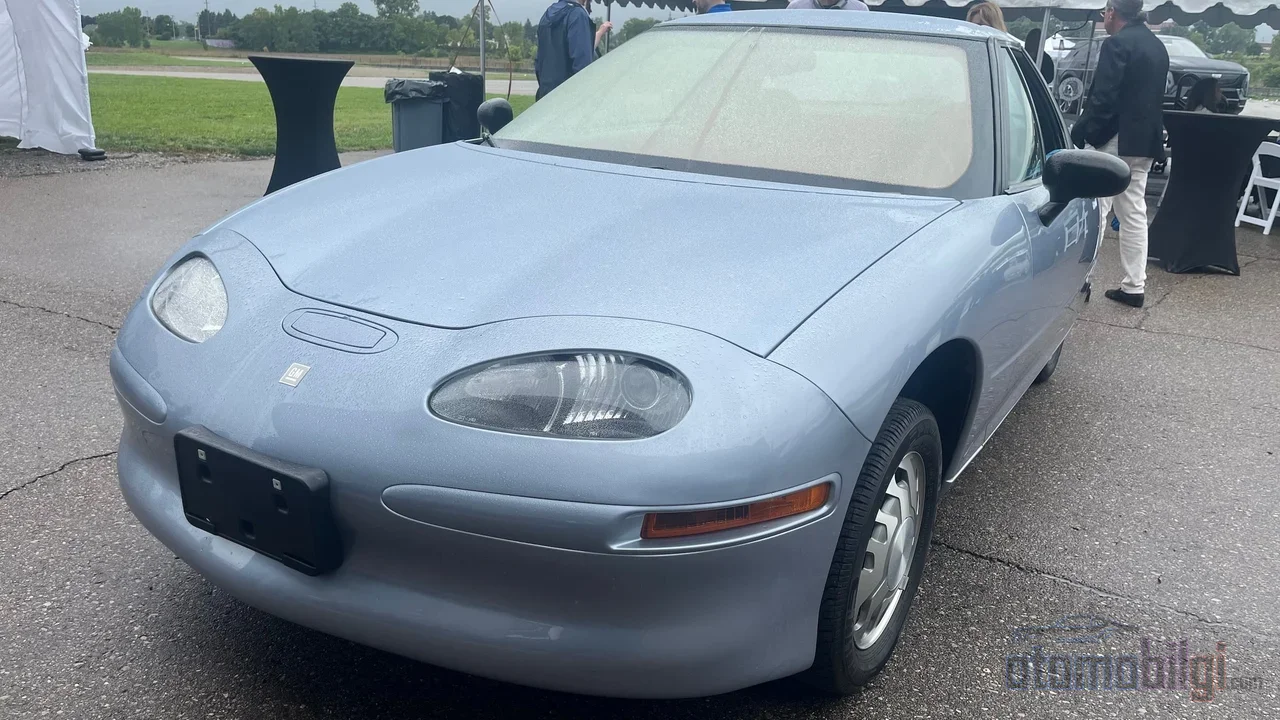
Produced between 1996 and 1999 in Lansing, Michigan (Lansing Craft Center), the EV1, as a two-seat subcompact coupe, came to life in 1,117 units and was never sold under any circumstances; it was only leased. Leasing began in December 1996 in Southern California and Arizona, starting at $399-549 per month ($349-574 in the second generation). GM spent $8 million on the launch and a total of $10 million by 1997; 288 vehicles were leased in the first year.
| Feature | 1st Generation (1996) | 2nd Generation (1999) |
|---|---|---|
| Battery | Lead-acid, 16.5 kWh | Panasonic lead-acid 18.7 kWh or Ovonics NiMH 26.4 kWh |
| Range | 60-100 miles | 80-100 miles / 75-150 miles |
| Motor | 137 hp (102 kW) three-phase AC induction | Three-phase AC induction |
| Units produced | 660 | 457 |
| Total production | 1,117 units | |
The engineering behind the numbers is considerable: Cd=0.19 drag coefficient, a 40% lighter 290-pound (130 kg) aluminum spaceframe instead of steel, regenerative braking, and Magne Charge inductive charging. But the commercial equation was upside down: while the estimated production cost per vehicle was around $80,000-100,000 GM's direct investment reached approximately $500 million, and the total direct and indirect cost exceeded $1 billion. In March 2000, 450 first-generation vehicles were recalled due to a faulty charge port cable; 16 "thermal incidents" and at least one vehicle fire were on record.
How Does a Fleet Die? The EV1's Roundup and Crushing
GM saw electric vehicles as an unprofitable niche; production ended in 1999. In February 2002, lessees were notified that the vehicles would be taken back. The resistance was real: 58 lessees offered to extend their leases by taking on maintenance and repair responsibility; GM rejected the offer in June 2002 by refunding deposit checks exceeding $22,000. Actor Peter Horton wrote in 2003 that he had been put on a waiting list of several thousand people and that his chances of getting a car were low. Under CEO Rick Wagoner, the program was completely shut down at the end of 2003.
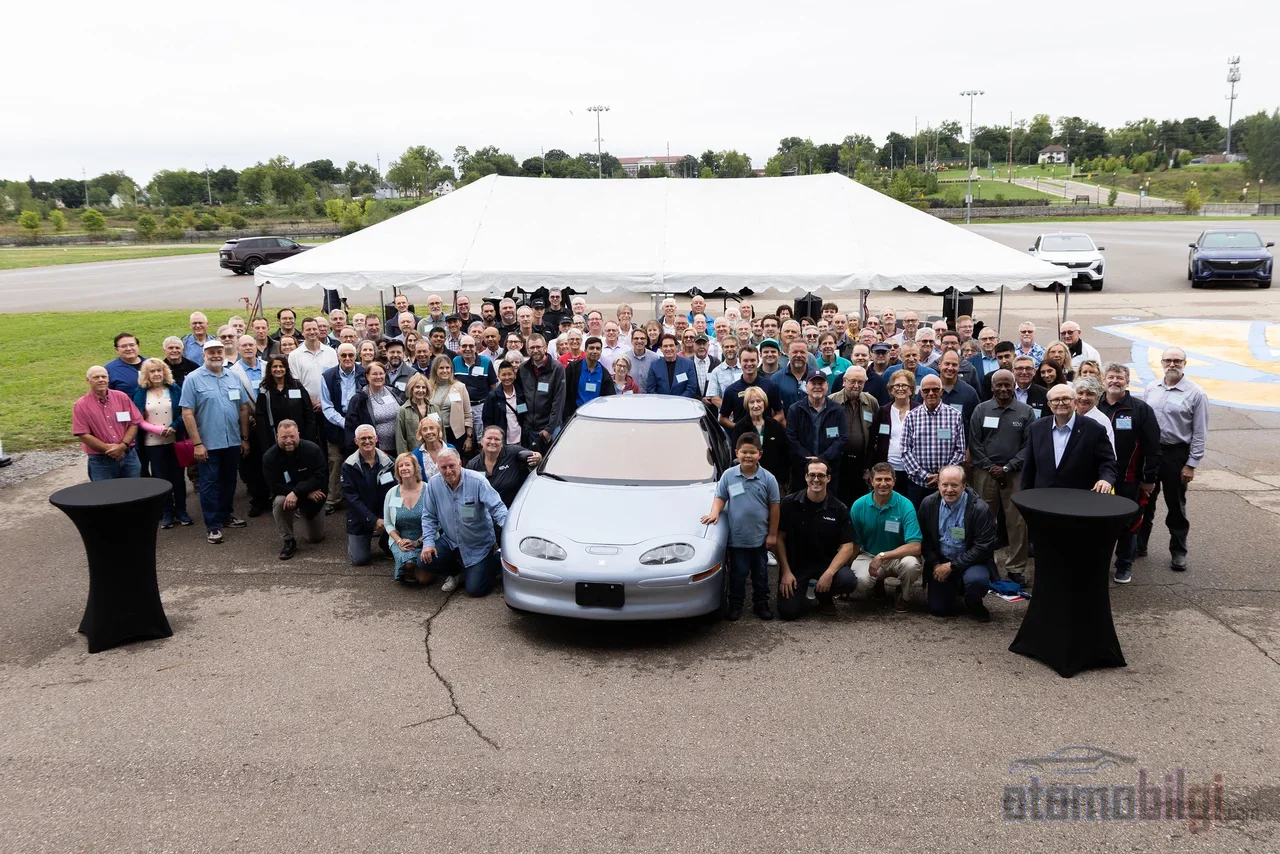
Then came the destruction. In November 2003, the vehicles began to be collected; by the end of August 2004, all leased EV1s had been taken back. The vehicles were trucked to Mesa, Arizona, and crushed; photographs showed stacked piles of body remains. Approximately 40 units, with their driving capability disabled, were donated to museums; the example donated to the Smithsonian no longer works due to battery degradation. GM has working examples in its own collection; in 2021 a Holden test vehicle was found in Australia and donated to the National Motor Museum. In 2025, an abandoned EV1 in Atlanta went up for auction and sold for $104,000 - the only documented EV1 sale. From this point on, the question became "why?": fans and former lessees spoke of lost spare parts and a sabotage linked to the oil industry, while the opposing camp argued that since the vehicle itself was loaded with expensive components, its economics - combined with the weak economy of the era - killed the program. It can be said that the truth probably lies somewhere between the two: with the mandate lifted, no external pressure remained to offset the unprofitability. The 2006 documentary "Who Killed the Electric Car?" investigated this question, and for years GM was known as "the company that killed the electric car."
The Lithium-Ion Revolution and the tZero: Mother of the Roadster
In the 1990s, the lithium-ion battery became the preferred rechargeable solution for portable electronics thanks to its high energy density, and it began to leave behind lower-density NiMH cells. Since then, the energy density of lithium-ion has more than tripled - and this increase changed the range equation for cars from the moment it became portable enough to move into automobiles.
AC Propulsion in California built the bridge of this transformation: in the mid-1990s, a limited number of hand-built tZero. Weighing 1,040 kg, the vehicle was 23% lighter than the GM Impact and was one of the first examples to bring lithium-ion cells into a road vehicle. Tesla Motors at one point used the tZero as a test mule and paid royalties to AC Propulsion to use the tZero design in the Roadster. The summary sentence is simple: without the tZero, there might have been no Tesla.
2008 Tesla Roadster: How the Range Barrier Was Broken
The EV1's best configuration remained at a ceiling of 150 miles; the Roadster announced a 244-mile (393 km) range on the EPA cycle - the first production electric vehicle to exceed 200 miles on a single charge. The difference lay in a single variable: battery chemistry. While the EV1 was limited to lead-acid and NiMH, the Roadster came with a system managing more than 6,800 individual lithium-ion cells in a single pack; it was the first vehicle to use a cell assembly at that scale. The performance side was no joke either: 0-60 mph in 3.7-3.9 seconds. A price of around $109,000 and a production run of 2,500 units made the car a small but intimidating piece of the market - the world's first series-production electric sports car powered by lithium-ion.
It should be noted that when the page closes, an era closes too: at the end of 2010, the Chevy Volt and Nissan LEAF went on sale in the US, and the electric vehicle was no longer a niche, museum-bound curiosity but a product category. GM, meanwhile, took a step toward making peace with its past: in the retrospective it published, it emphasized that the EV1 program left "a lasting legacy." And indeed, the legacy is tangible: the demand the EV1 demonstrated was real; what was missing was the maturation of lithium-ion and range crossing a psychological threshold. Both were achieved in 2008.
Sources
- General Motors EV1
- Tesla Roadster (first generation)
- AC Propulsion tZero
- History of the electric vehicle
- Driving the future, then and now: the story of the EV1 - GM News
- EV1 Electric Car - National Museum of American History
- This little electric car made history - OPB
- The History of the Electric Car - U.S. Department of Energy
- Early Electric Cars in America (1891-1922) - Library of Congress
- Beyond Lithium: New Battery Tech - Yale e360
- T-zero - Electric Vehicle Discussion List
- Tzero - Roadster Inspiration - Gruber Motors
- 2008 Tesla Roadster - Hagerty Valuation Tools
- Who Killed the Electric Car? (2006)