How Was GM's Abandoned EV1 Saved?
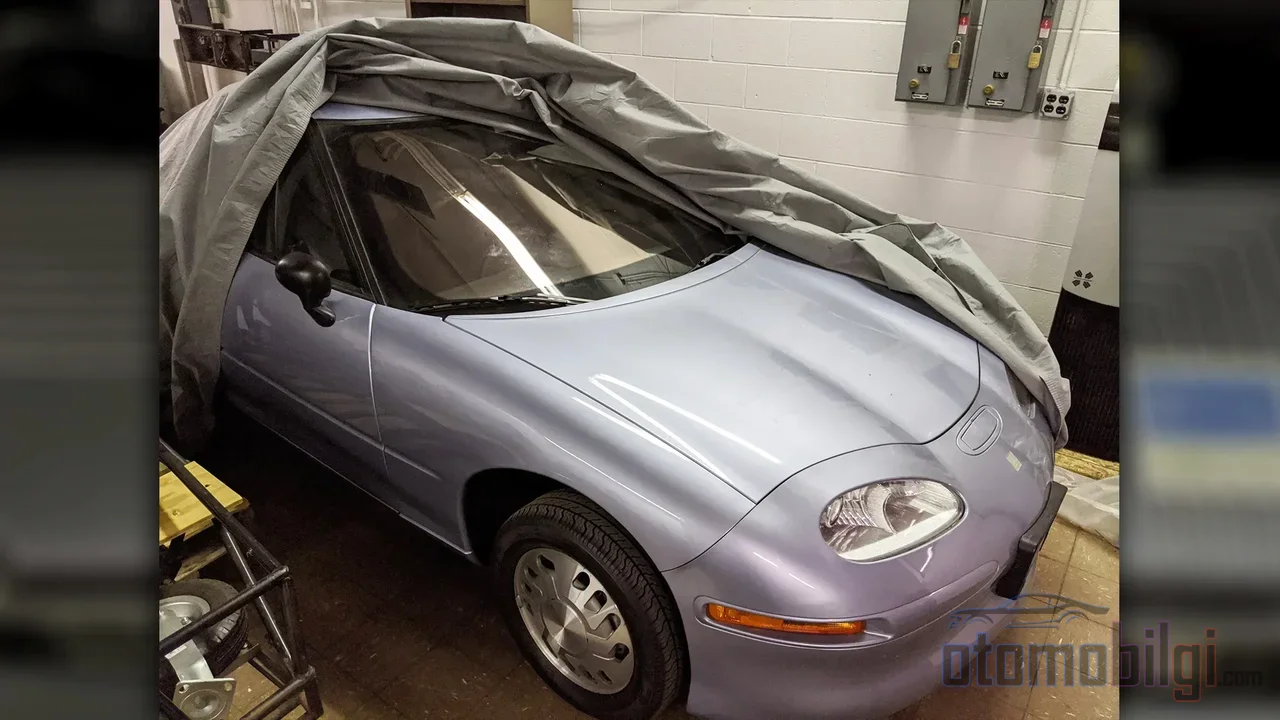
At an auction held at a tow yard in Atlanta in late October 2025, a green 1997 GM EV1 found a buyer for $104,000, excluding buyer's premiums. While this transaction may look like an ordinary salvage sale, it actually opened the door to one of the strangest chapters in automotive history: the documented first and only change of hands of a vehicle that GM had nearly all of collected and crushed in 2004, never allowing a single one to be sold. This car, chassis number 212, is today at the center of a restoration project called V212, and this time General Motors is at the table too.
On this page, we examine how that car was rescued, how GM joined the restoration with factory parts and engineering support, and the language that has quietly changed since the program's shutdown. Let's start with the numbers, because the EV1 story is first and foremost an engineering story.
What Is the EV1: An Electric Car Built with a Purpose, in Numbers
The GM EV1 is a two-door, two-seat coupe produced between 1996 and 1999 at the Lansing Craft Center in Lansing, Michigan. It represents the first serious attempt by a major American automaker to design a mass-production vehicle from scratch as an electric-only car. A total of 1,117 units were produced, and here is the remarkable part: not a single one was ever sold. All vehicles were delivered through leasing programs in which the purchase option was explicitly prohibited in the contract.
Its technical identity was striking for its era. The three-phase AC induction motor produced 102 kW (137 hp) of power and 110 lb-ft of torque, while the car's drag coefficient remained at an astonishing Cd = 0.19. The body was a 290-pound aluminum spaceframe, 40 percent lighter than steel. Charging was done via an inductive system called Magne Charge: not a plug-in connection, but energy transfer through a magnetic field.
| Generation | Units | Battery | Capacity | Range |
|---|---|---|---|---|
| 1st generation | 660 | Lead-acid | 16.5 kWh | 60-100 miles |
| 2nd generation | 457 | Panasonic lead-acid | 18.7 kWh | 80-100 miles |
| 2nd generation (optional) | 457 (included) | Ovonics NiMH | 26.4 kWh | 75-150 miles |
The leasing program began in December 1996 in Southern California and Arizona; the monthly rent ranged from $399 to $549 and was supported by an $8 million promotional campaign. In its first year, 288 vehicles were leased. But the cost table was brutal: the production cost per vehicle is estimated at between $80,000 and $100,000; GM's total investment in the EV1 and related technologies exceeded $1 billion.
Highlights
- A total of 1,117 units of the EV1 were produced; none were sold, all were leased.
- By the end of August 2004, most leased EV1s had been crushed.
- On October 28, 2025, chassis no. 212 sold at the tow yard auction for $104,000.
- GM is providing factory parts and engineering support to the Project V212 restoration.
- The car's thirtieth anniversary in 2026 made the official announcement of the support possible.
How the Program Ended and Why All Cars Were Collected
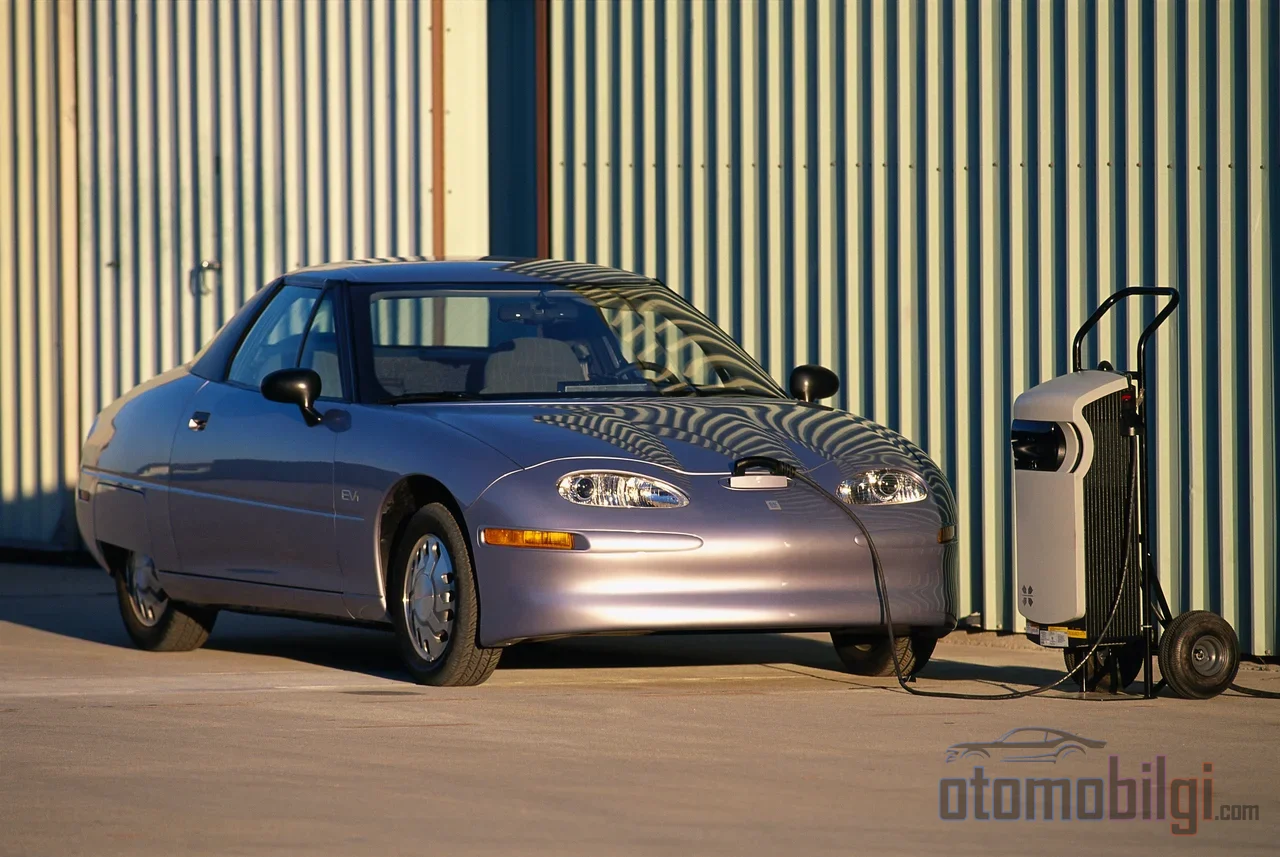
The road opened with a concept called the Impact. At the 1990 Los Angeles Auto Show, GM chairman Roger Smith introduced this concept developed by AeroVironment; the prototype, powered by 32 lead-acid cells, could reach a top speed of 295 km/h. The design know-how came from the Sunraycer, winner of the 1987 World Solar Challenge, and the first version of the drive electronics was designed by Alan Cocconi, founder of AC Propulsion. The PrEView trial program, conducted in 1994 with 50 hand-built Impacts, was also a link in this chain.
The ending, however, came in a systematic fashion. In February 2002, GM informed lessees about the recall; collection began in November 2003, and by the end of August 2004 all leased EV1s had been taken back. About 40 vehicles, with their powertrains disabled, were donated to museums and educational institutions; most of the rest were crushed. The justification given was high production cost and an insufficient market. The lessees' devotion, meanwhile, had reached a financial dimension: 58 lessees sent GM deposit checks totaling more than $22,000 along with a proposal to extend the leases. GM rejected the proposal in June 2002 and returned the checks.
The Debate Still Lives On
Among electric vehicle enthusiasts, environmental groups, and former lessees, the view is widespread that GM deliberately ended the program to avoid spare parts obligations, and that the oil industry influenced the process; this debate was also the subject of a 2006 documentary. On the other side, GM's defense remained the same: there were not enough lessees at any given time to sustain the program, and the business model did not hold up. Infrastructure shortcomings and cost were also added to the debate.
From an Atlanta Impound Lot to an Auction: How V212 Was Found
The second act of the story opened in 2025. The vehicle entered an impound lot in the Delhi area after the Clark Atlanta University campus police reported it as an abandoned vehicle. The towing company registered the vehicle as abandoned and put it up for public auction. On October 28, 2025, EV enthusiast Billy Caruso paid $104,000, not including auction fees, to buy the green 1997 EV1, the car with chassis number 212.
This transaction is the first and only known documented case of an EV1 being sold at a public auction. It is also stated that the car is the only known privately registered EV1. Part of the answer to how the vehicle escaped the crusher also comes from the original lessee: the lessee shared that when GM tried to take the car back, he filed a lawsuit, and he believes this lawsuit played a role in the car not being destroyed. When the vehicle was found, it had been vandalized; the first step before restoration was cleaning with dry ice.
Project V212: GM Is on the Restoration Side This Time
Caruso launched the V212 project with the aim of preserving the car's history and sharing the restoration process; they are working together with Jared Pink from the YouTube channel The Questionable Garage. The project's biggest surprise came in March 2026: GM officially announced its support for the independent restoration being carried out with the goal of returning the car to the road. The support is being provided through GM president Mark Reuss in the form of factory parts and engineering expertise; replacement parts that would normally be impossible to find are being supplied. The announcement was timed to coincide with the car's thirtieth anniversary.
There is a symmetric historical detail here: Reuss's father Lloyd Reuss served as GM president between 1990-1992 and was a champion of the company's electric vehicle research. A family that witnessed the birth of the EV1 joining the car's resurrection with factory resources thirty years later adds a meaningful continuity to the story from an engineering standpoint.
What the Decision-Makers Said Later: Wagoner and Coppola
The subject of the program's closure was the GM CEO of the time, Rick Wagoner. In 2006, Wagoner openly acknowledged that the decision to end the EV1 program and not prioritize hybrid development was the biggest regret of his career; he said that canceling the program was his worst decision. Low demand and high costs stood out among the reasons for cancellation. Such a clear self-declaration by a GM executive is one of the rare examples in automotive history.
The name of director Francis Ford Coppola was also added to the story: In 2016, on a television program, he claimed that he had hidden his EV1 from GM, but a GM representative debunked this claim, stating that the car had been returned. The car in Coppola's possession was said to be the only known EV1 in private ownership. Such claims also fuel the uncertainty about the number of surviving vehicles.
How Many EV1s Remain Today?
The widely accepted basic figure is approximately 40 vehicles donated to museums and educational institutions, subject to the condition that their powertrains be disabled. Beyond that, it is known that a few vehicles passed into private hands and that some of them are in working condition; if demonstration and concept vehicles are also counted, there are estimates that the total number could reach up to 180. The difference between the figures varies depending on which category of vehicles is counted.
The EV1's Place in the Long Historical Line
What makes the EV1 unique is its position in the long history of the electric car. Around 1900, roads in the US were divided among three technologies: steam, gasoline, and electricity. At the end of the 19th century, approximately 40 percent of American automobiles were electric; the 1899 census recorded the production of 1,575 electric vehicles, and in 1897 the first electric taxi service was operating in London. Electric vehicles were vibration-free, odorless, quiet, and had no gearbox; gasoline cars, on the other hand, suffered from the hand crank. Gasoline pulled ahead thanks to rapid improvements in the internal combustion engine, the absence of electric infrastructure, and the cost difference.
The EV1 was the most ambitious attempt in the middle of this long gap. It was followed in 2008 by the Tesla Roadster, the first mass-produced, road-legal, fully electric sports car with a lithium-ion battery; the Roadster used a battery pack made up of thousands of cylindrical 18650 cells. The EV1's drag coefficient, lightweight body, and motor control approach were precursors of solutions that live on in today's electric vehicles. The battery evolution from lead-acid to NiMH also clearly illustrates the technology frontier of the late 1990s.
Conclusion: What Does the Single Documented Sale of a Crushed Program Mean
The short answer is this: The GM EV1 was never sold; all 1,117 vehicles were leased, and they were recalled in 2004 and largely crushed. The only documented sale was in October 2025 at a tow yard auction in Atlanta, chassis no. 212 finding a buyer for 104,000 dollars at a tow yard auction in Atlanta in October 2025, and this car is now being made drivable with factory support from GM.
From an engineer's perspective, the significance of V212 is not purely nostalgic. Technically speaking: the roughly 40 remaining EV1s are in museums, with non-functioning powertrains; this is the only documented, specially registered vehicle that could return to the road. From the company's perspective: the manufacturer is participating, for the first time, with parts and engineering in the restoration of a car it recalled thirty years ago. Wagoner's statement of regret, the Coppola controversy, and the Reuss family's two-generation connection form a small but coherent correction cycle around this single green coupe. If a vehicle that survived the crusher line returns to the road with parts from its manufacturer's archive, one of the strangest chapters in automotive history will gain a proper closing.
Sources
- General Motors EV1 - Wikipedia
- EV1 Electric Car - National Museum of American History
- This little electric car made history. 25 years ago, GM stopped... - OPB
- Report: With EV1, GM sparked the era of the electric car but didn't follow through - Green Car Reports
- TIL of The General Motors EV1 - Reddit