The Sold EV1 Is Coming Back to Life in Atlanta
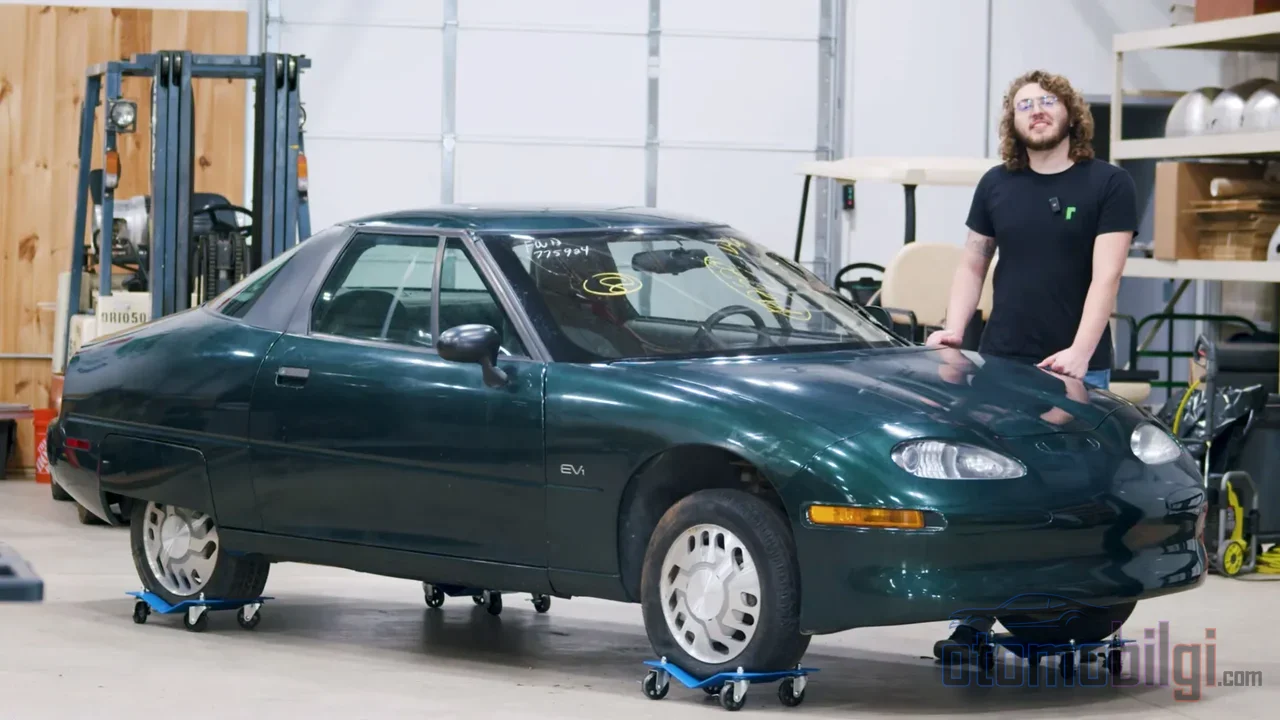
An October 2025 auction at an Atlanta salvage yard saw a record-breaking price paid for a 1997 electric car with a cracked windshield and a raccoon nest inside it. The vehicle's identity pointed to one of the strangest chapters in automotive history: General Motors EV1, chassis number VIN 212. Considering that GM ended its leasing program about 30 years ago and crushed most of the 1,117 vehicles it produced, the sale of this car at an auction is an anomaly in itself. Moreover, this is the only documented EV1 sale, and how the car survived without being destroyed still cannot be fully explained.
The Tragedy of the EV1s That Survived the Destruction Order
The EV1 was the first series-produced, purpose-built electric car offered to the public. GM produced a total of 1,117 units from 1996 to 1999 and offered the car only through leasing; sale was never possible at any stage under the program. When the lease periods expired, customers applied to buy the vehicles, but the door was closed. GM judged electric vehicles to be an unprofitable market niche and destroyed most of the returned vehicles by crushing them. About 40 examples, as a lucky minority, were donated to museums and universities with their motors disabled.
Within this picture, VIN 212's place is special. It is not one of those roughly 40 donated vehicles; it was an example that went unrecorded for years, one the internet had never seen the face of before. So how did this vehicle escape the destruction line?
Highlights
- Only documented EV1 sale: October 2025, Atlanta salvage yard auction, $104,000 before fees
- Total cost reached $118,040 with salvage yard fees; 134 bids were placed at the auction
- GM President Mark Reuss is supporting the project by inviting the team to the Global Technical Center in Warren
- The goal: For VIN 212 to be on the road by November 14, 2026, the 30th anniversary of its first drive
- Motor: 137 hp, 150 Nm, 0-60 mph in about 8.5 seconds, drag coefficient of 0.19
How Did VIN 212 End Up in Atlanta?
The vehicle's trail extends to Arizona after production. Records indicate that VIN 212 was originally delivered in Arizona and unofficially held the 10,500-foot EV1 high-altitude driving record. The first lessee was Jonathan Sawyer, an electrical engineer living in Boulder, Colorado. Since there was no GM leasing program in Colorado, Sawyer leased it in Tucson through his sister and took the car to Colorado.
When the lease period ended, things got complicated. GM issued a recall for a faulty charger that posed a fire risk; according to Sawyer's account, the vehicles were not returned during the recall process. Sawyer sued GM for the return of his vehicle and reported it stolen to the Tempe Police; but the car had by then been taken out of the state. According to Sawyer, GM may have exempted this vehicle from the destruction line because of the lawsuit. The alternative possibility is that VIN 212 is one of the lucky examples set aside for museum donation. It is not certain which is correct.
How the vehicle got from Arizona to Atlanta is also unknown. The vehicle was marked as abandoned by the Clark Atlanta University campus safety unit and towed to the A-Tow Atlanta impound lot. No one at the university could explain why the vehicle was considered abandoned; someone at the school even described the car as an urban legend. The result was an impound lot sale contingent on a court decision: a car that had been limited to a leasing program and had never been put up for sale could now be legally bought and sold.
The $104,000 Auction and the New Owner
The auction held through Peak Auto Auctions drew 134 bids, and the vehicle sold for $104,000 excluding fees; with impound lot fees, the total cost reached $118,040. The new owner, identified only by name in early reports as Billy Caruso, had set an automatic bid of up to $156,000 in the final two minutes of the auction. When the competition was pushed to that level, the price was unprecedented for any EV1 example of the era.
Despite the ambitious price, the car's condition was striking: the 1997 model was quite complete except for a cracked windshield and a damaged fender. It had no key, and it was unknown whether it ran. Caruso's collection includes a Chevy S10 Electric pickup that uses EV1 underpinnings and an extensive collection of EV1 memorabilia; he aims to open an electric vehicle museum on the West Coast.
Project V212: Racing to the 30th Anniversary
Caruso launched Project V212 together with Jared Pink, owner of the Questionable Garage YouTube channel. The goal is clear: VIN 212 by November 14, 2026, exactly 30 years after its first drive in 1996. anniversary of its first drive in 1996, in a condition where it can be publicly displayed.
The technical scorecard of the restoration
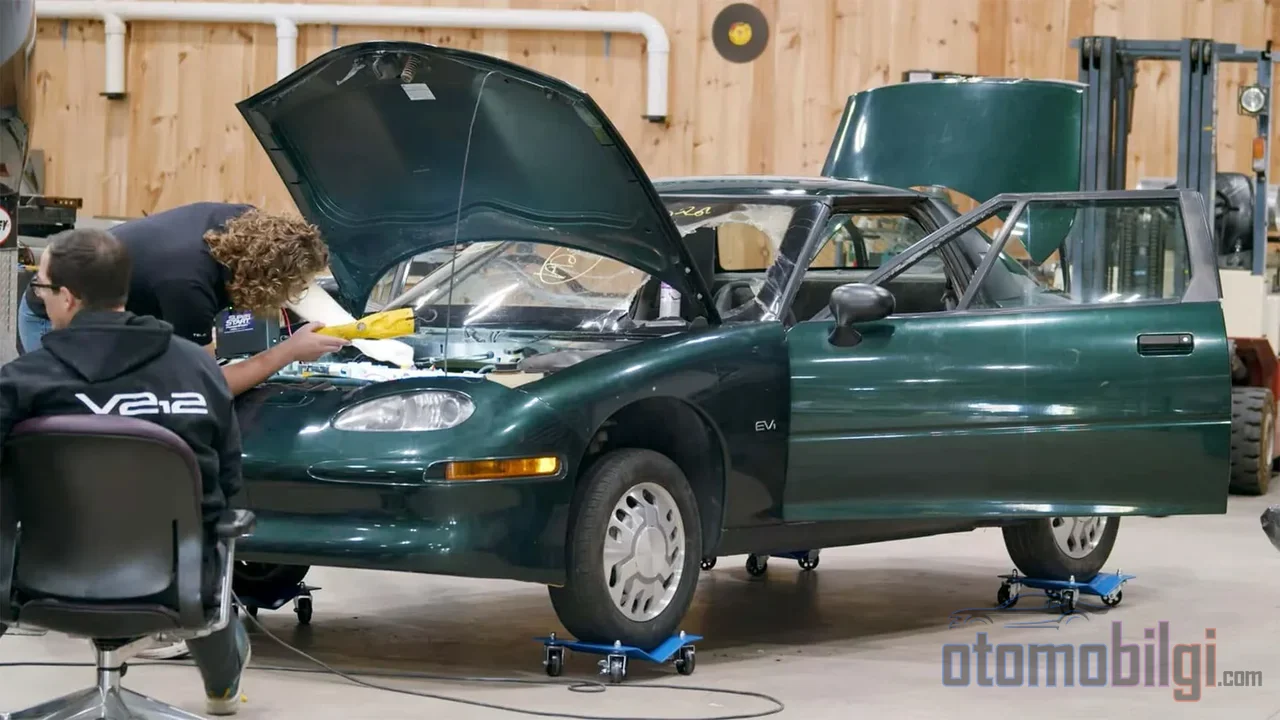
The vehicle's initial inspection revealed GM's standard decommissioning procedure applied before destruction. According to Caruso's findings, there is no battery, no battery cable, the charging cable is cut, the drive control module is missing, and a wiring harness is torn. There was even a raccoon nest inside. The hardest parts to find are the windshield and the driver-side fender: obtaining original examples of these body panels is the biggest secondary challenge in the entire process.
GM steps in
The most unexpected twist in the story came from the very company that had ordered the destruction. GM President Mark Reuss, upon seeing videos of the restoration work, invited the team to the Global Technical Center in Warren, Michigan. GM decided to support the project with donor parts and information access, and committed to sustaining this support until the 30th anniversary. There are differing accounts of how voluntary the support was: according to an unofficial account, Reuss had to be persuaded to support the project; GM's own narrative portrays proactive support. The result speaks for itself: the company published an article telling the story of the EV1 through its official newsroom on March 11, 2026, and Reuss emphasized at the 2026 Automotive News Congress that GM was playing a long game in electric vehicles.
The Technical Identity of the EV1: Numbers Ahead of Their Time
The identity card of VIN 212 is formed by the standard EV1 equipment of its production years. The single front motor, combined with an electric unit delivering full torque across the 0-7,000 rpm range, made up a small yet efficient package.
| Specification | Value |
|---|---|
| Power | 102 kW (137 hp) |
| Torque | 150 Nm (110 lb-ft), full torque across the 0-7,000 rpm range |
| 0-100 km/h (0-60 mph) | GM's statement is approximately 8.5 seconds (some measurements 8.4 seconds) |
| Battery capacity | 16.4 kWh |
| Range (lead-acid pack) | Approximately 90 miles (range of 50-95 miles) |
| Range (NiMH pack) | Approximately 140 miles |
| Drag coefficient (Cd) | 0.19 |
Two of these figures are impressive even today. The first is the drag coefficient of 0.19: this value even exceeds today's Lucid and Tesla models. Secondly, solutions such as regenerative braking and low rolling resistance tires were pioneering for their time and have become fundamental components of today's electric vehicles. Because the lead-acid battery's range dropped significantly in cold weather, GM could only offer the vehicle in warm states such as California and Arizona; examples with the NiMH pack pushed the range to approximately 140 miles.
How Did the EV1 Shape Today's Electric Vehicles?
GM's decision to shut down the program is one of the most debated pages in automotive history. The company cited insufficient demand and high costs as justification. However, the engineering legacy was not erased. The EV1 is regarded as the project that laid the foundation for today's advanced electric vehicle technologies; there are strong narratives that it directly inspired Tesla's founding in 2003 and that Toyota drew motivation from this vehicle when designing the Prius. The restoration of VIN 212 means bringing a tangible piece of this legacy back to working condition; as part of the project, an EV1 archive and museum page has also been launched.
Conclusion: What Lies at the End of the Road?
As of November 10, 2026, there is no definitive information about whether the restoration will meet its November 14 target. But the picture is already striking: a car reclaimed for destruction is bought at a towing yard auction for 104,000 dollars, then invited to its technical center by the president of the very company that ordered its destruction and supported with donor parts. VIN 212, the only documented sale of an EV1, has become a symbol of this reversal to preserve a vehicle produced by GM's own engineers, even if 30 years late. If the team reaches the goal, the hidden example the world has never seen will celebrate the EV1's 30th anniversary with its wheels turning; even if it does not, the archive compiled by the project will stand as a lasting output of this effort to preserve history.
Sources
- The Wild True Story Behind The Only GM EV1 Ever Publicly Sold
- Driving the future, then and now: the story of the EV1 - GM News
- GM helping to restore one of the few EV1s it didn't crush
- Inside GM's Decision to Help Restore a Rare EV1 for the First Time Ever
- First-ever electric car has sold in Atlanta for world record $104,000
- Billy Caruso, Restoring 'VIN 212' - EV Info
- General Motors EV1
- The V212 Story - v212.org