Beardsley Electric: Built 661 Vehicles, So Why Did It Disappear?
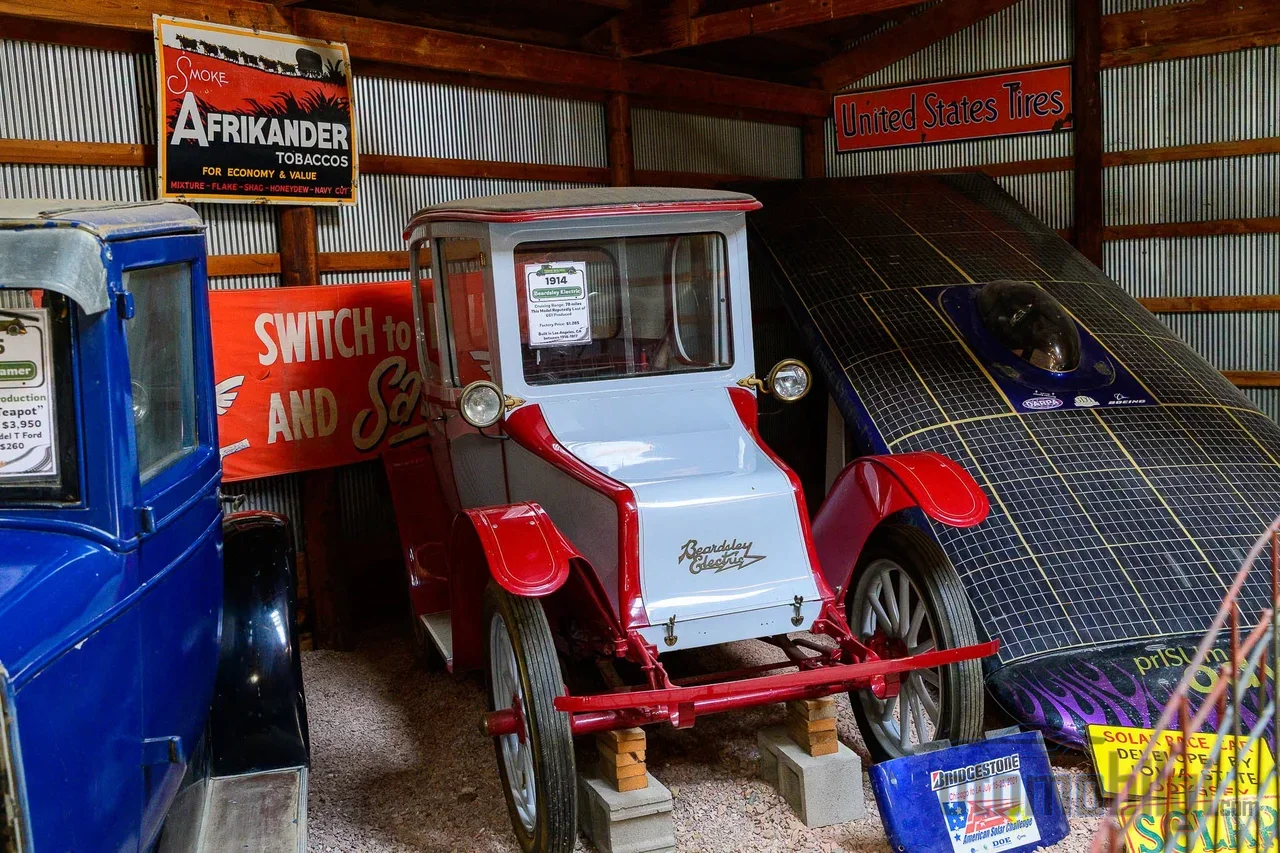
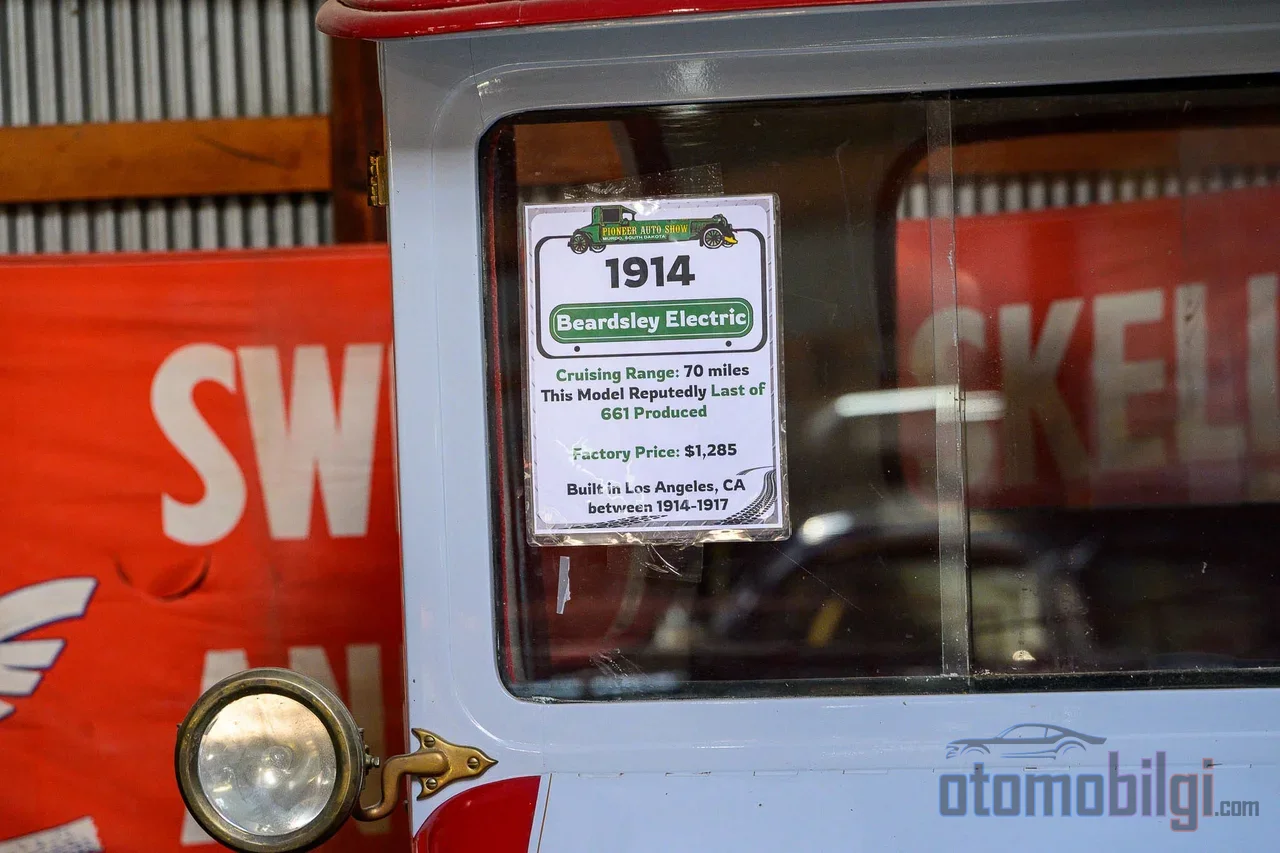
In April 1916, a small convoy was moving through the streets of Los Angeles: electric cars from a domestic manufacturer, which had covered more than 70 miles, or roughly 115 kilometers, on a city tour. The light town car model among them was being promoted as the lowest-priced electric car produced in America. In the background, however, this small victory would not last long: Four years after its founding, Beardsley Electric Company would quietly fade into history. The story of this Los Angeles-based manufacturer, which produced a total of 661 vehicles between 1914 and 1917, is one of the most concrete examples for understanding why the early electric car industry collapsed despite a large market.
The name Beardsley has remained in the shadow of the era's major electric vehicle makers such as Detroit Electric or Baker. But it is precisely because of this that it is valuable: the balance sheet of a small-scale manufacturer shows the economics of the industry in hard numbers. What did the company do right, where did it get stuck, and why did it have to shut down in 1917? The answer lies not in a single company's decision, but in a technology's reckoning with the market economy.
Volney S. Beardsley and the founding in Los Angeles
Beardsley Electric Company was founded in Los Angeles in 1913 by Volney S. by Beardsley in Los Angeles. Beardsley was an entrepreneur born in 1868, and he passed away in 1946 at the age of 77. As reflected in the December 30, 1916 issue of the Los Angeles Herald, he had recognized the value of the electric car in Southern California around 1913, and had established a production facility in Culver City along with service stations within the city.
This geographic choice was no coincidence. Southern California was one of America's fastest-growing settlements in the 1910s, and its climate and short-distance urban travel offered a use environment where the electric car's weak points - low range and limited speed - posed relatively few problems. Beardsley positioned its product precisely for this urban scenario.
Highlights
- Beardsley Electric produced a total of 661 electric vehicles between 1914 and 1917.
- The typical range was recorded as 115 km (70 miles).
- The price of the 1916 light town car model was 1,285 dollars; approximately 38,000 dollars in today's value.
- In the Los Angeles tour on April 15, 1916, each vehicle covered more than 70 miles.
- The company closed in 1917 amid the industry's general collapse.
Product range and technical specifications: A portrait of the 661 vehicles
Throughout its four-year production life, Beardsley offered different body and capacity options. Vehicles were produced in versions with capacities of 2, 3 and more passengers; the backbone of the product range was the compact body suited to urban transportation. A Beardsley vehicle recorded in the period's archives carried a weight of approximately 800 pounds (about 360 kg); this points to a lightweight chassis and body structure excluding the battery.
On the electrical system side, a 64-volt setup stands out. The range figures are remarkable: While sources cite values between 60 and 90 miles, range figures reaching 100 miles in third gear have also been reported. The typical range of 70 miles, that is 115 kilometers, is comparable to today's standard electric cars. The range of early electrics was actually not bad; the problem was not the range itself, but what the range cost.
One of the Beardsley vehicles is on display today in an automobile museum in Murdo, South Dakota. The survival of one of the vehicles of a manufacturer that lasted four years also shows the historical value of this small series.
The $1,285 light town car: What did the pricing strategy say?
The company's most talked-about model was the light town car, sold in 1916 for $1,285. This price corresponds to roughly $38,000 in 2025 money: an amount in the vicinity of today's mid-segment car. During a Los Angeles tour on April 15, 1916, this model was introduced as the lowest-priced electric car produced in America, and all vehicles on the tour covered an average of more than 70 miles.
Placing the pricing in its era shows the seriousness of Beardsley's move. In the same years, rival electrics were seriously expensive:
| Vehicle (year) | Price | Range / speed |
|---|---|---|
| Beardsley light town car (1916) | $1,285 | 115 km typical range |
| Rauch & Lang Electric Roadster (1912) | $2,250 | 40 miles, 25 mph |
| Standard Electric (period) | $1,785-1,900 | Claimed 110-mile range |
| Rauch & Lang Brougham (1916) | - | approximately 30 miles, 20-25 mph |
The table reveals a clear strategy: By pricing itself directly below its rivals, Beardsley was trying to open the electric car to a wider audience. This approach was correct on paper. Since lead-acid battery cost was the main item making electric vehicles more expensive than their gasoline counterparts, a low price was only possible with low battery capacity and a lightweight body. Beardsley's approximately 360-kilogram vehicle and 64-volt system were exactly the product of this logic.
Why had the electric car started out ahead in the 1900s?
To understand Beardsley's effort, one must look at the starting point of the market it entered. The market share of the electric automobile in America in 1900 is given in different forms across sources: according to one account, 28 percent of registered vehicles were electric, while another breakdown shows a distribution of 40 percent steam, 38 percent electric, and 22 percent gasoline. The difference between the figures varies depending on the counting method and its scope; but both accounts lead to the same conclusion: the gasoline automobile was not the leader of the market at the turn of the century.
The technical advantages of the electric were concrete. There was no exhaust smell, vibration was minimal, and noise was low. There was no hassle of starting with a hand crank; it moved without cranking and without gear confusion. In 1897, 12 electric taxis were operating in New York, and in the same year electric taxis entered service in London as well. Electric cars held the status of a city car, especially among wealthy urban customers, and marketing was aimed primarily at women buyers; this positioning was later criticized as a strategy that narrowed the market by driving away male consumers.
Electric vehicle sales peaked in the early 1910s. In America, more than 300 manufacturers that produced vehicles until 1942 can be counted. Beardsley entered the market in 1913, right in the middle of that peak wave. In other words, the market was large at the moment the company was founded; the problem was that the market sat on a curve that had already begun to narrow.
Why gasoline won: the economy of the 1910s
The transformation came about through the overlap of multiple technological developments. In 1912, Kettering's electric starter motor freed the gasoline car from its greatest practical disadvantage, the hand crank. The exhaust muffler, previously developed by the Reeves brothers, had reduced noise to a tolerable level. Henry Ford's mass production practices, meanwhile, rapidly drove down the price of gasoline cars. The result was harsh: by 1912, an electric car was selling for nearly twice the price of its gasoline equivalent.
On the other hand, the electric car's structural limits remained unsolved. Typical speeds were in the 15-20 mph band, range hovered around 30-40 miles, and the vehicles remained limited to urban use. By the 1920s, the improving road network created demand for longer distances; the discovery of large petroleum reserves also kept gasoline prices low. The failure of charging infrastructure to spread made the problem permanent. Alternative models were not absent: Between 1910 and 1924, Hartford Electric Light Company operated a battery-swapping service covering more than 6 million miles, and in 1917 a similar service was set up in Chicago for Milburn buyers. But such solutions never scaled across the industry.
The industry's balance sheet was ruthless: most electric vehicle manufacturers stopped production during the 1910s, and around the 1920s the electric car industry effectively disappeared.
Why couldn't Beardsley scale, and why did it close in 1917?
The answer to the question is now becoming clear. Beardsley Electric, with a production of 661 vehicles over its four-year life, was an efficient but small operation. The company's pricing strategy was right, the product fit the use case, and its local market was large. However, it hit three structural walls at once.
The first was the cost wall: the lead-acid battery stood as the main item that kept the electric car from reaching price parity with gasoline vehicles. At $1,285, it was cheap among electrics, but against Ford's mass-produced gasoline cars it no longer counted as an advantage. The second was the demand wall: the electric starter motor had removed the gasoline car's last practical barrier, while narrow marketing aimed at women effectively excluded half of the potential buyer base. The third was the scale wall: 661 vehicles were not a volume that could sustain development costs and the service network in the long term. The small manufacturer was facing capital erosion in a shrinking market.
The short and clear answer is this: Beardsley lost not because of its product but because of its timing. The company operated in a window where the electric car missed its market peak and collided with the industry's mass retreat; its closure in 1917 was part of a collapse pattern that engulfed the entire industry, not a single management error.
It disappeared, but history did not repeat itself: Lessons of the following century
After Beardsley, the electric car did not vanish entirely again; but it waited on the sidelines for nearly a century. In 1916, the Chicago-based Woods company released a hybrid model called the Woods Dual Power to revive the sector. In 1959 came the Henney Kilowatt, based on the Renault Dauphine; although its 72-volt version reached speeds of around 60 mph, it was discontinued in 1961 due to costing nearly twice as much as the gasoline-powered Dauphine. Beardsley's price wall was still standing thirty years later.
In 1990, the GM Impact concept was introduced, and the legend of the EV1 that followed began. The EV1 was available only through closed-end leases; GM canceled the program in 2003 citing high production costs and a small market, recalled the remaining vehicles and destroyed most of them. The company's explanation was a lack of spare parts and safety; the real reasons for the cancellation are still debated today. Once again, the same two words: cost and market.
The real breakthrough came from battery chemistry. The first mass-produced electric car to use a lithium-ion battery was the Nissan Altra EV. Then came the Tesla Roadster, the first mass-produced electric vehicle to use lithium-ion cells and the first fully electric car to travel more than 200 miles on a single charge; this vehicle transformed the industry by making the electric car practical. Department of Energy-supported research contributed to reducing battery costs by nearly 50 percent. As of the end of 2020, global plug-in electric vehicle sales reached a cumulative 10 million.
Beardsley Electric's 661 vehicles are the very first link in the chain of this enormous concept. The right idea, the wrong battery, and the wrong decade. In 1916, the light town car sold for $1,285 - roughly $38,000 in today's money; a century later, electric cars in a similar price band are the fastest-growing vehicle segment in the world. The difference was not the technology itself, but the time it took for the technology to become economically viable.
Sources
- History of the electric vehicle
- Volney S. Beardsley - Los Angeles Herald 30 December 1916
- April 15, 1916 Beardsley Electric Tour in Los Angeles
- Volney S Beardsley (1868-1946)
- File:1913 Beardsley Electric
- Early Electric Vehicles E-G
- The History of the Electric Car - U.S. Department of Energy
- General Motors EV1
- 1912 Rauch & Lang Electric Roadster