How Did GeVeCo's Battery Swapping Service Work?
Share This Page
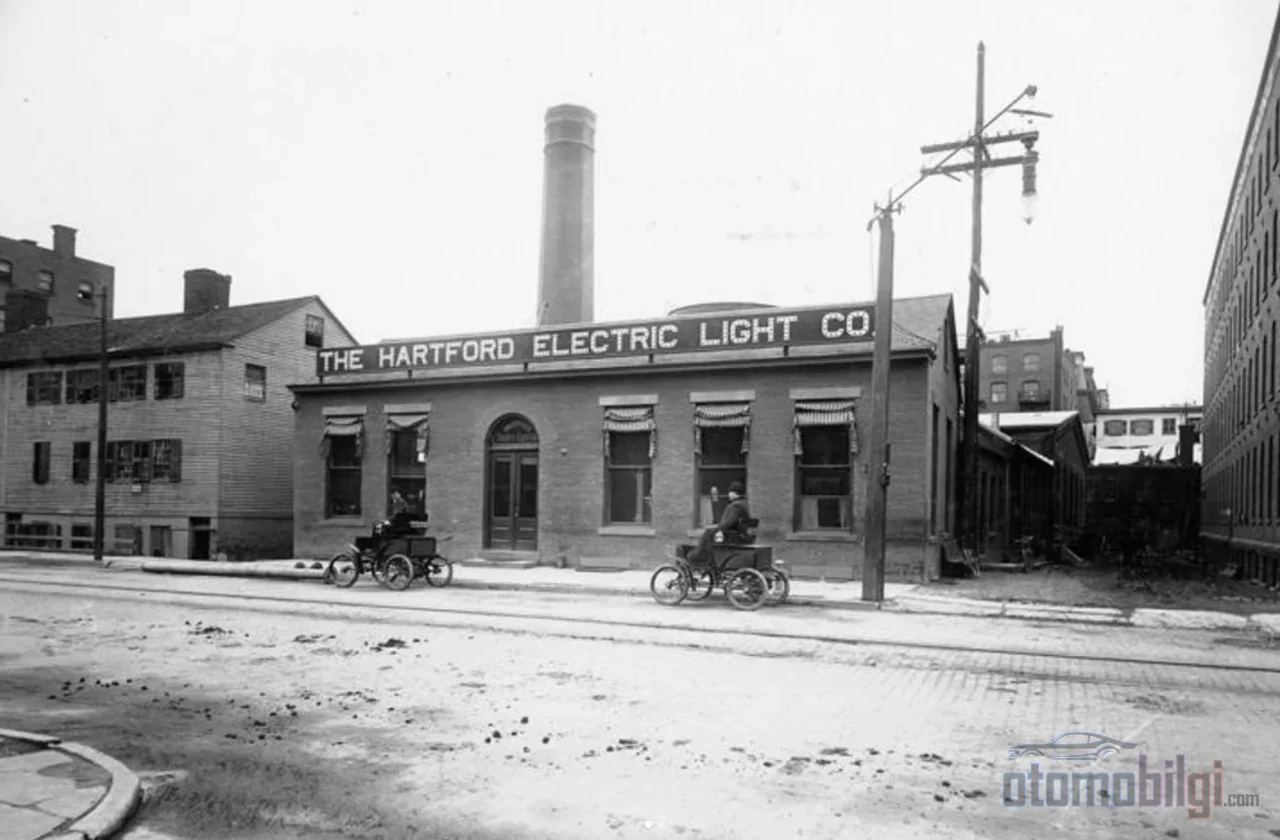
GeVeCo was a battery swapping service operated by Hartford Electric Light Company in the state of Connecticut, USA, between 1910 and 1924: The electric vehicle owner did not buy the battery; through a subscription, they used pre-charged swap batteries. The system worked with a contract structure consisting of a variable per-mile fee and a monthly service charge, and by the time it was shut down in 1924, a total of more than 6 million miles had been traveled with these vehicles.
Highlights
- The idea of a replaceable battery was first proposed in 1896; its commercial implementation began in 1910.
- In the GeVeCo model, the vehicle was sold without a battery, and energy was sold at a per-mile fee.
- The system operated for 14 years and exceeded 6 million miles.
- A parallel service was run for Milburn owners in Chicago from 1917 onward; a battery swap took about 5 minutes.
- The service was terminated in 1924 as demand for electric vehicles declined.
What Is GeVeCo and Where Did the Idea Come From?
At a time when startups present battery swapping as an innovation, knowing that the concept was first proposed back in 1896 changes the perspective of the whole story. At that time, the automobile was not yet widespread; lead-acid batteries were heavy, their capacity was low, and charging times were long. The main bottleneck of early electric vehicles was energy storage; this is still true today, but the solution back then was more radical: removing the battery from being a permanent part of the vehicle and treating it as a stored and exchanged commodity.
It was Hartford Electric Light Company that turned this idea into a commercial operation. The company had begun operations on April 7, 1883, supplying electricity to six customers with a steam plant on Pearl Street, and in 1896 it was the first operator of a hydraulic facility using storage batteries. In other words, it was an organization that had been familiar with battery technology for years, not only for vehicles but as part of the grid. In 1910, a service based on cooperation with General Vehicle Company - a company partially owned by General Electric, abbreviated as GeVeCo - was built upon this experience.
How the Business Model Worked: Buy the Vehicle Without a Battery, Use Energy by Subscription
The elegant aspect of the GeVeCo system was that it split ownership into two separate items. The customer purchased the vehicle from General Vehicle Company without a battery; the heavy and expensive battery pack never entered the purchase cost at all. The electric power, on the other hand, was obtained from Hartford Electric Light Company in the form of a replaceable battery. In other words, the vehicle was purchased once, while energy was continuously supplied just like a service we subscribe to today.
The contract structure reflected this separation and consisted of two components:
- Variable per-mile fee: The energy consumed was billed according to the distance the vehicle traveled. A pay-as-you-go logic made it possible to sell the energy stored in the battery directly.
- Monthly service fee: This charge covered the maintenance of the batteries and the storage of the trucks. So the health, lifespan, and availability of the battery were the responsibility of the service operator, not the customer.
Looking at this scheme even from today's perspective, it is clearly modern: The risk of battery degradation, ownership of the most expensive component, and charging infrastructure problems were all transferred to the operator. On the hardware side, the system was designed end to end; both the vehicles and the batteries were manufactured in a way that made quick swapping easy. The depleted pack was replaced with a full one at the station, and instead of waiting to charge, the customer continued on their way. During this period, the service was provided mainly to electric trucks; fleet vehicles operating on fixed routes with predictable estimated range were the customer profile where the swap model's economics worked best.
6 Million Miles in 14 Years: The System's Scalable Success
The most honest measure of a service is how much it was used. The GeVeCo battery service was operated continuously from 1910 to 1924, and during this period the vehicles served covered a total of more than 6 million miles. When you factor in the road conditions of the 1910s and the battery energy density of that era, this figure is not an exaggerated showcase number but the sum of an operation repeated every day for fourteen years.
What is striking from an engineering standpoint is that the system did not rely on a single technological miracle. Lead-acid batteries remained within the limits of their time; the success came from an operator that centrally charged and maintained the batteries, compensating for low energy density through logistics and contract design. The charging time problem did not disappear, but the customer never spent that time waiting in a queue.
Parallel Service in Chicago: Milburn Owners and the 5-Minute Swap
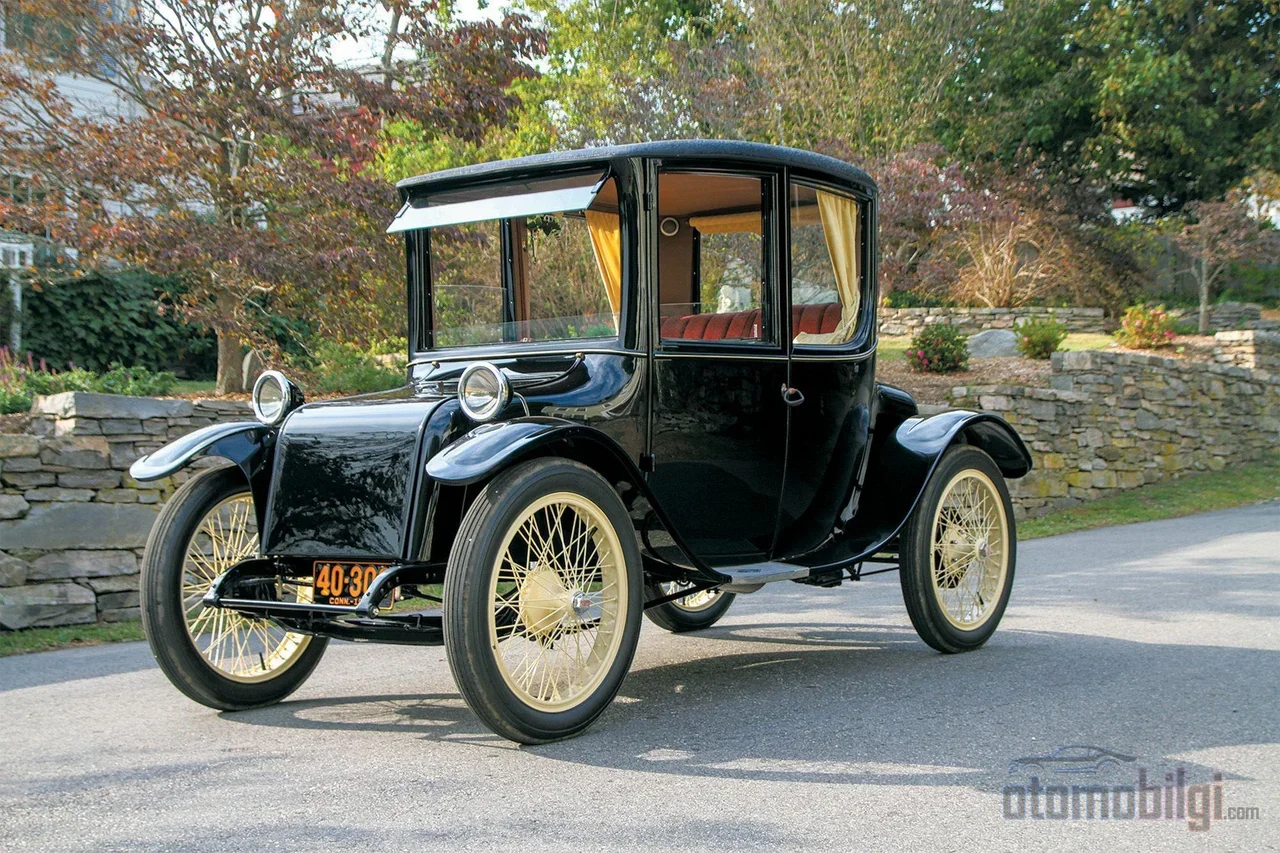
GeVeCo was not the only example. From 1917 and for several years, a similar battery rental service was operated in Chicago for owners of Milburn electric vehicles. Produced in Toledo, Ohio, the Milburn Light Electric was among the lowest-priced of its contemporaries and about 1,000 pounds lighter; it was found to be quiet, clean, and stylish. Milburn Wagon Company produced a total of about 4,000 electric vehicles between 1915 and 1923.
The details of the Chicago service demonstrate the operational maturity of the era. Recorded in a 1917 electricity industry publication, Fashion Station was the first station to offer a battery rental program, and it swapped battery packs in about 5 minutes. On 1922-model Milburns, meanwhile, the operator could inspect and maintain the battery packs even when no swap requests came in from owners - meaning the battery stock could be kept centrally healthy even when unused. This is a discipline quite close to today's form of fleet management.
Why Did the System Collapse? The Superiority of Gasoline and the Drying Up of Demand
The GeVeCo service was discontinued in 1924; the reason was declining demand for electric vehicles and general indifference in the industry. But this was less a failure of the business model than the evaporation of the market it was working on. Early electric vehicles held a serious share in the early 1900s, and electric taxi fleets were serving New York in 1900. Electrics were quiet, clean, and easy to use; unlike gasoline cars, which had to be cranked by hand, they were marketed to women drivers. Then came a series of developments that tipped the balance:
- Cheap Texas oil: With the improvement of intercity roads, demand for long range grew; cheap gasoline made the internal combustion engine the natural solution for long journeys.
- The electric starter motor: The electric starter, which spread from 1912 onward, removed the gasoline car's biggest usability obstacle - the hand crank - and nullified the electric car's strongest advantage.
- Price: In 1912 electric vehicles averaged around $1,750, while internal combustion ones sold for about $650. The Ford Model T, made cheap by mass production from 1908 onward, widened this gap permanently.
When these three forces combined, even the problem the swap model solved - charging wait time - was not enough to save the market; because there were no vehicles left to buy. Electric vehicles all but disappeared from the scene by 1935, and GeVeCo's subscription scheme ended with them, as it could find no market to carry it.
Modern Swap Attempts in the Blink of an Eye: The Second and Third Rounds of the Same Idea
The idea, of course, did not die; it waited for the market. The first attempt to make battery swapping mainstream in the modern era was Better Place, which opened its first station in Israel in March 2011; the company, which offered swaps of about 5 minutes, went bankrupt in May 2013. Tesla also demonstrated a roughly 90-second swap for the Model S in June 2013, and even planned to offer the service for $60–80; but in 2015 it closed its only station due to lack of customer interest. These examples were a modern repetition of the reality GeVeCo faced: Technology alone is not enough; a sustainable vehicle fleet and usage pattern are needed behind it.
There are also examples with different outcomes. By 2021, Gogoro was operating the world's largest swap network for electric scooters in Taiwan, with roughly 11,000 stations, and had passed 200 million swaps. NIO, meanwhile, reached 100 million battery swaps as of 2026; the average swap time is about 3 minutes, with around 1.2 million swaps completed in a single week. The common denominator of swapping at both small and large scale is the same principle GeVeCo proved in 1910: When the battery is managed as shared infrastructure, you can eliminate the charging time problem entirely.
The Lasting Lesson from GeVeCo to Today
The Hartford Electric Light Company's GeVeCo service is an early case worth remembering because it solved three things at once: It shifted the battery's high upfront cost from the customer to the operator, eliminated charging wait time through swapping, and consolidated battery maintenance at a central point. The data from 6 million kilometers of mileage shows this was not a theoretical design, but an operation that stood on its feet for fourteen years. What ended the system was not the model itself, but the gasoline car's advantages in price and usability. Today, as swap networks grow again, the question to be measured has not changed: Is there enough vehicle volume and the right usage pattern? GeVeCo is the first and oldest data point for this question.
Sources
- Battery swapping
- Swapping electric car batteries since the Gilded Age
- The History of the Electric Car - U.S. Department of Energy
- An Early History of the Hartford Electric Light Company
- Hartford Electric Light Company Records
- Milburn Light Electric
- Documents - Milburn Light Electric
- The 1922 Milburn Light Electric
- Milburn Light Electric Car Advertisement - The Henry Ford
- 1918 Milburn Electric
- NIO Achieves 100 Million Battery Swaps
- Battery swap works: Nio completes 1.2 million swaps in a single week