Why Was Woodrow Wilson Traveling in an Electric Car?
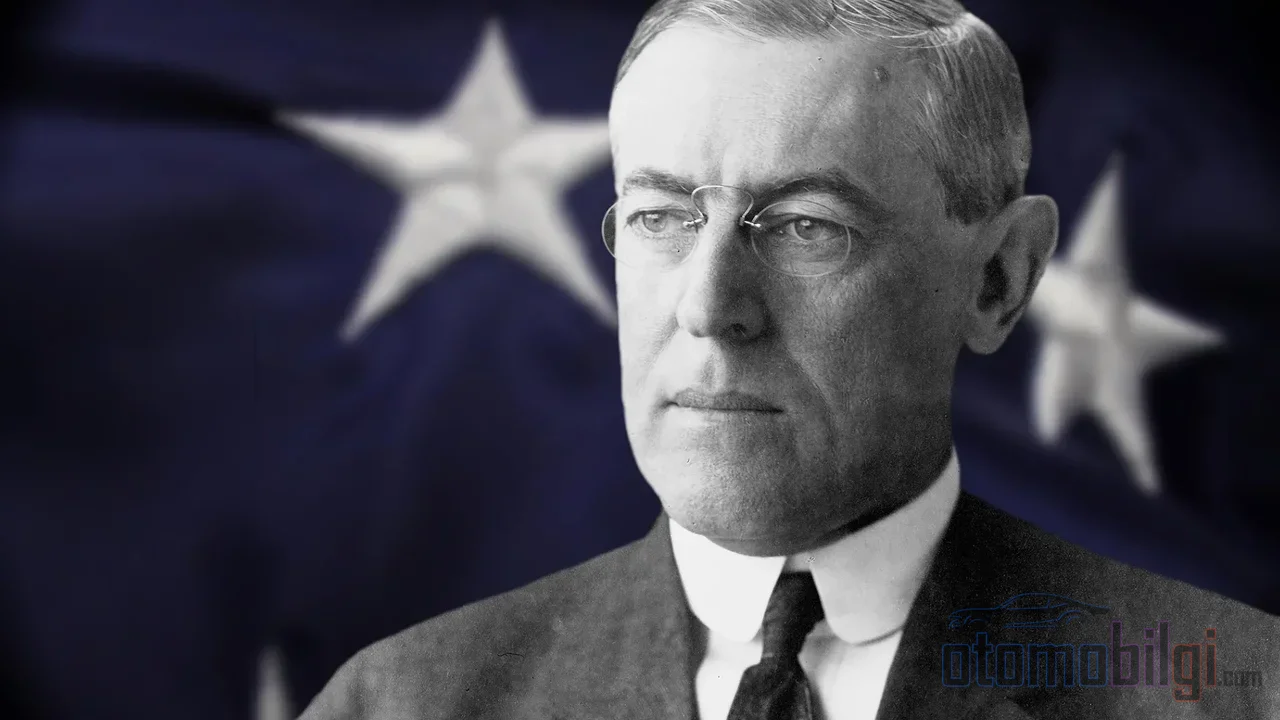
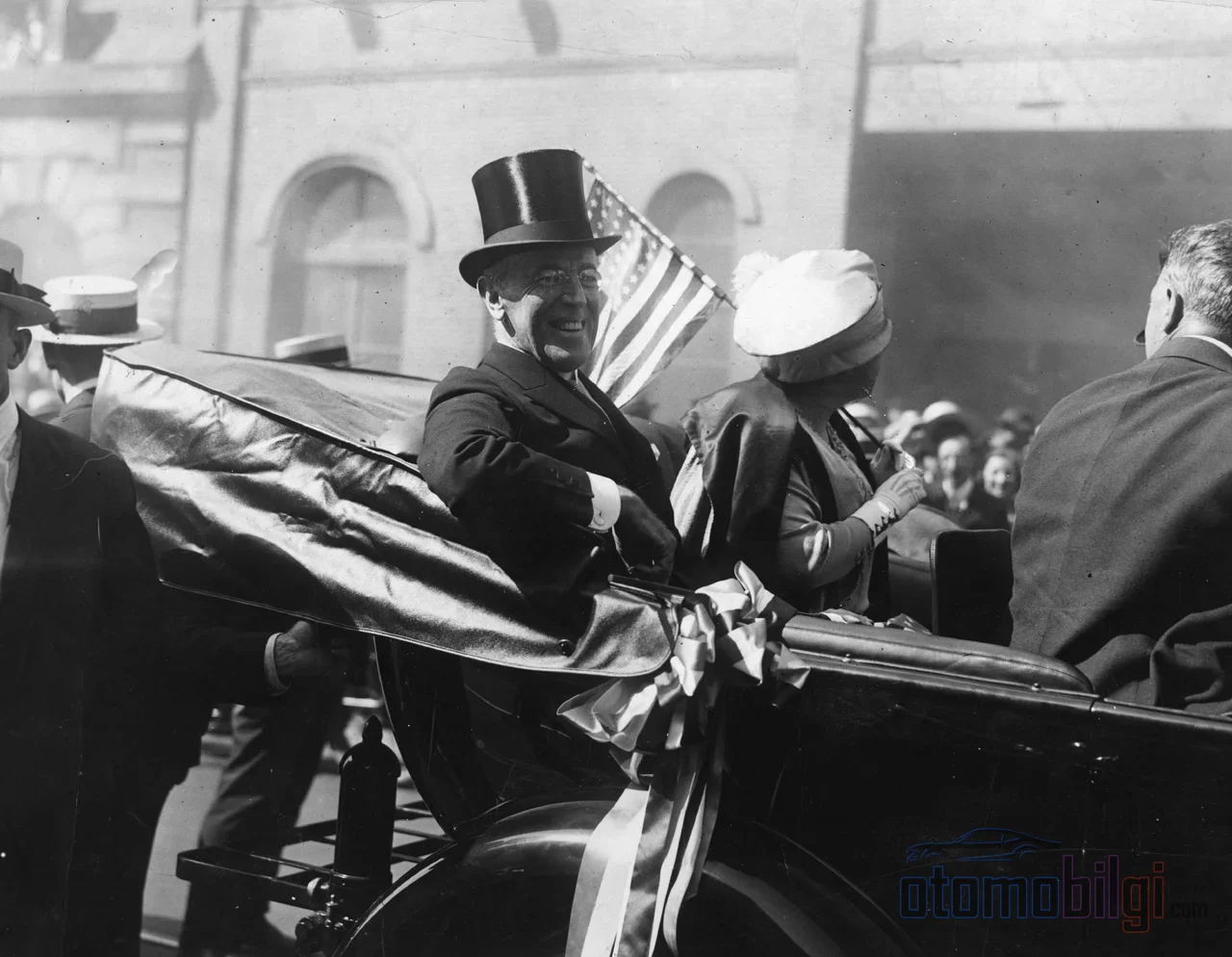
In 1910s Washington D.C., a silent vehicle was gliding out of the White House garden gate: no gasoline smell, no exhaust racket, no noise from the hand-cranked starter motor. Inside was the President of the United States, Woodrow Wilson, and the vehicle was a Milburn Light Electric with a General Electric motor and lead-acid batteries. For a reader who believes the electric car was Tesla's invention today, this scene is surprising; yet even presidential protection had once preferred the electric car for its silence. Behind Wilson's choice lay not only comfort but also the engineering realities of the era.
A silent escort in pursuit of the horse carriage
Wilson never learned to drive a car; an official chauffeur or carriage drove him around. However, personally using a 1918 model year Milburn Light Electric in the White House gardens made him one of the most modern presidents of the era. The vehicle had been made available to Wilson through a distributor in Washington.
The most interesting detail lies hidden in the Secret Service. The protection team's previous escort vehicle, used while following the president's horse-drawn carriage, had a noisy gasoline engine, and Wilson disliked this noise. So the agents switched to electric Milburns: silent operation allowed the escort vehicle to position itself beside the president without being noticed. In parades and family outings, the Milburn became the standard vehicle of the protection fleet. One source states Wilson may have been the first US president to use an electric as his official car; although this claim could not be definitively verified, the picture is clear: the capital operated for a while with an electric protection fleet.
Highlights
- Milburn Light Electric production continued between 1914-1923, with approximately 4,000 units produced.
- Wilson and the Secret Service used Milburns of the 1918 model year in Washington.
- Motor: General Electric DC, 2 hp (1915), 3.36 hp (from 1917 onwards).
- 1915 prices: coupe $1,485, roadster $1,285, delivery chassis $985.
- As of 2024, only 56 examples are known to survive.
Milburn Wagon Company: from carriage maker to electric automobile
The Milburn name was known for horse carriages before automobiles. George Milburn entered the carriage business in Mishawaka, Indiana in the mid-19th century and went into the carriage business in Mishawaka, Indiana in the mid-19th the company moved to Toledo, Ohio in 1873 and built a large factory on Monroe Street, powered by a 250-horsepower steam engine. This facility was one of the first fully mechanized carriage factories.
When the automobile era began, Milburn turned to contract body production for Ford, Pope-Toledo, Willys-Overland and Oldsmobile. The electric automobile was always a small part of the business; about 200-250 people worked in the electric division. The first Milburn electric automobile was announced in September 1914 and entered production as the 1915 model year. The platform and mechanical parts were designed by Karl K. Probst, and the body by George H. Woodfield was responsible; The Dura mechanical window-lift system is attributed to Woodfield. On the electric side, the company was largely an assembly and body operation: the motor and controller came from General Electric, and the lead-acid batteries from Philadelphia. This was a rational engineering choice for the era; sourcing the components at the heart of the system from proven suppliers reduced risk for a young product.
Milburn Light Electric specifications
The Milburn Light Electric was an unusually light and low design among the electrics of its era. The 1915 coupe weighed 1,400 pounds (approximately 640 kg) excluding the batteries; with the batteries, the total was around 2,000 pounds. While early models required a full charge every 50 miles (80 km), the range rose to 60-70 miles in 1917 and to 90 miles in the 1921 model year. Top speed also improved with the model year: the 1915 coupe was at the level of 15 mph (24 km/h), and the roadster at 19 mph (31 km/h), while by 1921 a band of 25-30 mph had been reached.
| Specification | Value |
|---|---|
| Motor | General Electric DC, 2 hp (1915) / 3.36 hp (from 1917) |
| Gearbox | 4 forward, 2 reverse |
| Battery | Lead-acid; 13 units of 6 volts in 1917 models |
| Range | 50 miles (1915) - 90 miles (1921) |
| Top speed | 24 km/h (1915 coupe) - around 48 km/h (1921) |
| Weight | 1,400 pounds (without batteries, 1915 coupe) |
| Wheelbase | 100 inches |
Torque (Nm), 0-100 km/h acceleration, consumption and trunk capacity figures were never published in any reliable source; they were not disclosed by the manufacturer. In the logic of electric cars of the era, these figures were already secondary; the purchase decision was determined by range, quietness and ease of use.
Tiller instead of a steering wheel
The vehicle's most unusual detail was the driver controls. The coupe and brougham bodies had no steering wheel; the driver used a tiller consisting of two horizontal levers. The roadster and sedan, however, had a classic steering wheel; in the town car, the driver's seat was equipped with a steering wheel while the enclosed compartment had a tiller. There was also an interesting solution to braking: the stored energy provided a primitive form of regenerative braking that assisted the two mechanical wheel brakes.
Battery swap system
The most creative answer to the range issue was the solution we discuss today as battery swapping. Electric taxi fleets had been using replaceable battery boxes since the late 1890s. Milburn announced its own quick-swap system from 1918: cells were carried in removable boxes on rollers, and in equipped garages the boxes could be pulled out from the front and rear and replaced with charged sets. In 1920, the company put roller battery kits on sale; in 1917, a battery exchange service had even been provided for owners in Chicago. A newspaper report from 1921 mentions an average range of more than 70 miles over seven consecutive discharges and a promotional demonstration approaching 100 miles; however, these were the company's promotional performances, not a guarantee of everyday use.
Why was the electric car a status symbol?
The Milburn was the cheapest electric car of its era; yet it was still expensive and was seen as a status symbol for the professional class. The explanation for this apparent contradiction lies in the market segmentation of the period. The electric car; thanks to its silence, the absence of exhaust fumes, and the fact that it required no hand cranking, was especially favored among urban elites and women drivers. The technical superiority of the gasoline car had not yet been settled, and 1914 was the peak year for electric car sales.
Milburn sold about 1,000 units in its first year and 1,500 in its second; the most popular body style was the brougham. Famous owners also reinforced the vehicle's status: Swedish inventor Waldemar Jungner, athlete Amos Alonzo Stagg, and tobacco magnate Richard H. Wright each owned a Milburn. Wilson and his security team sat at the very top of this preference map.
How did the electric-gasoline rivalry reverse?
The transformation happened through the combination of several developments. The arrival of the electric starter motor in 1912 freed the gasoline car from the hassle of hand cranking and took away the electric car's biggest practical advantage. Meanwhile, gasoline vehicles became cheaper and faster; roads improved and demand for travel outside the city grew. Lead-acid batteries, with their heavy, expensive, and maintenance-demanding nature, could not keep up in this race. Sales began to fall after the 1914 peak, and electric cars were almost entirely wiped from the market by 1935.
Milburn fought against this current as well. A fire at the factory in 1919 caused 900,000 dollars' worth of damage; 30 completed vehicles and numerous bodies burned. Production was temporarily moved to the Toledo University grounds and resumed in January 1920. The final blow came in February 1923: General Motors bought the Milburn body factory. The company retained the right to build electrics but produced only briefly to run down its stock; the last vehicle left the line two months after the GM purchase. Total production is considered to be around 4,000 units.
Why did Wilson drive electric? The clear answer
The answer to the question can be summed up in one sentence: Woodrow Wilson and the Secret Service chose the Milburn Light Electric because the vehicle was quiet, effortless to use, and easily met the president's transportation needs within Washington with its city range. The noise of the gasoline escort vehicle had bothered the president, while the silent electric perfectly filled this need both as a comfort and an invisible protection vehicle.
From an engineering standpoint, this is a textbook case of technology being matched to the right task definition. A General Electric DC motor of between 2 and 3.36 hp and lead-acid batteries provided everything needed in the capital of the 1910s: short distances, low speed, silence. The electric car's triumph was postponed by 90 years afterward, but Wilson's Milburn stands as proof of how long a technology that finds the right use case can keep working sensibly.
How many Milburns survive today?
As of 2024, the number of surviving examples of the Milburn Light Electric is known to be 56; the vast majority are on display in museums. The restored 1922 model at the Tampa Bay Automobile Museum carries 14 modern deep-cycle batteries (over 900 pounds) and reaches speeds of around 30 mph with a range of roughly 60 miles; showing that the original specification can be reproduced almost exactly with contemporary batteries. It is a reminder, once again, that the performance already achieved with 1910s lead-acid chemistry proves the battery was the real bottleneck.
This story, stretching from the President's choice of a silent vehicle to 56 museum cars, opens a tangible window into the electric car's forgotten prestigious era. Wilson had no propaganda motive; he was simply using the most rational vehicle at his disposal. History began rereading it a century later.