Thomas Parker and the Forgotten First English Electric Car
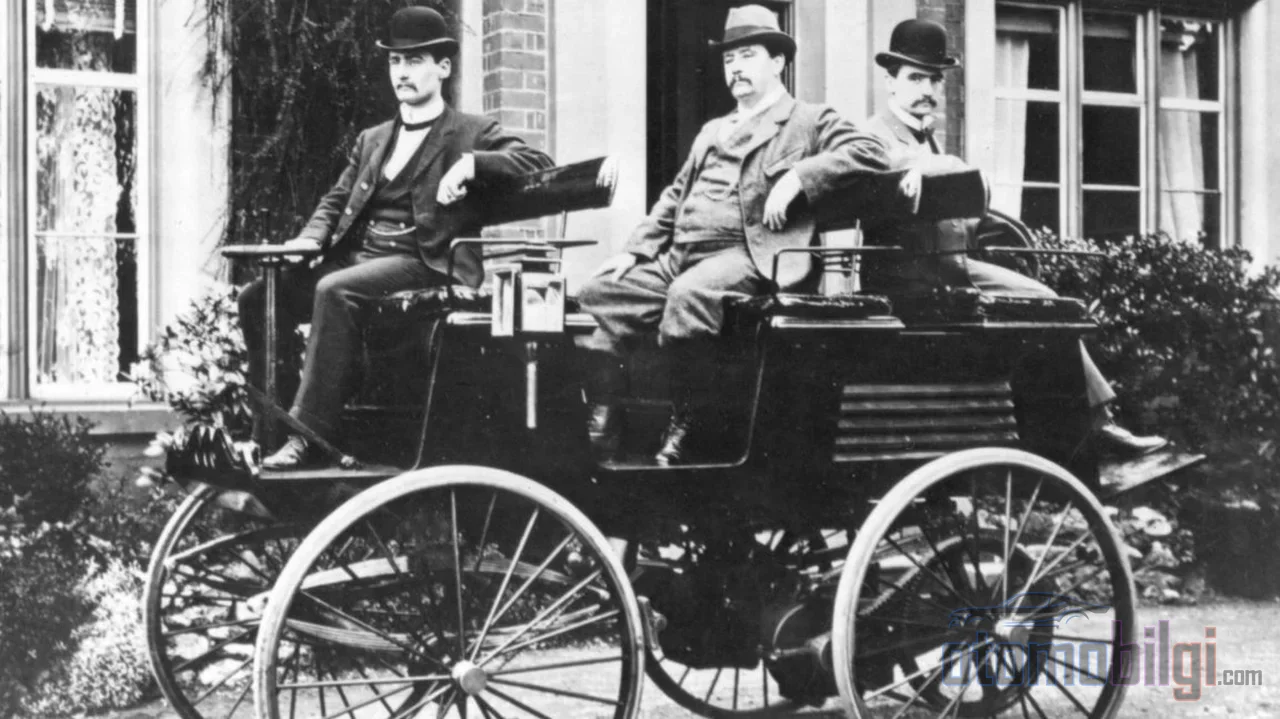
There is a black-and-white photograph taken in 1895 in England, in front of a house in the Tettenhall district of Wolverhampton. The car in the frame is neither steam-powered nor horse-drawn; it is a rechargeable electric car running on lead-acid batteries. And standing right in the middle is a man with a serious look: Thomas Parker. This single frame is almost the only visual evidence of one of the earliest examples of the electric car in England. So why did this engineer, who drove to work every day more than twenty years before the Ford Model T, never make it into the main narrative of automotive history? The answer lies hidden in the fate of both a person and an industry.
A Craftsman Who Emerged from Coalbrookdale: Who Was Thomas Parker?
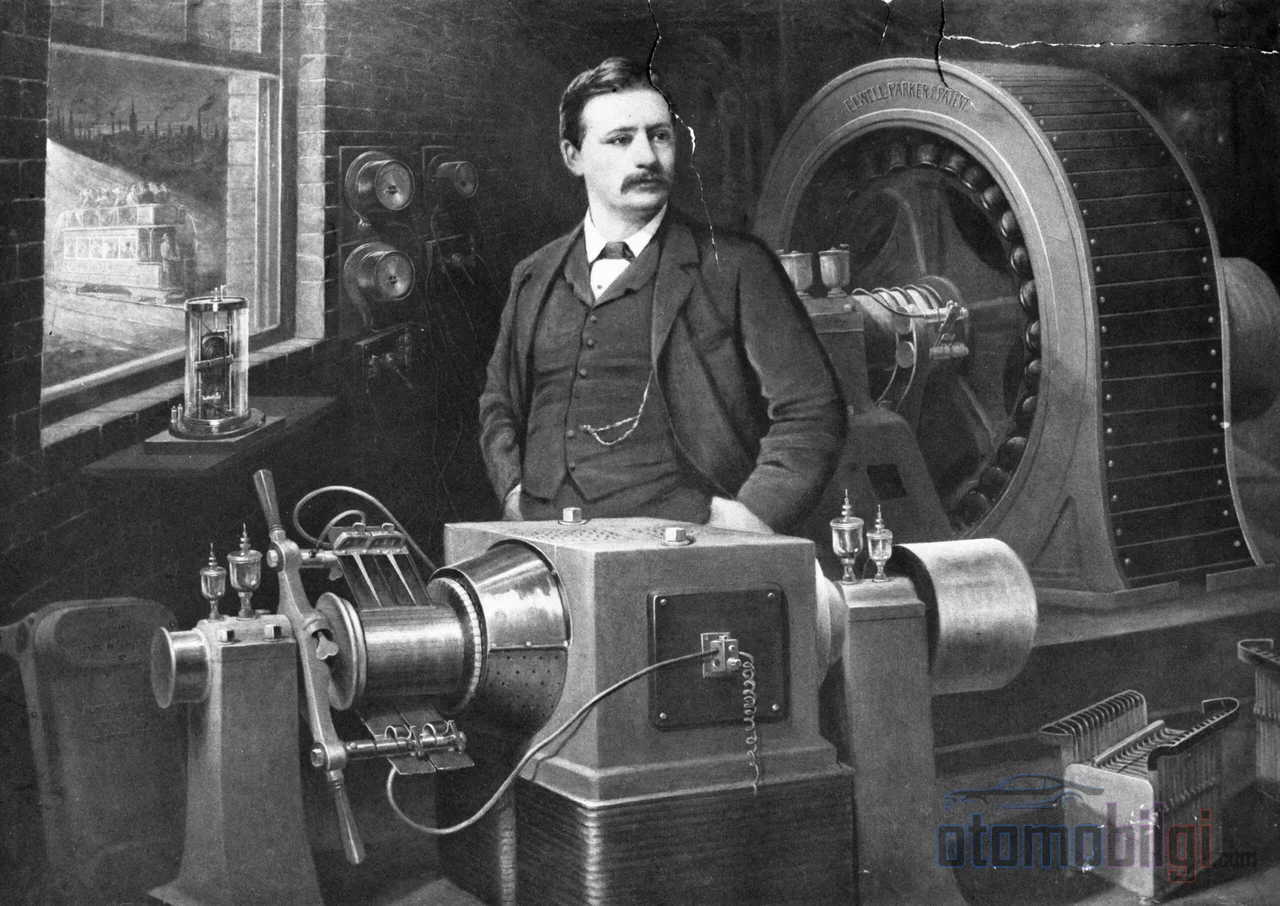
Thomas Parker was born on December 22, 1843 in Coalbrookdale, Shropshire. It was a town that carried the myth of iron: his father was a patternmaker at the Coalbrookdale Ironworks, and the family had toiled at the same foundry for generations. Parker's first job was also as a patternmaker alongside his father; he received his schooling at a Quaker institution. This background gave him early the two qualities that would define his career: manual dexterity and a habit of practical problem-solving.
The turning point was the 1862 International Exhibition in London. Parker toured the exhibition as one of four representatives of the Coalbrookdale Company; faced with the electric telegraph and wet battery stands, he saw what a mechanical engineer would see: the future of portable energy. After returning to Coalbrookdale, he became a chemist in the electroplating department and, to increase its electroplating power, installed a large dynamo of his own design. This machine is considered to be the first dynamo used for this purpose.
From then on, his inventions followed one after another. In 1876 he received a patent for an improved steam pump developed with Philip Weston. In 1881 his anthracite-burning Kyrle Grate won a silver medal at the Smoke Abatement Exhibition; years later, in 1904 he became the inventor of the smokeless fuel Coalite and, after his death, was honored with the gold medal for the fight against smoke. His contemporaries knew his place well: Lord Kelvin described Parker as the Edison of Europe. He was an engineer who occasionally dabbled in politics as well; in 1892 he stood as the Liberal Party candidate for Kingswinford and lost; a year later he became a magistrate in Wolverhampton.
Elwell-Parker: The Midlands' First Electrical Company
1882 was a year that opened with two separate patents in Parker's life. In June he took out a patent with Paul Bedford Elwell for dynamos and electric lighting; the same year, a separate patent was filed for the improvements he had made to Gaston Planté's lead-acid battery. In October he moved to Wolverhampton and formed a partnership with Elwell. Elwell's family operated a nail and horseshoe factory in the region; the capital and industrial tradition were there, and the electrical knowledge was with Parker.
The firm they founded was the first company to manufacture electrical equipment in the Midlands. The production line quickly took shape: Accumulators were produced from 1882 onward, and dynamos from 1883 onward. The customer portfolio shows how seriously the firm was taken. Dynamos were sold to the Manchester Edison Company; The equipment supplied to Trafalgar Colliery in the Forest of Dean made possible an application regarded as the first electric lighting underground. Lighting a mine's underground workings with electricity was a bold reference by the engineering standards of that era.
This partnership evolved into a larger structure in the long term. In 1889 a syndicate founded the Electric Construction Corporation (ECC); By acquiring Elwell-Parker and similar equipment manufacturers, it opened a new factory in the Bushbury district of Wolverhampton. The interesting part is that the founding genius could not get onto the board of this structure: Parker was unable to become a board member and was appointed only as Works Manager. When the company fell into difficulty in 1893 and was re-established as the Electric Construction Company, Parker resigned in 1894 and founded his own firm, Thomas Parker Ltd.; that company was also dissolved in 1909. This picture sums up the harshness of the electrical industry of that era: those who produced the technology and those who controlled the capital did not always sit at the same table.
Highlights
- Thomas Parker claimed to have built an electric car in Wolverhampton in 1884; today we have only a single photograph, dated to around 1895.
- Parker received separate patents for lead-acid battery improvements in 1882, the same year as Gaston Planté.
- ECC produced the first electric dog cart in 1896; reins were used instead of a steering wheel.
- Between 1899-1908, Parker worked as consulting electrical engineer for the Metropolitan Railway on the electrification of the London Underground; Neasden Power Station opened in 1904.
- The 1885 Blackpool tram was the country's first electric tram, and its equipment was Parker's work.
Not Wolverine 1884, But Wolverhampton: How Was the First British Electric Car Born?
What we know about Parker's car is surprisingly little, but the claim is clear: he stated that he built an electric car as early as 1884. Within a decade, he was commuting daily with this car. Imagine: in 1880s England, an engineer commuting from his own home to work with lead-acid batteries he produced himself. The Ford Model T would come in 1908; while Parker's car was already on the roads, even the conceptual vocabulary of the automobile had not fully taken shape.
The state of the evidence, viewed with engineering discipline, is weak: we have a single photograph, dated to around 1895. In the frame, the vehicle stands in front of his home in Tettenhall, and Parker is in the middle. What we know technically is also based on this image: the vehicle ran on rechargeable lead-acid batteries. No performance data, no production figures, no range information. This uncertainty is part of why the question of exactly who invented the electric car, and on what date, remains contested. Parker is not alone; Magnus Volk's three-wheeled electric vehicle with an Immisch motor was already on the roads on October 1887. The lack of a clear distinction between a first prototype and a first production vehicle makes narrowing the race down to a single winner impossible. In this picture, Parker is one of the strongest candidates; but not the only one.
The 1896 Electric Dog Cart: An Electric Nod to the Horse-Drawn Tradition
The first electric dog cart produced by the Electric Construction Corporation in 1896 was an ironic wink at the vehicle culture of its time. The dog cart was a horse-drawn vehicle type named for carrying hunting dogs; ECC brought it to life with an electric motor. The vehicle's most colorful detail was its control mechanism: no steering wheel was used - instead, reins. Since operations manager A. B. Blackburn enjoyed driving horse-drawn vehicles, steering with reins was preferred. The technology changed, but the user's habits did not; it can be considered one of the earliest examples of user experience design.
Another Parker may come into play in this vehicle's design: some records claim the dog cart's prototype was designed by Thomas Hugh Parker, son of an Elwell-Parker co-founder. There is also a distinction worth noting: the electrical engineer Thomas Parker (1843-1915) and the locomotive chief of the Manchester, Sheffield and Lincolnshire Railway, Thomas Parker (1829-1903), are not the same person; they are two names frequently confused in the pages of history. When viewed alongside Elwell-Parker's de facto monopoly in the British market in the 1890s, the dog cart is not merely a curiosity but the first institutional step in electric vehicle production in England.
| Period | Development | Significance |
|---|---|---|
| 1882 | Founding of Elwell-Parker, battery and dynamo patents | The Midlands' first electrical equipment company |
| 1883 | Dynamos for miners; Underground lighting at Trafalgar Colliery | Electricity's descent onto industrial ground |
| 1884 | Parker's electric car | The earliest known claim of an electric vehicle in England |
| 1889 | Electric Construction Corporation founded | Elwell-Parker acquired, factory in Bushbury |
| 1896 | First electric dog cart | First production electric vehicle controlled with reins |
| 1899-1908 | Metropolitan Railway electrification | The electric era in underground railways |
The Man Who Electrified the London Underground
Parker's role in electric vehicle history is actually part of a broader infrastructure career. In 1885 he supplied the equipment for the Blackpool tramway; it was the country's first electric tram. He worked on the electrification of the Liverpool Overhead Railway; in 1892 he established high-voltage DC distribution systems for Oxford, Birmingham, Charing Cross, Chelsea, Sydenham and Shoreditch. In 1897, he founded the Midland Electric Corporation, the first company to distribute electricity over a wide area. Projects of the kind that entire city infrastructures today rest upon.
The peak came in 1899. He resigned from the general management of Thomas Parker Ltd., moved to London, and became consulting electrical engineer for the Metropolitan Railway. His mission was the underground railway's transition from steam to electricity; at the heart of the project was Neasden Power Station, opened in 1904. Sources describe his role with varying breadth: some list him as Metropolitan's consultant, while others mention him as the person responsible for electrifying most of the underground. What is certain is that this project established the modern identity of the London Underground and that Parker stood at the engineering peak of this transition. He retired in 1908 and returned to Coalbrookdale, where he was born. On December 5, 1915, he died of a brain tumor at his home in Ironbridge; his grave is at St Michael's Church, Madeley. Sources record his age at death as 71 or 72; the difference stems from the calendar reckoning of his birth and death months.
Who Invented the First Electric Car and Why Was Parker Forgotten?
The honest answer to this question is: there is no single definitive name. On the American side, it is accepted that Robert Anderson developed the first crude electric vehicle around 1832, but that vehicle did not become widespread until the 1870s. Around 1900, roughly a third of vehicles in the US were electric; 22 percent were gasoline-powered, and the rest were steam. At the start of the competition, electric vehicles were often superior in comfort: no vibration, no smell, no noise, and no dangerous hand crank. But the gasoline side had longer range, higher speeds, and a spreading network of gas stations; the asphalting of rural and intercity roads also played in favor of gasoline cars. In 1912, Charles Kettering's electric starter completely eliminated the hand crank problem, and the balance shifted permanently. Parker's car was a victim of this economy: expensive, limited in range with the battery technology of its day, and a vision documented by just a single photograph.
There is another reason why Parker's name has remained in the shadows. His energy was spread not across a single product, but across an ecosystem: dynamos, accumulators, trams, mine lighting, distribution companies, the metro. While names identified with a single car are written into history, the trace of engineers who built infrastructure usually remains within the systems. Still, the story was not entirely forgotten: in 2015, a commemorative plaque was unveiled at Severn House in Coalbrookdale, and in 2022, the walking festival in Wellington was dedicated to Thomas Parker; there is also a street bearing his name in the town.
An Engineer's Idea Born Too Early
Thomas Parker's 1884 automobile was not a modern coincidence, but the tip of a coherent chain of engineering: battery improvement patents, dynamo manufacturing, mine lighting, and tram experience, all led to the same place. The evidence we have is thin - a single photograph dated around 1895 - but the context is strong: the Midlands' first electricity company, de facto market dominance in the 1890s, the 1896 dog cart, and the electrification of the London Underground. As we relive the era of the electric vehicle today, what is surprising about this story is simple: the idea was not wrong; it was merely born a hundred years too early. Parker's quiet photograph in Tettenhall is a single-frame summary of an engineer's patience and of being touched too early.
Sources
- Thomas Parker (inventor) - Wikipedia
- Thomas Parker - Wolverhampton History and Heritage
- ECC cars - Wolverhampton History and Heritage
- Elwell-Parker's Zero Emissions Legacy - Elwell-Parker
- File: Thomas Parker Electric car.jpg - Wikimedia Commons
- The History of the Electric Car - U.S. Department of Energy
- Electric vs Gasoline Cars: History Shows This is Nothing New - MotorTrend
- Wellington Celebrate Thomas Parker - Walkers are Welcome
- Invention, Enterprise, Struggle: Thomas Parker - FullCharger
- Early Electric Vehicles: E-G - earlyelectric.com