Was the Sinclair C5 Electricity's Biggest Fiasco?
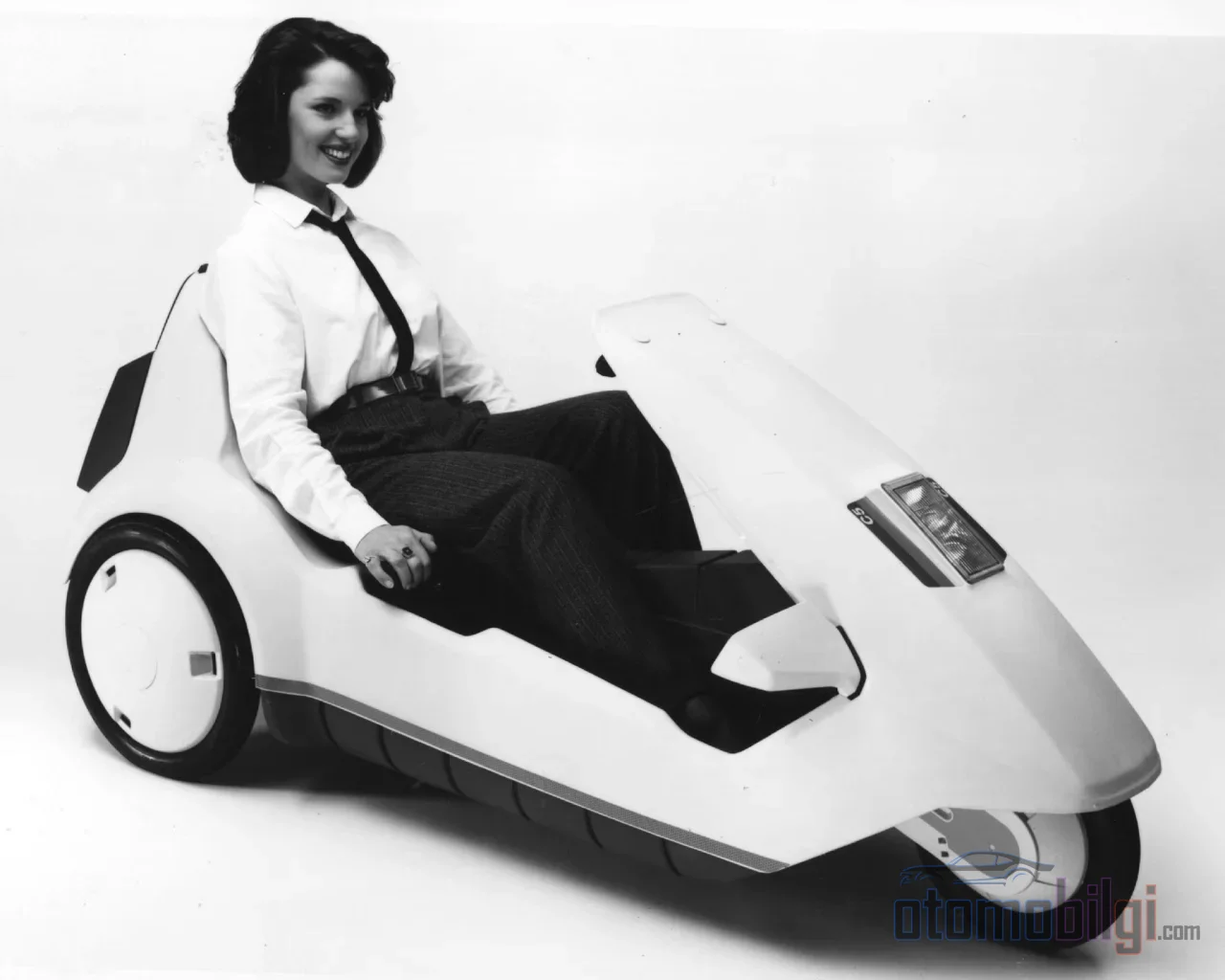
On the morning of January 10, 1985, six Sinclair C5s burst out of cardboard boxes and lapped the arena at Alexandra Palace in North London. Drivers in gray-yellow uniforms, T-shirts, keychains, and even a C5 video game... Sinclair had run a 3 million pound promotional machine at full throttle. Yet by the end of that same day, journalists were left holding a vehicle with no option but to pedal, its range melting away in the cold. Ten months later production would halt, and Sinclair Vehicles would sit at the bankruptcy table with 7.75 million pounds of debt. So why did this project, riding the winds of the energy crises of the 1970s-80s, collapse so quickly?
This page does not seek an answer to a general question, namely why the electrics of the 1970s never caught on. It puts a single product, a single launch, and a single commercial collapse under the microscope: the Sinclair C5. The answer lies in where the scissors opened up between the engineering specification and market reality.
What Is the Sinclair C5 and Who Was It Designed For?
The Sinclair C5 is, by its technical classification, an electrically assisted pedal trike: a small, single-seat, recumbent tricycle. Though the public called it an electric car, Clive Sinclair clearly described the vehicle as a vehicle, not a car. This distinction was not evasive; it was the very foundation of its legal basis.
The engineering goal was based on official road data: In Britain, the average daily car journey was only 13 miles (about 21 km), while moped and bicycle journeys were around 6 miles. Sinclair's chain of logic was simple: for short-distance daily transport, a full-size automobile was unnecessary; a light, cheap, electric vehicle could fill that gap. The target price was set below 500 pounds. The final product went on sale for 399 pounds; 428 pounds with delivery by post. To keep the price under 400 pounds, components such as indicator lights, mirrors, a horn, and the reflective High-Vis Mast were turned into optional accessories. This decision would later sit at the center of the safety debate.
The intellectual roots of the project went back much further. Sinclair's interest in electric vehicles extended to a holiday venture at Solartron in the late 1950s. In the early 1970s, initial preliminary research was done at Sinclair Radionics, and a thin motorized scooter prototype was developed; but when calculator projects took priority, the work stalled for years. In late 1979, the project was reborn under the codename C1, as a moped alternative with a target speed of 30 mph. In 1982, wind tunnel tests were conducted at the University of Exeter, and styling studies were carried out with Ogle Design; but when the vehicle approached 150 kg, the program was halted in March 1983. The new approach was a lighter, slower vehicle legally classified as a bicycle.
Highlights
- Launch: January 10, 1985, Alexandra Palace, London; price 399 pounds
- Motor: 250 W (0.34 hp), 12 V lead-acid battery, claimed range of 32 km, top speed of 24 km/h
- Approximately 14,000 units were produced; sales remained around 5,000
- Production stopped in August 1985; Sinclair Vehicles went bankrupt in November 1985 with 7.75 million pounds in debt
Legal Framework: The Law That Defined the C5
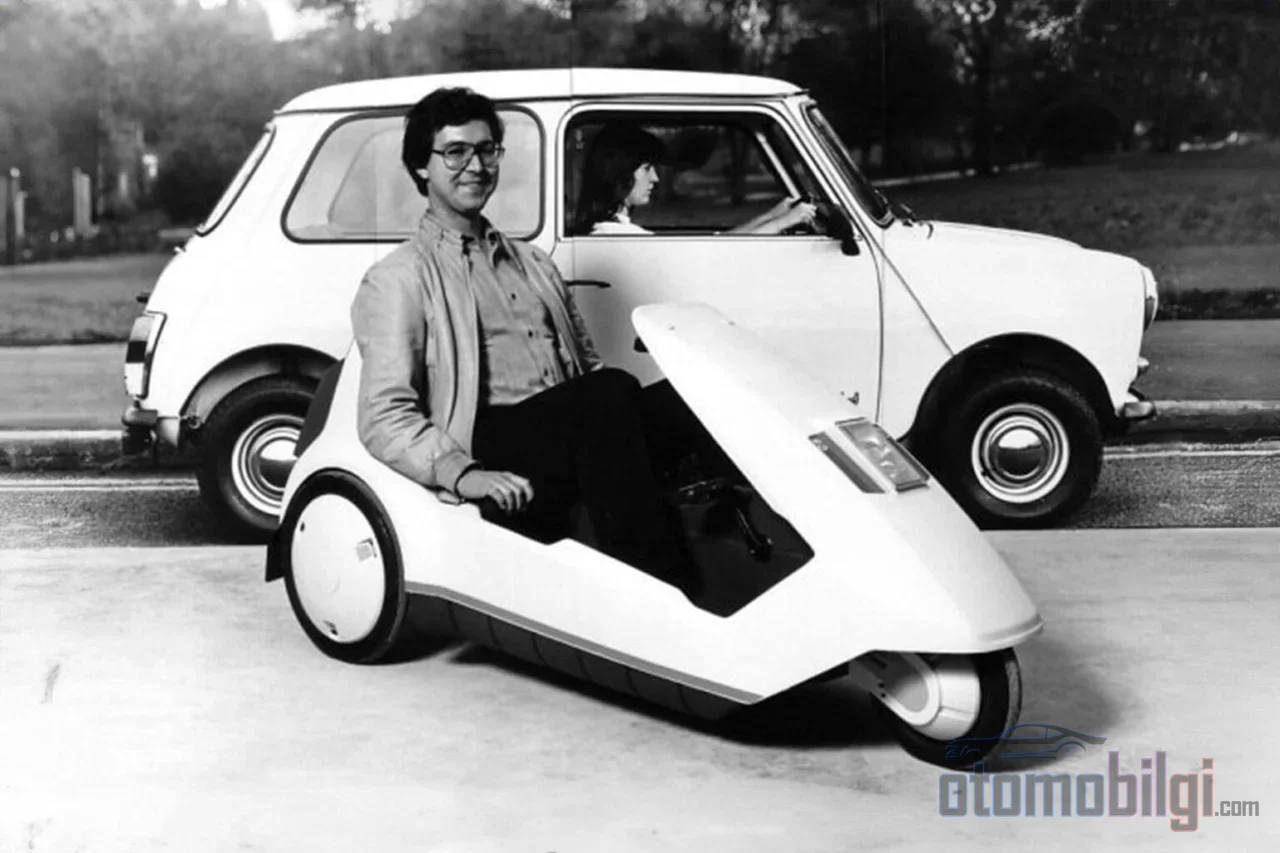
The most critical engineering decision defining the vehicle's character was actually a law. The electrically assisted pedal cycle legislation passed in August 1983 was shaped by lobbying from bicycle manufacturers and removed the insurance, vehicle tax, license, and helmet requirements from this category. In return, three strict limits were imposed: The 15 mph (24 km/h) speed limit, a 60 kg weight limit, and a 250 W motor limit. The entire design of the Sinclair C5 was optimized around these three numbers. In other words, the vehicle's performance was not an engineering goal but a product of a legal ceiling.
The corporate groundwork was also laid in the same period: In March 1983, Sinclair Vehicles was founded with 8.3 million pounds obtained from the sale of Sinclair Research shares; former DeLorean employee Barrie Wills was appointed managing director. Development was carried out over 19 months in great secrecy at the MIRA test facility; detailed design and the prototype stage were entrusted to Lotus Cars.
Technical Specification: What Do the Numbers Say?
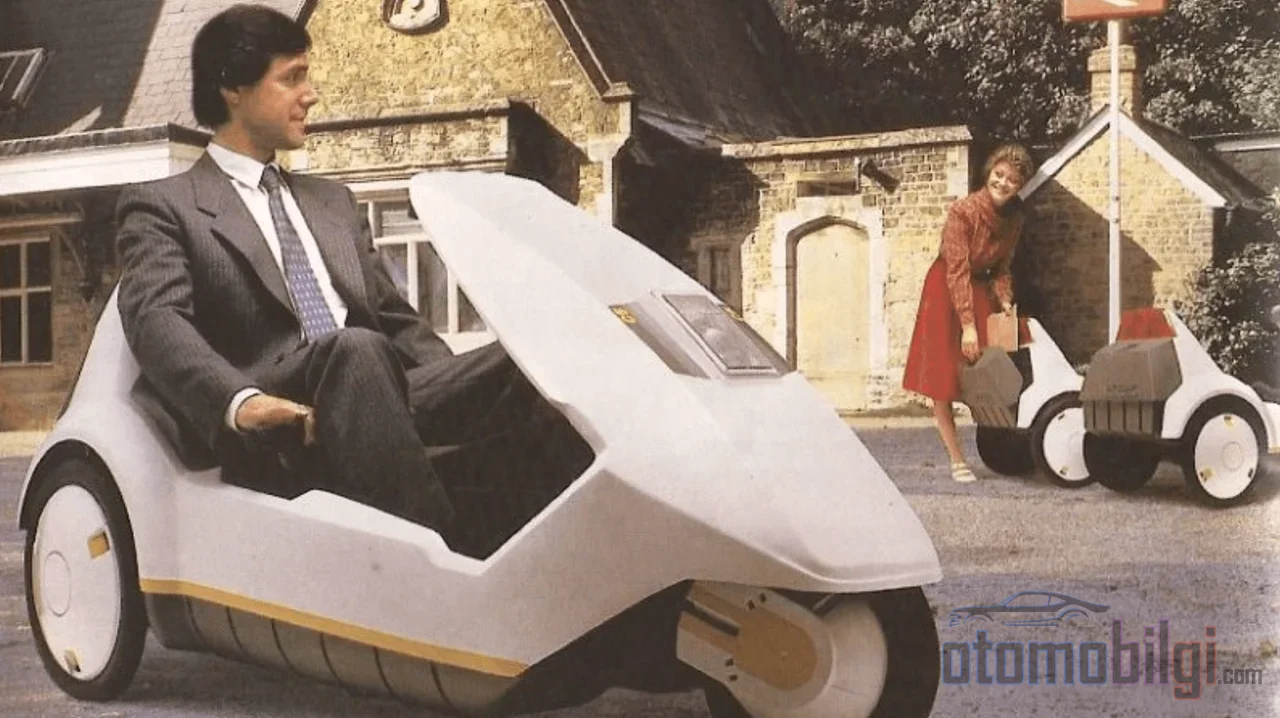
The C5's data sheet makes the vehicle class clear at first glance:
| Feature | Value |
|---|---|
| Motor power | 250 W (0.34 hp), max 4,100 rpm |
| Battery | 12 V lead-acid, 35 A per hour on a full charge |
| Range (claimed) | 32 km (20 miles) |
| Maximum speed | 24 km/h (15 mph, legal limit) |
| Weight | Approximately 30 kg (without battery) / 45 kg (with battery) |
| Length / width / height | 1,744 / 744 / 795 mm |
| Wheelbase | 1,304 mm |
| Cargo capacity | 28 liters |
| Gradient capability | 8% with motor, 14% with pedal assistance |
| Price (1985) | 399 pounds (428 pounds by mail order) |
The motor was produced in Italy by Polymotor; the commonly repeated washing machine motor legend is not true - the design was derived from a truck cooling fan. The battery was an Oldham Batteries product. On the drivetrain side, a two-stage gearbox multiplied torque 13-fold; a torque value in Nm was never disclosed by the manufacturer. When the motor was put under full load it drew up to 140 amps, and the electronic circuit would disable the motor after 4 seconds to protect it. There was no reverse gear in the gearbox: the driver had to get off and turn the front of the vehicle by hand to change direction. Steering was provided by a handlebar positioned below the knees.
The body consisted of two polypropylene injection-molded shells, while the chassis was made of a single Y-shaped steel component designed by Lotus. The final styling was done by 23-year-old industrial designer Gus Desbarats; he also designed the same reflective High-Vis Mast. Since the maximum speed was 24 km/h, a 0-100 km/h acceleration value is not meaningful for this vehicle; the vehicle could never reach that speed.
Energy Crises Context and the Battery Choice
The 1980s were actually a favorable climate for the idea of electric vehicles. History showed the big picture clearly: In 1912, around 34,000 electric cars were registered in the US alone, and electric vehicles at one point outnumbered internal combustion vehicles; but while the internal combustion engine's efficiency improved rapidly, battery technology could not keep pace. The 1973 oil crisis and the second crisis that followed once again exposed the slow development of the battery. In 1978, of Britain's 17.6 million registered vehicles, only 45,000 were electric in daily use, and roughly 90 percent of these were milk delivery vehicles.
Sinclair's critical strategic choice emerges here: he deliberately refused to develop battery technology. His logic rested on the assumption that if the vehicle reached the market, battery manufacturers would develop better products. Tony Wood Rogers, one of the project's chief engineers, later summed up the situation clearly: he said they were condemned to standard technology, that the semi-traction battery was a good compromise, but that they had very little freedom of choice. The 12 V lead-acid battery was the best solution available for this task with 1985 technology, and at the same time the heaviest solution. The lithium-ion revolution was still thirty years away.
Why Did the Launch Go Wrong?
Production was set up at the Hoover washing machine factory in Merthyr Tydfil, Wales; the Welsh Development Agency had acted as an intermediary, and Hoover had been persuaded with sales projections of 200,000 and then 500,000 units per year. The original plan was DeLorean's factory in Dunmurry, Northern Ireland; DeLorean's bankruptcy eliminated that option. Full production began in November 1984, and by early January 1985 more than 2,500 C5s had been produced. The line could turn out 50 vehicles per hour, with a weekly capacity of 8,000 units.
The launch show on January 10, 1985 was choreographically ambitious: vehicles bursting out of boxes, promotional merchandise, and a three-month, 3-million-pound press and television campaign. The theme emphasized a new force in personal transport. However, the press test ended in complete disaster: many of the show machines did not work at all. On launch day, the cold weather had reduced the range of the 12-volt battery, and journalists were left pedaling in cold, windy and wet weather.
The marketing strategy was also inconsistent: the brochure presented the C5 as a leisure-focused product giving individuals bespoke personal transport, while other materials positioned it as an alternative to a car. There was a more fundamental problem: no market research had been conducted for the project. One of the advertising agency's executives admitted in January 1985 that the project had been carried through to the prototype stage entirely on Sir Clive's beliefs. Even within the design team there was a contradiction: Ogle had told Sinclair that they did not believe in the project, that the vehicle would not be fast enough, that drivers would get wet in the rain, and that the battery would fall short.
The Safety Debate: A Death Trap, or a Visibility Problem?
The media heavily criticized the C5 within days; was accused of being dangerous because the vehicle was unstable, unsafe and invisible to other road users, and of being a three-wheeled death trap. Howard Boyd, RoSPA's national cycling officer, warned that the vehicle's low height made it difficult for truck and careless car drivers to see it. Murray MacKay, head of the Accident Research Unit at the University of Birmingham, argued that the C5 was a kind of milk float released into traffic without requiring a helmet or a license. The dispute, conducted through the British Safety Council and its chairman James Tye, went as far as Sinclair's announcement that he would file a defamation suit; the case produced no outcome. In July 1985, an Advertising Standards Authority report also voiced criticism of the advertisements.
Official test findings make the picture more detailed. Transport Research Laboratory's report RR55 found that the C5's daytime visibility was comparable to pedal bicycles in clear visibility conditions, that its road holding and handling characteristics were adequate, and that the consequences of overturning were most likely less serious than falling off a bicycle. However, the same report also noted that the problems emerged under certain conditions. In other words, the death trap rhetoric did not fully match the official findings; the real issue was the risk perception created by the low body profile in complex traffic and the fact that safety equipment was not included in the 399-pound price.
The Anatomy of the Commercial Collapse
Sales figures were far too weak compared to production capacity. Production was cut by 90 percent in the first three months and stopped entirely in August 1985. By July 1985, around 8,000 units had been sold; by the end of ten months, total sales remained around 5,000, and different institutional records present figures ranging between 4,500 and just under 9,000. Production, meanwhile, remained at around 14,000 units. Sinclair Vehicles filed for bankruptcy in November 1985; 7 million of the 7.75 million pound debt came from Sinclair's personal investment. Hoover was left with a debt of around 1.5 million pounds, and the Merthyr assembly line was decommissioned within a year. The project was assessed as a fiasco that swallowed most of its creator's fortune and effectively ended his business career; it is considered one of the greatest marketing failures of post-war British industry.
So Why Did It Fail? The Clear Answer
Looking at it as a single event-centered case, the answer has three layers. First, product positioning: the C5 appealed neither to car owners nor to bicycle users; the 24 km/h speed limit, the 32 km range claim and the lead-acid battery that drained rapidly in the cold turned it into an inadequate copy of both worlds. In addition, the vehicle only reached store shelves months after the launch. Second, the process: without market research, without heed to the design team's warnings, a production run of 14,000 units and a capacity of 8,000 vehicles per week were established on the founder's conviction alone. Third, in context: Battery technology in 1985 Britain was not yet ready to carry this concept, and winter conditions proved it on the first day of testing.
Afterwards: The Question of Cult Object and Ahead of Its Time
The story did not end with sales. Thousands of unsold C5s were bought up by investors and marketed at inflated prices of up to 6,000 pounds instead of 399 pounds. Today the C5 is a cult object among collectors; owners have formed clubs, and some have modified the motor to reach speeds of 240 km/h. It even made the news in our time when a 1985 C5, still unopened in its box, was put up for auction.
The other end of the debate is still ongoing. According to one view, the C5 was an idea whose time had come, but 24 years too late: the concept was right, but it was being implemented in the lead-acid era. The opposing view says that even a single piece of market research would have exposed these flaws and the C5's uselessness on Britain's late 20th century British road network would have come to light. When the two are read together, the lesson is clear: The idea of the electric vehicle did not fail; battery chemistry, legal limits, and stubbornness without market research turned this 399-pound tricycle into a 7.75-million-pound fiasco. When we remember that the modern electric revolution arrived with the lithium-ion battery, the C5's fate was not the limit of an idea, but the limit of an era.
Sources
- Sinclair C5
- Sinclair C5 - Britannica
- Was the Sinclair C5 30 years too early? - BBC Future
- Safety aspects of the Sinclair C5 (RR55) - TRL
- Sinclair C5 Electric Vehicle - Science Museum Group
- Freeze Frame: The Sinclair C5 experiment fails - Hagerty UK
- Great Motoring Disasters: Sinclair C5 - Retro Motor
- BBC On This Day - 10 January 1985