Enfield 8000: The Electric Endeavor That Ended After Only 112 Units
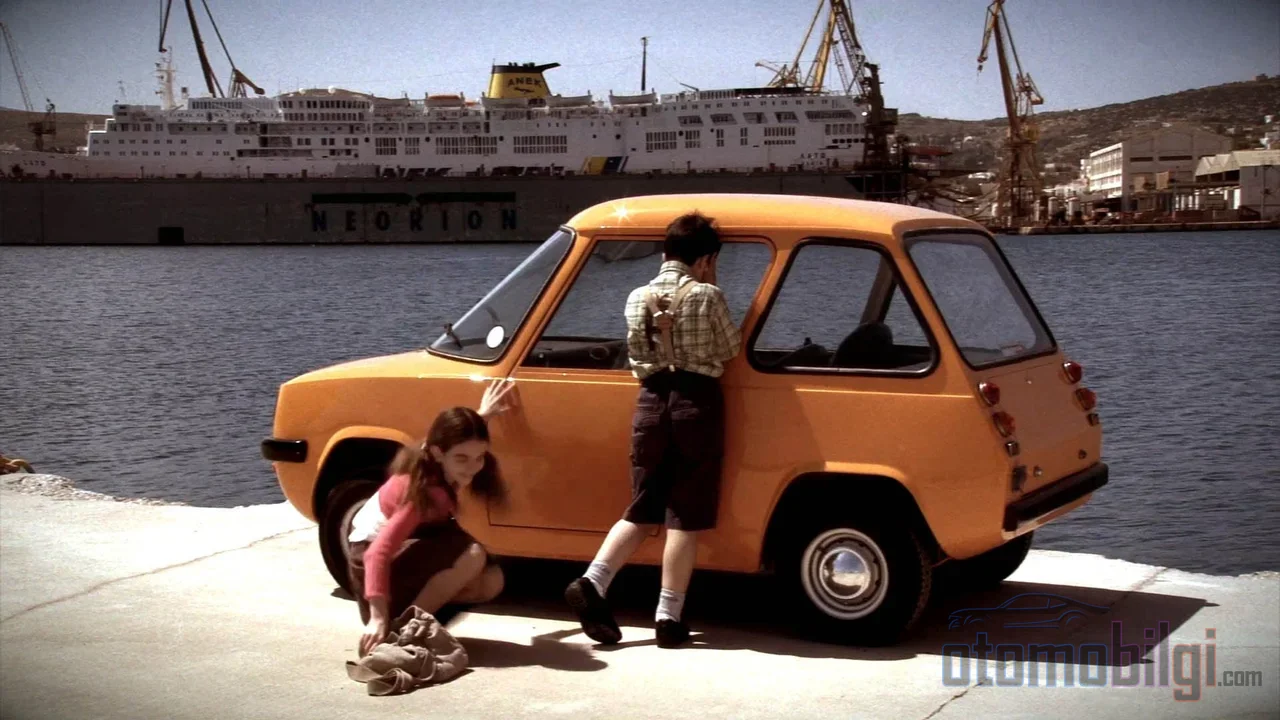
In late May 1976, an automobile project of Isle of Wight origin quietly came to an end. There was no one to claim it; the production line had stopped, and the vehicles on hand had become showcases in the promotional fleets of electric utilities. Yet just three years earlier, this vehicle had been promoted as the United Kingdom's promise of an electric future amid the panic created by the 1973 oil crisis. This small, two-seater city car called the Enfield 8000 is the most concrete example of why electric cars failed to catch on in the 1970s: limited range, high price, and a market with no infrastructure. For those living today in the lithium-ion era, it is an engineering lesson written half a century ago with lead-acid batteries.
On this page you will find the entire story of the Enfield 8000 from its birth to its end: how the 1973 oil crisis fueled the search for electric vehicles, the car's technical specifications, its production adventure in Greece, and why the project ended with a permanent production of not just 112, but between 100 and 123 according to sources. Yes, this is a project whose production count was never precisely determined; the most widely accepted figure is 120. So why did this experiment fail?
The Oil Crisis and the Idea of an Electric City Car
OPEC's oil embargo in 1973 created a sudden acceleration in electric car research. Oil prices nearly quadrupled, rising above 12 dollars per barrel; in 1970, the United Kingdom was importing 94 percent of its oil needs. The possibility that gasoline supplies could completely run out was being seriously debated. It was precisely in this environment that the Enfield 8000 took shape.
The project's roots actually go back even further, to 1966. The UK Electricity Council opened a competition to develop a practical electric city car. Enfield Automotive on the Isle of Wight won the contract, beating out strong rivals like Ford. Greek and British engineers worked together on the design team; John Ackroyd, who led the project's design, would later go on to the Thrust 2 land speed record vehicle. The company's owner was the Greek millionaire Giannis Goulandris.
There was also an interesting twist in the car's fate: At the first international electric vehicle symposium in Phoenix, Arizona in November 1969, California Governor Ronald Reagan promised a factory site, subsidies, and guaranteed orders for the prototype on display. Goulandris declined this offer. The consequences of that decision, together with the production relocation we will see in the following sections, remain the most debated moment of the project.
Highlights
- Production years 1973-1976; total production between 100-123 units according to sources, with the most accepted figure being 120
- Engine power 8 bhp (6 kW), 48-volt DC system, lead-acid batteries weighing approximately 308 kg
- A range of approximately 40 miles (64 km), with maximum speed claims between 37-48 mph
- Price 2,600-2,800 pounds: it was possible to buy two Minis for the same money
- Production was moved from England to the Greek island of Syros; the vehicle could not legally be sold in Greece
Technical Specifications of the Enfield 8000: What Could It Do?
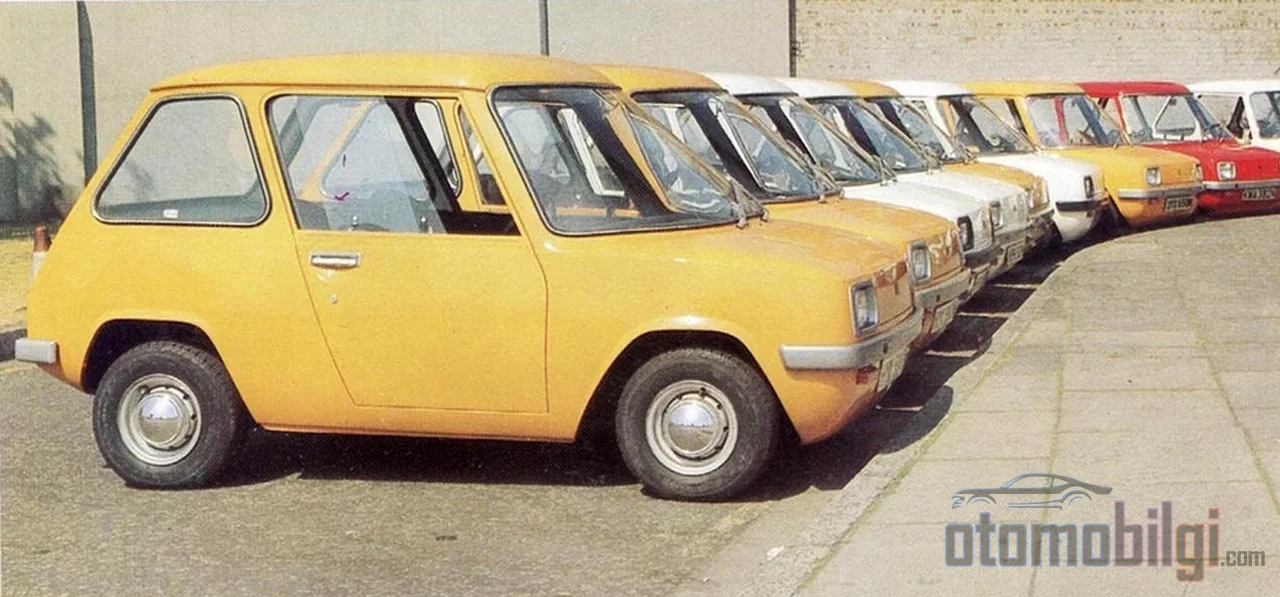
In engineering terms, the Enfield 8000 was a battery-electric, rear-wheel-drive, two-seat city car. A 48-volt DC motor ran in the transmission tunnel between the seats, producing 8 bhp (6 kW) of power. The powertrain featured a single-speed gearbox and reverse gear; operation was via two pedals, accelerator and brake. The torque figure was never disclosed by the manufacturer at any point.
The energy storage consisted of lead-acid batteries. There are two different accounts in the sources regarding the battery configuration: some speak of eight 12-volt units, others of eight 6-volt monoblocks. In either case, the total battery weight was approximately 308 kg; the energy density of 1970s lead-acid technology meant that such a heavy battery pack delivered a very modest range by today's standards.
The chassis featured pragmatic solutions. A ladder-type frame made of square-section steel tubing, topped by a steel skeleton stretched with aluminum alloy body panels. Suspension components were adapted from the Hillman Imp, the doors from the Mini; the rear axle was derived from Reliant's three-wheeled models. The brakes were drums front and rear. That said, the engineering was not careless: the vehicle passed crash tests and, in wind tunnel measurements, posted a better drag coefficient than a Porsche.
| Specification | Value |
|---|---|
| Body type | Two-seat (2+2 in some sources) city car |
| Motor | 48 V DC electric motor, rear-wheel drive |
| Power | 8 bhp (6 kW) |
| Torque | Not disclosed by the manufacturer |
| Gearbox | Single-speed + reverse |
| Battery | Lead-acid, approximately 308 kg |
| Top speed | Between 60-77 km/h (source claims) |
| Range | Approximately 40 km - 90 km (depending on conditions) |
| Acceleration | 0-30 mph: 12.5 s (manufacturer data) |
| Price | £2,600-2,800 |
What does the spread in the performance figures mean?
Claims range from 37 mph to 48 mph for top speed, and from 25 miles to 56 miles for range. This spread is not an inconsistency, but the natural consequence of the characteristics of lead-acid batteries: range and performance vary significantly depending on the battery's state of charge, air temperature and usage conditions. While the manufacturer's handbook gives 40 mph and 12.5 seconds for 0-30 mph, an independent road test conducted in early 1976 measured the usable range at 25 miles (40 km). The real world was crueler than the brochure.
From the Isle of Wight to Syros: The Production Adventure
Production began at the Somerton Works on the Isle of Wight. However, labor disputes and production delays pushed the project into trouble, and the production line was moved to the Neorion Shipyard on the Greek island of Syros; the company took the name Enfield-Neorion, with its headquarters relocated to Piraeus. Greek engineers and technicians at the facility in Ermoupolis took on the aluminum body, the chassis, the assembly, and the electrical system.
The relocation decision remains a breaking point that is still debated today. Critic Constantinos Adraktas resigned in protest against the move of production to the Greek island; he believed that the costs on the island would doom the project to failure. There are also different accounts of the rationale behind the relocation: some emphasize labor disputes, others point to costs; yet another account highlights the owner's view that the production should have belonged to the Greeks who designed it.
The real paradox is this: even though the vehicle was produced in Greece, it could not legally be sold there. The legislation did not recognize the electric vehicle category, and the tax classification was stuck. Almost all of the vehicles produced were exported, with the United Kingdom as the priority market; some vehicles were also sold to Australia and South Africa. The company even developed a Jeep version for the rent-a-car market in the Greek islands, but local sales never materialized.
Why Were Only Just Over 100 Vehicles Produced?
The total production number varies between 100 and 123 depending on the source; the most widely accepted figure is 120 vehicles, 65 of which were used by the Electricity Authority and electricity boards in southern England. In other words, state institutions purchased roughly half of the production themselves in an effort to promote fuel-saving vehicles. As for public sales, only around 40 vehicles were sold to general consumers.
The reason was economics more than engineering. The vehicle's price ranged between 2,600 and 2,800 pounds; with the same money, two Minis could be bought. What the buyer got in return was a nominal range of 64 kilometers, shorter in real conditions, and 8 horsepower. There was no charging infrastructure; it was an expensive proposition even as a second vehicle. When even gasoline-powered luxury cars, which had fallen out of favor for a while during the crisis years due to their thirst, returned to normal, interest in electric city cars quickly evaporated. Production came to a complete halt in May 1976; the story ended with the owner closing down this venture, which he saw as a gamble, after trying and failing.
Why Didn't Electric Cars Catch On in the 1970s?
The failure of the Enfield 8000 summarizes the common fate of all electric car attempts of the era. The problem was not the vehicle's engineering alone; the problem was the physics and market conditions placed in the vehicle's path.
- Battery technology: The energy density of lead-acid cells offered a range of only a few dozen kilometers in return for a 300-kilogram pack. The lithium-ion revolution was still forty years away.
- Cost: Low-volume production drove up the unit price; the Enfield's price equaled two Minis.
- Lack of infrastructure: There was no such thing as a charging network; users were condemned to the outlet at home.
- Range and performance perception: A real range of 40 kilometers and acceleration taking minutes made it a hard sell next to its petrol rivals.
When these four factors came together, the outcome was predictable. Yet, in fairness, one point must be added: this was not an engineering disaster thrown on the scrap heap. Solutions like its lightweight aluminium body, low drag coefficient, integrated packaging and simple two-pedal operation would, decades later, become the core design principles of modern electric cars.
Looking from Today: Remains and Legacy
Most of the cars that returned from the electricity boards' promotional fleets were scrapped in the 1980s. Today there are believed to be roughly three examples known to have been used on UK roads; a few vehicles live on in museums and private collections. An example displayed at the industrial museum on Syros carries the fifty-year memory of production on the island; the project is today regarded as the world's first modern electric production car.
The most vivid legacy, however, came from an unexpected place: a car enthusiast converted a 1974 Enfield 8000 into a street-legal electric drag racing machine. The aluminium body was preserved, a tubular steel space frame and modern powertrain were added; the car was at one point claimed to be the world's fastest street-legal electric car, with an estimated top speed of 225 km/h. Instant electric torque was proof of how the promise left half-finished in the lead-acid era of the 1970s could be fulfilled with modern batteries.
In short, the question the Enfield 8000 answered is clear: electric cars did not catch on in the 1970s because the battery technology that determined range and cost was not yet ready, and the market infrastructure simply did not exist. 112 or 120 units; the figure itself tells the scale of the experiment. The real lesson is independent of scale: if the right idea arrives in the wrong decade, even engineering cannot save it.
Sources
- Enfield 8000
- The Enfield 8000 electric car | Industrial Museum of Hermoupolis
- The Enfield Thunderbolt: An electric car before its time
- Guilty pleasures: Enfield 8000
- Enfield E8000 - 1975 - Lane Motor Museum
- Enfield 8000 electric car - Aeva
- The electric car that was 50 years ahead of its time
- History lesson in the First modern day Electric car