Gaston Planté and the Battery That Gave Birth to the Electric Car
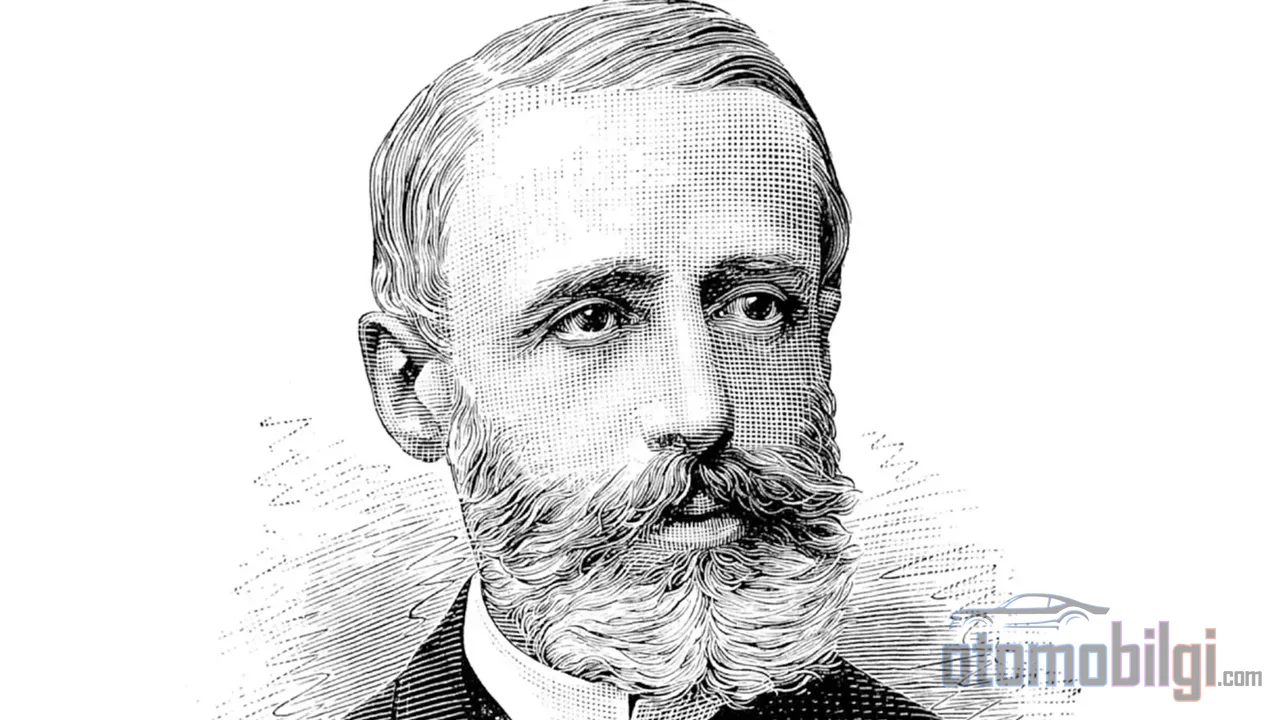
In 1859 in Paris, a physicist dipped two pure lead plates into a glass jar, fed this curious contraption with a generator, and invisibly crossed one of the most important thresholds in the history of electricity. What Gaston Planté demonstrated in that jar was the first device capable of chemically storing produced electricity and then giving it back: the rechargeable battery. When electric cars are mentioned, lithium-ion packs, modern range debates and fast charging stations come to mind; yet the physical precondition for traveling on electricity had been established half a century before gasoline, with lead and sulfuric acid. This page does not tell how batteries are used in electric cars; it tells how that battery was born.
Why Was the Idea of a Rechargeable Battery a Revolution?
Before Planté, the usable sources of electricity were primary cells: once depleted, they were chemically exhausted and could not be reused. The Daniell Cell was the best known of these; John F. Daniell developed this device in 1836; it could deliver a voltage of about 1.1 volts, but its job was done when the electrodes were consumed. Nicolas Gautherot's 1801 observation that some materials held a charge after contact with electricity was the first spark of the idea of reversibility; Volta's cell of 1800 and William Cruickshank's mass-production approach of 1802 had prepared the groundwork.
Planté's contribution was a qualitative leap in this chain. His single cell produced 2 volts of voltage - nearly twice that of the Daniell Cell - and its chemical reaction could be reversed. In other words, the cell was not a consumable to be used once and thrown away, but an energy store that could be filled and emptied. Moreover, the use of a single electrolyte provided a practical advantage over Daniell's two-liquid arrangements. Higher voltages could be obtained by connecting cells in series; the nine-cell battery concept was presented to the French Academy a year later, in 1860. Some sources give the date as 1859, based on the demonstration, while others give 1860, based on the presentation to the academy; the two figures actually mark two stages of the same development.
Highlights
- Gaston Planté demonstrated the world's first rechargeable battery in 1859; the single cell produced 2 volts.
- Camille Faure patented the paste-coated plate method in 1881 and opened the lead-acid battery to mass production.
- The electric vehicle became physically possible only with Planté's invention, which enabled portable electricity storage.
- In 1900, roughly one third of the vehicles on the road were electric.
- Battery swapping stations were first tried in the United States in the 1890s.
The Inventor Who Came From a Glass Jar: Who Is Gaston Planté and How Did the Battery Work?
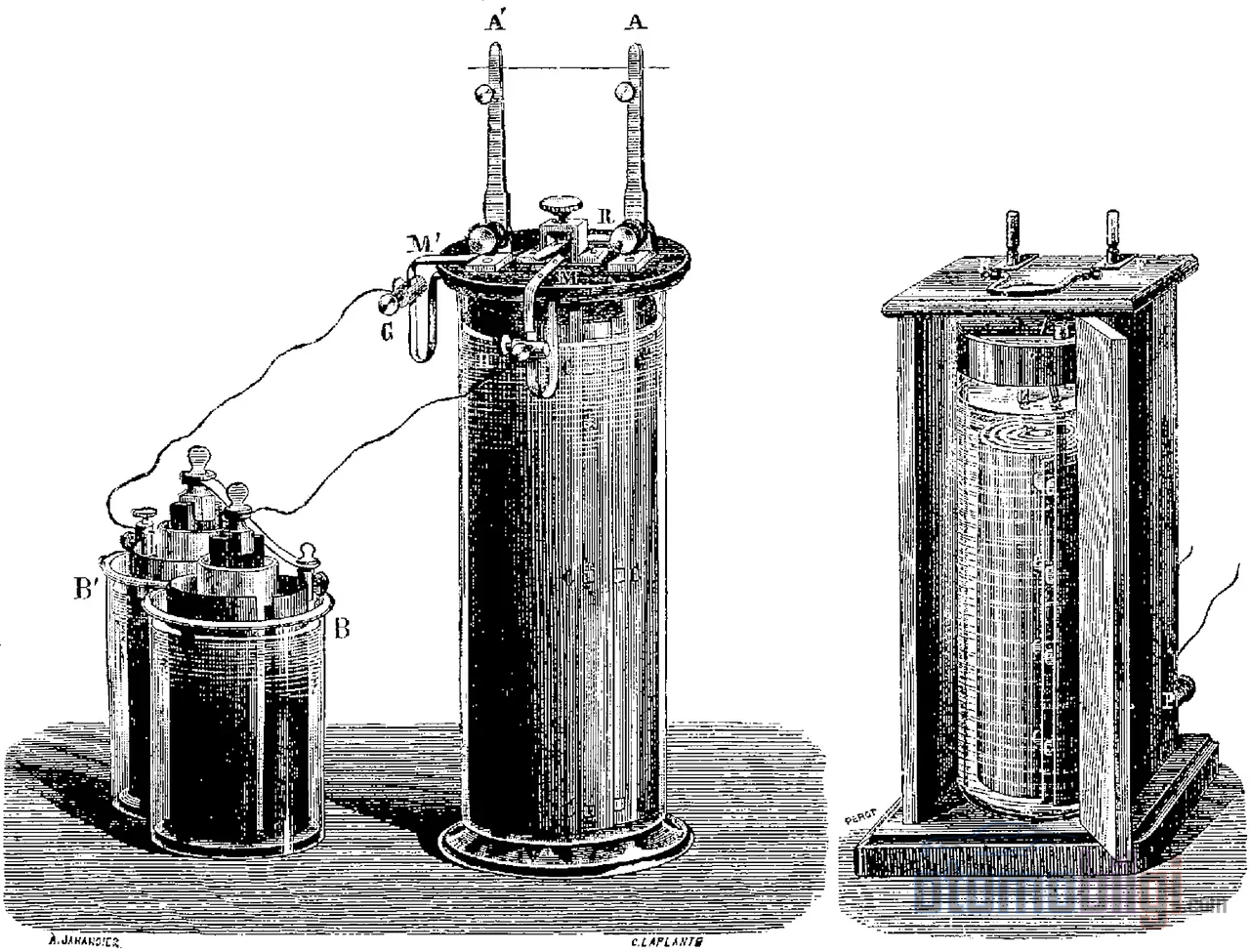
Gaston Planté (1834–1889) was a French physicist, and his battery invention dates back a decade before Michael Faraday's development of the mechanical electric generator - meaning rechargeable storage existed even before the technology of generating electricity with machines. When viewed through today's engineering lens, the construction of the first device was strikingly simple: two long, narrow sheets of pure lead were rolled into a cylindrical shape with rubber strips placed between them, a copper wire was attached to the edge of each sheet, and the assembly was immersed in a glass jar containing a 10 percent sulfuric acid solution. It was charged with a generator-like device, and the resulting power was demonstrated before an audience.
Its operating principle is subtle but easy to understand. When charged, lead dioxide is found on the surface of the positive electrode and metallic lead on the negative electrode; during discharge, lead sulfate forms on both electrodes, and the reaction reverses during charging. This two-way flow of electrons turns the cell into an energy store.
The Weak Point of the First Design
The critical shortcoming of the Planté cell was the small amount of active lead dioxide on the positive electrode; the cell could deliver a stable voltage only for short periods. To overcome this, Planté rapidly improved his prototype: he replaced the spiral winding with flat rows of lead sheets, and through systematic experiments with sheet thicknesses and spacings he arrived at a design that could meet commercial demand. The first rechargeable batteries were put to work directly in railway carriage lighting - meaning that in its very first years the technology was already answering the electrical needs of a moving vehicle. Reaching the capacity to power a road vehicle, however, would wait for another name and another twenty-two years.
Camille Faure and the Pasted Plate: The Industrial Threshold of 1881
There was an annoying problem in Planté's original design: the activation of the pure lead sheets' surfaces depended on a superficial wearing process that took years of repeated charge cycles. A factory waiting out this process was commercially unthinkable. The solution came in 1881 from the French chemist Camille Alphonse Faure (1840-1898): a paste made of lead oxides, sulfuric acid, and water was applied to the lead sheets, and this coating was cured warm in a humid environment. The method was patented, and the approach known today as the pasted plate was born.
The effect of this coating was twofold. First, energy density increased significantly; the sheet left the factory already loaded with active material. Second, production no longer depended on the years-long maturing of pure lead - the door to mass production had opened. Faure's design was far better suited to efficient mass production than Planté's; this innovation is regarded directly as the birth of the first electric car batteries. Ironically, Faure has remained largely the forgotten inventor of the modern lead-acid battery - Planté's name holds a much stronger place in the history books.
From Battery to Automobile: How the Lead-Acid Battery Made the Electric Vehicle Possible?
The electric vehicle was not a single invention; it was the product of a series of breakthroughs such as the battery and electric motor of the 1800s. But the critical link in the chain was this: a practical way of carrying portable electricity aboard a vehicle only opened up with Planté's 1859 invention. No matter how advanced the motor was, without stored energy to feed it, the electric vehicle could never have gone beyond being a laboratory curiosity. The lead-acid battery was the technology that fulfilled this physical prerequisite.
The results were not long in coming. With the threshold of industrialization reached in 1881, the first practical electric cars took to the roads in the 1890s, and around 1900 the golden age of electrics was lived: roughly one-third of vehicles on the road were electric. Ferdinand Porsche developed his own electric model in 1901. Early electrics stood out for their quietness and ease of use compared to the noisy, smelly, hand-crank-started gasoline cars - they were especially popular among women drivers.
The Capabilities and Limits of the Battery
The engineering balance sheet of the lead-acid architecture was clear. On the power side, the battery did its job; but its energy density was low, and Planté's original batteries were far too large and heavy for early vehicles. Early electrics could typically offer a range of 30-50 miles (approximately 48-80 kilometers) per charge, their top speeds remained low, and the charging infrastructure was extremely limited. Thomas Edison set out to develop a nickel-iron battery aiming for durability and long life as an alternative to the weight and clumsiness of lead-acid batteries; repeated failures delayed the realization of the electric automobile many times over.
The balance was quickly upset. High cost, low top speed, and short range weakened electrics in competition with internal combustion, while Ford's 1908 Model T made gasoline cars far cheaper and suited to long distances; cheap oil and the spread of the electric starter motor reversed the remaining balances as well. The electric automobile, which sold more than gasoline cars in the early 1900s, was pushed to the margins of the market within a few years.
Battery Swapping Already Existed in the 1890s
A widespread assumption is that battery swapping is an invention of the 21st century, yet history does not confirm this. The first swapping attempts go back to the late 1890s, at the close of America's Gilded Age. To counter the problem of waiting time for charging, an ice rink in New York was converted into a battery swapping station - both vehicles and batteries were modified to facilitate quick exchange. This practice served the markets that adopted it from 1910 to 1924.
The lead-acid architecture was the architectural origin of this practice. The battery was heavy and slow to fill; the solution, then, was not to stop the vehicle and wait, but to quickly swap the depleted pack with a full one. Around 1906, publicly accessible charging stations, fully electric taxi fleets, and early battery swapping systems existed simultaneously. The structural logic of today's battery swapping models - reducing waiting time to swapping time - is exactly the logic of the 1890s. What changed a century later was not the concept but the battery's chemistry: lead-acid gave way to lithium-ion, commercialized by Sony in 1991, and this chemistry became the accepted standard in today's electric vehicles.
Why Is the Lead-Acid Battery Still Alive?
Despite the advancement of the electric car, the lead-acid battery itself never left the stage. Thanks to its affordability, reliability, and high recyclability, it is still widely used today; its modern derivatives such as VRLA and AGM, along with deep-discharge types, serve different applications. The chemistry that began in a glass jar 167 years ago has remained one of the most produced battery types in the world during this period.
Short Answer: Which Battery Gave Birth to the Electric Car?
The battery that physically made the electric car possible was the lead-acid battery, demonstrated by Gaston Planté in 1859 and opened to mass production by Camille Faure in 1881 with the pasted plate method. While Planté introduced the concept of rechargeability, Faure took it to an industrial scale; without this duo's breakthrough, neither the one-third electric market share of the 1900s nor the first battery swapping stations could have existed. The lithium-ion revolution is the final link in the chain started by lead-acid - the first link of the chain was always that glass jar in Paris.
Sources
- A Brief History of the Lead Acid Battery
- About the Planté Battery
- Camille Faure Creates Lead-Acid Batteries in 1881
- Gaston Planté and his invention of the lead-acid battery (Kurzweil, 2010)
- All you need to know about batteries
- The History of the Electric Car - U.S. Department of Energy
- The lost history of the electric car
- A History of Swapping EV Batteries Since the 1890s