Robert Anderson and the First Attempt at an Electric Car
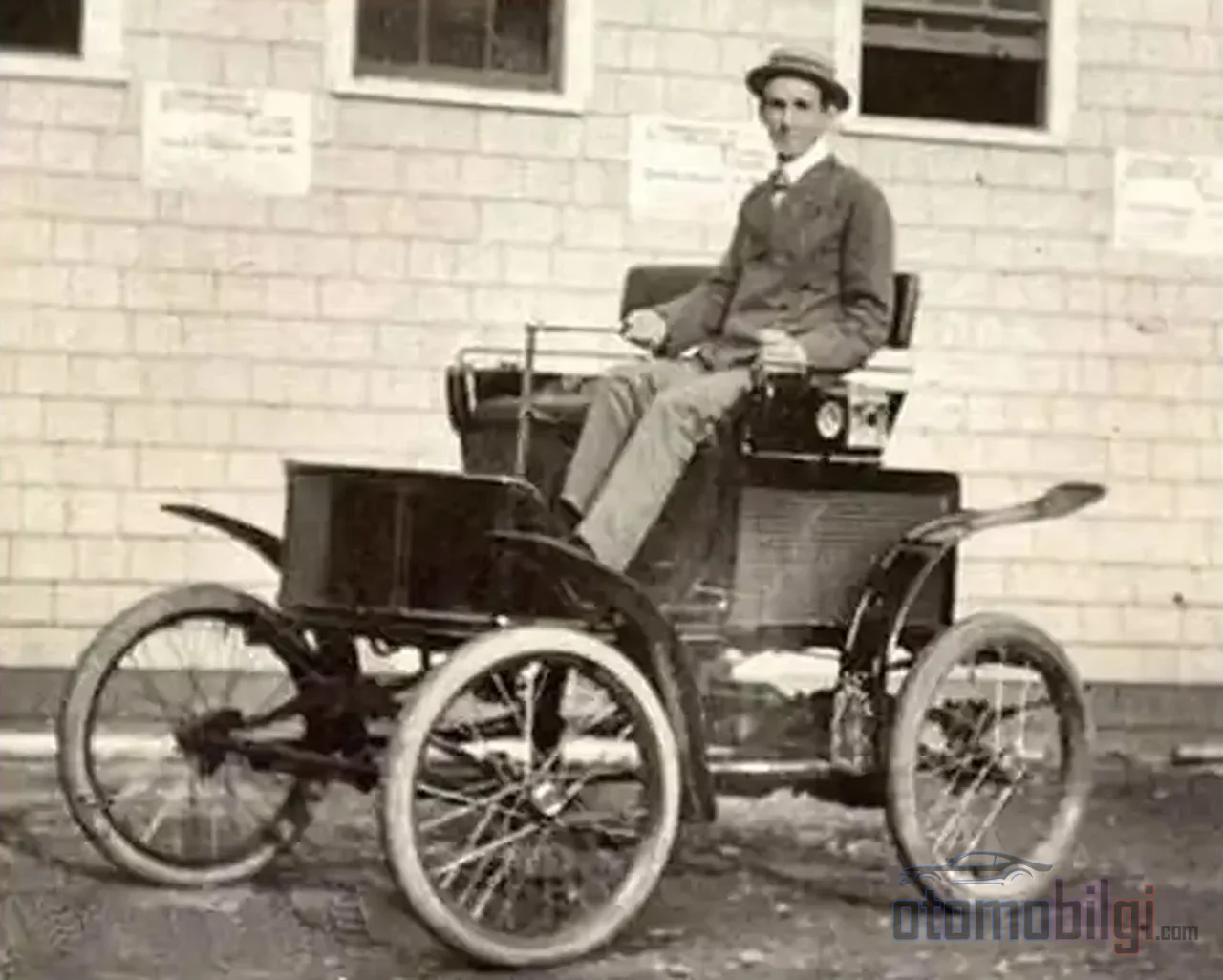
In 1830s Scotland, before anything like an internal combustion engine even existed, one man tried to remove the horse from his horse-drawn carriage and replace it with batteries and an electric motor. Judged by today's standards, the result was a design at the limits of daring: slow, heavy, and a vehicle left helpless once its batteries ran out. Yet Robert Anderson's attempt is one of the earliest recorded examples of using electricity for personal transport, and it is mentioned first in every discussion of the question of who invented the electric car.
The subject of this page is not that debate itself; it is the technical reality of Anderson's vehicle, why it could not be practical, and the place it holds in the history of the electric vehicle compared with the pioneers who followed it.
Who Was Robert Anderson and What Did He Do?
Robert Anderson was a Scottish inventor who lived in the 19th century, and what is recorded about his life is astonishingly scant. Neither his birth nor his death date is known for certain; it is his invention that wrote him into history. Between 1832 and 1839, the exact year uncertain, he developed an electric vehicle - an electric carriage - in Scotland. The idea was simple but radical for its time: to apply the concept of the horseless carriage by placing a battery and an electric motor into the body of a conventional carriage, thereby eliminating the horse.
Was it a failure? Technically, yes. Historically, no: Anderson's vehicle is the earliest evidence that the idea of electric personal transport was tried on wheels, not just on paper. To understand it, one must first look at the technology inside the vehicle.
Highlights
- Robert Anderson developed a primitive electric vehicle in Scotland between 1832 and 1839; the exact year is uncertain.
- The vehicle ran on non-rechargeable primary batteries; its range and operating time were severely limited.
- The rechargeable lead-acid battery only arrived in 1865, thanks to Gaston Planté.
- The first successful electric vehicle in the United States was built by William Morrison in 1891.
The Vehicle's Technology: The Trap of Non-Rechargeable Primary Batteries
The critical point that set Anderson's vehicle apart from other breakthroughs of its era was its energy source. The vehicle used primary batteries - that is, single-use cells that had to be thrown away once depleted - to power the electric motor. This alone determined the vehicle's fate.
The chain of logic is simple: If you cannot refill a primary battery, the vehicle's range is limited by the total capacity of the batteries you carry on board. When the batteries run out, the only thing to do is replace the depleted cells with new ones - which is a process unsustainable both in cost and in weight. The result is a vehicle devoid of practicality for everyday use, suited only to demonstration and short journeys. The vehicle was slow, heavy, inefficient, and truly unable to go very far.
What Was Missing on the Electric Motor Side
Anderson's story frequently mentions "electromagnetic motor inventions"; to be honest here. No patented or documented electromagnetic motor invention of his own exists in the records. The real motor pioneers of the era were others: The Hungarian Ányos Jedlik built the first electric motor in 1827 and ran a small model the following year; Joseph Henry also developed an electric motor in Albany in 1831 to understand electromagnetism. Anderson's contribution was not the motor itself, but actually putting into practice the idea of trying this motor to propel a vehicle. This distinction is important for correctly assessing his legacy.
Why Was It Not Practical? Three Decades of the Battery Gap
What determined the fate of Anderson's vehicle was not the inventor's ability, but the energy storage technology of the era. The first rechargeable lead-acid battery was invented by the Frenchman Gaston Planté in 1865 - at least a quarter century after Anderson's experiment. So Anderson, theoretically, could not solve his problem in any way with the technology available to him; the pieces of the solution lay in a future that did not yet exist.
Planté's battery was a game changer, but in its original form it was inadequate. In 1881, Camille Faure developed a lighter and longer-lasting lead-acid battery, bringing it closer to practicality. The real rise of electric cars only happened after this, in the 1880s and 1890s. In short, Anderson was an inventor who grasped the right idea roughly fifty years too early.
Placing Anderson in Context: Other Early Pioneers
Seeing Anderson alone distorts the picture's true scale. In the same decade, other names were also grappling with the same problem: In the USA, Thomas Davenport, and in the Netherlands, Sibrandus Stratingh and Christopher Becker worked on similar electric vehicle ideas in the 1830s, independently of Anderson. Davenport, just like Anderson, was limited by non-rechargeable batteries.
| Pioneer | Period | Contribution | Defining Limitation |
|---|---|---|---|
| Robert Anderson | 1832-1839 | First crude electric vehicle in Scotland | Non-rechargeable primary batteries |
| Thomas Davenport | 1830s | Electric vehicle experiment in the USA | Non-rechargeable batteries |
| Stratingh and Becker | 1830s | Electric vehicle work in the Netherlands | Lack of scale and energy |
| Robert Davidson | 1840s | Early electric vehicle experiments | The battery technology of the era |
| Gustave Trouvé | 1880s | Electric vehicle in France | Limited energy storage |
| William Morrison | 1891 | First successful electric vehicle in the USA (six passengers) | Early-era range and infrastructure |
The comparison draws a striking curve. The experiments of Anderson and Davidson proved that electric power could be used for vehicle propulsion; but for the first American example worthy of the adjective "successful," it was necessary to wait until 1891, until the Scotland-born Morrison's six-passenger vehicle in Des Moines, Iowa. Almost the entirety of this fifty-year gap is explained by the pace of progress in battery technology.
Anderson's Share in the Question "Who Invented the Electric Car?"
The question seems simple, but the answer depends on definitions. If we mean the precursor of the electric motor, Jedlik and Henry stand out; if we mean the first crude electric vehicle, it's Anderson; if we mean the first practical examples, Morrison and the post-1880s generation come to mind. Anderson's vehicle is the most widely accepted attribution - institutional archives and energy authorities cite him as the developer of the first crude electric vehicle - however, the independent work of Davenport, Stratingh, and Becker in the same years shows that a flat narrative based on a single inventor oversimplifies history.
There is also a documentation dimension to this: The paper trail on Anderson is surprisingly thin. There is no verified patent, biographical detail, or primary archival document; his own entry is merely a short record based on only a few references. Although a blog post claims that Anderson used crude oil to generate energy, this is single-source information that has not been verified. Moreover, the date range is not fixed; records give different years ranging from 1832 to the mid-to-late 1830s, and even to 1837 and 1838. The correct approach is to leave the exact year uncertain and use the 1832-1839 range.
So why is Anderson less known today? Most of the answer lies in this documentation weakness: he has no patent, no company, no fleet he produced, and no notable commercial success. He has gone down in history as the owner of a single primitive but pioneering attempt.
After Anderson: The Long Rise and Fall of the Electric Vehicle
For what Anderson attempted to become reality, it was enough for batteries to become rechargeable. After Faure's 1881 improvement, electric cars quickly became popular; by the end of the 19th century, roughly 40% of cars in the US were electric. The range of early electric vehicles was typically around 30-50 miles (approximately 50-80 km) per charge, and charging infrastructure was virtually nonexistent. In London, Walter Bersey designed and put into service a fleet of electric taxis.
At the beginning of the 20th century, the balance shifted: high cost, low maximum speed, and short range made battery-powered electric vehicles unable to compete with the internal combustion engine. Electricity withdrew from personal transportation for roughly half a century and only returned to the agenda after the barrel price quadrupled following the 1973 OPEC embargo. The road from Anderson's vehicle, which could not even travel forty kilometers on primary batteries, to today's electric automobiles with ranges of hundreds of kilometers is precisely a story of battery development.
Conclusion: A Right Idea Caught Early
The short and quotable answer is this: Robert Anderson is the Scottish inventor who, between 1832 and 1839 - the exact year uncertain - in Scotland, developed the first crude electric vehicle powered by non-rechargeable primary batteries; vehicle, because it came decades before the invention of the rechargeable battery, was not practical, but it went down in history as the earliest precursor of the electric car.
From an engineer's perspective, Anderson's legacy is not a product but a proof: The idea of electric vehicle propulsion was a workable idea even before all the necessary components of the invention were available. The missing piece was not the battery - the right battery, namely the rechargeable lead-acid battery, would have to wait until 1865. Anderson was written into the middle of that gap as one of the first names to ask the right question with the means at hand.