Gustave Trouvé's Forgotten First Electric Vehicle
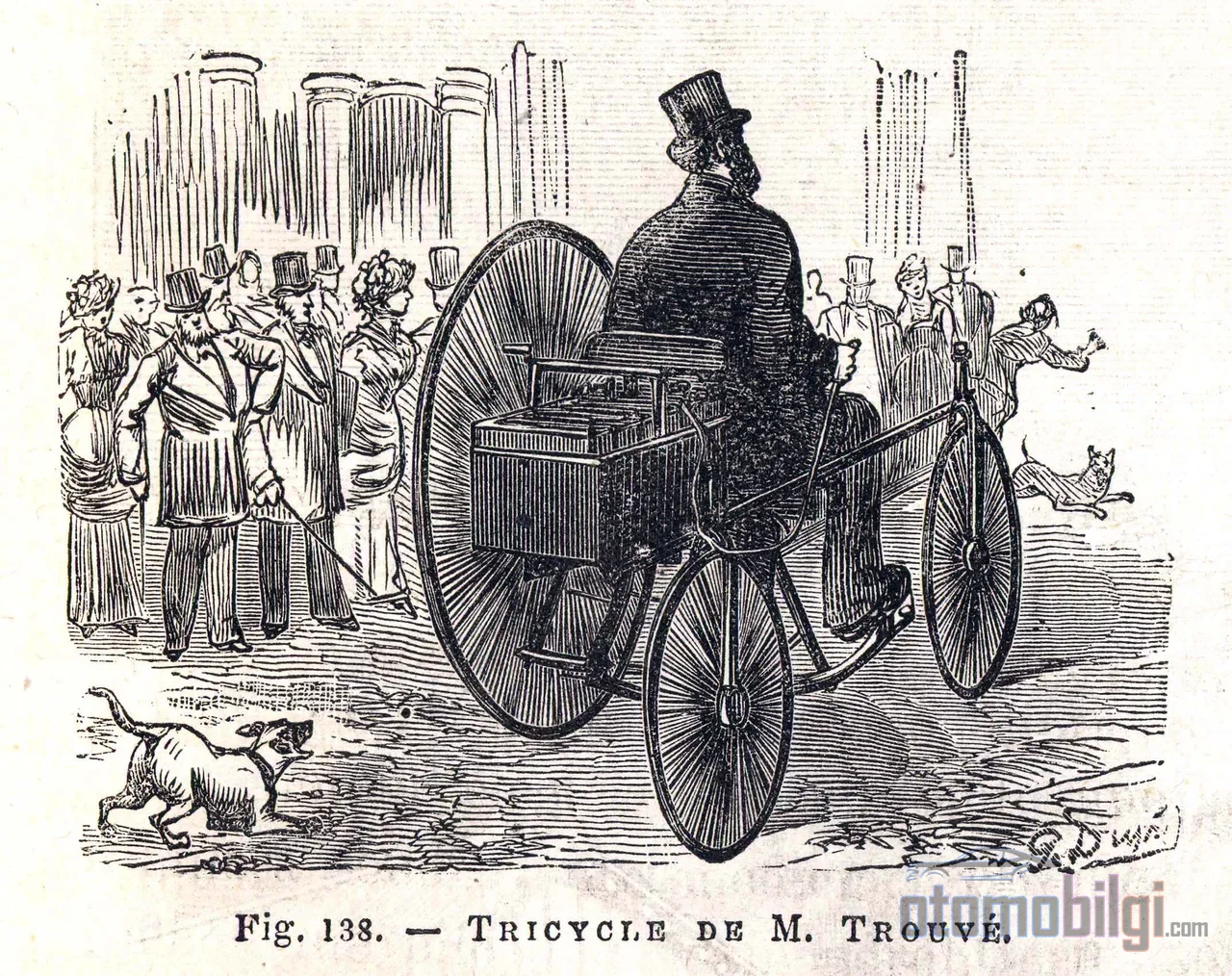
On April 19, 1881, on Rue Valois in central Paris, a man drove a three-wheeled vehicle powered by its own energy source. It was something no one had ever seen before: an electric vehicle carrying a battery and capable of moving a person on the road. The man's name was Gustave Trouvé, and the fact that his name is absent from every issue concerning the history of electric vehicles is one of the strangest missing files in engineering history. So why was this vehicle forgotten, and why is the claim to the world's first human-carrying electric vehicle still controversial?
What They Could Achieve with a Tricycle on Rue Valois
The technical components of Trouvé's 1881 attempt are well worth a careful examination. The vehicle carried a small electric motor mounted on the tricycle of the British manufacturer James Starley. The motor was based on a design that Siemens had purchased from Johan Kravogl in 1867; Trouvé improved the motor's efficiency and drew its power from a rechargeable battery, newly developed at the time.
The success came not from a single revolution but from combining three separate improvements in the right order: a more efficient motor, an energy source that was no longer discarded after use, and a lightweight, three-wheeled chassis. This combination worked flawlessly along Rue Valois on April 19, 1881. Trouvé later introduced the vehicle at the 1881 Paris Electrical Exhibition under the name Trouvé Tricycle; the vehicle could reach a top speed of 12 km/h. The working three-wheeled electric vehicle was also demonstrated to the public at the International Electricity Exposition in November 1881.
The most ironic detail is this: Trouvé could not patent this vehicle. The first recorded human-carrying electric vehicle in history took to the roads without even an official document bearing its owner's name - and perhaps it is precisely for this reason that it struggled to enter the history books.
Highlights
- April 19, 1881: Trouvé drove the first electric vehicle carrying a person on Rue Valois in Paris.
- Technical basis: an improved Siemens motor, a rechargeable battery, and a James Starley tricycle.
- Trouvé Tricycle was introduced at the 1881 Paris Electrical Exhibition with a top speed of 12 km/h.
- Trouvé alone received 40 patents; according to some sources, the number of patents exceeds 70.
- On May 15, 2024, the Trouvé Museum opened in his birthplace, Descartes.
Why Is the Claim to the World's First Electric Vehicle Controversial?
"First" claims in automotive history are always a matter of definition, not just competition. Three separate definitions are at play here. If we are looking for the first electric vehicle powered by its own energy source and carrying a person, Trouvé's 1881 tricycle is a strong candidate. If we are looking for the first three-wheeled electric car, some sources link it directly to the exhibition presentation in 1881. But when the search begins for the first recorded electric vehicle, the picture changes, because Trouvé failed to obtain a patent and did not mass-produce the vehicle; an unrecorded pioneer cannot be as visible as a documented one.
There are also older roots. In the 1830s, between 1832 and 1839, Robert Anderson carried out one of the first experiments with an electric car powered by non-rechargeable batteries - but the vehicle was far from being a practical means of transport. In 1884, the British inventor Thomas Parker produced the first mass-produced electric car; Parker's name was already known for electrifying the underground trams of London. So Trouvé's claim does not stand in a vacuum; there were efforts in the same direction both before and after him. The difference is that Trouvé's vehicle, for the first time, carried a person on its own battery through a real Paris street.
A small note on dating is also necessary: the completion of the tricycle is dated to 1880 in some sources, while the road test is dated to April 19, 1881. The two pieces of information do not actually contradict each other; the vehicle was completed in 1880, and the manned trial took place the following spring.
From a Sardine Tin to 40 Patents: What Kind of Inventor Was Trouvé?
Gustave Pierre Trouvé was born on January 2, 1839, in La Haye-Descartes (in today's Indre-et-Loire) and died on July 27, 1902. His father Jacques was a wealthy cattle dealer; his son shone early enough to build a working miniature steam engine from a sardine tin and umbrella ribs at the age of seven. The rest of his life became an enlarged version of this early beginning.
In his workshop at 14 rue Vivienne in central Paris, Trouvé produced a surprising range of things beyond the electric vehicle: a portable motorized electric boat, an electric airship, a portable electric safety lamp, an endoscope, an electric rifle, electric "light swords", electric jewelry, and illuminated fountains. There are 40 patents registered in his name alone; some sources state that the total number exceeds 70 and that he was awarded the Légion d'Honneur. If the handmade instruments that left his workshop have survived to this day, each carries the same signature: Trouvé, 14 rue Vivienne, Paris - Eureka.
1881 was not only the year of the tricycle. In the same year, Trouvé invented and tested the first electric outboard motor boat powered by rechargeable batteries on the Seine River; Paris 1881 is cited as the year the first outboard motor emerged. In 1894, he received the patent for his electric piano - an invention that would years later lay the foundation for one of his museum's newest pieces.
What Happened to Electric Vehicles After Trouvé's Invention?
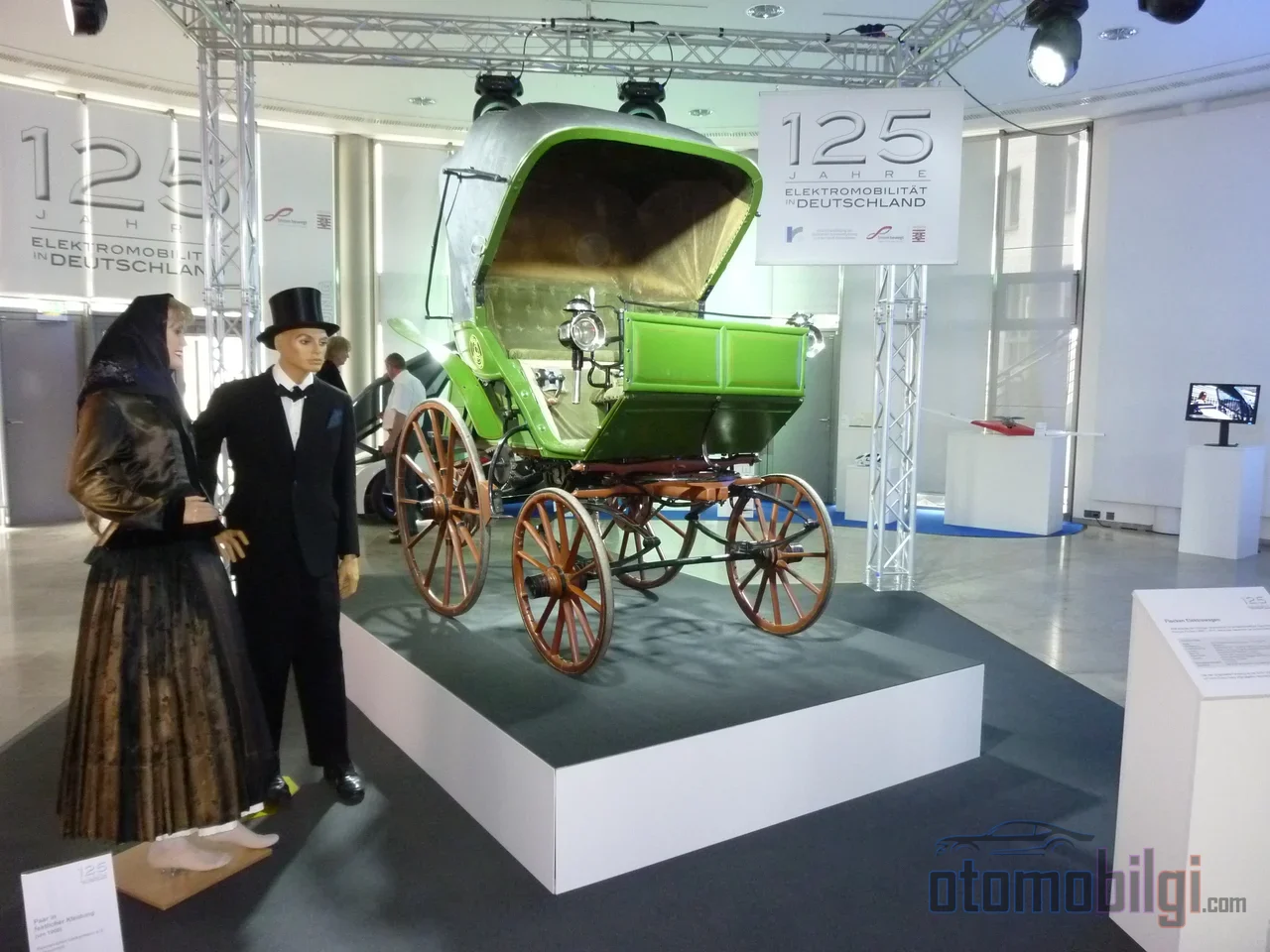
Trouvé's tricycle was a beginning, but it was not a finished system. The first famous four-wheeled electric car was the Flocken Elektrowagen, built in Germany in 1888. In the 1890s, electric cars became popular especially in urban areas; they were quiet, clean, and easy to use. By the early 1900s, the list of advantages looked surprisingly modern: there was none of the vibration, smell, and noise of gasoline-powered vehicles; and most importantly, they did not require a hand crank that had to be turned by arm.
Yet the answer to the question of why gasoline ultimately prevailed lies hidden in equally measurable figures. Gasoline-powered vehicles could travel farther and faster; for long-distance touring use, the range advantage was decisive, and gasoline prices began to fall. In 1912, Charles Kettering's electric starter motor eliminated the hand crank as a problem - one of the electric car's most tangible advantages in daily use melted away as a result. By around 1920, electric vehicles had all but vanished from the roads.
| Date | Development | Significance |
|---|---|---|
| 1830s | Robert Anderson's vehicle with non-rechargeable batteries | First electric car attempt |
| April 19, 1881 | Trouvé's Rue Valois experiment | First electric vehicle carrying a person |
| 1884 | Thomas Parker's first mass-produced electric car | First example to enter production |
| 1888 | Flocken Elektrowagen | First famous four-wheeled electric car |
| 1912 | Kettering's electric starter motor | Eliminated the hand crank problem |
| ~1920 | The disappearance of electric vehicles | The definitive superiority of gasoline-powered cars |
Turning Points of the Modern Renaissance
At the end of the 20th century, the story had to be told once again. Following the 1990 emissions legislation, GM launched EV1, the first purpose-built mass-produced electric vehicle initiative; in 1996, 1117 vehicles were produced and leased. As the first modern electric car designed for the mass market, the EV1 gained a cult following. The real breakthrough, however, came in the early 2000s: thanks to more efficient lithium-ion batteries, small companies began developing long-range vehicles. During this period, Tesla developed the Roadster with a 350 km range; the Roadster offered a range of over 200 miles as the first highway-legal mass-produced fully electric vehicle with lithium-ion batteries, and its battery pack was one of the largest and most advanced Li-ion packs in the world. The Tesla Model 3 overtook the Nissan Leaf in early 2020 to become the best-selling electric car, and in June 2021 it went down in history as the first model to surpass the 1 million sales milestone.
The Trouvé Museum Opened in Descartes: Why Was His Legacy Rediscovered in 2024?
Roughly 122 years after Trouvé's death, on May 15, 2024, a museum bearing his name opened in Descartes, his birthplace. The museum is part of a museum complex at the birthplace of the philosopher René Descartes; the same complex also houses the René Descartes and writer René Boylesve museums. The project, approved in 2022, also displays a working replica based on Trouvé's 1894 electric piano patent.
The significance of this opening goes beyond being a local culture news story. The fact that his former workshop at 14 rue Vivienne and his birthplace in Descartes are today marked with plaques stands as physical evidence of an inventor's erasure from history and his return. For a reader living in the age of the electric vehicle, the Trouvé Museum is proof that memory, like engineering, also requires maintenance.
Conclusion: Who Made the First Electric Car?
The honest answer to the question depends on the definition: the first electric vehicle to carry a person with its own power source was the Starley tricycle with an improved Siemens motor, driven by Gustave Trouvé on April 19, 1881 on Paris's Rue Valois. The first practical, mass-producible electric car, however, belongs to the decades after that - to Parker and to Flocken.
The reason Trouvé's story is still told today is not the tricycle's 12 km/h speed, but the chain of logic he built on top of that speed: a more efficient motor, a rechargeable battery, a suitable chassis. This formula, 140 years later, can be read in the same order in the Tesla Roadster's battery pack and in the powertrains of every modern electric vehicle. The only difference is scale.
Sources
- Gustave Pierre Trouvé - History Today
- Gustave Trouvé - Wikipedia
- Gustave Trouvé Facts for Kids - Kiddle
- Oliver Turland's Post - LinkedIn
- Cars - The Common Vein
- Short history of the electric vehicle - The Mobility House
- Gustave Trouvé: The First Outboard Motor, Paris 1881 - Powerboat News
- Maison natale de Descartes - MuseumsAtlas
- L'Espace Muséal (Descartes) - Touraine Val de Loire
- The History of the Electric Car - US Department of Energy