How the Tesla Roadster Gave Birth to the Chevrolet Volt?
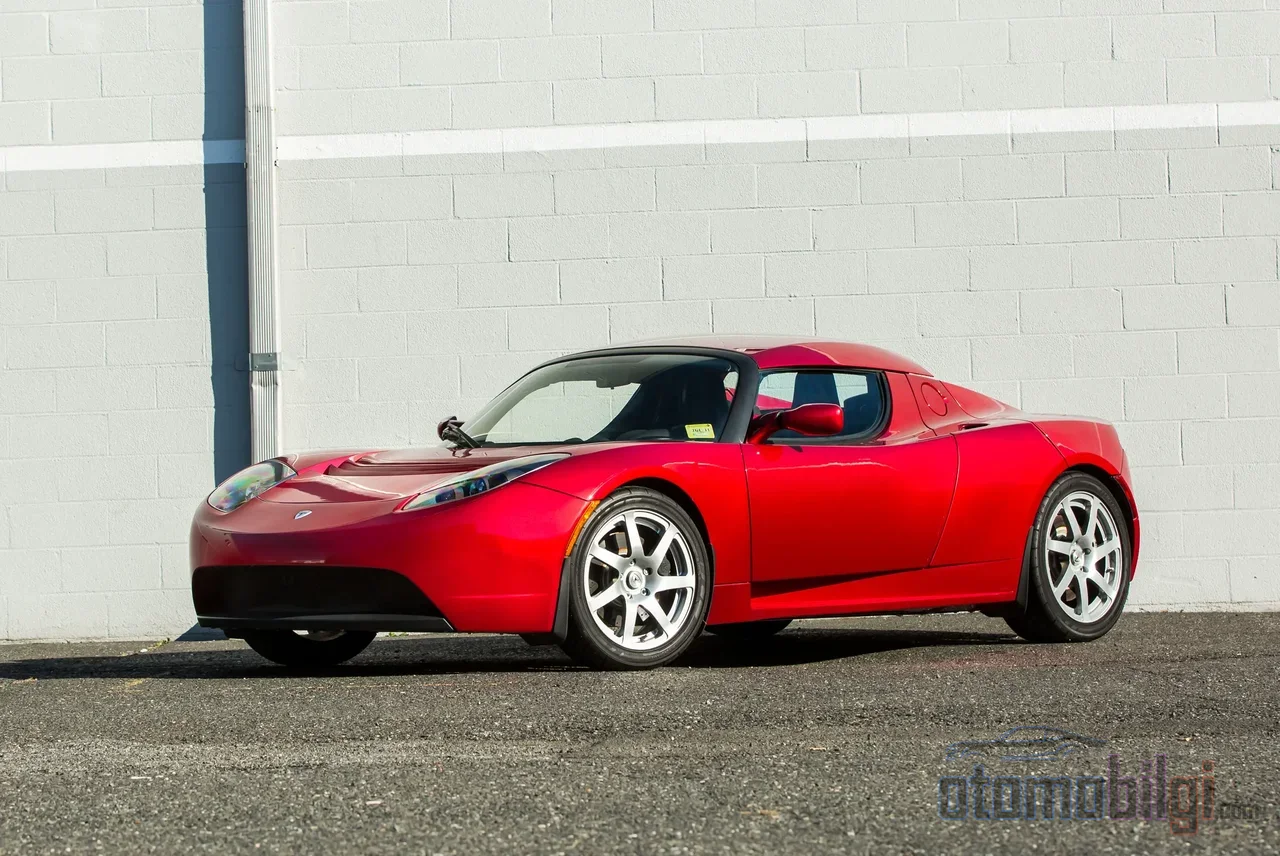
On a day in February 2008, in a small workshop in Menlo Park, a hand-built sports car stepped out in front of a crowd: low, wide, carbon-fiber-paneled, and fully electric. That day, the first production Tesla Roadster was delivered to Elon Musk, and the door to the modern electric car era was opened. The story of this vehicle is usually buried inside larger narratives of transformation; yet the Roadster, on its own, is an engineering and commercial story with measurable milestones: the agreement signed with Lotus for 2,500 gliders, the title of the first series-production fully electric car to exceed the 320 km range-per-charge threshold, and roughly 2,450 units sold in more than 30 countries by December 2012.
On this page, we cover that story from start to finish, within its own chain of logic: how the Roadster came about, what lithium-ion batteries did in this transformation, why and how production ended, and why its impact on General Motors was so decisive.
How the Roadster Was Born: From tzero to Founding Partnership
Tesla Motors was founded on July 1, 2003, in Delaware by Martin Eberhard and Marc Tarpenning. The two had test-driven a concept vehicle called the tzero built by a company named AC Propulsion, and had brought a production proposal to the same company; when they did not receive a positive response, they decided to chart their own path. Elon Musk, who had tested the same concept, was on a similar quest; AC Propulsion introduced him to Eberhard and Tarpenning. Musk invested $7.5 million in 2004 and, in April 2004, took an active role in the company as chairman of the board.
The engineering idea here was simple but bold: combining thousands of 18650-size lithium-ion cells, the kind used in laptop computers, and placing them under a sports car. The major manufacturers of the time thought lithium-ion technology was still too early for automotive use; a small Silicon Valley startup claimed exactly the opposite, and a product was needed to prove it.
The Lotus Glider Agreement: Signed for 2,500 Bodies
Developing a car platform from scratch was not realistic in terms of cost and time for a newly founded company. Tesla's solution was a clever industrial move: On July 11, 2005, a product and service agreement based on the Elise was signed with Lotus Cars. Lotus would produce body-chassis units without an electric drivetrain, vehicles known in the industry as gliders, at its Hethel facility in England, and Tesla would fit these gliders with its own battery pack, motor, power electronics module, and transmission. The number of gliders ordered was 2,500 units, and the program's scope was gradually raised from 2,400 vehicles to this level of 2,500.
Contrary to popular belief, the Roadster was not an electric motor bolted on top of an Elise. The direct parts sharing between the two vehicles was only in the range of 6 to 7 percent; it consisted of items such as the windscreen, airbag systems, and some dashboard and suspension components. The Roadster's wheelbase was 2 inches longer than the Elise's, and its chassis had a more rigid structure. The body panels were carbon fiber composite produced by resin transfer molding; this made the Roadster one of the most affordable vehicles with a full carbon fiber shell. The supply chain was also global: body panels came from France, the single-speed gearbox from BorgWarner in Detroit, and brake and airbag components from Germany; 30-40 percent of the parts were sourced from Taiwan. Vehicles destined for North America went through final assembly in Menlo Park, while the others were finalized at the Wymondham facility in England.
From the 2006 Reveal to First Deliveries
The prototypes were unveiled on July 19, 2006 at an invitation-only event for 350 people in Santa Monica, California; in December of the same year, Time magazine awarded the Roadster the transport invention prize in its best inventions of the year roundup. The real challenge was not the reveal, but production. The first two gearbox suppliers were unable to produce a mechanism that could withstand the combination of high torque and high rpm; the gearboxes in the development stage did not last more than a few thousand miles. In December 2007, the first vehicles were delivered with the problem temporarily deferred by being locked in 2nd gear, and this workaround slowed 0-60 mph acceleration to 5.7 seconds. Production faced serious delays.
Regular series production finally began on March 17, 2008. Sales figures then climbed rapidly: 30 vehicles by the end of September 2008, 100 vehicles by the end of May 2009, 500 vehicles by the end of May 2009, and 700 vehicles delivered by September 15, 2009. In July 2009, 109 vehicles were shipped in a single month and the company turned a profit for the first time: a profit of roughly 1 million dollars on 20 million dollars of revenue. By January 2010, 1,000 Roadsters had been produced, and the vehicles had reached 43 states and 21 countries.
Highlights
- It was the first series-production full electric car to deliver a range of more than 320 km per charge.
- A production agreement was signed with Lotus for 2,500 gliders.
- Between 2008 and 2012, approximately 2,450 units were sold in more than 30 countries.
- The EPA combined range was measured at 393 km (244 miles).
- Production was completed in January 2012 with the expiration of the Lotus contract in December 2011.
The Lithium-Ion Revolution and the 320 km Threshold
A single number summarizes the Roadster's technical identity: the 53 kWh lithium-ion battery. This pack, called the Energy Storage System, weighed approximately 450 kg and consisted of 6,831 18650 cells; the cells were arranged into 11 sheets, each sheet into 9 bricks, and each brick into 69 parallel cells. This choice in the form of laptop cells was radical for its time, because lithium-ion stored significantly more energy per unit mass compared to lead-acid batteries. While the second generation of the GM EV1 stayed at a level of 80-100 miles with a lead-acid battery, the Roadster measured 244 miles, or 393 km of combined range, on the EPA cycle. The first measurement in February 2008 gave a combined value of 227 miles, rising to 244 miles in August 2008 with Powertrain 1.5.
In practice, the limits were even further out. In Australia, Simon Hackett and Emilis Prelgauskas drove 501 km from Alice Springs to Marla on a single charge, leaving about 4.8 km of range reserve on arrival. The Roadster also finished the 241-mile Rallye Monte Carlo d'Energies Alternatives with 58 km left in its charge. The efficiency side was solid too: 28 kWh per 100 miles consumption, 21.7 kWh per 100 miles from battery to wheels, and an average efficiency of 88 percent. A full charge took about 3.5 hours with the High Power Wall Connector running at 70 amps and 240 volts. Small differences among the range figures stemmed from measurement methods; for example, the EPA value was at one point revised from 245 miles to 221 miles due to an alleged calibration error, then settled at 244 miles with the verified cycle.
Technical Specifications: Tesla Roadster in Numbers
The Roadster was driven by a three-phase, four-pole AC induction motor. The standard model produced 248 hp (185 kW), while the Sport model with a hand-wound stator produced 288 hp (215 kW). The torque value appears in the records in two different forms: the general technical specification sheet speaks of a constant 270 Nm across the 0-6,000 rpm range, while the manufacturer's official service document states a maximum torque of 370 Nm across the 0-5,400 rpm range; the difference between them is the product of different measurements and definitions.
| Specification | Value |
|---|---|
| Motor | 3-phase, 4-pole AC induction |
| Power (Standard / Sport) | 248 hp (185 kW) / 288 hp (215 kW) |
| Maximum torque | 270 Nm (spec sheet) / 370 Nm (official service document) |
| 0-97 km/h (0-60 mph) | 3.9 s (Standard) / 3.7 s (Sport) |
| 1/4 mile | 12.6 s / 165.1 km/h |
| Top speed (electronically limited) | 201 km/h (125 mph) |
| Battery | 53 kWh lithium-ion, 6,831 cells |
| EPA range | 393 km (244 miles) combined |
| Transmission | BorgWarner single-speed, fixed ratio (8.27:1) |
| Curb weight / length | 1,305 kg / 3,946 mm |
Motor Trend's independent test verified the 0-60 mph acceleration. The dimensions clarify the Roadster's character: a low and compact sports car profile with 1,873 mm width, 1,127 mm height and a 2,352 mm wheelbase; the drag coefficient was in the 0.35-0.36 band.
Why Production Ended: December 2011 and Beyond
The end of the program stemmed not from a technical failure, but from two concrete reasons coinciding in the same period. First, order taking in the US market stopped in August 2011; the two-stage advanced airbag exemption was set to expire at the end of 2011, and for this reason the last Roadsters could not be sold in the US. Second, the Lotus glider contract expired in December 2011 and the glider supply ran out. Production was completed in January 2012; sales continued on stock throughout 2012, intensifying in Europe and Asia in the final quarter.
The farewell was made with a limited series: 15 Final Edition units were produced and distributed in fives to North America, Europe and Asia. The overall picture was as follows: By September 2012, more than 2,418 vehicles had been sold worldwide, and by October 2012 only 575 units had changed hands in Europe alone. The confirmed total, based on SEC filings, was approximately 2,450 units between 2008 and 2012, and these vehicles reached more than 30 countries. The story did not end with production either: From September 2015 until the end of 2016, a Roadster 3.0 upgrade was offered for $29,000; The LG Chem cell battery increased by 31 percent to 70 kWh, and the new aerodynamic kit and low rolling resistance tires supported the range. In 2016, a battery upgrade to 80 kWh also went on sale. In November 2023, Tesla released some of the vehicle's design and engineering documentation as open source along with its service software.
The Bob Lutz Effect: How Did the Roadster Trigger the Chevrolet Volt?
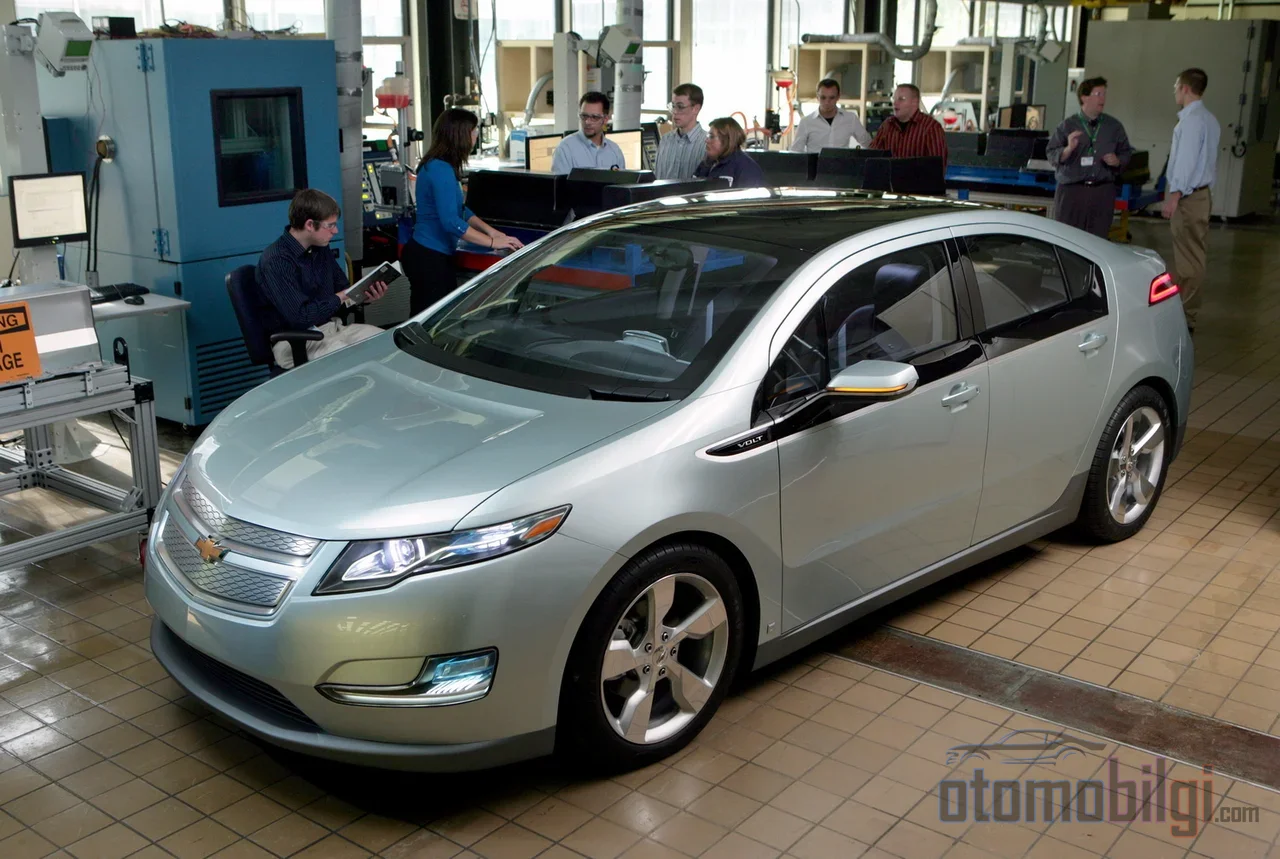
The Roadster's most lasting impact came not from its sales figures, but from the impression it left in the minds of its rivals. GM Vice Chairman Bob Lutz, the champion of the Chevrolet Volt program, learned of this small company developing high-performance electric vehicles in Silicon Valley at the end of 2005. According to Lutz, while the engineering wing within GM believed that lithium-ion technology needed another decade of maturation for automotive applications, Tesla was the only company openly planning to produce lithium-ion based electric vehicles starting in 2006; Lutz repeatedly and openly stated that this gave them the main driving force and that Tesla was the main inspiration for the Volt. He repeated the same message in his keynote speech at the 2009 Los Angeles Auto Show.
There was also a practical logic in Lutz's assessment: GM could have built a similar fully electric sports car, but General Motors was a company that required volume sales; therefore, GM's answer in the $100,000 bracket was the Corvette ZR-1, while its electric move turned toward the Volt, priced close to a mass-market figure. Considering the short-lived adventure of the GM EV1 between 1996 and 1999 and the opportunity that was not pursued, the picture becomes clear: the major manufacturer had ignited the electric vehicle era earlier but had not pursued it. Bringing lithium-ion cells to a series-production car and crossing the 320 km threshold fell to the 2008 Roadster. That is the answer to the question: The Roadster did not single-handedly open the modern electric vehicle era, but it proved it at series-production scale for the first time and forced its biggest rival to make a move.
Conclusion: The Legacy Left by 2,450 Vehicles
A production figure of approximately 2,450 units is a low number by the standards of automotive history. But the Roadster's job was not volume: As the first production car suitable for highway traffic with lithium-ion cells and a range of over 320 km on a single charge, it set an engineering-provable threshold, triggered a Volt program in Detroit, and moved the lithium-ion battery to the center of the automotive world. This short program, which ended with the last sale in December 2012, deserves to be read as the opening chapter of today's electric car market.