The Nissan Altra EV Was the First Car with a Lithium-Ion Battery
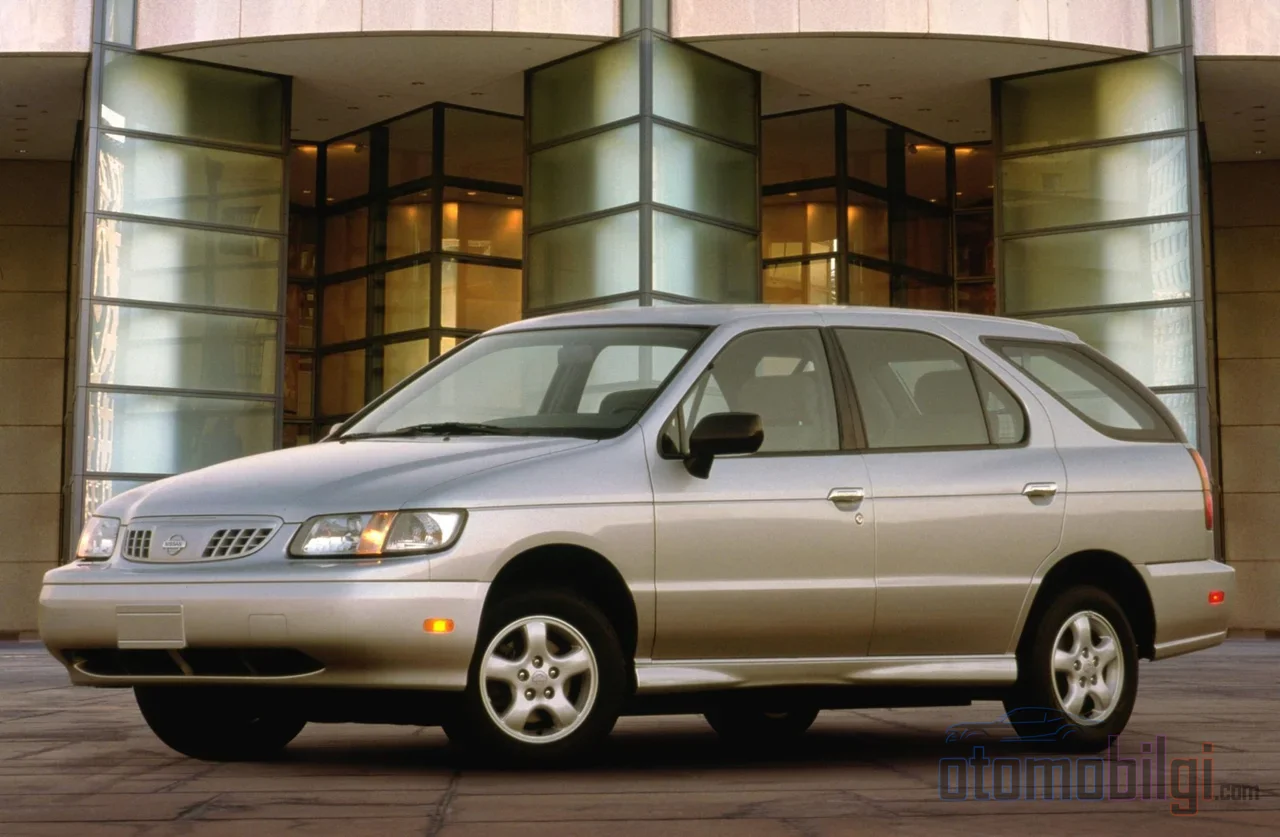
A decade before the Tesla Roadster, an electric car with a lithium-ion battery was already in series production and roaming the roads. Called the Nissan Altra EV, this vehicle went down in history as the first model to put today's standard battery chemistry through a production line; yet its name is remembered not where it deserves, but on the list of forgotten pioneers. So why wasn't producing a lithium-ion car in 1998 enough, and why did the Altra fail to capture a lasting market?
The Zero Emission Mandate: The Forcing Policy That Gave Birth to the Altra
The story of the Altra begins not with the vehicle itself, but with a regulation introduced in California. In September 1990, the California Air Resources Board (CARB) put into force a rule requiring automakers to deliver zero-emission vehicles (ZEV). This decree was described as one of the boldest and most controversial air quality policies of its time, and it forced the automotive world to turn its face toward an electric future.
The mandate pushed manufacturers from the laboratory bench to the production line. Chrysler's TEVan, Ford's Ranger EV, and General Motors' EV1 and S10 EV models were all responses to this mandate. Launched in 1996, the EV1 quickly gained a cult following. Nissan, meanwhile, was about to play its own card in this race, and the card in its hand was battery chemistry.
Highlights
- The first electric car produced in series with a lithium-ion battery: Nissan Altra EV, 1998–2002
- Sony lithium-ion pack with 96 cells, nominal voltage of 345 V, approximately 363 kg
- 83 hp permanent magnet synchronous motor, 120-mile (~193 km) range
- Number of units produced: approximately 200 or 320; most of the vehicles in electric utility fleets
- Full charge in ~5 hours; Hughes inductive charging system, same as the GM EV1
An Electric in a Minivan Body: What Is the Altra, and Where Did It Come From?
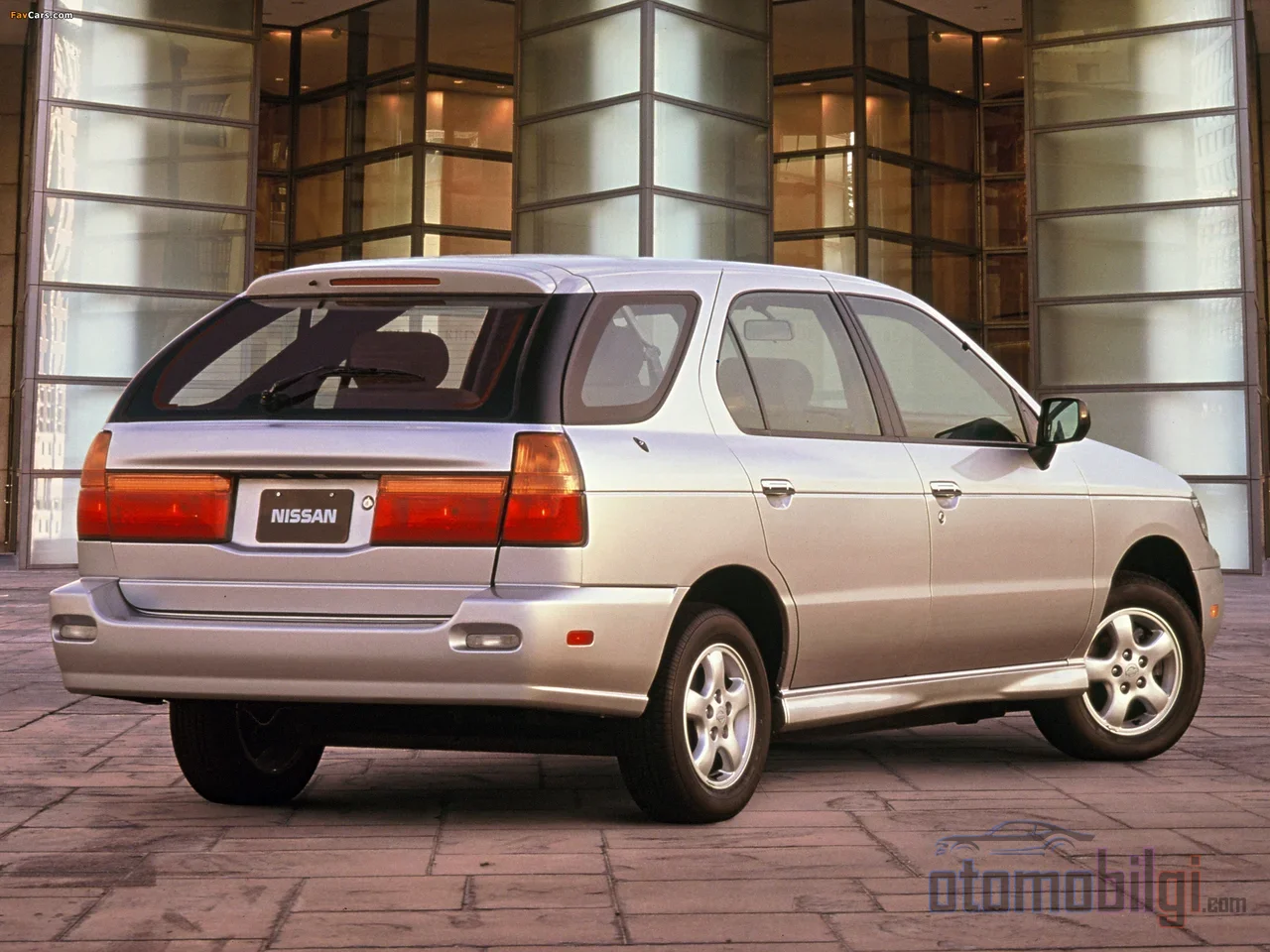
The Altra was not a vehicle designed from scratch; it was the electric derivative of Nissan's R'nessa minivan, which was sold in Japan only with an internal combustion engine. Its official launch in North America took place at the 1998 Greater L.A. Auto Show. Nissan's choice was practical: equipping an existing body with an electric powertrain was a much faster and cheaper path than developing a new platform.
But this choice came at a price, and that price would reveal itself in the vehicle's range. Moreover, for Nissan the Altra was not a first, but a peak point: The company's electric vehicle history reaches back to the Tama Electric Vehicle of 1947. The Prairie Joy EV of 1996, meanwhile, is remembered as the first car in the world to carry a lithium-ion battery. Nissan had begun conceptual work on lithium-ion with Sony back in 1992, years before the Altra.
Technical Table: What Lies Beneath the Altra?
The Altra's real secret was under the floor. It carried a Sony lithium-ion pack with 96 cells connected in series, arranged as 12 modules × 8 cells; each cell was 2.6 inches in diameter and 16 inches long. The pack's nominal voltage was 345 V, capacity 94 Ah, and weight approximately 800 pounds (~363 kg). According to Nissan, this chemistry delivered 300% higher energy density compared to lead-acid batteries - that was precisely the promise of the lithium-ion revolution.
Nissan made no official statement about the battery's cost; industry estimates placed the unit cost of early versions in the $50,000-70,000 range. This figure alone is enough to explain why the vehicle was produced out of necessity, not for the market price.
| Feature | Value |
|---|---|
| Motor | 83 hp permanent magnet synchronous, front-wheel drive |
| Max. rpm / efficiency | 13,000 rpm / ~90% |
| Battery | Sony lithium-ion, 96 cells, 345 V |
| Pack weight | ~363 kg (under the floor) |
| Range | 120 miles (~193 km) |
| Max. speed | 75 mph (governed) |
| Consumption | 304/342 Wh/mile (highway/city) |
| Dimensions (L/W/H) | 4,770 / 1,765 / 1,680 mm |
| Curb weight | 3,749 lbs, Cd 0.36 |
| Full charge time | ~5 hours |
Details of the motor and drivetrain
A neodymium permanent magnet synchronous motor delivering 83 hp was used on the front axle. Weighing only 85 pounds (approximately 39 kg), this motor could rev up to 13,000 rpm and operated at roughly 90% efficiency; its control was handled by a 32-bit RISC processor. On the charging side, a Hughes-type inductive system was chosen - the same system as the GM EV1. A full charge took about 5 hours.
One notable design decision was the seating layout: Instead of the 6-7 passenger arrangement of conventional minivans, the Altra was offered as a 4-seater. The reason was simple: weight control. In an electric vehicle, every kilogram meant range.
Who Bought It, and How Many Were Produced? The Short Life of a Fleet Vehicle
The Altra was never a car sold on a dealership shelf. In the first year, 30 units were brought to the US; the vehicles were tested mostly in Nissan's own employee fleet and in electric utility company fleets. After the first 30, a further 90 units by 2000 were planned to be brought to the US for placement in fleets. Two figures circulate for total production: the manufacturer's own data shows approximately 200 units, while a source compiling sales statistics shows 320 units. It varies depending on how the figures were counted; but both values clearly reveal the scale of the matter - this was not a mass-market vehicle, but a fleet trial program.
The user profile was no coincidence. Electric vehicles of that era could not achieve large sales figures due to high costs and limited range; most were placed with public institutions and electric utility companies. The Altra followed exactly the same path.
Why Did It Fail to Capture a Lasting Market?
The Altra's failure stemmed not from its technology, but from its economics and platform choice. The common problems of early electric vehicles - high battery cost and limited range - also applied to the Altra. In an environment where the unit cost of a pack was measured in tens of thousands of dollars, it was nearly impossible to establish any commercial logic beyond merely meeting a mandate.
More interesting was the platform criticism voiced by experts of the era: It was assessed that if Nissan had chosen a smaller and lighter platform instead of the minivan body, a 200-mile range with the lithium-ion battery would have been possible. In other words, the battery technology of 1998 could have delivered a range above the era's expectations even with the right body. The Altra's official 120-mile range was not the battery's limit, but the limit of the body choice.
The assessment of the 1990 ZEV mandate completes this picture: it failed to create a market at the time, but it forced manufacturers to invest in battery research. The Altra is one of the most concrete outputs of that investment.
The Missing Link of the Pre-Tesla Era: The Altra's Legacy
The Altra's place in the story of lithium-ion is clear. The first commercial lithium-ion battery had been introduced in 1991; throughout the 1990s, replacing the soft carbon anode first with hard carbon and then with graphite provided significant leaps in energy density. The Altra carried this maturing technology onto a mass-production line for the first time.
The title of the first mass-production EV using lithium-ion cells is officially given to the Tesla Roadster in 2008 - with a gap and a leap in between. The decade in between was the period when seemingly failed attempts were actually maturing the technology. Since that time, the energy density of lithium-ion cells has risen from the 100-120 Wh/kg band to over 300 Wh/kg; this chemistry, which is today the standard for nearly all electric cars, completely overthrew lead-acid. The Altra is regarded as a pioneer of this transformation and is mentioned among the most interesting failed electric vehicles of its era.
Conclusion: Being First Wasn't Enough
The Nissan Altra EV, as the first electric car to enter mass production with a lithium-ion battery, is the vehicle that first established the bridge between the laboratory and daily use in real traffic. With its 96-cell Sony pack, its 345 V system and its 120-mile range, it staged a technical rehearsal of the future in 1998; but the battery cost of $50,000-70,000, the leasing model for fleets, and the heavy minivan body could not carry it to a lasting market. With a production run of roughly 200-320 units, the Altra was not a commercial outcome but a technical proof. What the Tesla Roadster would demonstrate a decade later - that lithium-ion is the natural chemistry of the electric car - the Altra had already proven. The market simply was not ready yet.
Sources
- Nissan Altra EV Blazed the Way for Lithium-Ion Power
- Heritage Collection | R'nessa EV / Altra EV - Nissan Global
- 1947-1998 | Innovation | Nissan Motor Corporation Global Website
- The Nissan Altra EV - MotorTrend
- History of the electric vehicle - Wikipedia
- History of the lithium-ion battery - Wikipedia
- Zero-Emission Vehicle Regulation - CARB
- The History of the Electric Car | Department of Energy
- Nissan Altra EV Sales Figures | GCBC
- Nissan's Forgotten EV Had Lithium-Ion Batteries a Decade Before Tesla - The Autopian