Why Did the Th!nk City Electric City Car Fail?
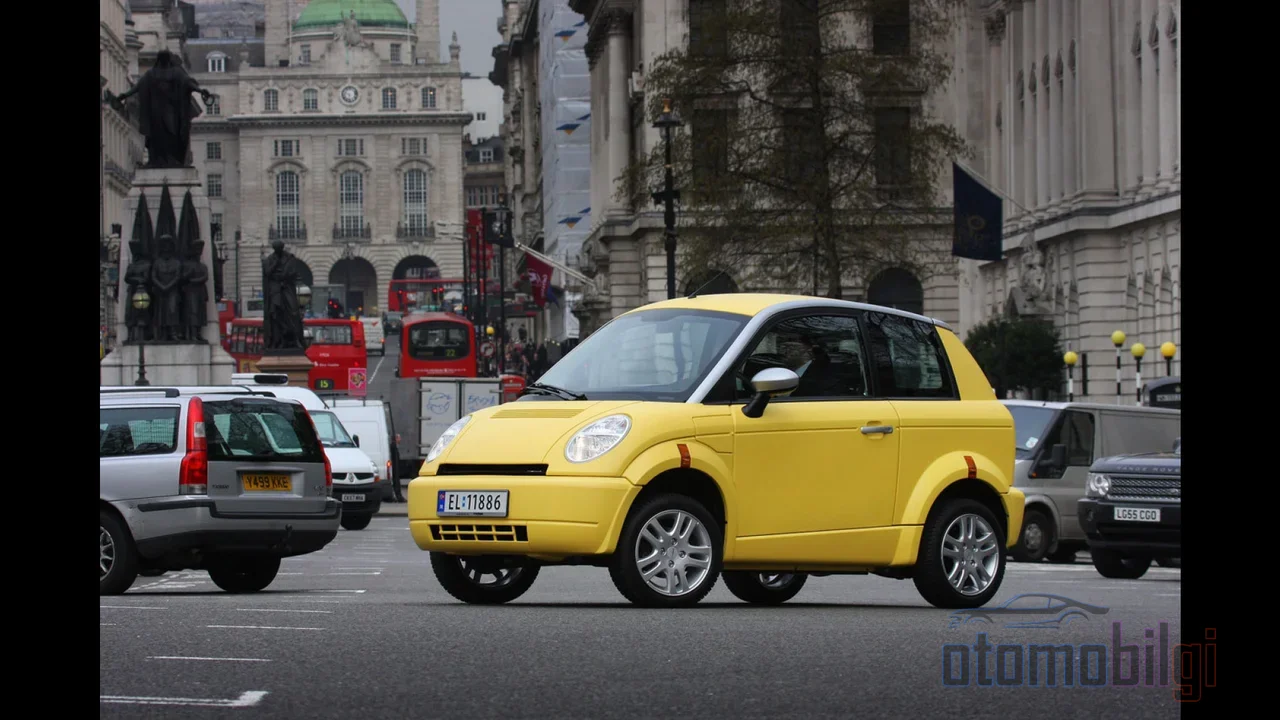
At the end of June 2011, a small electric car manufacturer in Norway filed for bankruptcy for the fourth time in twenty years. The car was called the Th!nk City; it was one of only five electric cars that had passed crash testing, held highway certification, and reached series production. Yet its total worldwide sales had remained at just 1,045 units as of March 2011. In a decade when the Nissan Leaf and Tesla's electric cars carried EVs into the mass market, why did the idea of a small city electric car fail to catch on?
The answer cannot be reduced to a single mistake. The story of the Th!nk City sits at the intersection of several engineering and economics problems: the cost of battery chemistry, the absence of economies of scale, and the overnight disappearance of a regulation-driven market. On this page, we cover the entire process from the vehicle's Ford era to the 2011 bankruptcy, together with production and sales figures.
From Pivco to Ford: The Company's First Era
The company's origins trace back to Pivco Industri AS, founded in Norway in 1991. The vehicle in the prototype stage was named PIV4, and by 1998 Pivco had managed to produce more than 1,000 small electric cars. This was not a garage project; it was a small but functioning series-production operation.
The real turning point came in 1999. Ford bought the company for 23 million dollars to prepare for California's zero-emission vehicle (ZEV) mandate, and invested another 100 million dollars in the battery development program. In November 1999, the first-generation Think City went onto the production line at the Aurskog facility near Oslo.
Technical Profile of the Ford Era (2000-2002)
The first-generation vehicle was a technically modest package: a 27 kW (36 hp) three-phase asynchronous motor, a 12 kWh nickel-cadmium (NiCd) battery, and a range of about 48 km. Ford offered the car to the market at 199 dollars a month on a 34-month lease, and despite a target of 5,000 leases, it managed to find only about 1,000 customers. In the US, more than 370 vehicles were leased as station cars; half of them were scrapped, and half were sent back to Norway.
When the mandates loosened, Ford's calculus changed too. Production was halted in 2002 after a total of 1,005 units, and the company was sold in 2003. Records show that Ford's mass-market expectations for this period were low, and that management openly limited its expectations from the vehicle. At the end of March 2006, Think Nordic passed to the InSpire investment group, which included original founder Jan Otto Ringdal, and there was a plan on the table for a new generation.
The Second-Generation Th!nk City: 2008 Introduction and Technical Specifications
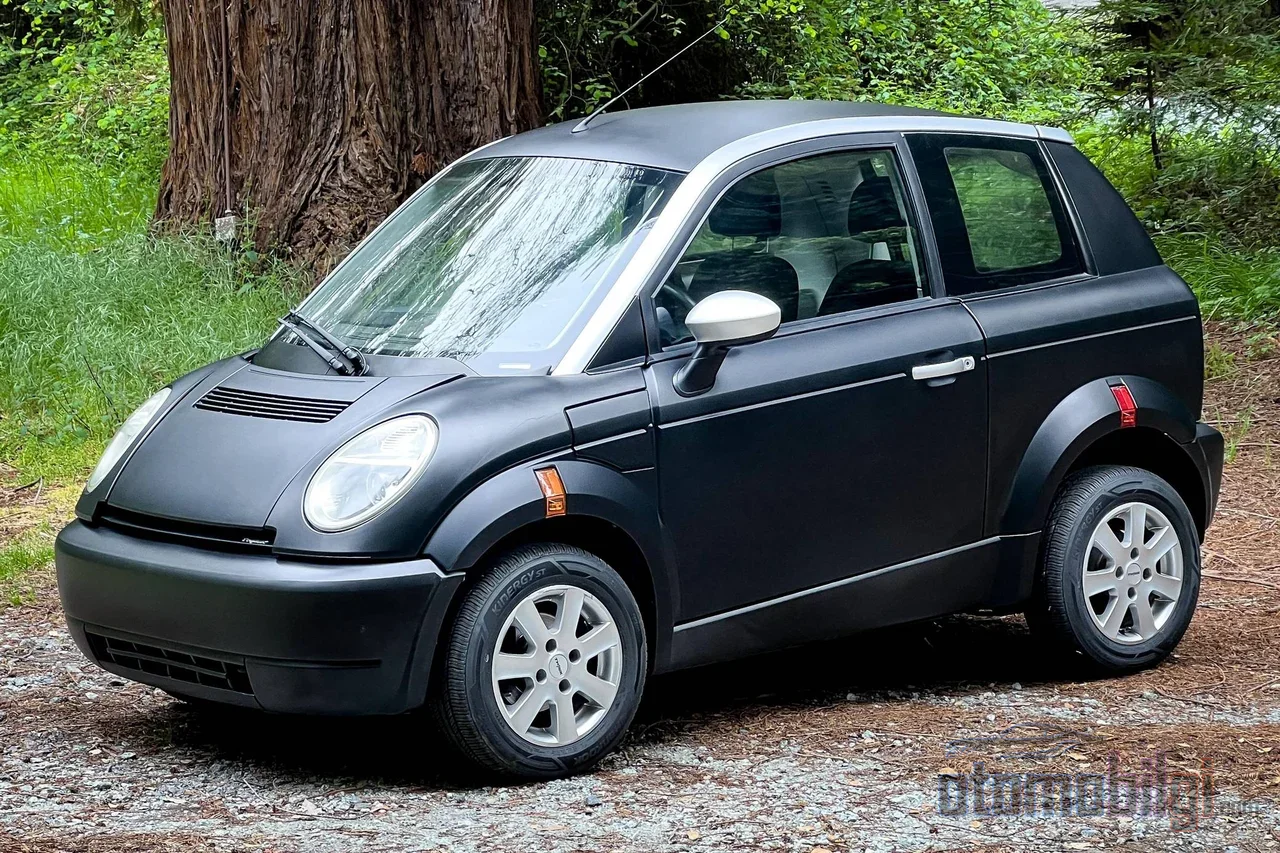
The second-generation Th!nk City was introduced at European auto shows in the summer of 2008. It was displayed in the UK for the first time in July 2008; the Denmark and Sweden launch was announced at the Geneva Motor Show, and it was stated that sales in the UK would begin in the summer of 2009. The launch was also backed by remarkable official interest: Prime Minister Gordon Brown and the Transport Secretary attended the presentation.
Highlights
- The second-generation Th!nk City was offered with a 34 kW (46 hp) motor and a range of 160 km; top speed was 110 km/h.
- Production reached 2,500 units in October 2010; worldwide sales remained at 1,045 units as of March 2011.
- The company filed for bankruptcy in Norway for the fourth time in twenty years on June 22, 2011.
- The US list price was $35,495; not a low price for a small city car that year.
Considering the technical side, the second generation was the product of a serious engineering effort. The vehicle had passed crash testing and received highway certification, and as of early 2011 it was one of only five series-production electric cars in the world with this qualification; it stood on the same list as the Tesla Roadster, Mitsubishi i-MiEV, Nissan Leaf and Smart ED.
| Specification | Value |
|---|---|
| Motor | 34 kW (46 hp) three-phase asynchronous, front-wheel drive |
| Battery options | 24 kWh zebra (NaAlCl4), 23 kWh EnerDel li-ion, 18.7 kWh A123 li-ion |
| Range | 160 km (full charge) |
| Top speed | 110 km/h |
| Transmission | Single-speed automatic |
| Length / width / height | 3,143 / 1,658 / 1,596 mm |
| Wheelbase | 1,970 mm |
| Mass | 1,397 kg |
| US list price (2011) | $35,495 |
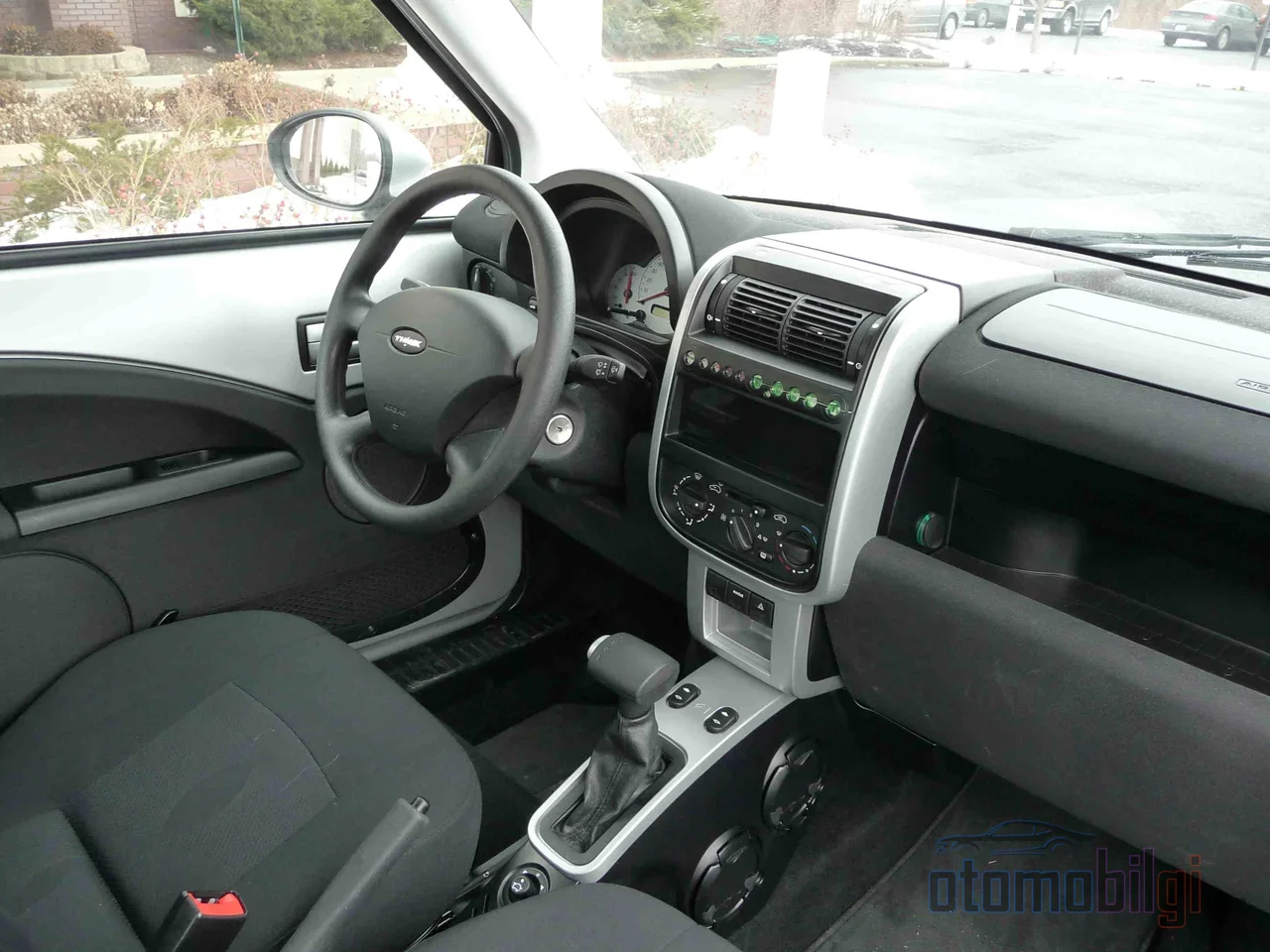
The body was made of injection-molded plastic, with 95 percent of the weight recyclable; most of the interior control levers were taken from the Ford Focus. ABS, regenerative braking (front disc, rear drum), air conditioning, power windows and hydraulic steering were standard equipment. Performance, however, was limited by the 34 kW motor: 0-48 km/h acceleration took about 6 seconds, and range varied between 160-180 km depending on the battery option. While the advertised top speed was around 110 km/h, some measurements recorded that the car could go noticeably faster than this; but it was clear that these figures did not constitute a sufficient performance promise for the market.
Production Networks: Norway, Finland and the USA
The second generation's production map spanned three countries. Main assembly was carried out at the Aurskog facility in Norway and the Uusikaupunki facility in Finland; the facility in Finland was the Valmet Automotive factory where high-level Porsche models were also produced. In 2010, partial production began in Elkhart, Indiana, USA; the body, wheels and chassis were brought from Finland, and Indiana production was set up with EnerDel's Indianapolis batteries.
By October 2010, production reached 2,500 units and the Th!nk City became one of the best-selling pure electric cars of its time. However, the picture on the sales side was bleak: only about 500 vehicles could be shipped to the US in early 2011, and total worldwide sales remained at 1,045 as of March 2011. Norway became the leading market; 1,120 vehicles were registered in the country by September 2013. Countries where the car was sold also included the Netherlands, Spain, France, Austria, Switzerland, Finland and the United Kingdom.
Battery, Capital and Ener1: The Technical and Financial Background of the Bankruptcy
The bankruptcy came not with a single decision, but with several intertwined problems. The first was capital: In March 2011, production in Finland stopped due to financial difficulties, and the company, citing its inability to raise enough capital to fund operations, filed for bankruptcy in Norway on June 22, 2011.
The second problem was battery supply and cost. Think's major investor and lithium-ion battery manufacturer Ener1 cut ties with Think in May 2011 and wrote off a $71 million loss on its quarterly balance sheet due to this investment; the total investment was reported as $73 million. Ener1 itself filed for bankruptcy in January 2012. This fragile partnership between a battery manufacturer and a vehicle manufacturer sank both companies together.
The third problem was price and scale. The vehicle was listed at $35,495 in the US, and that price was an insurmountable barrier for a small 2+2 city car. A short-lived partnership period with Renault also yielded no results. In July 2011, the company's assets, including its North American and UK subsidiaries, were purchased by Electric Mobility Solutions AS, and it was announced that production would resume in early 2012; but production never restarted. The factory in Indiana completed its last vehicle in August 2012 and closed the book.
It Was Not Alone: The Context of Coda, Wheego and the GM EV1
The fate of the Th!nk City was typical for the small electric ventures of the era. Coda Automotive sold its four-door electric, based on the Chinese-sourced Hafei Saibao sedan, at a higher price than the Chevrolet Volt, and managed to sell only around 100-120 vehicles in total; the company went bankrupt following an unsuccessful financing process with the Department of Energy. Other small players like Wheego were also caught in the same squeeze of high prices and low volume.
Within a broader historical framework, GM's EV1 program met a similar end: in 2003, the vehicles, abruptly canceled due to high production costs and a small market, were taken back from their lessees and most were crushed; GM executives argued that the vehicle was ahead of the market, technology, and infrastructure. The Th!nk City was the 2000s version of these early electric experiments: technically on the right track, economically never sustainable.
The Nissan Leaf Filled the Gap
So why did none of these attempts take hold, and who filled the gap? Nissan put the Leaf on sale starting in December 2010 as the first fully electric car affordable for the mass market. The results were incomparable: The Leaf surpassed the 50,000 sales threshold globally, then reached 400,000 sales and recorded a total of 10 billion kilometers driven. Nissan's boss at the time, Carlos Ghosn, said that between 500,000 and 1 million Leafs needed to be sold per year for economies of scale to hold; that figure is hundreds of times the 2,500-unit production of the Th!nk City's entire life cycle.
The engineering lesson here is clear: Th!nk City went bankrupt because it had none of the scale economics, battery cost discipline, or capital continuity required to run a sustainable automobile business. Technically, it managed to produce a highway-certified, crash-tested electric car; but 1,045 sales at a price tag of $35,495 alone explain why the equation never closed. The door to the mass electric market was opened not by small city cars; but by models developed with the scale, engineering, and capital power of major manufacturers.
Sources
- Think City - Wikipedia
- Think City - 2011 - Lane Motor Museum
- 2011 Think City - Green Car Reports
- A big bet on electric vehicle manufacturing goes bust - LA Times
- 2011 Think City - TopSpeed
- Think City (2008) CAR Review - CAR Magazine
- Nissan LEAF first electric car to pass 400,000 sales - Nissan
- THINK Electric Cars: History, City and Collapse - Motorgrail