Better Place: The Failure Story of the Battery Swapping Experiment
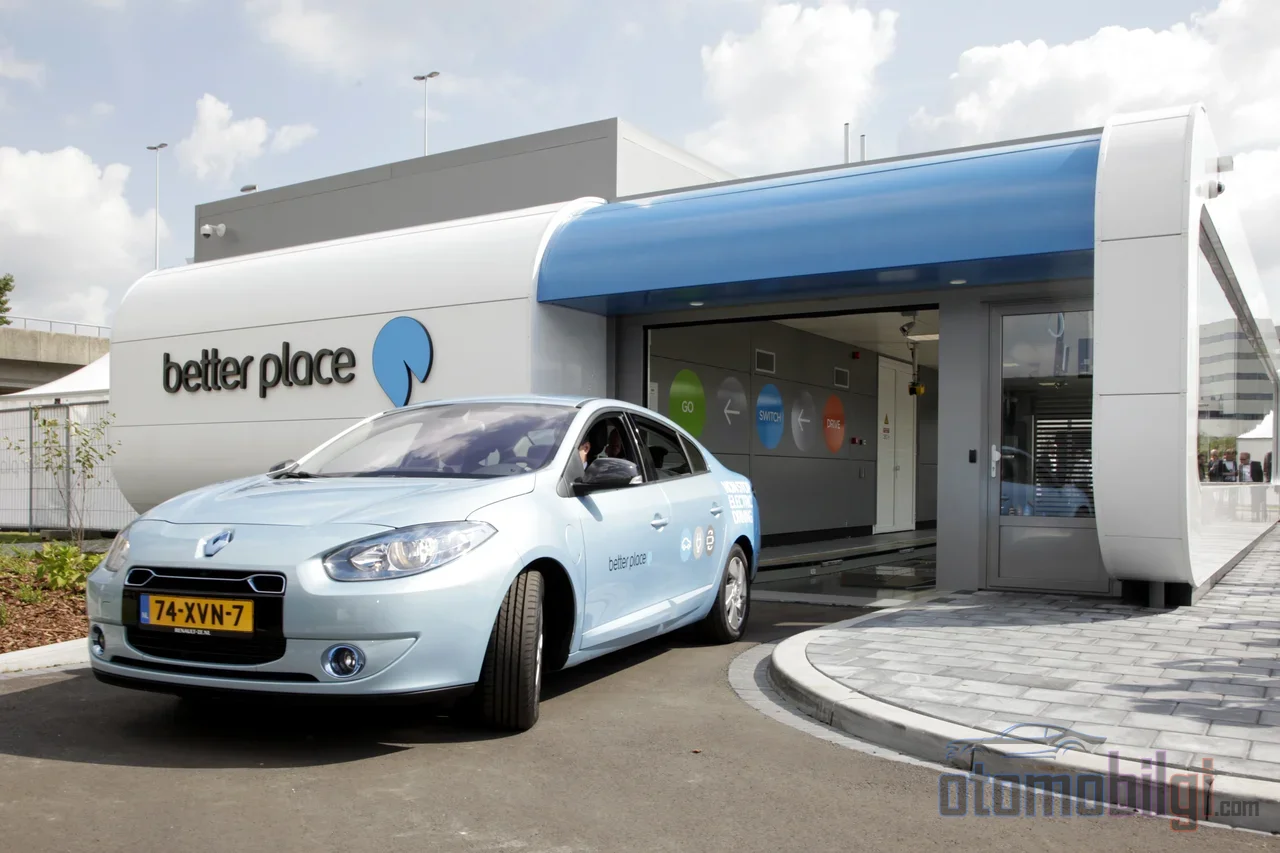
A driver enters a battery swap station, scans a membership card, and waits without even leaving the vehicle. A robotic arm removes the empty battery and installs a fully charged one; the process is as effortless as a car wash and takes about five minutes. This scene actually happened in 2011 in the town of Kiryat Ekron, Israel, and at that moment the world's most ambitious electric vehicle infrastructure experiment seemed to be working. Two years later, the company's name entered the files of one of the most expensive bankruptcies in electric car history.
What made Better Place so interesting was not that the idea was absurd - quite the opposite: the idea was highly coherent, the money was plentiful, and the technology worked. Despite this, the company burned through the roughly 850 million dollars it had raised and declared bankruptcy on May 26, 2013. So why couldn't the promise of a 5-minute battery swap convince the market?
Shai Agassi's Question and the Birth of a Company
The story begins with a question asked at the 2005 World Economic Forum in Davos: How do you make the world a better place by 2020? Entrepreneur Shai Agassi took this question seriously, looked for the answer in transportation, and concluded that the biggest obstacle to the electric vehicle was not the vehicle itself, but the infrastructure. The way to eliminate range anxiety was not to put a battery in every vehicle, but to separate the battery from the vehicle: the driver would buy the car, while a service network would operate the energy and the battery.
Agassi turned this vision into a company in 2007, and on October 29, 2007, the project was introduced to the public under the name "Project Better Place." The business model was borrowed from the mobile phone industry: customers purchased a subscription per kilometer, and the price of the electric car could be subsidized through this subscription. The goal was to be able to sell the electric car for 5,000 dollars less than the average gasoline-powered car in the US. The memorandum signed with Renault-Nissan in January 2008 provided the first institutional framework for this model: Better Place would build and operate the network, while Renault-Nissan would supply the vehicles. The company had given this arrangement the name "Electric Recharge Grid Operator," or ERGO for short - claiming to be the first operator in the world to take on this role.
The money was not long in coming. In 2007, a 111 million dollar Series A round closed with investors including VantagePoint, Israel Corporation, Morgan Stanley, and Maniv Energy Capital; in 2009, 135 million dollars was allocated for the Denmark network for a group that included DONG Energy; in 2010 came the 350 million dollar Series B, led by HSBC with 125 million dollars. Israel Corporation was the largest shareholder with a 33% stake. Official announcements spoke of a total of 850 million dollars in venture capital; as of the bankruptcy date, the private funds spent were approaching nearly 1 billion dollars.
Key Highlights
- The first battery swap station opened in 2011 in Kiryat Ekron, Israel; the robotic swap took about 5 minutes.
- The company raised approximately 850 million dollars in private capital and declared bankruptcy on May 26, 2013.
- In Israel, fewer than 1,000 took to the road, while around 400 Renault Fluence Z.E. were deployed in Denmark; Agassi had expected 100,000 vehicles in Israel by 2010.
- The cost of a switch station was approximately $500,000; by comparison, DC fast chargers were installed for $25,000–40,000.
- After the bankruptcy, the remaining assets were sold in November 2013 for only $450,000.
Renault Fluence Z.E. and How Did the 5-Minute Swap Work?
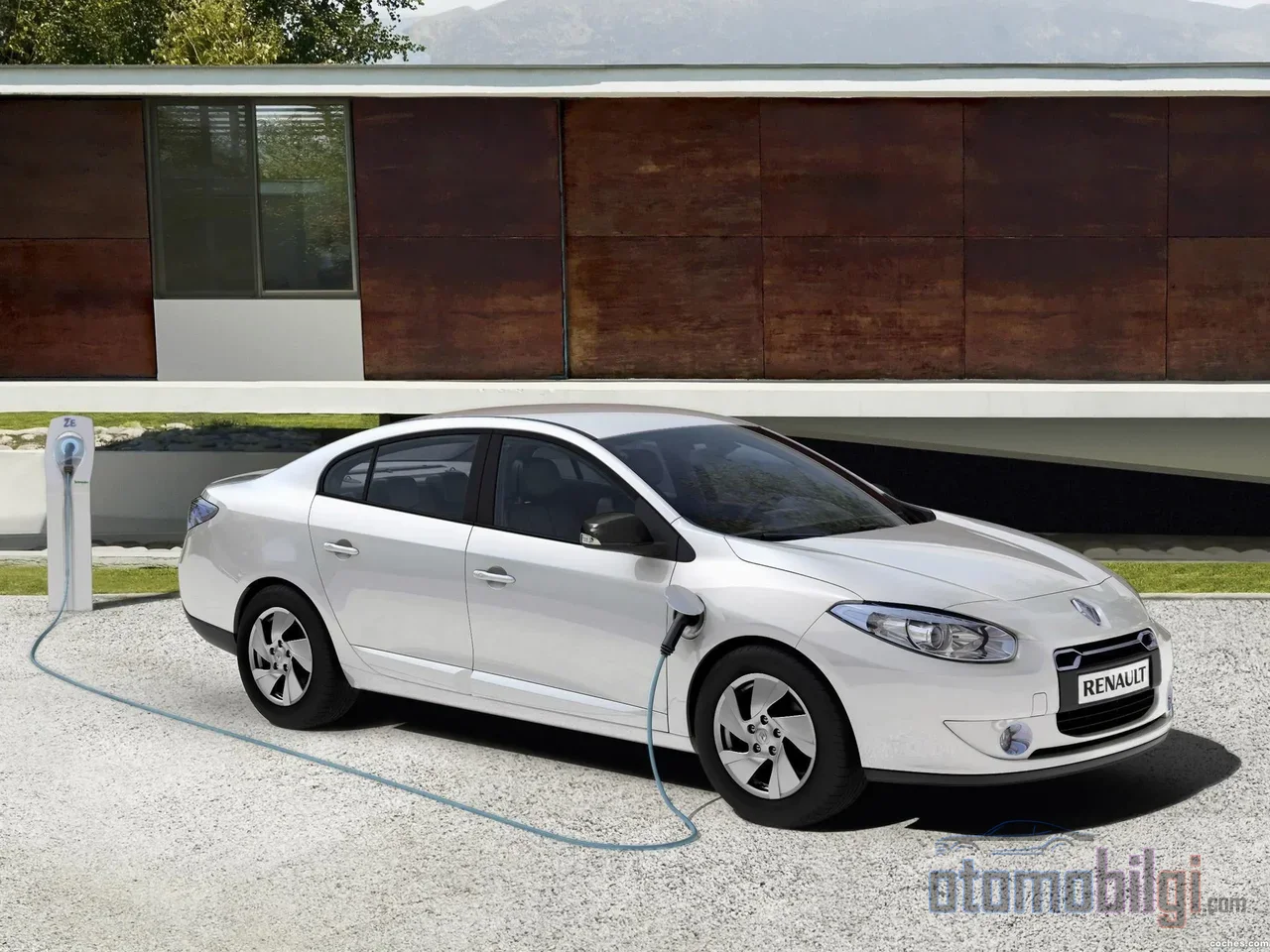
The network's vehicle was the Renault Fluence Z.E., announced at the Frankfurt Motor Show on September 15, 2009; it was the first Better Place-compatible electric car designed with a removable battery. Deliveries began in Israel in the second quarter of 2012, and by mid-September 2012, 21 battery switch stations were open to the public in Israel. The first charging station had come into service even earlier, in early December 2008, at Pi-Glilot near Tel Aviv.
The swap process required no effort from the driver at all. The customer swiped their membership card, and everything else proceeded fully automatically: a robotic arm removed the depleted battery from below and mounted a full unit in its place, while the driver watched the process without leaving the vehicle. In stations with storage facilities, this operation took about 5 minutes; the "QuickDrop" system promised to reduce the time to about 3 minutes, and prototypes to under 2 minutes. The most tangible proof of the system's scalability came from Tokyo: in a 90-day taxi trial in 2010, 3 Nissan Rogue vehicles covered more than 40,000 km and completed 2,122 battery swaps, with an average swap time of just 59.1 seconds.
These figures matter because the most common misconception about the experiment is that the technology failed. It did not. Battery swapping physically worked, it was fast, and the user experience design was impressive by the standards of that era. The problem lay elsewhere: the system worked, but the market was not buying it.
The Idea Was Not Actually New
The setup Better Place built had already been tried in the first quarter of automotive history. The idea of a removable battery service dates back to 1896 and was proposed precisely to overcome the range limitation, the classic weak point of the electric vehicle. The first major implementation was the GeVeCo battery service of the Hartford Electric Light Company: from 1910 to 1924, vehicles were sold without batteries by the General Vehicle Company, with electricity paid per mile and a monthly maintenance subscription. During this period, more than 6 million miles were covered under the service; from 1917 onward, a similar service was operated in Chicago for the Milburn Light Electric.
On the industrial side, the idea never disappeared: electric forklifts have operated with battery swaps since at least 1946; at the 2008 Beijing Olympics, a fast battery swap system was used for 50 electric buses. So what Better Place did was repackage an outdated technology with a modern subscription economy. The modern context had also opened up at an opportune time: Introduced in 1996, the GM EV1 became a milestone for modern battery-powered electric vehicles, while the Tesla Roadster announced in 2008 reopened the stage as the first highway-legal series-production fully electric car using lithium-ion cells. So why did the same idea work in 1910 but burn through a billion dollars in 2010?
Where the Money Went: The Price of a Station and the Weight of a Network
Pricing the physical unit of the business model reveals the source of the failure. A battery swap station cost about $500,000 - in Agassi's own comparison, half of a typical gas station. The figure may not seem frightening on its own, but it is critical in terms of comparison: in the same period, the EV Project in the US was installing a DC fast charger for $25,000-40,000. In other words, Better Place needed more than ten times the capital of conventional charging infrastructure, and it had to repeat this investment in every market.
And that is exactly what the company did: Beyond its core markets of Israel and Denmark, it advanced plans to build networks in Germany, Australia and some US states - Hawaii and Northern California. The goal was to create demand for the vehicles; each new market meant hundreds of millions of dollars in upfront investment. In October 2012, an urgent funding request of about $100 million came, and 150-200 people out of the 400-strong staff in Israel were laid off. The Australia operation was halted in the same period. Management was also shaken: On October 2, 2012, Agassi stepped down as CEO and resigned from the board a week later; his successor Evan Thornley was fired in January 2013 by chairman Idan Ofer, and Dan Cohen became interim CEO. At this point, the company's survival depended on a single variable: vehicle sales.
The Expectation of 100,000 Vehicles, the Reality of 1,400
The gap between expectation and reality is the heart of the story. Agassi expected 100,000 vehicles on Israeli roads by 2010. In reality, fewer than 1,000 were deployed in Israel and around 400 Renault Fluence Z.E. in Denmark; by the time the company went bankrupt, total sales were around 1,300 vehicles. That was a performance below even one percent of the target.
If we are to classify the results with binding provisions, the failure falls into four headings:
- Poor management - successive departures at the executive level and weakness in crisis management.
- Overexpansion - the waste of attempts to set up pilots in too many countries at once instead of deepening a single market.
- High infrastructure investment - the $500,000 cost per station could never be amortized with so few vehicles.
- Market penetration far below projections - despite the subscription model, customers' distrust of the electric vehicle and of the battery belonging to the company.
Academic assessments speak in the same vein: when the company went bankrupt, it disposed of an asset pool of 850 million dollars at very low prices against roughly 1,300 vehicles it had sold; the origin of the failure was attributed to the unmanaged range anxiety and the interpretive uncertainty the business model created in customers. The ecosystem feeding expectations was also divided: Deutsche Bank analysts praised the model in early 2008 as an approach carrying the potential for a paradigm shift in the automotive industry, one that could completely eliminate the gasoline engine; in contrast, there were skeptics who foresaw from early on that the centralized charging infrastructure model would not be widely adopted, and the 500,000-dollar station cost was the first objection point of economy commentators. The technical front was also divided: Tesla's chief engineer Peter Rawlinson offered criticisms emphasizing that different batteries fit different cars, and that viewing batteries in isolation from the vehicle was a simplified perspective. There was one more structural problem: Since Israel's grid relied largely on fossil-fuel electricity generation, the promise of 100% renewable energy was not practical in the short term.
May 26, 2013 and After: Cars Without Batteries
The end came quickly. On May 26, 2013 Better Place declared bankruptcy in Israel; Better Place Danmark A/S filed for bankruptcy the same day. The magnitude of the losses was recorded in various ways depending on the institution writing the report - from assessments that the company lost approximately 800 million dollars over five years and exhausted 90% of its cash in early 2012, to calculations that the loss was 812 million, even a cumulative 477 million dollars between 2010 and February 2013; different definitions and periods yield different figures. The common denominator is clear: as of the bankruptcy date, nearly 1 billion dollars of private investor funds had been spent.
The liquidation process also presented the most painful part of the story. The batteries belonged to the company, the vehicles to the customer - meaning the company's collapse turned the fate of Fluence Z.E. owners left without batteries, whose vehicles became "unusable cars," into a direct legal question. The disposal of assets also resulted in a massive loss of value: When the Sunrise group's 5+7 million dollar purchase offer failed to make the first payment, the court canceled it; Success Assets' 3 million dollar deal ended in October 2013 when payments fell behind. In November 2013, the remaining assets were sold to Gnrgy for only 450,000 dollars - nearly one-thousandth of the 850-million-dollar investment.
So Why Did Better Place Fail?
The most honest answer to this question begins with making the distinction between technology and business model. Battery swapping worked: Average 59.1-second swaps in Tokyo and the five-minute automated process in Kiryat Ekron were proof of this. What collapsed was the economic order needed to sustain this technology: each station cost 500,000 dollars, and every new market wanted hundreds of millions; in return, a total of 1,300 vehicles could be sold in its two core markets. It was an equation with extremely high fixed costs and a very narrow revenue base, and instead of fixing the equation, the company deepened it by expanding into more markets. Just as there are evaluators who say the vision was right, there are also those who say the failure stemmed from the implementation approach - the debate continues.
The modern electric vehicle market's solution was different: sell the battery with the car, deploy charging infrastructure far more cheaply, and reduce range anxiety by growing battery chemistry. That is why Better Place's legacy is not a worthless bankruptcy tale but a calibration data point: no matter how elegantly you solve an engineering problem, if the unit economics of the solution don't fit the market, the scale is drawn according to how fast the money runs out. Although the robot in Kiryat Ekron has vanished into history today, every initiative in electric vehicle history that revisits battery swapping has to account for this 850-million-dollar bill.
Sources
- Better Place (company) - Wikipedia
- Why Did Better Place Fail?: Range anxiety, interpretive ...
- Better Place: First Battery Swap Station, Profit In 2 Years?
- Better Place files for bankruptcy - The Times of Israel
- How electric-car startup Better Place went to a worse one and lost $815 million - Quartz
- Another Electric Car Company Is Going Bankrupt - Business Insider
- Electric car startup Better Place liquidating after $850 million investment - CNET
- Better Place: what went wrong for the electric car startup? - The Guardian
- The Wide Lens-Better Place Epilogue - Ron Adner
- Electric Car Company Better Place Files for Israel Bankruptcy - The Forward