From Jedlik to Davenport: The Pioneers of the Electric Car
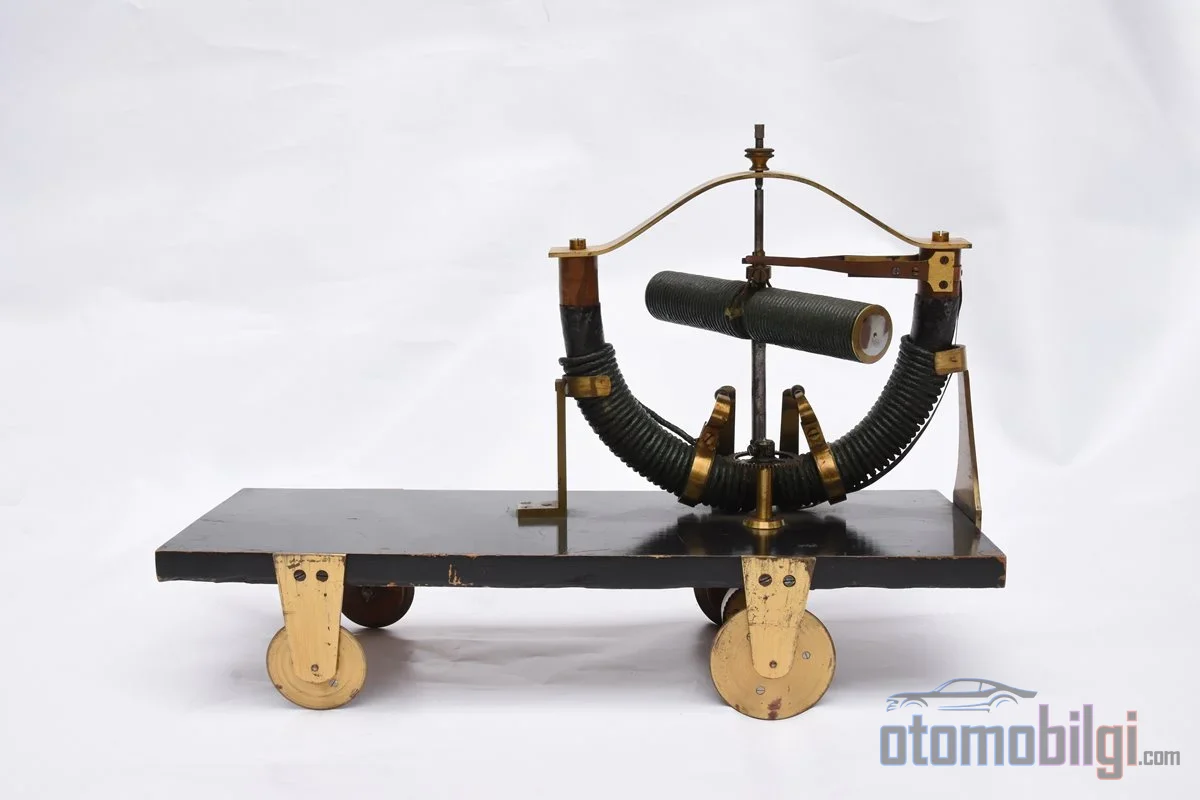
The birth certificate of the electric car was signed not in Los Angeles or Detroit, as most people assume, but in the physics classroom of a Hungarian grammar school, the laboratory of a Dutch university, and a blacksmith workshop in Vermont. In this short seven-year period between 1828 and 1835, three different men, unaware of one another, sought an answer to the same question: Can electricity move a vehicle? The answer to the question was yes - but all of these first attempts remained at model scale, and what stopped them all was not the motor but the battery. This is precisely why there is no clear answer to the question of who built the first electric car: these three experiments differed greatly from one another in nature.
Ányos Jedlik and His 1828 Model: The First Three-Component DC Motor
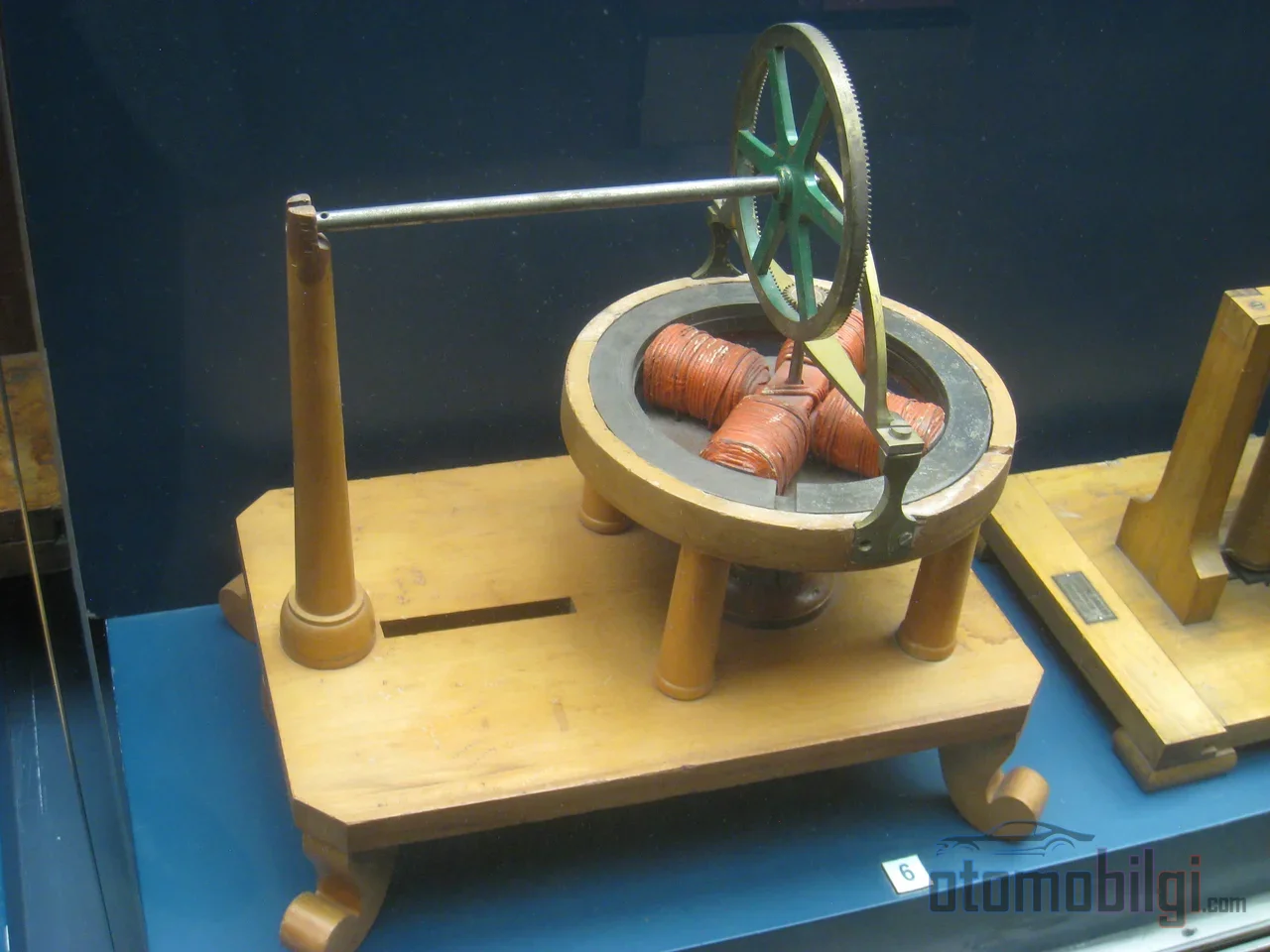
Ányos Jedlik was born on January 11, 1800, in Szimő, and spent most of his life as a Benedictine monk and physics teacher. Hans Christian Ørsted's 1820 demonstration of the relationship between electric current and magnetism led him to the problem of electromagnetic rotational motion. In 1827 he began experimenting with electromagnetic rotating devices at the grammar school in Győr, and in 1828 he demonstrated the first device combining in a single body the three main components that today define a direct current motor - stator, rotor, and commutator. In the prototype, both the stationary and the rotating parts were electromagnetic; in other words, this was not a toy but the complete blueprint of the modern DC motor.
Using this motor, Jedlik ran a small model car and a model locomotive. For this reason, the history of the electric vehicle is often dated to 1828. Yet there is an uncertainty that must be emphasized: Jedlik announced his invention years later, and the records in his notebooks make it possible for the actual date to fall anywhere between late 1827 and early 1828. In his notebook he described the motor as a wire carrying electric current continuously rotating around a similar electromagnet - viewed through an engineer's eyes, this is a striking distillation capturing the essence of the rotating electric machine in a single sentence.
The reason Jedlik's priority was forgotten was not technical but bureaucratic. He did not publish his work early enough; although he formulated the principle of self-excitation, fundamental to the dynamo, around 1861, he reported the same principle six years after Siemens and Wheatstone, so the invention of the dynamo went down in history under Siemens' name. The 1828 electromotor and its user manual, preserved today at the Museum of Applied Arts in Budapest, still work flawlessly - the most tangible proof of the prototype's engineering maturity.
Highlights
- 1828: Jedlik demonstrated the first DC motor, complete with stator, rotor, and commutator, and ran a model car with it.
- 1835: Stratingh and Becker built a small-scale electric car powered by primary batteries in Groningen.
- 1834: Vermont blacksmith Thomas Davenport used America's first DC motor in a model vehicle running on a circular track 1.2 m in diameter.
- The rechargeable battery only emerged in 1859; all three pioneers' vehicles were limited to primary batteries.
Stratingh and Becker: The First True Electric Vehicle in Groningen
Sibrandus Stratingh (1785-1841) was a professor of chemistry and technology at the University of Groningen, and before electricity he was interested in steam; one of his 1834 experiments was as bold a test as driving his steam vehicle through the streets of Groningen. The difficulties of using steam in vehicles pushed him to search for alternatives, and together with Christopher Becker, an instrument-maker assistant, he built a small-scale electric car powered by battery cells in 1835. Using the electromagnetic principles developed by Michael Faraday, this vehicle - although only model-scale - is considered the first electric vehicle to move on its own wheels under its own power.
Getting into the details complicates the history: some sources date this vehicle to 1836, but mainstream acceptance is 1835. More importantly, the vehicle's energy source. Stratingh and Becker's vehicle ran on primary cells - that is, non-rechargeable batteries that were discarded once depleted. The vehicle worked, but the energy storage problem was unsolvable from the start, and Stratingh could not carry this research forward: he died on February 15, 1841. The original vehicle is on display today in the University of Groningen museum; a replica of the vehicle was also later built and documented.
Thomas Davenport: From the Blacksmith's Workshop to a Circular-Track Electric Vehicle
The third pioneer was not affiliated with any university. Thomas Davenport (July 9, 1802 - July 6, 1851) was a blacksmith working in the town of Brandon, Vermont. Together with his wife Emily, he built America's first direct-current electric motor in 1834, and that same year he used this motor to run a model electric vehicle that drew its power through the track. The vehicle ran on a circular track with a diameter of about 4 feet (1.2 m); this is the first recorded example of an electric railway.
Davenport's work was sealed in a different way from his European counterparts: he patented his invention on February 25, 1837. His motor later laid the groundwork for the electrification of trams, and Davenport explicitly aimed at the idea of the electric tram. As an interesting historical echo, this achievement of a blacksmith had been so forgotten that a newspaper would publish, exactly 80 years later, in 1921, a piece recalling that the Vermont blacksmith had completed a working model of an electric railway. Obtaining the patent meant that, unlike Jedlik, Davenport's work was recorded in his own country - yet it only returned to the collective memory of the electric vehicle a century later.
Comparison of the Pioneers: Three Countries, Three Approaches
| Pioneer | Year | Place | Work | Scale |
|---|---|---|---|---|
| Ányos Jedlik | 1828 | Győr | Model car with his own DC motor | Model |
| Thomas Davenport | 1834 | Brandon, Vermont | Electric vehicle on a 1.2 m circular track | Model, patented in 1837 |
| Stratingh and Becker | 1835 | Groningen | Electric vehicle running on primary batteries | Small scale |
Putting these three lines side by side also clarifies a question of priority. Jedlik built the earliest motor and a model vehicle; Davenport produced the first DC motor on the American continent and the first documented attempt at an electric railway; Stratingh and Becker brought out what was probably the first true electric vehicle, moving on its own batteries. The claims do not contradict each other - they point to different definitions and different priorities. Meanwhile, the list of names is not limited to these: A crude electric car attributed to the Scot Robert Anderson is also put forward, though its date vaguely varies between 1832 and 1839 across historical sources; The Dutchman Robert Davidson, with his 1837 locomotive and his 1842 locomotive named Galvani, is the fourth important figure of the same era.
The Problem That Stopped Everything: Why Was the Portable Battery Delayed?
The common weakness of the three pioneers' vehicles was a periodic technological threshold: a usable rechargeable battery did not yet exist and would only emerge in 1859. The batteries of the era were both large and heavy, their capacity was very limited, and they restricted range. The best data showing just how hot the water was comes from Davidson's 1842 Galvani locomotive: the zinc consumption in the battery cost roughly forty times more than obtaining the same energy by burning coal in a firebox. Under this balance, the battery-powered locomotive was not economical - in fact, steam engineers' competitive concern resulted in the Galvani being broken up in its shelter.
Nor was the problem one that could be solved by a single invention. Even Thomas Edison tried to develop an alternative to the heavy, cumbersome lead-acid batteries and failed; this failure led to the repeated postponement of his own electric car project. The electric cars that entered production at the turn of the century would struggle with batteries that traveled limited distances between charges, required maintenance, and wore out quickly, along with the impracticality of carrying reserve energy - in other words, the answer to the question of why the first electric cars failed lies not in the motor but in the century-long delay in energy storage.
Intellectual Legacy: The Line Extending to the Modern Electric Car
All three attempts between 1828 and 1835 were at model scale and none carried a passenger. Financially viable electric traction became possible only in the 1860s with the invention and refinement of the dynamo - meaning the first half of the story is the story of the motor, and the second half the story of storage. Jedlik's stator-rotor-commutator trio is still the schematic of every DC motor today; Davenport's 1837 patented motor is the conceptual ancestor of tram electrification; and Stratingh and Becker's vehicle is the first step of the electric journey as a mode of transport.
The honest answer to the question of who built the first electric car is this: Jedlik built the motor, Davenport the first application in the US, and Stratingh and Becker the vehicle form - and the fundamental lesson that connects all three to today's meaning and makes the modern electric car possible is this: without portable power storage, there would be no vehicle. This lesson applies just as much to the electric cars of the lithium-ion era; only the battery chemistry changed, the structure of the equation did not.
Sources
- Ányos Jedlik - Wikipedia
- History of the electric vehicle - Wikipedia
- Thomas Davenport (inventor) - Wikipedia
- Thomas Davenport | Britannica
- Thomas Davenport - Edison Tech Center
- The world's first electric car | University Museum Groningen
- History of Electric Vehicles II - ElectricVehiclesNews.com
- First Electric Car Ran 80 Years Ago - NYT Archive (1921)
- When Was the First Electric Car Made? - Historyhit
- The lost history of the electric car - The Guardian (2021)