GM Impact: The Story of the Concept That Gave Birth to the EV1
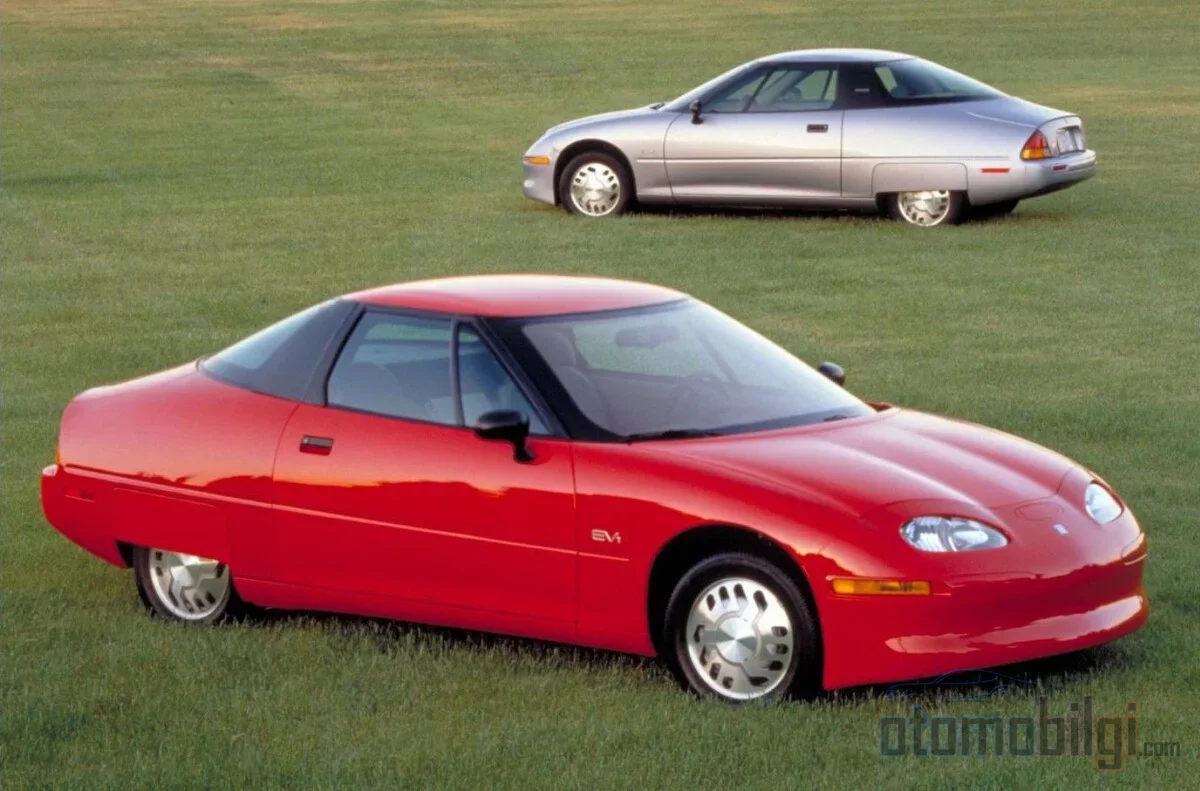
In January 1990, on the stage of the Los Angeles Auto Show, General Motors chairman Roger Smith unveiled a two-seater, low, teardrop-shaped concept: GM Impact. Show cars are usually display-piece sculptures; the Impact, however, was announced with the promise that it would become a production vehicle in April of the same year, and it would keep that promise in 1996 as the EV1, the first modern electric production car in history. What happened in the six years in between - a 183 mph speed record, a test program in which 50 hand-built prototypes were entrusted to ordinary drivers, and the program's oddly anticlimactic conclusion - is the least-known chapter of the modern electric car's birth story.
From Sunraycer to Impact: Technology That Came Off the Race Track and Onto the Road
The story begins with the World Solar Challenge run in Australia in 1987. GM's solar-powered race car, the Sunraycer, was designed by AeroVironment, founded by Paul MacCready, and won the race. This victory sent GM's engineers a clear message: when a lightweight body, low aerodynamic drag, and efficient electric propulsion come together, electric mobility becomes a practical possibility. Three years later, AeroVironment was tasked with turning this know-how into a two-seater road vehicle.
The drive system's electronics were designed and built by Alan Cocconi; the system was later developed by Hughes Electronics. In other words, the Impact is an engineering bridge where the physics of a solar-powered race car was brought together with the requirements of a road car. As the Smithsonian has documented, AeroVironment carried the weight of research and development along the Sunraycer-Impact-EV1 line.
The Technical Identity of the 1990 Impact
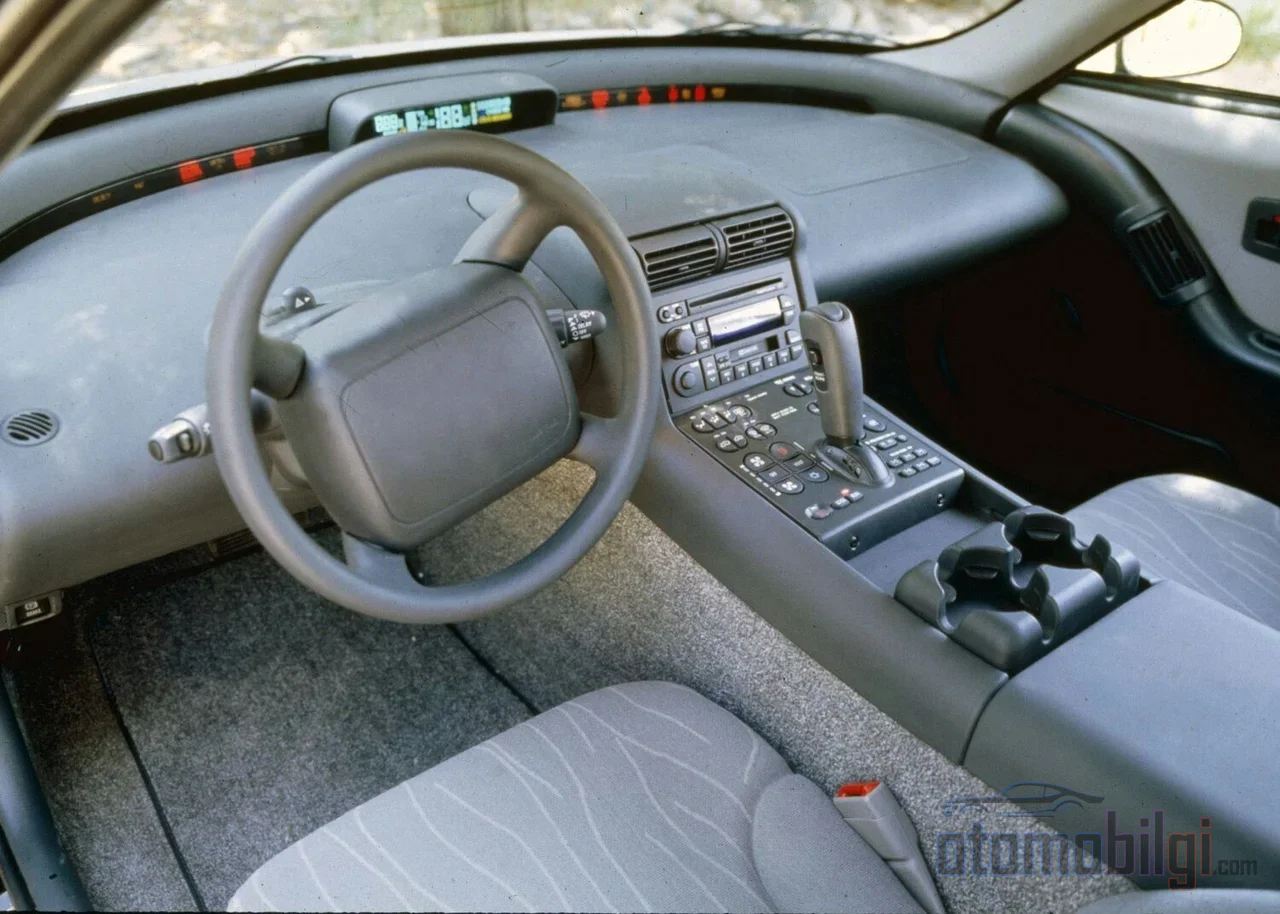
The Impact's architecture was built on three pillars: aerodynamic efficiency, low mass, and electric propulsion. The drag coefficient was targeted at 0.19; this is a value clearly below the 0.3-0.4 range typical of production cars of those years, and it would be carried over almost unchanged to the EV1.
Energy storage, meanwhile, reflected the limits of the era's technology. The vehicle carried 32 rechargeable lead-acid batteries; in the 1990 concept, the pack's total energy was stated as 18.7 kWh. The first generation of the production EV1 in 1996 also kept the lead-acid chemistry, while the second generation moved to a NiMH pack (26.4 kWh, 343 V, 77 Ah). Fifteen years before the lithium-ion revolution, balancing range and performance with heavy lead plates was the program's fundamental engineering challenge.
On the drive side, a three-phase AC induction motor did the work. The power figure has been published in two different forms: according to GM it was 110 hp, while some documents cite a value of 137 hp (102 kW); the difference is likely based on different measurement conditions or version definitions. The torque value is consistently reported as 110 ft-lb, i.e. roughly 150 Nm. The transmission is single-speed; the gearbox being bypassed is a natural consequence of the electric motor producing maximum torque from zero rpm.
Highlights
- The Impact was introduced in January 1990; announced in April 1990 with a production promise, with an annual target of 25,000 units
- Top speed of 183 mph (295 km/h); Land speed record for production electric vehicles broken in Fort Stockton in March 1994
- 0-60 mph acceleration of 8 seconds, range of approximately 200 km
- In the 1994 PrEView program, 50 hand-built prototypes were tested with real drivers, then destroyed
- Drag coefficient of 0.19: an aerodynamic legacy carried over to the EV1
Performance and Range Figures
| Specification | Value (1990 Impact) |
|---|---|
| Battery | 32 lead-acid cells, 18.7 kWh |
| Motor | Three-phase AC induction, 110-137 hp (102 kW) |
| Torque | 110 ft-lb (approximately 150 Nm) |
| Top speed | 183 mph (295 km/h) |
| 0-60 mph | 8 seconds |
| 30-60 mph | 4.6 seconds |
| Range | 124-125 miles (approximately 200 km) |
| Transmission | Single speed, front-wheel drive |
| Drag coefficient | 0.19 |
One group of measurements is not included in the table: no reliable manufacturer-stated values exist for consumption, cargo volume, and price. For a prototype still at the concept stage, this is not surprising; GM never officially published these figures.
183 mph: The Fort Stockton Record of March 1994
The Impact's most striking moment came in March 1994 near Fort Stockton, Texas. A modified Impact set the land speed record in the production electric vehicle class: a two-way average of 183.822 mph over 1 km and 183.075 mph over 1 mile. Top speed figures had already been quoted as 183 mph, that is, 295 km/h; the record run proved that this value was not a theoretical speculation but a measured fact. For an electric car to approach the 290 km/h mark in that year was a serious engineering achievement for a lead-acid battery design, and it probably still exceeds the expectations of few readers.
The PrEView Program: 50 Prototypes and Real Drivers
In 1994, GM launched the PrEView program, which took the Impact out of the laboratory and into the real world. The plan was simple: 50 hand-built Impacts were entrusted to ordinary drivers in the US for periods of one or two weeks; participants had to document their experiences and provide detailed feedback to GM. The vehicles were hand-built one by one at the GM Technical Center in Warren. The aim was to measure, by collecting data, how functional the electric car was in everyday use.
Why Was the Feedback Positive but the Outcome Negative?
The outcome was unexpectedly two-sided. Drivers loved the cars; so did the press. Among motoring magazines, the Impact was praised as the only electric vehicle in the world that could be driven like a real car; its road holding and the smoothness of its power delivery were standout qualities. As an engineering evaluation, PrEView could be considered a success in technical terms.
GM, on the other hand, evaluated the program as a failure. The company concluded that electric cars were not yet commercially viable and that the CARB regulation in California needed to be repealed. This regulation required, starting in 1990, the seven largest manufacturers in the US to make 2 percent of their fleets zero-emission by 1998, rising to 5 percent in 2001 and 10 percent in 2003. Dennis Minano, GM's vice president of energy and environment, questioned whether consumers really wanted electric vehicles. Nor was the skepticism unique to GM: the same year, Chrysler president Robert J. Eaton also held the view that no one could foresee that electric cars could be built right now; New York Environmental Conservation Commissioner Thomas C. Jorling openly criticized this approach.
Criticism of Planning for Flop
The paradox here also became the subject of a front-page story in one of the era's leading newspapers: GM's attitude was interpreted as pride and pessimism coexisting, and it was claimed that the company wanted to delay time by dragging the program into failure or have the legislation repealed. This criticism is also the core of the planning for fiasco claim that would later be voiced in EV1 documentaries and books: the assertion that, despite positive driver data, the company's final report reflected resistance not to marketing, but to regulation.
The concrete end of the program was harsh: when testing was completed, all 50 Impacts were destroyed. The concept's design evolved into the EV1 by 1996.
From Impact to EV1: A Direct Legacy
The Impact is the direct predecessor of the EV1; this is not a resemblance, but a relationship of continuity. A total of 1,117 units of the EV1, produced between 1996-1999, were manufactured (660 first generation, 457 second generation); the car was only leased and the program was terminated in 2003; most of the cars, like the PrEView prototypes, were destroyed. The program's chief engineer was Kenneth Baker; Baker had been the in-company champion of the electric car idea since GM's failed Electrovette attempt in the 1970s.
The concrete technologies carried over from Impact to EV1 can be listed one by one: low rolling resistance tires, keyless ignition, a heat pump for heating and cooling, and regenerative braking. The EV1's drag coefficient of 0.19 remained the lowest value in the history of production cars.
Why Is the Impact So Important?
The Impact's importance lies in the chain that took the car from being a 1990 concept with a lead-acid battery and made it a turning point in the history of the electric car. Sunraycer's 1987 race victory produced aerodynamic and efficiency knowledge; the Impact was the prototype that translated this knowledge into a road car; the EV1, in turn, carried it, however limitedly, into series production. So how did the Impact pave the way for the EV1? The answer has three layers: technically, it proved solutions such as an aerodynamic body, low rolling resistance tires, a heat pump, keyless ignition, and regenerative braking; institutionally, it paved the way for the EV1 program with its 1990 production promise; culturally, both the 183 mph record and the PrEView experience showed that an electric car could be a real automobile, not a toy.
The disappointing end of PrEView is also part of this legacy. GM resisted the CARB regulation by citing the program; this resistance was also the herald of the EV1's tragic shutdown in 2003. Nevertheless, the engineering carried over from the Impact to the EV1 defined the template that Tesla and other manufacturers would build upon in the 2000s, when lithium-ion batteries arrived: aerodynamic body, regenerative braking, single-speed electric drive, and data collected from real-world use. That is why the Impact is not merely a concept, but the engineering bridge that gave birth to the modern electric car.
Frequently Asked Questions
What is the difference between the Impact and the EV1?
The Impact is the concept and prototype stage introduced in 1990; the EV1 is the production vehicle manufactured between 1996-1999. The EV1 inherited the Impact's aerodynamic and drivetrain legacy almost exactly as it was.
How fast was the Impact?
Its top speed was 183 mph, i.e. 295 km/h; 0-60 mph acceleration took 8 seconds, while 30-60 mph took 4.6 seconds.
What happened to the 50 prototypes in the PrEView program?
When the test period ended, all 50 Impacts were destroyed; their designs lived on in the 1996 EV1.