GM's Engineering Lineage Extending to the Sunraycer and EV1
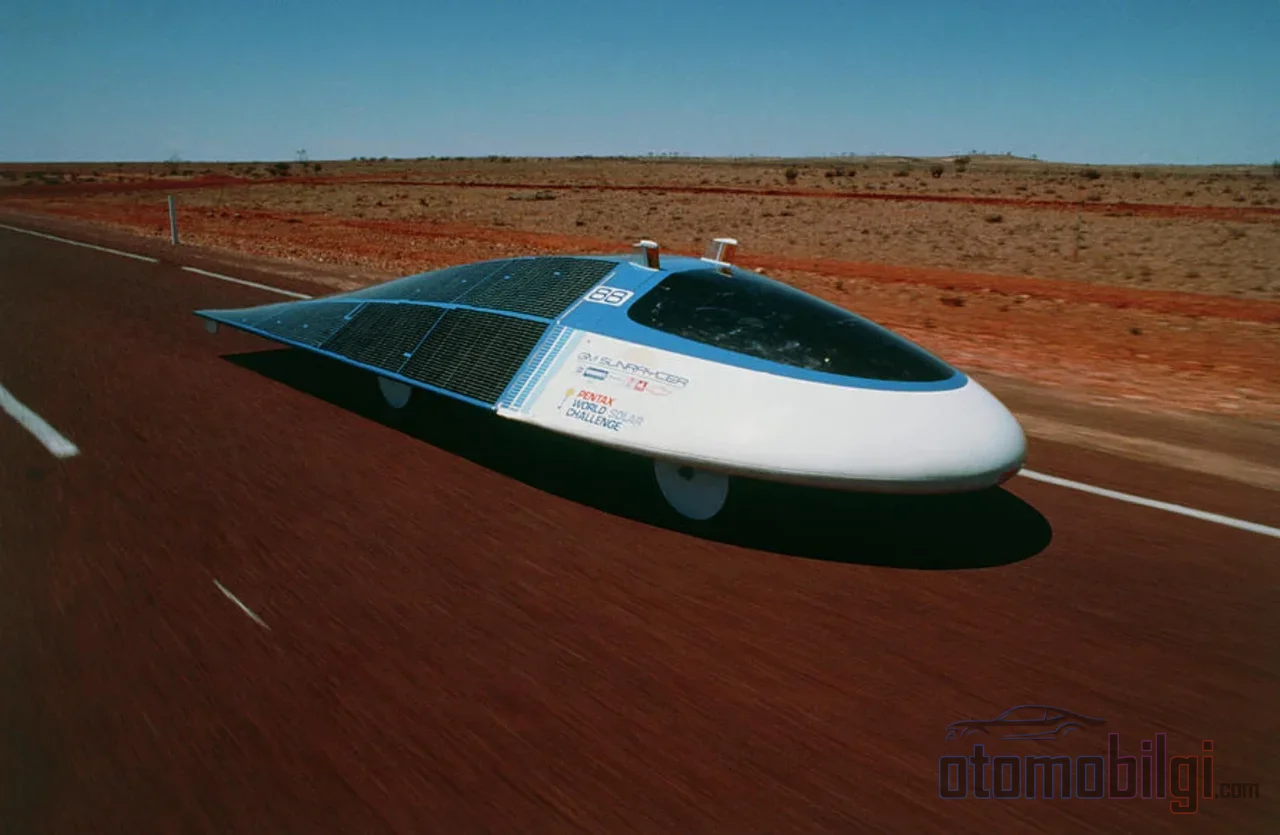
When a strangely shaped vehicle set off from Darwin, Australia in November 1987 and arrived in Adelaide after 3,140 kilometers, the fate of the modern electric car had changed. The solar-powered race car called Sunraycer, developed in just ten months by General Motors in partnership with AeroVironment and Hughes Aircraft, finished the first World Solar Challenge more than two days ahead of the second-place car. So how did this vehicle, which never stopped at a fuel pump and carried thousands of solar cells on its back, become the draft technical specification for the GM EV1 and the electric cars we drive today?
The answer to this question begins with the EV1 in most accounts. Yet the true origin story lies hidden in a desert race in 1987, in the aerodynamic and efficiency calculations of a 177-kilogram body. Here we will follow that line from start to finish: The chain stretching from the engineering of the Sunraycer to the 1990 Impact concept, and from there to the 295 km/h land speed record for a production electric vehicle in 1994.
How Was the Sunraycer Born?
The spark of the idea came from the Australian adventurer Hans Tholstrup. Tholstrup had made a journey from Perth to Sydney in a solar-powered vehicle with Larry Perkins in 1983, and then brought to life a race organization running from Darwin to Adelaide. At the end of 1986, GM CEO Roger Smith conveyed the race rules to Hughes Aircraft; Hughes executive Howard Wilson put the proposal to join the project on the table, and the connection was made through AeroVironment founder Paul MacCready, the designer of human-powered aircraft.
Less than ten months remained until the race's start on November 1, 1987. Under MacCready's leadership, with Alec Brooks in charge of design, the team worked around a set of clear priorities: low mass and as little aerodynamic drag as possible. GM financed the project through Hughes; AeroVironment took on the design and integration.
The 1987 World Solar Challenge: Australia in 5.2 Days
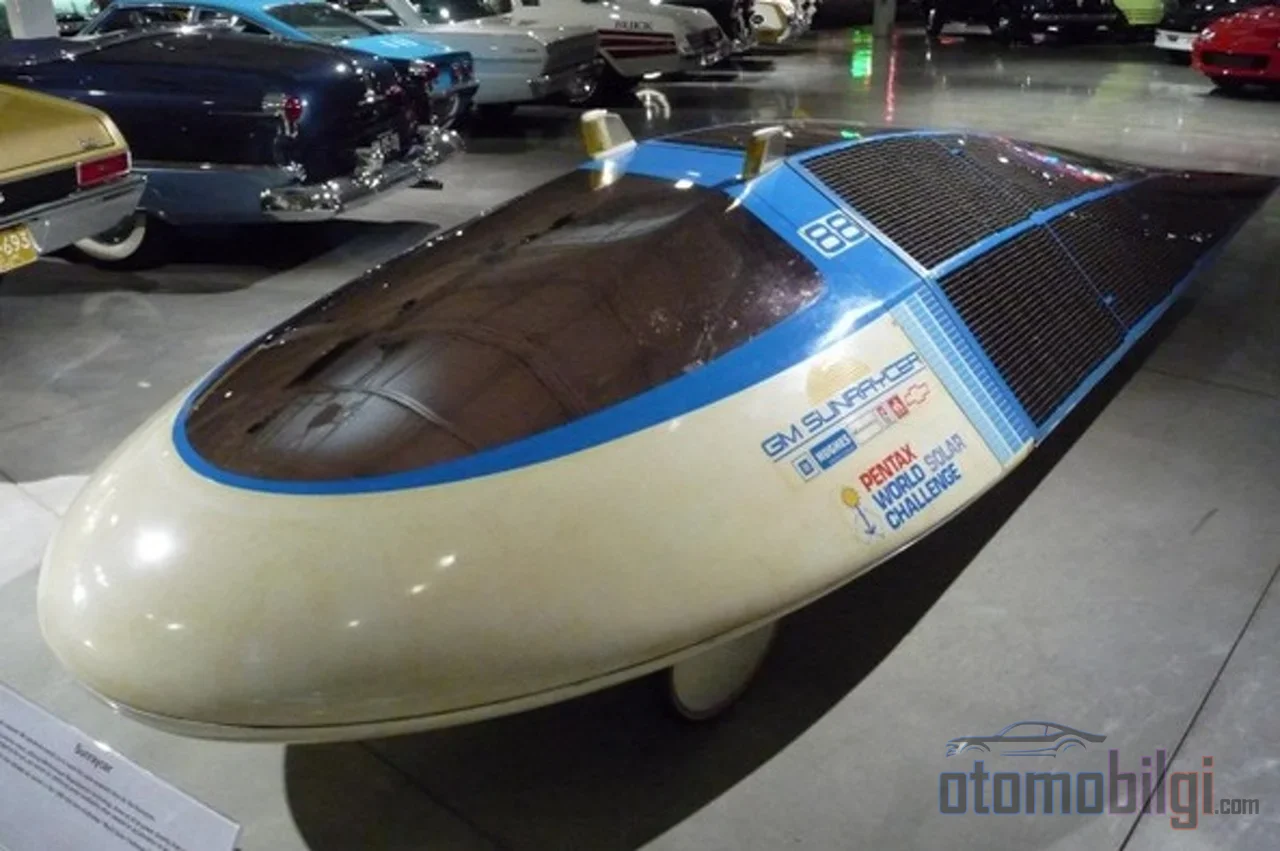
The distance followed along the race route was approximately 3,005 kilometers. Sunraycer finished in 5.2 days, with a net running time of 44.9 hours, in the car driven mostly by Australian pilot John Harvey; its average speed was 66.9 km/h. Ford, in second place, reached Adelaide two days later with an average 50% lower. Sunraycer had won pole position with the highest speed of 109 km/h among 24 vehicles in the speed trials before the start, and never gave up the lead throughout the race. Among those who did not withdraw from the race, Switzerland's Spirit of Biel finished third.
Highlights
- Sunraycer won the 1987 World Solar Challenge in 5.2 days at an average speed of 66.9 km/h; the second-place car arrived two days later.
- The vehicle weighed only 177 kg in total; its drag coefficient was around 0.125-0.13.
- Motor efficiency was approximately 92%; the solar cells produced about 1,500 W at midday.
- In 1994, a modified Impact set the land speed record for a series-production electric vehicle at 183.8 mph (approximately 295 km/h).
- The Impact was the direct basis for the GM EV1, introduced in 1996, with roughly 1,000 units available for lease.
The Engineering of the Sunraycer: Lightweight, Aerodynamic, Efficient
The Sunraycer's technical approach can be summarized under three headings, and these three headings would become the roadmap for the cars that followed.
Mass: A 177-kilogram solution
The vehicle's total weight was approximately 177 kilograms; the chassis alone weighed 14 pounds, or roughly 6.4 kilograms. The body shell was made of Kevlar. The 6-meter-long vehicle was 2 meters wide and 1 meter high. Higher weight figures such as 550 pounds also appear in press reports; this difference may stem from the vehicle being measured or configured differently at different times.
Aerodynamics: Drag down to 0.13
With a drag coefficient between 0.125 and 0.13, the vehicle reached extraordinary values for its era. Since the energy coming from the sun was extremely limited, no watt could be sacrificed to aerodynamic losses; even for a vehicle whose top speed was limited to 109 km/h, this coefficient was decisive for range and average speed.
Power transmission and battery
A six-pole, external permanent-magnet electric motor drove the left rear wheel via a chain. The motor produced 25 Nm of torque, with continuous power output at the 1,500 W level; under short-term loads it could reach up to 8 horsepower. The continuous horsepower figure for the Sunraycer was stated to be around 2 hp; no separate official horsepower claim was made by the manufacturer, and no 0-100 km/h acceleration figure was announced either. The motor used Magnequench rare-earth magnets, which GM developed independently in 1983 along with Sumitomo Special Metals in the same year, and its efficiency was announced as approximately 92%.
Carrying thousands of gallium arsenide solar cells, the vehicle produced about 1,500 watts at midday; these cells are noted to deliver significantly more power than previous generations. The vehicle also carried a 30 Ah silver-zinc battery pack. This battery's role was different from everyday use: to provide support during momentary high power demands such as truck overtakes, and to balance the energy by charging from the sun during parking hours between 08:00 and 17:00.
Post-race records followed as well: In June 1988 in Mesa, Arizona, the vehicle reached 121.1 km/h on solar power alone, and this record remained unbroken until January 2011, when the Sunswift team's vehicle in Australia surpassed it. The Sunraycer is on display today in the collection of the Smithsonian National Museum of American History.
From the Sunraycer to the Impact: Transferring Racing Lessons to Series Production
The Sunraycer's victory raised an important question within GM: could the same principles of lightness, aerodynamics, and efficiency be applied to a road-going production car? The answer was the GM Impact concept introduced in 1990. The low-mass materials, aerodynamic drag reduction principles, and power management systems proven in the Sunraycer were carried over into the Impact project; in development, AeroVironment was once again GM's partner.
The Impact translated Sunraycer's flying engineering into a real car format. It drew power from the front wheels with a three-phase AC induction motor and a single-speed transmission. The power unit produced 137 horsepower and 110 ft-lb, about 149 Nm of torque; GM's own heritage collection and museum records confirm this figure. Some period reports also mention a lower value, such as 110 horsepower; this difference likely stems from different measurement or reporting methods. The 18.7 kWh battery pack, made up of 32 Delco lead-acid batteries, gave the vehicle a range of roughly 200 kilometers; the vehicle weighed about 1,400 kilograms. The Impact's 0-100 km/h acceleration time was never officially stated; period texts exist that only highlight 60 mph acceleration with the 110-horsepower claim.
| Power type | Sunraycer (1987) | GM Impact (1990) |
|---|---|---|
| Power type | 1,500 W continuous (8 hp short-term) | 137 hp |
| Torque | 25 Nm | Approximately 149 Nm |
| Battery | 30 Ah silver-zinc | 18.7 kWh lead-acid (32 batteries) |
| Weight | Approximately 177 kg | Approximately 1,400 kg |
| Top speed | 109 km/h | Not stated |
| Range | Solar-powered along the race route | Approximately 200 km |
295 km/h: The 1994 Land Speed Record
The Impact's most spectacular moment came in March 1994, in Fort Stockton, Texas. GM made land speed record attempts for electric vehicles with a modified Impact: the car set two international and US records with average speeds of 183.822 mph over a kilometer and 183.075 mph over a mile. That meant roughly 295 kilometers per hour, the highest verified speed for a production electric car up to that day. A vehicle running on lead-acid batteries being able to reach that speed proved just how powerful the efficiency approach inherited from Sunraycer was, even if only for one lap.
The Line Extending from the Impact to the EV1
The Impact concept formed the basis of the production design of the GM EV1, which reached lessees at the end of 1996. The EV1 was a car optimized for efficiency, with aerodynamic, lightweight aluminum bodywork, its design largely inspired by the Impact prototype. GM produced about 1,000 EV1s and leased them to customers; the car quickly gained a cult following. Most readers know how it ended: In the late 1990s, the EV1s, which had been in use for a few years, were controversially retired and scrapped.
The critical point here is this: The EV1's technical identity was so distinct precisely because there was a Sunraycer history behind it, before the Impact. Solar car racing had served as a kind of test bench for developing motor techniques capable of running at over 98% peak efficiency, efficient controllers, and battery management systems. This experience, together with production techniques using lightweight materials and principles of aerodynamic drag reduction, had long since established the engineering vocabulary of the production electric car.
Where Can Sunraycer's Legacy Be Seen Today?
The short answer is: the modern electric car began, before the EV1 narratives, with a series of engineering decisions made in Australia in 1987; Sunraycer proved lightness, low aerodynamic drag and efficient power transfer, Impact turned this into a real car, and the EV1 became the production version of that specification.
The chain of logic still holds. In an electric car, range is directly linked not only to battery capacity but also to mass and aerodynamic drag; Sunraycer demonstrated this relationship in the most extreme form with a 177-kilogram body and a drag coefficient of 0.13. The principles of efficient motor and battery management are still solving the same problems with the same methods in today's electric cars. Indeed, the lineage continued: In 2008, the Tesla Roadster, the first mass-produced electric car to use lithium-ion cells and the first road-legal EV with a range of over 200 miles, became the natural extension of this heritage.
As for the solar-powered car, it is not a realistic solution for everyday use: to drive a conventional car 700 kilometers on sunlight alone would require 60 square meters of collector area, that is, a 40-meter-long vehicle. Sunraycer's contribution lay not in the number of solar panels but in the engineering discipline it embodied. That discipline is the single continuous line extending from a race car of thirty years ago to today's showrooms.
Sources
- Sunraycer - Wikipedia
- General Motors 'SunRaycer' - Smithsonian National Museum of American History
- 1990 Impact Experimental - GM Heritage
- Driving the future, then and now: the story of the EV1 - GM Newsroom
- High tech wins out in duel in the sun - The Christian Science Monitor
- The World Solar Challenge and the future of solar cars - The Conversation
- Sunraycer Odyssey - Paul B. MacCready
- 1990 Impact Experimental - Audrain Auto Museum
- Tesla Roadster (first generation) - Wikipedia