How Does an Intercooler Increase Turbo Efficiency?
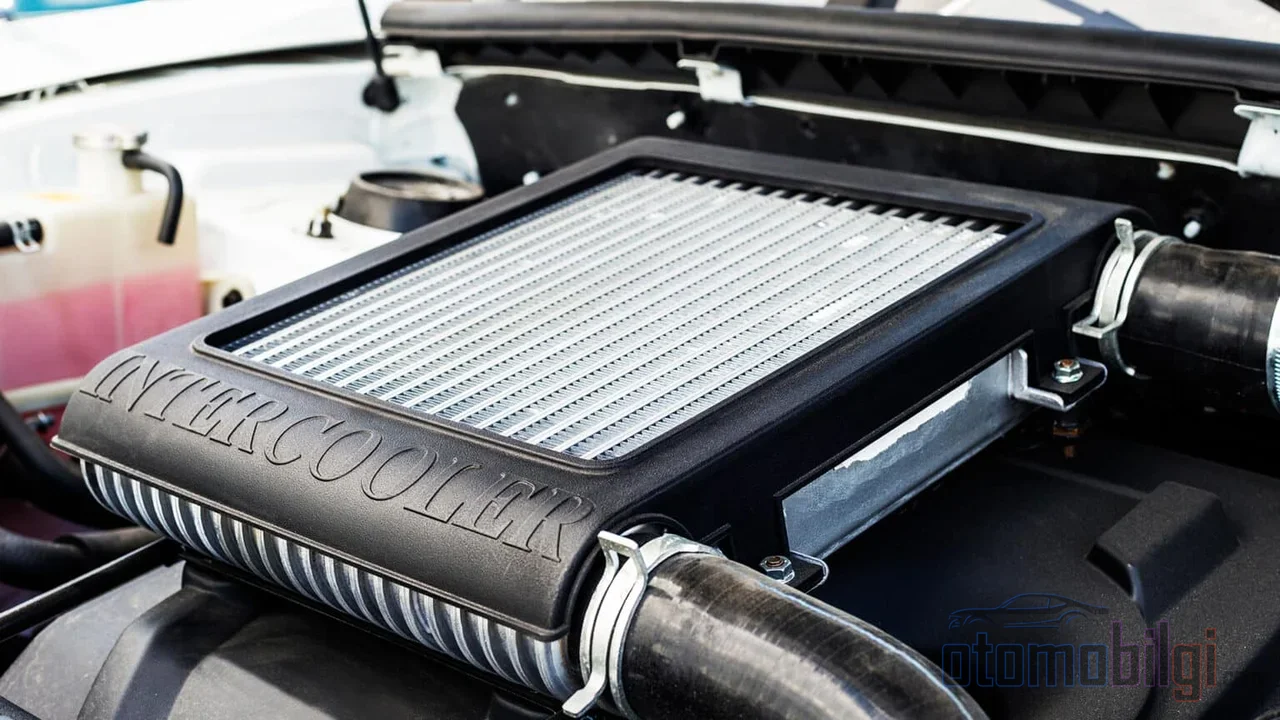
In a turbocharged engine, the air leaving the compressor can reach temperatures exceeding 200 °C in some applications. Air this hot before it even enters the cylinder is a sufficient starting point for explaining why the engine suffers a loss rather than gaining power. Because as temperature rises, air expands, its density drops, and less oxygen enters the cylinders with each intake stroke. This is exactly where the intercooler comes into play: as a heat exchanger placed between the turbo and the intake manifold, it cools the compressed air before it reaches the engine. So how exactly does this cooling affect power, fuel consumption, and engine life?
Why Does Compressed Air Heat Up?
The working principle of a turbocharger is simple: exhaust gases spin the turbine, the turbine turns the compressor wheel via a shaft, and the compressor draws in ambient air, pressurizes it, and sends it to the intake manifold. Compression itself physically creates inevitable heating; whether you compress air with a piston or with a turbo, the result is the same. Compressed air heats up, and the higher the pressure, the greater the heating.
To give an idea of the scale, atmospheric pressure at sea level is approximately 14.7 psi. In typical turbocharged automotive applications, boost pressure usually stays between 8 psi and 20 psi; aftermarket and high-performance projects go beyond this limit. The compressor wheels producing these pressures spin so fast that some turbochargers can reach speeds exceeding 300,000 rpm.
The problem with heated air is the loss of density. Fewer oxygen molecules per unit volume means worse combustion, increased knock risk, and lower efficiency. The intercooler removes heat from this pressurized air and delivers a cooler, denser mixture to the engine; thus the engine receives more oxygen in the same volume, and more fuel can be burned safely. The density advantage also lies at the heart of the downsizing strategy, where manufacturers shrink engine displacement and compensate with a turbo.
Key Highlights
- At the compressor outlet, air temperature can exceed 200 °C in some cases.
- A good front-mounted intercooler often achieves cooling efficiency above 90%; typical top-mounted units reach around 70% at full throttle.
- Water's heat-carrying capacity is about 13 times that of air; therefore air-to-water systems are more efficient but more expensive.
- An intercooler does not directly add horsepower; it indirectly improves performance by providing an oxygen-rich combustion environment.
How an Intercooler Works: Where Does It Take the Heat From?
An intercooler is a heat exchanger that cools the air in the stage between compression and engine entry. It is placed between the turbo and the intake manifold; the pressurized air passing through it contacts the cooling channels and releases a significant portion of its heat to the outside environment. The air reaching the engine is cooler and denser, meaning it carries more oxygen with each intake cycle.
At this point, a common mistake needs to be corrected: an intercooler does not add horsepower on its own. What it provides is an oxygen-rich combustion environment. The power increase emerges as the natural consequence of this environment. In addition, the lower intake temperature allows the electronic control unit to run more aggressive ignition and boost settings without hitting the knock limit; this is precisely where the main value of an upgraded intercooler lies in performance vehicles.
Air-to-Air or Air-to-Water? Comparing the Two Intercooler Types
There are two main approaches in intercooler design, and the choice is made according to the vehicle's intended use and the constraints of the engine bay.
| Feature | Air-to-Air | Air-to-Water |
|---|---|---|
| Cooling medium | Direct outside air | Water circuit and auxiliary radiator |
| Efficiency | Good, but prone to heat soak | Higher; water performs better across a wide temperature range |
| Size and placement | More voluminous, mounted where airflow is available | Compact, fits into tight engine bays |
| Cost | More expensive, more complex | Typical use |
| The majority of turbocharged vehicles | Applications with limited space and high heat loads | The most obvious weakness of air-to-air systems is heat soak: |
after a long full-throttle pull, the core heats up and takes time to cool down. In air-to-water systems, the water absorbs heat from the hot air and carries it to a radiator; however, if the auxiliary radiator is inadequate, the fluid can overheat, and once the water heats up, recovering efficiency becomes difficult. but if the auxiliary radiator falls short, the fluid can overheat, and once the water heats up, it becomes difficult for efficiency to recover. In terms of core structure, there are also two basic types: fin design, common at factory standard, is lighter, while the bar & fin design is lighter, while the bar & plate design is generally more efficient and is preferred on the aftermarket side.
Front-Mounted (FMIC) or Top-Mounted (TMIC)?
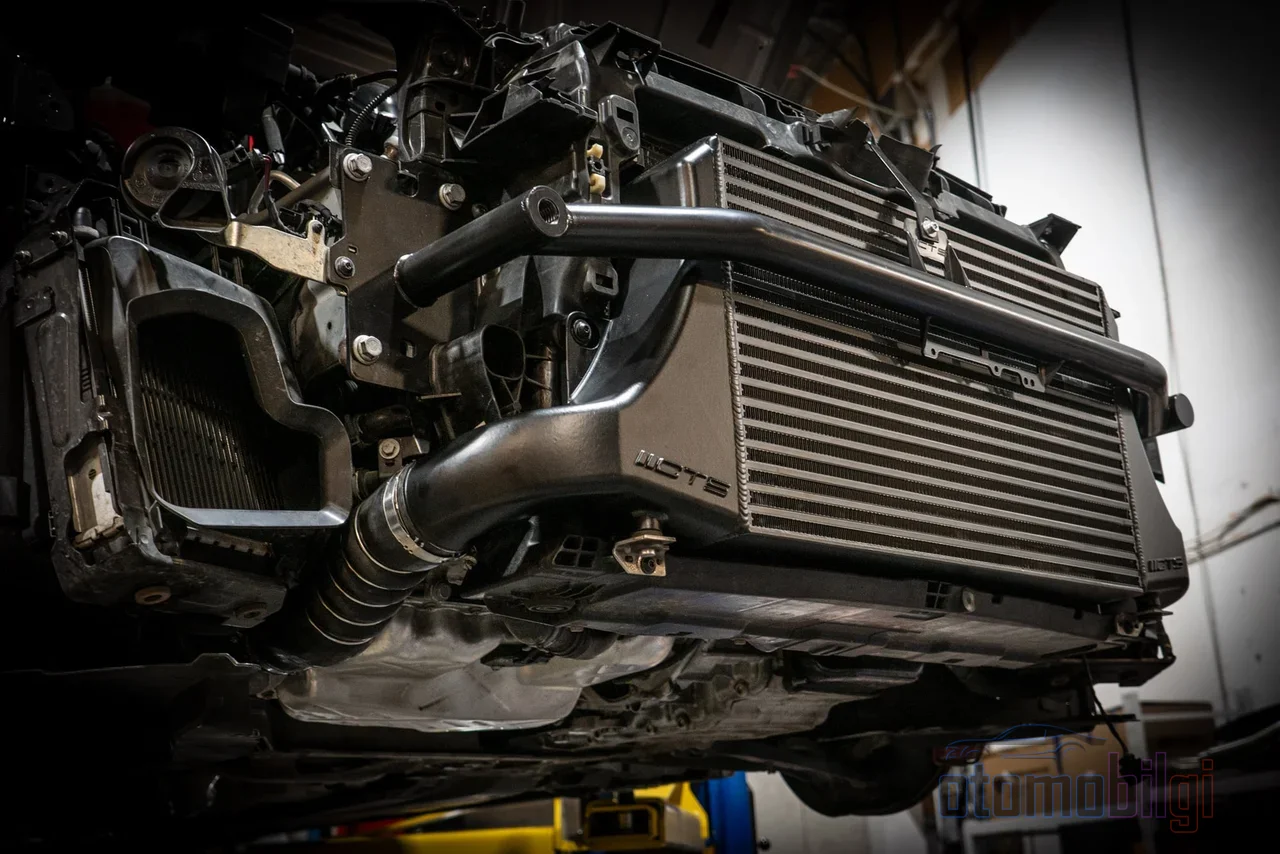
A front-mount unit is placed behind the bumper and in front of the radiator; since it receives direct airflow, it provides maximum cooling, transfers less heat to the engine, and because it stays away from engine bay heat, it retains less heat even at low revs. Installation and maintenance are also relatively easy. A top-mount unit, on the other hand, sits at the top of the engine bay.
A top-mount unit, meanwhile, is positioned at the upper part of the engine bay. Its advantage lies in the plumbing: shorter pipe routes, less volume, and consequently less lag in boost response. With these characteristics, it naturally suits small and mid-sized turbocharged vehicles intended for daily use. While general layout comparisons favor a front-mount setup for large turbo and track-focused projects and a top-mount setup for daily driving, it should also be noted that the difference between the two solutions is not always significant in terms of overall performance under every condition.
Its Relation to Knock, Fuel Consumption and Traction
The most critical contribution of low intake temperature is the reduction of knock, i.e. detonation, risk. Compressed and overheated air paves the way for spontaneous ignition starts in the combustion chamber before controlled firing; this is both harmful and inefficient. Technical studies have also shown that high intake temperatures can advance the combustion phase and increase vibration intensity during acceleration. Overheated air can lead to detonation, and this is precisely one of the main reasons why turbocharged engines use an intercooler.
On the fuel consumption side, the picture is somewhat more nuanced. Cooler, denser air allows more precise control of the air-fuel mixture, and less throttle input may be needed for the same power; this can positively affect consumption. On the other hand, it would be misleading to say that an intercooler alone directly improves consumption; the real effect is that it allows greater air mass intake with minor losses.
A realistic warning is also appropriate here: installing a larger intercooler may not noticeably increase power on its own, because the stock ECU software does not automatically adjust boost and ignition for the lower air temperature. The real advantage of an upgraded unit is that more aggressive tuning can be done without taking on knock risk, and its resistance to heat soak delivers consistent power during long track sessions.
Effect on Engine Life and Reliability
Unmanaged thermal load, beyond knock, is also the main culprit in cascading failures: high heat is one of the leading causes of turbo wear, engine oil degradation, and cylinder head gasket failures. Running without an intercooler chokes combustion efficiency due to hot, thinned air; cooled intake, on the other hand, helps preserve the reliability of the power transmission chain.
Although there is no definitive proof that an intercooler measurably extends engine life, there is a clear engineering principle: lower operating temperature is never a bad thing. The reduction of thermal stress on the engine for the same power always works in favor of the long-term reliability calculation.
Failures and Maintenance: What Should You Pay Attention To?
The intercooler is a robust component, but it has its problems. Common situations include:
- Hose and clamp leaks: these manifest themselves as a drop in performance and a "whoosh"-like sound, especially when accelerating; black smoke and power loss are additional signs in diesels.
- Front-position-related damage: stones thrown up from the road and impacts can affect the core.
- Oil contamination originating from turbo failure: a small amount of oil in the core and pipes is normal in non-sealed circuit systems, but excess oil is a sign of trouble.
Even a simple plumbing error, such as a pipe coming loose, leads to a noticeable drop in performance due to boost loss, rough running, and a tendency to overheat. In diesel vehicles there is an even more serious scenario: oil leaking from a faulty turbo into the intercooler can trigger a chain that may lead as far as the engine burning its own oil and locking up with an uncontrolled rise in revs. That's why turbo and plumbing health matters more in diesel vehicles than in gasoline ones. Let's also add a note on terminology: in the diesel context, the distinction between intercooler and aftercooler is debated for units that cool between compression stages; but since almost all diesel engines are turbocharged, they use the intercooler for the same reason as turbocharged gasoline engines.
Conclusion: Cold Air, a Confident Engine
The intercooler is the silent hero of the turbocharged engine: it doesn't add power directly, but by cooling the compressed air it delivers more oxygen in every cylinder fill, a lower knock risk, and more precise fuel control. The answers to air-to-air versus air-to-water, and front mount versus top mount questions depend on the vehicle's purpose; in daily use simplicity and response time stand out, while under high thermal load efficiency and resistance to heat soak become decisive. To sum up: every degree of cooling of the compressed air is part of a system in which every oxygen molecule entering the engine does more work - and this is the common denominator of a turbocharged engine's power, efficiency, and longevity.
Sources
- Intercoolers: How do they work? - Garrett Motion
- Turbocharger Intercooler Role in Heat Reduction & Efficiency - CSF Radiators
- Benefits Of Upgrading Your Intercooler - Can Auto Performance
- Make The Case: Air-to-Air vs. Air-to-Water Intercoolers - Performance Racing Industry
- Air-to-Water vs. Air-to-Air Intercooling Tech - Mishimoto
- Front Mount vs Top Mount Intercoolers - Maperformance
- The effects of intake air temperatures on turbocharged vehicles - Stratified Automotive
- Effect of Intake Charge Temperature on Combustion - Khatamnejad, University of Isfahan journal
- Intercooler vs Aftercooler in Diesel Engines - Imara Engineering Supplies